
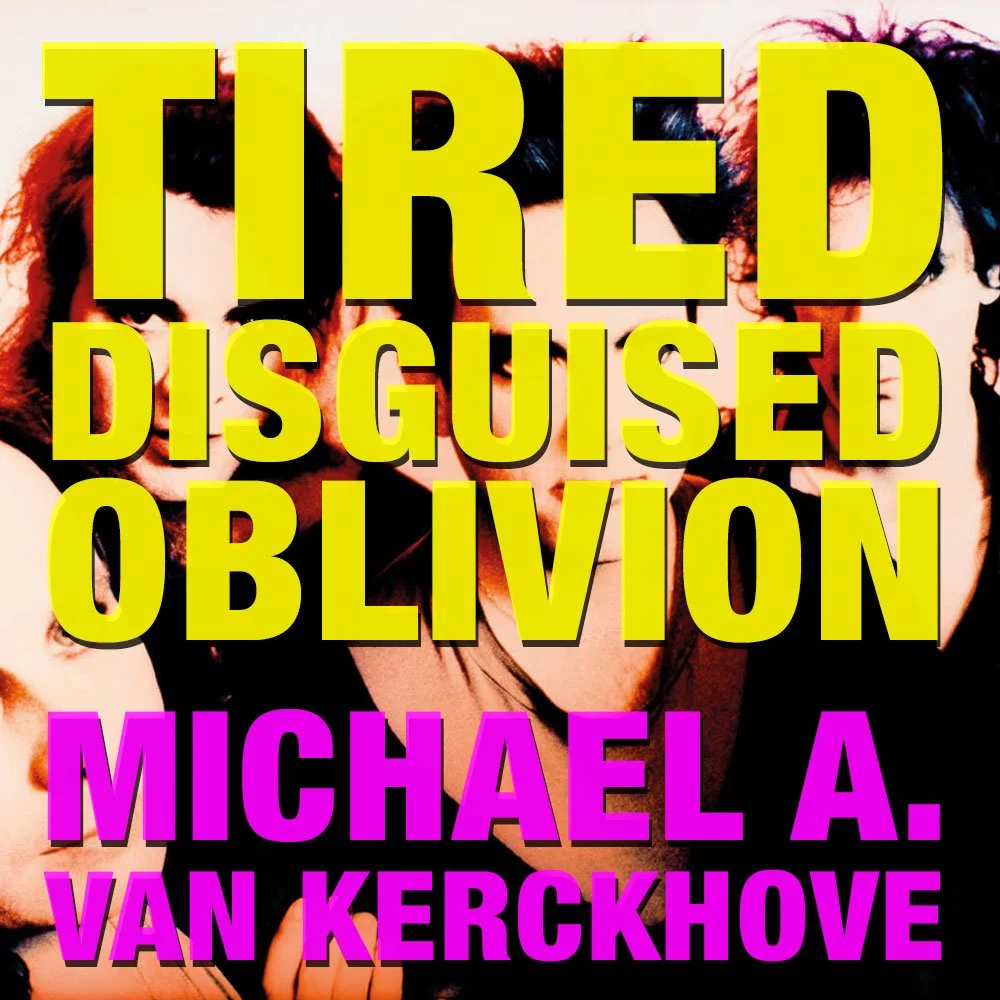
Tired Disguised Oblivion: On The Cure’s “End” and Other Endings & Beginnings by Michael A. Van Kerckhove
April 21, 1992: A day for rejoicing.
It’s The Cure frontman Robert Smith’s 33rd birthday and the release date of the band’s ninth studio album Wish.
I am seventeen, a senior at my Detroit area all guys Catholic high school, where the hair codes now focus less on late 80s below-the-collar anti-mullet endeavors and more so on front-forward anti-bangs-over-the-eyes efforts. Which seems to parallel the shifts in music culture at large and my own tastes in particular in this fascinating time to be in high school. When I pivot from Headbangers Ball to 120 Minutes, even if I will remain comfortable in both worlds.
Robert Smith has tamed his iconic Disintegration era rat’s nest hair into a sleeker yet still high head of gloriousness for the band’s new chapter—as witnessed in promo photos and the video for lead single “High.” At least for now. Meanwhile, I am at war. And in the forthcoming year-end issue of our school newspaper, my last name will be added to the school glossary, therefore preserved in school lore: Vankerck (adj) – To be in constant violation of all hair codes. A badge of honor and recognition for this not gay yet Drama Club kid still finding his way.
I ride these shifting sands of popular and alternative music—and just in time. Dare I say I once hated “that new wave music,” and I’d even once uttered, “I hate The Cure,” may the goth gods not ever smite me. We are all young and dumb at some point.
But thanks to my alternatively minded ninth and tenth grade buddy CT and his Cure poster covered basement bedroom, where we’d spend hours after school playing Zelda, my resistance weakened. By the end of freshman year, the band released Disintegration, and something in my burgeoning tortured artist brain clicked.
I buy the “Fascination Street” cassingle with B-side “Babble” at Musicland, aided by moderate MTV video rotation, the heavier bass as my backdoor into “Just Like Heaven” and the rest. I buy the crucial Standing on a Beach singles & B-sides collection cassette, cementing a base knowledge of the band’s history, often listening after dinner while loading the dishwasher and ignoring my family. For my fifteenth birthday in October, tucked inside the pocket of a gray cardigan CT’s mom picked out, is the Disintegration cassette, thus setting my teen angst course askew from “Every Rose Has its Thorn.”
A few months later, for an Honors English paper, I write a history of the band: The Disintegration and Rebirth of The Cure, focusing on their 1982 breakup during their tour supporting the Pornography album. In the spring of 1990, we don’t know if the band will go on.
So, with Wish, I am in full speed new album anticipation mode, thankful for my established fan cred lest I am dubbed one of those “High” people as a California pen pal calls the new baby girl fake-fans. We are real fans.
North American success kicked in for The Cure with their 1985 Head on the Door album. With its solidified lineup, one that “became much more like a family,” Smith told Rolling Stone in 2004, and an overall fresh enjoyable start. Thus began their incredible run through Kiss Me Kiss Me Kiss Me, Disintegration, and then finally, Wish.
As alternative grew more mainstream, the band peaked in its powers and number of fans. But it was also the disintegration of the family vibe. For Smith, Disintegration “was the end of the golden period.” He said that on the Wish album, he felt more isolated. “Like I was making the album on my own, and the others were just playing. Some days it would be really, really great, and other days it would be really, really horrible.”
The album opens with “Open,” a song whose lyrics “are about the deranged perspective, loss of control, and overwhelming banality of believing oneself defined by the role of singer in a famous band,” as Smith tweeted in 2022 during a 30th anniversary listening party. Next is a kaleidoscopic collection of pop, psychedelia, and melancholy.
And it all ends with “End.” Where the deranged perspective of “Open” spills onto their fans: Please stop loving me; I am none of these things. Robert was “dying inside” and the band was “slowly dissolving” as the Wish Tour progressed. Thankfully, I noticed none of these things when I finally saw them live that summer at the Palace of Auburn Hills, where their concert album and film Show were recorded. Where I had no chance to be a part of the film’s opening fan montage—as my grade school tenured best friend Chris (who I in turn had to convince to not hate The Cure) got us lost and pulled over enroute and was almost murdered. By me. We got to our seats as the house lights lowered, and the opening notes of the “Tape” intro struck.
Robert achieved his desired epic ending to the album. And after the excitement of the tour and live albums subsided, some fans moved on while those of us left behind looked around at each other, at ourselves, wondering what exactly Robert was telling us. Was this really the end, like so many ends or threats of ends before? And why can’t we love you? You are all of these things and more to us.
In the years to come, the band would contribute to a couple movie soundtracks and navigate legal troubles with founding member Laurence Tolhurst. A new lineup would emerge, and finally in 1996 they would release the still often maligned and polarizing Wild Mood Swings album. A reception that Robert was initially surprised by.
Thus, “End” marks the beginning of a transition for the band, its fans, and myself.
The phrase tired disguised oblivion, which modifies everything I do, within “End”’s lyrics strikes me as chewable poetry for now fifty-something fans.
Tired evokes exhaustion, boredom, hackneyed expression.
Disguised connotes concealment, deception.
Oblivion expresses extinction, forgetting, being forgotten.
It’s a regular old midlife crisis for us mere mortals: Does whatever we’ve accomplished even matter? Is it original? Is it even real? Are we truly the person everyone believes us to be? Do we care? Are we sad and oblivious or just tired?
It’s an understandable thirty-something crisis for someone who released his first album a few weeks into his twenties. Who emerged from the oblivion of small-town England to the world stage but eventually grew exhausted from maintaining the idolatry.
I do not have a dissolving band or crumbling media empire. Nor do I have a seat on literary Mount Olympus—the occasional published essay will not bring world fame and stalkers or fans stabbing themselves at reading events—unless any of you would like to volunteer. I am not cool enough to be worshipped. Though like Robert Smith, I too have lived and do live in a quasi-tortured artist space, my GenX Scorpio identity snickering at decades-old scars, friends and medication and other distractions getting me through.
As The Cure faced change post-Wish, so too did I. Firstly by graduating from high school and going to college a perfect two hours from home. Where one sense of self ended, evolving into someone else, more closely resembling the man I am today. Where I was a Theatre and English major, navigating the proper college experience of meeting contemporaries outside my long-established bubbles in all the early 90s cafeteria smoking sections and infant internet glory.
Where I sat in the middle of a party, nursing a Honey Brown beer (probably), wearing non Catholic high school dress code attire including earrings and eyeliner, and sporting an increasingly hair code defying coiffe. And overhearing a conversation that finally (and in a much safer space) started me thinking that this whole heterosexual thing was probably not for me. A quieter more reflective salvo versus the jarring horn section blast of “The 13th,” our eventual first taste of Wild Mood Swings.
An act which naturally led to disguise. If not in active deception then in revelation arrested by the slow burn of acceptance. From myself. From others I shouldn’t worry about. From others I should. Where the truth would occasionally poke through in certain situations, slipping into a post-rehearsal bar and grill hangout, a long table ripe for bussing while the others shot pool, with the man who’d become the first kiss of my new life.
Please stop loving me for who you think I am; please start for who I am really. Please find joy in what I do; please forgive my missteps. I say to all involved.
November 1, 2024: Another day for rejoicing.
The Cure releases their long awaited fourteenth studio album Songs of a Lost World. I am a freshly minted fifty-year-old. Robert Smith is well into his sixties.
The album is part of the band’s “forever following their muse, free of the wearying obligations that face the next bright young things,” as Pitchfork reviewer Ben Cardew writes. Continuing that the album is “content to move at its own unhurried pace.” Much like the tempos of the band’s aging fans, even if we could and should still kick it up a notch sometimes. Fans who listen to it, earbuds in and eyes closed on the couch, not worrying about whether or not they will fall asleep.
Where we reach the latest end song, “Endsong,” a man standing outside in the dark, staring at the blood red moon, remembering the hopes and dreams [he] had and all [he] had to do, and wondering what became of that boy.
The only boy in the recital, tap dancing in sequins. The boy in his mother’s arms underneath the Northern Michigan stars. The boy peering with his dad and little brother into horse pastures from atop a high hill, then later in college rolling down it unafraid of scratches from thistle and clover. The boy who wrote a five-day stretch in his third grade Pac-Man diary: It’s almost Valentine’s Day ~ It’s almost Valentine’s Day ~ It’s almost Valentine’s Day ~ Day before Valentine’s Day ~ Bad day. The boy who got a puppet stage one Christmas and an Atari another. The boy who was bad at tying knots but good at baking cookies.
The boy who moved to Chicago to take over the world, or at least be gay and write plays, who let youthful bravery carry him and inherent fear hold him back. Who experienced his share of beginnings and endings with other men—some short, some medium, and one rather long.
Robert seems happy now and settled into himself based on interviews surrounding Songs and its positive reception. Where he tells of his collection of old iPods, a playlist ready for any mood; and about how he and his wife Mary live in the English countryside and raise sheep. Did you know that Robert Smith raises sheep? I did not know that Robert Smith raises sheep.
As for me, I think I’ve reached that point where I still have my disguises, parts of myself saved for the company of like-minded souls. But again, the truth pokes through in certain situations, after a light-hearted joke from an in-law, or in deliberate plantings in a poem or essay. Ultimately, I don’t really give a fuck what others know and think about me. Maybe because as our country crumbles, all our made-up stuff doesn’t matter. 90s sadness turned to 2020s sadness, matured like fine whisky in the heirloom oak barrels of our hearts. Is that too much? Eh, I’m keeping it in.
I do try to rise above the doom and gloom and often succeed. If Robert Smith can still find joy in The Cure, be at peace with his status in the eyes of his fans, in raising his sheep, I too can find joy in my own creativity, the aforementioned friends (and family) and other distractions; watch history documentaries and my fish swim; and track the changing seasons with neighborhood walks, robust fall pumpkins giving way to deflation and frost before butterfly attracting flowers bloom again.
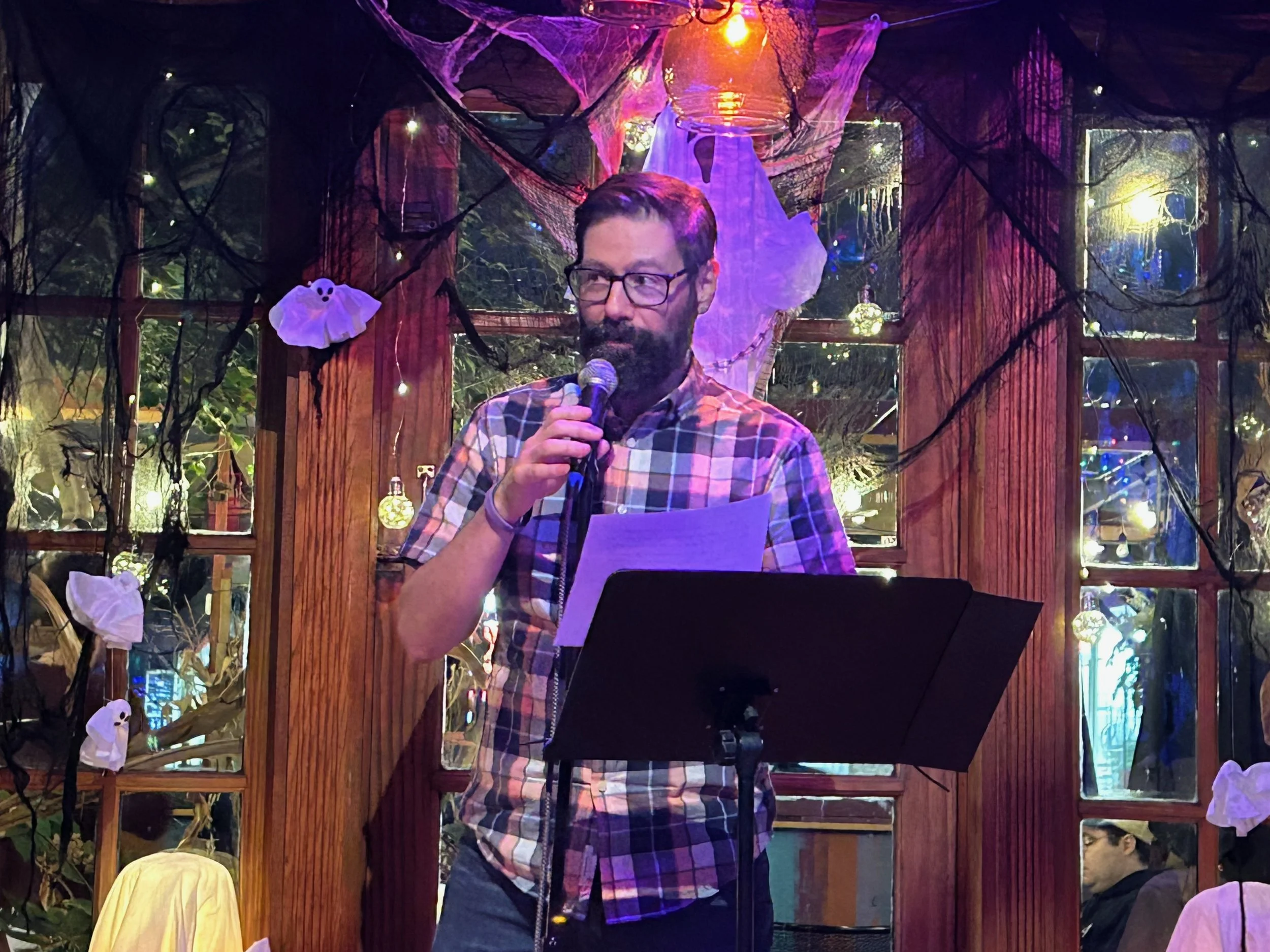
Michael A. Van Kerckhove is a Chicago writer and performer. He last appeared in March Xness defending DJ Sammy’s cover of Bryan Adams’ “Heaven” for March Danceness and celebrating Cry Cry Cry’s cover of R.E.M.’s “Fall On Me” for the March Faxness extra credit collection. More at MichaelVanKerckhove.com. @mvankerckhove on Instagram and Bluesky. @MichaelAVK on Letterboxd.