
final four
(1) Guns n’ Roses, “November Rain”
vs
(1) Celine Dion, “My Heart Will Go On”
Read the essays, listen to the songs, and vote. Winner is the song/essay with the most votes at the end of the game. If there is a tie, we will play a one-hour overtime (and repeat until we have a winner). Polls close @ 9am Arizona time on 3/27/26.
“Far Across the Distance”: melissa fite johnson on Experiencing “My Heart Will Go On” Then and Now
On a recent walk with my husband, we talked about nostalgia—why it’s powerful, how we each define it. In particular, I was processing why I often feel nostalgic for incredibly painful moments in my life, which feels especially strange since I’m so much happier now. I don’t wish to go back—at least not literally, if time travel were a thing. But I love keeping journals. I love documenting and reflecting and considering how I got here, wherever here is. And sad memories are often the most defining ones. Celine Dion’s “My Heart Will Go On” is a portal to the worst few months of my life. It’s also one of my favorite songs. Both things are true at once.
In 1998, I saw Titanic twice in the theater. The first time was in late January, when the film finally came to the theater in my small Kansas town. In my journal from that year, I called the process of standing in line for hours to buy tickets with my friends “an adventure,” complete with elaborate plans to buy tickets to Spice World and switch theaters if it sold out. We made a whole evening of it—dinner at the Mall Deli, trying on dresses at Maurices, stuffing tickets from arcade games into our purses. Then we had to stand in line again to get good seats—there were twelve of us, and we took up a whole row. Even though we knew the movie would be heartbreaking, we were wild with excitement. We’d come prepared with travel tissue packs; we were looking forward to crying through Titanic the way we’d looked forward to shrieking through Scream and I Know What You Did Last Summer. Secondhand emotions, so satisfying and safe. We were young and invincible. Nothing could touch us.
The second time was in mid-March with my new boyfriend. In my journal, I wrote that Titanic “was actually sadder the second time around. It was nice to sit next to [him]—he stroked my arm until I felt better.” He and I were together for only two weeks, and later he told his friends we’d only been hanging out, not going out. He didn’t know why I thought it was more than it was, even though we went much farther sexually than I was ready for. In my journal, I wrote, “We hung out in his room. We talked a lot, which was nice. Then we did some things—I can’t quite decide if I should view them as being shameful or beautiful.” It wasn’t pressure so much as praise that lowered my defenses. Because of Titanic and movies like it, I believed in love that took only a few days to bloom. I wasn’t wary of grand statements like “Rose, you’re the most amazingly astounding, wonderful girl—woman—that I’ve ever known.” When this boy told me I was beautiful and that he’d wanted to kiss me for a long time, I’d been waiting my whole life to hear something like that. I was ready to open myself to whoever said it first. After he broke up with me, he told his friends he’d only hung around me because I was stupid and easy and had big breasts.
And then on April 3, my father died, an event that should be unrelated to that boy and Titanic, but it all feels like one memory. One soundtrack—“Near, far, wherever you are,” a lyric that meant a lot because I wasn’t sure about religion or heaven. One regret, that I’d wasted the last weeks of my father’s life pinned beneath this boy who thought so little of me. When I try to conjure that time—relive it more than remember it—I am walking the halls of my high school, wearing an oversized hoodie so no one can see my body, hoping no one brings up my father because I can’t talk about him without crying. I am sixteen.
In a late 90s talk show appearance, Celine Dion addressed her tendency to beat her chest with her own fist at the climax of her songs: “When I sing sometimes, I get emotional and I hit myself—I don’t know why! I don’t know why I do that.” She hit herself especially hard during her Oscars performance, spooking her heart of the ocean necklace right off her chest. I watched that moment in my childhood living room with my dad less than two weeks before he died.
I’ve been thinking a lot about that—emotion and violence, emotion and pain. I am trying to understand why I love a song that I so associate with the end of my father’s life and the worst few months of mine. It’s nice to remember him, and maybe that’s all it is. That’s such a simple, normal explanation. But maybe I’m still the girl who finds a strange pleasure in sadness, even when it’s real, even when it transcends a radio or screen. Don’t all of us sometimes put on an album or movie expressly because we know it will make us cry? Don’t we read through old journal entries documenting our most gut-wrenching memories? We know it will hurt, but the hurting reminds us we’re still here.
In my journal, I wrote, “That night, at home, Dad began complaining that he was having trouble breathing. After a while he asked me to call 911. An ambulance came and they took Daddy to the hospital. He was crying and they gave him oxygen and it was horrible. In the ER they said they thought he’d had a heart attack.”
He didn’t die that night. I took Mom’s car and got McDonald’s for her and me, and we ate it in the hospital waiting room. He died two nights later, after being moved from ICU to a regular room. Since he seemed to be doing better, I took a break from the hospital to go to the movies with my friends.
In my journal, I wrote, “When I left he’d been having a little trouble breathing, but he said he’d be OK. I kissed his forehead, told him I loved him, and I never saw him again.”
My friends and I didn’t see Titanic the night my father died, though it was still playing, of course. It played in theaters for nearly ten months. It’s hard to explain to my students, who are the age I was when it came out, how much of a phenomenon both the film and the song were. Halfway through 1998, “My Heart Will Go On” was already considered the most played song of the year. In this era of streaming movies at home and everyone making their own playlists, it feels to me like there aren’t as many unifying pop culture touchstones, the things that will remind everyone in the same age bracket of a certain winter or spring.
Maybe to test this theory, I asked a few students what they consider their generation’s version of “My Heart Will Go On,” their version of Titanic. Their answers were fantastic but totally varied, which makes me think there really isn’t a contemporary equivalent. For songs, they brought up My Chemical Romance and Billie Eilish, both of which feel appropriately dramatic, and one student suggested Adele, which I think speaks to a respect for Celine Dion’s powerhouse voice. For films, they mentioned Downton Abbey for its attention to class systems, the Bollywood movie Saiyaara for its love story, and Pirates of the Caribbean “because it’s ocean related.”
I also asked my students whether they thought Titanic and “My Heart Will Go On” were more romantic or sad, and they were all torn. One student called them “sad but cute”; another, “romantic with a hint of sadness.” Finally, someone found the word “bittersweet,” which might capture the spirit best of all.
Last summer, I was surprised that “My Heart Will Go On” wasn’t on the longlist of options for this tournament because it was considered more romantic than sad. I’d thought of the song as sad for so long, it was hard to think of it as anything else. However, it’s true that the first image that opening flute solo prompts—universally, I think, though usually I speak only for myself—is undeniably romantic: Jack and Rose on the bow of the ship, homecoming dance pose, his hands on her stomach, her hands covering his, her engagement ring from another man glinting in the sunlight, their faces close in anticipation of their first kiss. But it’s also true that the song makes me cry every time I hear it.
As I’m always telling my students, two things can be true at once. In another favorite romantic movie of mine, Before Sunset, Ethan Hawke’s character discusses an idea for his next novel: “I’ve always wanted to write a book where the whole thing happens within the space of one pop song.” He describes a scene from his would-be protagonist’s life, where his young daughter is dancing to a song on a table, and then a scene from his past, where his first love climbs onto his parked car and dances to the same song. The protagonist somehow understands that he is not merely being reminded of the past; he is there, and he is also in the present with his daughter. He is living both moments simultaneously.
I married a man who also saw Titanic more than once in the theater—a different theater, in a town not so far from mine. He held some other girl’s hand. Knowing him, he wasn’t dreaming of her or me or anyone to complete his life. He was already firmly himself; he loved pro wrestling and sketch comedy and alternative rock. He wasn’t an obvious romantic. Even so, he fell in love with the movie, and with “My Heart Will Go On,” as much as I did. And though he’s hilarious and sarcastic, there is nothing ironic about his love for these things. There’s a story his cousin loves to tell about how he got drunk one night and insisted she drive him to Walmart so he could buy the Titanic soundtrack, a double cassette. In the morning, his roommates played it to coax him awake, and he refused to be embarrassed. He stood by it, then and now.
My husband and I didn’t know each other when the movie came out, or when that song poured from every teenager’s car radio. But the fact that we both loved them fervently when we were young has informed our relationship since it began in 2003. He and I once waited to leave a hotel room one morning, for wherever we needed to be, because the end of Titanic was playing on cable. We’ve seen the movie together in the theater twice—in 2012, for the 100th anniversary of the ship’s sinking, and in 2023, for our local theater’s tradition of luring in our generation with beloved movies from our youth. We’ve been to three Titanic exhibits—two at Union Station in Kansas City, and the Titanic Museum Attraction in Branson, MO. And we’ve seen Celine Dion in concert; our sole reason for going was to hear “My Heart Will Go On.” Celine did not disappoint. She came out dressed as an iceberg, billowing white layers everywhere. My husband and I clutched each other and sang. We were both crying, but we were so happy. We couldn’t believe how lucky we felt not to know such sadness anymore. So maybe it’s true, the song is more romantic than sad—or at least maybe it’s finally true, true now as I’d wished it were then.
Celine Dion’s “My Heart Will Go On” is a time capsule of an incredibly sad time for me, but it isn’t only that. The story of my life does take place during the length of one pop song—this pop song. When I hear it, there are two of me, “far across the distance and spaces between us.” Two of me existing at once. I am walking my high school halls in an oversized hoodie, devastated and aching for my father. And I am beside my husband in the theater, final credits rolling. He and I turn to each other, not sure how embarrassed we should be by our red eyes and wet cheeks, this song soaring almost ridiculously behind us.
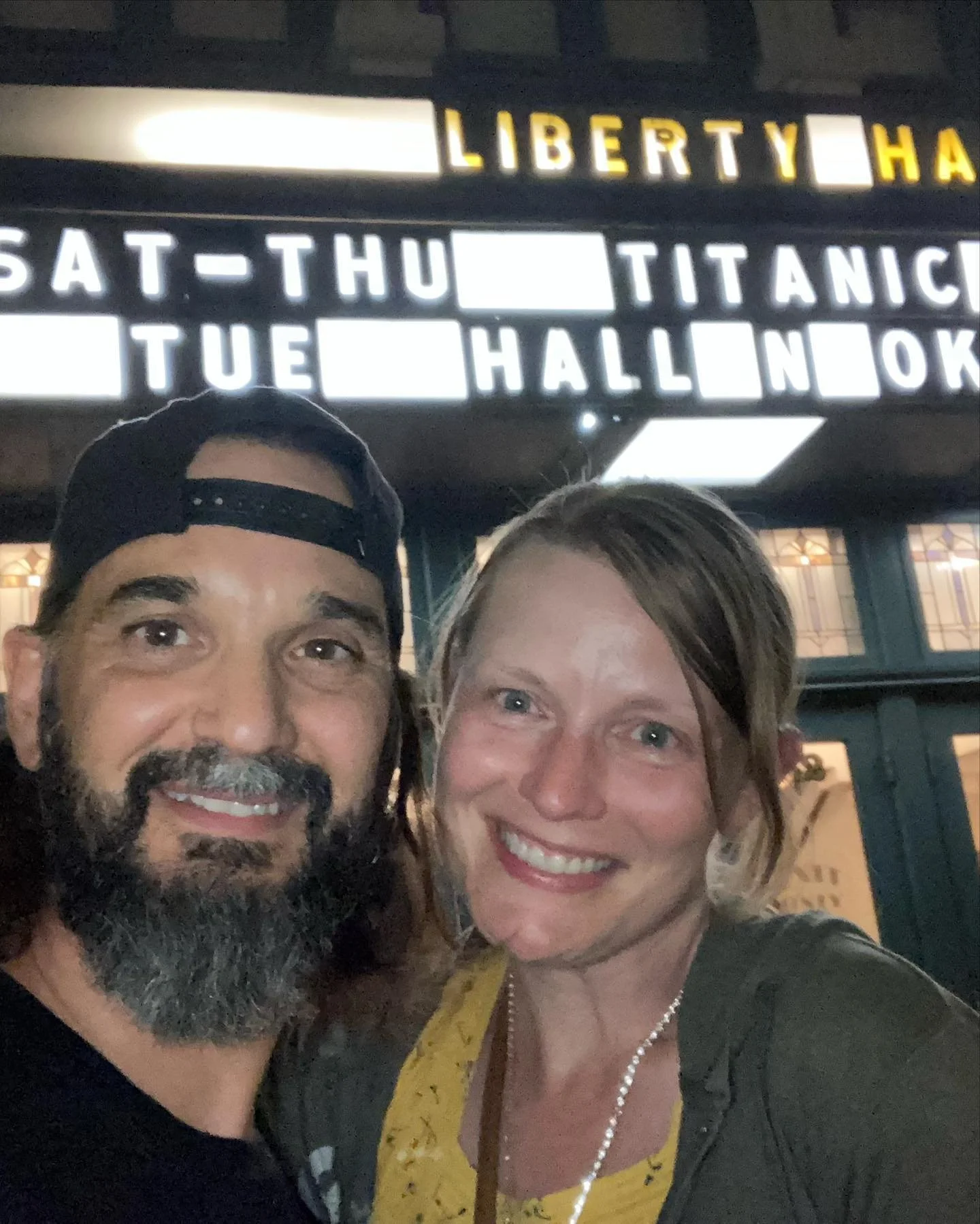
Melissa Fite Johnson is the author of three poetry collections, most recently Midlife Abecedarian (Riot in Your Throat, 2024). Her work has appeared or is forthcoming in Ploughshares, Pleiades, Southern Review, HAD, Ilanot Review, Poet Lore, DIAGRAM, and elsewhere, and has received a special mention for the Pushcart Prize. Melissa, a high school English teacher, is a poetry editor for The Weight Journal for high school students. She and her husband live with their dogs in Lawrence, KS.
Erin Keane: “November Rain” in Denmark
Stay, illusion!
If thou hast any sound or use of voice,
Speak to me:
—Horatio, Act 1 Scene 1, Hamlet
Wouldn’t time be out to charm you?
—Axl Rose, “November Rain”
When I first read Hamlet in high school, I pictured the Prince of Denmark as Axl Rose, his Use Your Illusion-era melancholy and melodrama having usurped Appetite for Destruction’s sexy nihilism just as the 1980s fully gave way to the ’90s. “I know it’s hard to keep an open heart,” Axl croons over his piano in “November Rain,” the third single off Use Your Illusion I, “when even friends seem out to harm you.” It was a poetic departure to say the least from his defiant Appetite howl, practically Shakespearean lyrics compared to “They’re out ta get me / They won’t catch me.”
Hamlet nursing his hurts and paranoias, crawling Elsinore, muttering and stabbing at the drapes, performing his “antic disposition,” betraying his chums, messing with everyone’s head: Later I would have Stoppard to help me make sense of Shakespeare, but in the beginning, I had Guns N’ Roses palace intrigue—Izzy’s out, Steven’s out, Axl’s out of control, Slash doesn’t want to talk about it—to guide me, emotionally if not textually, into Denmark.
Ghost walks, dead girls, gravesites, slings and arrows, whips and scorns of time: Tortured by the violence of his fathers, the betrayal of his mother, a young man lashes out yet struggles to articulate and enact a way forward. The audience is waiting for one, two, two and a half hours, just waiting for him to go on and do it already, but he can’t until the exact moment he’s ready. Made sense to me and my MTV habit, my subscription to Rolling Stone, my grocery-aisle People-skimming habit: Hamlet a tortured rock star, Axl a prince wrestling with his demons. Both of them making their problems everyone’s.
Just look at Sante D’Orazio’s portraits of Axl from that era and tell me you don’t see it: Incorrigible darling of the Sunset Strip channeling the original literary “I can fix him” by cradling the skull of poor Yorick, alas, in front of his naked crotch.
*
Like Hamlet, Shakespeare’s longest play, “November Rain” has stamina. Released as a single in 1992, at the time it was the longest song in history to crack the Billboard Hot 100’s Top 10, landing at number 3. The final album version is (forgive me) restrained, even, clocking in at a mere nine minutes, when earlier versions that predated Appetite had run anywhere from fifteen to eighteen minutes long.
“November Rain” is a song about a couple that is off and on a lot because they’re afraid to fully commit to their overpowering love, or something. The lyrics are almost too mature for the genre in places: “Do you need some time on your own? / Do you need some time all alone? / Ooh, everybody needs some time on their own,” which sounds like something I would say in my own functioning, middle-aged marriage when I have already put my soft pants on for the evening. The central metaphor is the Elton John-esque candle fighting to stay lit in the rain (not the wind!), an image of hope persevering through the storm of their conflicted emotions. “Rocket Queen” it was not. “November Rain” would not sound out of place in a Broadway musical. Not even Kurt Cobain’s scorn could make me hate it.
Some bands dropped a power ballad on an album to give the girls something to request on the radio, sure, crafting an illusion of the rock star as a sensitive guy who definitely wasn’t doing all this just to feed his own ego. But emphasis on the power: Such a song requires an operatic sense of bombast, of its own importance, that a softer acoustic or piano tune can’t sustain. It also requires an electric guitar solo to really cook, for when tragic feelings get so epic they overwhelm the song’s verse-chorus-verse container and must be confessed openly, to appeal directly to the audience’s heart.
It wasn’t just about sliding a love song like “Sweet Child O’ Mine” in between the Appetite bangers, or a crooner like “Patience” alongside the gross and antisocial (racism, homophobia, Charles Manson) parts of their pushed-out-the-door follow-up, G N’R Lies. Backed by the full firepower of an orchestra and choir, and constructed of several distinct movements, the heft of “November Rain” was emblematic of the artistic ambition Rose funneled into the double album in hopes of demolishing the band’s precedents.
Not everyone appreciated the scope—not even everyone in the band—which rankled Axl. “Maybe it would’ve been best for the purists if we’d died or broken up,” he sulked to Rolling Stone in 1992. “Then they’d get to keep it the way they liked it.”
Later, Axl would claim Slash was one of the band members who didn’t love the direction the Illusion ballads were taking them. Slash wouldn’t remember it like that. At the end of the day, though, tensions real or imagined appear to have worked in their musical favor, for those two epic cathedrals of emotion and sound, at least. Slash’s big moment in “November Rain” is no mere solo. He’s got two, each one a goddamned soliloquy.
*
I only dated one real musician in high school. The rest were drummers. It was over almost as soon as it started, an innocent interlude, a small detour he took on his way from and back to the love of his life. It didn’t devastate either of us when it ended; we took other people to prom and traded photos and hugs. He was the rare guitar obsessive in my life whose charm was sincere, earned, and lasting. He loved Led Zeppelin and Monty Python and guitars and Mustangs and El Caminos and occasionally blowing things up, and I know how that last part sounds, but he never hurt anyone, never would. He grew up to be an engineer whose specialty was something like industrial safety. (He was always the funny one.)
The year Guns N’ Roses released “November Rain,” I had spent hours on the phone or at his house listening to him attempt some riff or imitate an epic solo over and over, not Slash but rather some classic rock number, starting over at the beginning every time he messed up, beaming like a little kid when he nailed it. We probably danced to “November Rain” at homecoming, though, laughing at the DJ for playing a song with a final third that’s neither slow-dance material nor up-tempo enough to head-bang. So I don’t really associate the song with romantic heartbreak, personally speaking.
And yet. I spent so many hours of my youth pining for boys while they played guitar, but he is the only one I want to call up tonight to get an opinion on what Axl Rose was to us then, and what he has come to mean in his crone stage, and who we grew into, knowing what we now know about the power of the rock star image, and I can’t. They say only the good die young, and that’s just silly. My friend died in a sad, medical, grown-up way, when we were in our thirties, married and busy and not in as close of touch as I wished I could be. I haven’t been to a high school reunion since his funeral. I’m not sure what the point would be without the possibility of him showing up and maybe, accidentally, setting something on fire.
*
I perchance hereafter shall think meet
To put an antic disposition on
—Hamlet to Horatio, Act 1, Scene 5
For a 1999 SPIN cover story, Marc Spitz wrote an oral history titled “Appetite for Self-Destruction.” Here’s his highlight reel of Axl on tour in the summer of 1991, just a taste of business as usual at the time:
At Rose’s “homecoming” show in Indianapolis, he compares young people there to “prisoners in Auschwitz” and is fined for performing past curfew. On July 2, Rose starts a riot at the Riverport Amphitheatre near St. Louis by leaping into the crowd to take a fan’s camera; more than 50 people are injured and $200,000 worth of damage is done to the venue. As a result, the band’s next two shows are canceled.
Marc is another one I wish I could call tonight. I’d ask him about the process of collaging a cohesive narrative together from anecdotes, apocrypha, memories, and scattered records. I was his editor for several years when he wrote for Salon. Calls with Marc—he still used the phone a lot, still filed copy that feared no style guide from an AOL address—tended to be intense, forty-five-minute-long digressive pacers. Some days it felt like he was calling me from the past, somehow a ghost already. He talked about his pet theories and obsessions with a care, a deep and abiding personal stake that reminded me of how invested I could be when I was younger, before this was all a job and I had learned too much about the distance between the illusion and the reality. “If you’re hooked enough to talk to me this long about it,” I would tell him, though, “I think readers will be into it, too.”
*
By the time the Use Your Illusion albums came out, it had become increasingly hard for the public to tell whether Axl’s whole deal was an affectation he could be made to snap out of—his fits, his moods, his offenses—or whether unresolved trauma from a childhood marked by violence, had collided with the personality-warping that can be a side effect of fame, exiling him to a land beyond reason.
“That hour-and-a-half or two-hour time period that I’m late going onstage is living hell, because I’m wishing there was any way on earth I could get out of where I am and knowing I’m not going to be able to make it,” he said in this 1992 friendly Rolling Stone interview, in which he also talked openly about sexual abuse in his early childhood of which he had recently recovered memories.
“I started therapy in February [1991] and, Jesus, I’m right in the middle of stuff. I mean, if a heavy emotional issue surfaces and you’ve got a show in four hours, you have to figure out how to get that sorted out really quick before you get onstage so that you’re not in the middle of “Jungle” and have a breakdown. The pressure of having to do the show when whatever else is going on in my life is hard to get past.”
*
He never set out to be malicious, but by living under a microscope with the world scrutinizing him, any wrongdoing, public or private, tended to blow up in his face and often wound up as Nightly News. Personal flaws and fuck-ups are not allowed of the elite. —Del James, “Without You”
“Axl said to me, ‘I want to make videos more out-there than Michael Jackson’s,’” Josh Richman, who directed the video for their cover of “Live and Let Die,” said in Spitz’s SPIN story. “When we made the ‘November Rain’ video, we brought all these models in. Axl desperately wanted Stephanie Seymour—period. That night they went to the set, which was being built in an airplane hangar out in the Valley. That was their first date. She left Warren Beatty the next day.”
I remember certain details of the “November Rain” video, with its glam nuptials—Stephanie Seymour’s thigh-high wedding gown, Duff McKagan offering his own silver rings at the priest’s prompting, a guest jumping through the cake as the rain begins to pour on the reception—like it debuted yesterday. The director, Andy Morahan, was responsible for dozens of iconic videos of the MTV age: George Michael’s hypnotic ass in “Faith”? Andy Morahan. Cyndi Lauper in Trafalgar Square in “Change of Heart,” Mariah Carey having a “Vision of Love” in that giant empty cathedral window? Neil Tennant’s deadpan “West End Girls” standoff with the camera? That’s right. I hadn’t read “The Wasteland” yet. What were West End girls to a West Kentucky kid? I could see the Pet Shop Boys, at least, through Andy Morahan’s eyes.
The “November Rain” video was planned as one-third of a trilogy from the Use Your Illusions, along with “Don’t Cry” and “Estranged,” both of which are much sadder songs than “November Rain,” now that I think about it. It boasted a literary pedigree, even: “Based on the short story ‘Without You’ by Del James,” scrawled across the ending credits. The visual syllabus for “November Rain” includes The Texas Chainsaw Massacre (same cinematographer), The Godfather wedding scene, my grandfather’s John Wayne movies, and a thousand Elton John concerts run through a goth filter. And then there’s this short story by a writer I’d never heard of and had virtually no chance of reading at the time.
You have to understand: Back then, you couldn’t just Google an unfamiliar writer and find their work. If it wasn’t for sale at the local Waldenbooks or on the shelf of my high school’s library—and most weren’t—then it simply did not exist for me, for all intents and purposes.
Now that everything lives on the internet, I can say that’s a shame, because “Without You” by Del James is a story that has absolutely everything I would loved in a story when I was sixteen: a misunderstood, self-destructive hero who rejects the wealth and comfort that has insulated him because he’s emotionally wounded too deeply to be helped. A woman who’s dead because she loved him so much his mistreatment drove her to a desperate final act.
The story begins, as many stories loved by sixteen-year-olds do, in a dream. We know this when the hero, a rock star who goes by the stage name Mayne Mann, wakes up; the woman he has dreamed of is still dead. We get the back story—the friends who have forsaken him to his addictions, the girl he loved but couldn’t help fucking around on, because what was he supposed to do, not fuck around? When he took a sincere line she gave him about the pain he caused her and wrote a blockbuster song out of it, she shot herself and then proceeded to haunt his dreams.
“Inside his mind, he analyzed why his relationship with Elizabeth had failed more times than were countable,” Del James writes. “Like the scholar he wasn’t, he dissected situations, pondered things he should’ve said and shouldn’t have been caught doing.”
It ends (as many stories actually written by sixteen-year-olds also do) in a blaze of self-righteous self-immolation, a fire engulfing Mr. Mann, his rare guitars and luxury apartment up in flames. The rock star plays the piano while he burns his home down around himself, literally. What a waste of a talented young man! One had hoped—I would have thought at sixteen—he might pull it together. Maybe they’ll all be sorry now.
*
What is he whose grief
Bears such an emphasis, whose phrase of sorrow
Conjures the wandering stars, and makes them stand
Like wonder-wounded hearers?”
—Hamlet to Laertes, at Ophelia’s grave, Act 5, Scene 1
The “November Rain” video doesn’t show much of Del James’s story outright, except the opening scene of Axl waking, surrounded by bottles and pills, before going back to sleep and dreaming fitfully of the wedding ceremony, which is Act 1. Slash plays his best man—he had one job and still turns up at the church without the rings. After the ceremony concludes with Axl and Stephanie being pronounced husband and wife anyway, Slash walks down the aisle alone, exits the church into the desolate landscape of wherever they shot this in the Valley, then cries to the heavens with his first guitar solo. So of course, that move made me believe the video storyline was about a love triangle. What else makes sense at sixteen?
Act 2 is the reception, for which the bride has changed into a slinky black cocktail dress—iconic—maybe the first time I saw such a wardrobe change, which certainly never happened in the church-basement receptions I went to back home. A downpour sends the guests scrambling from the party. Again, a metaphor. The music shifts again. But what happens next is a mystery: dot-dot-dot.
In Act 3, there’s a funeral. The church sanctuary is mostly empty, in contrast to the joyful crowd at the wedding. A different priest presides. There’s some kind of mirror contraption reflecting half her face back to the crowd, allowing her to have an open-casket ceremony despite what horror it suggests is being concealed on the other side. That’s the only thing in the video to indicate what James’ story depicts, which is that she died by her own hand, with a gunshot, in despair over her man’s betrayal.
The short story is told in the limited third-person point of view, which is also the guiding lens of the video: In the end, he’s kneeling at her grave as the rain pours down on him, mingling with his tears. She’s been dead the entire time, and this is all memory for him, and while the narrator traces the guilt that leads his Mayne Mann to his big climax of self-destruction, it isn’t really interested in her side of the story. She is the object around which his story revolves, not the subject.
*
He took me by the wrist and held me hard
—Ophelia, Act 2, Scene 1
Seymour starred in two installments of the Use Your Illusion video trilogy. The volatile, fighting couple she and Axl depicted in “Don’t Cry” was also inspired, according to Axl, by his relationship with longtime girlfriend, then wife, Erin Everly (daughter of Don of Everly Brothers fame), which ended in annulment in 1991. In “November Rain,” the violence happens off-screen, the mirror bisecting the dead bride’s face and the sparse funeral crowd the only indicators that foul play had, perhaps, been self-inflicted. Seymour doesn’t appear in “Estranged.” She had already left Axl when they started production on that one.
Her contributions to Spitz’s SPIN oral history come in the form of court-recorded testimony, as do Everly’s, who was subpoenaed in Seymour’s case, alleging that Axl assaulted her, to testify that Axl had also been violent during their relationship as well. Everly filed her own lawsuit against him soon after. (All of the suits were settled out of court.)
Thanks to the Wayback Machine, you can still read the 1994 People feature, “Bye Bye Love,” (Jesus Christ, People) on Everly’s allegations against Rose, a relationship the magazine compared to O.J. Simpson and Nicole Brown Simpson, who had been murdered weeks earlier: “Everly says that throughout her four years with Rose, she suffered regular beatings that left her bruised, bloodied and sometimes unconscious. ‘You never knew what would set him off,’ she says.”
There’s also a sidebar about the dueling legal cases between Rose and Seymour that precipitated Everly’s:
Rose had fired the first shot by suing the supermodel in August 1993, claiming she had "kicked and grabbed" him during the party at the Malibu home they shared and that she refused to return more than $100,000 worth of jewelry he'd given her as gifts.
Countersuing, Seymour claimed it was Rose who attacked her, giving her a black eye and bloody nose. Angry because she had held the party after he had wanted to cancel it, he had slapped and punched her and kicked her down a flight of stairs, said Seymour, 25. When other defensive measures failed, she admitted, she "may have even...grabbed his testicles."
Let’s rewind. The actual band’s performance depicted in “November Rain” wasn’t grimy strip-club anarchy or a rioting arena crowd, two primary visuals associated with Axl in the years leading up to his two-volume magnum opus. He’s playing on stage in a classy theater. There’s a conductor, a violin section, a fucking flautist. Axl isn’t berating the crowd or jumping around or preening in chaps. He’s pensive, seated at a piano, channeling John Lennon, framed by the stage’s serious velvet drapes. That’s an artist, the staging indicates. If art is sacred, so is he.
I did not yet have the vocabulary, the framework, to understand how the glamorous woman on the cover of my Victoria’s Secret catalog could rendered for the public into both muse and victim, with the former bestowed as an honor, so the implication goes, that should more than make up for the latter, not a kind of depersonalization that allowed it to happen in the first place.
I didn’t even understand that I had absorbed—accepted it as a divine given, even—that an artistically ambitious and accomplished man couldn’t possibly be just another meathead who lashed out when he didn’t get what he wanted.
I didn’t yet know how many times in my life I would see a woman branded “crazy”—by suggestion or even outright statement, by the culture I consumed but also by men in my life who would never think of themselves as misogynists—for behavior that would later turn out to be completely justifiable.
*
Be wary then; best safety lies in fear
—Laertes (to Ophelia), Act 1 Scene 3
If we peel back the calendar even further, there are other stories, glossed over for years, recounted blithely like tall tales, myths even. These days, the truth can come out, but even now we aren’t sure what to do with it.
Here’s one: In 1985, the guys in the band were mostly squatting in this rancid, drug-addled hangout dubbed the Hell House, writing songs and playing club gigs and running with all kinds of misfits. You know, the stuff Hollywood rock legends are made of. One night, the police show up. Mick Wall’s 2016 book Last of the Giants: The True Story of Guns N’ Roses, excerpted in Cuepoint, doesn’t try to hand-wave the details away.
The girl in question was fifteen:
Slash, in his autobiography, published, of course, many years later, offers: “My memory of the events is hazy but from what I remember she had sex with Axl up in the loft. Towards the end of the night, maybe as the drugs and booze wore off, she lost her mind and freaked out intensely. Axl told her to leave and tried throwing her out. I attempted to help mediate the situation to get her out quietly, but that wasn’t happening.”
A naked, underage girl running away from adult men along one of the busiest streets in Los Angeles was not going to go unnoticed, and within hours the LAPD were back at the Hell House with the girl, looking to ID her assailants. Everyone in the house was brought outside except for Axl, who hid behind some equipment along with another girl. “While the cops are out there harassing everybody, asking their stupid questions, I’m with this girl behind the amp and we start going at it,” he later boasted. “That was the rush! I got away with it! It was really exciting.”
Her parents pressed statutory rape charges. Axl and Slash go into hiding to avoid being arrested for this. (They’re out ta get me!) Eventually, though, the charges were dropped, which means everyone else is free to drop the subject. The band signed with Geffen in 1986, and they were on their way to rock royalty.
In 2023, Axl was sued by a woman who alleged a violent sexual assault in 1989. He denied the allegations. A year later, the suit was settled. But in between, the girl from the Hell House in 1985 gave an account on a podcast of what happened that night, how she ended up out on the street naked and what led to those felony charges. (She obscures their identity in the original interview, but Rolling Stone confirmed that her allegations were made about Rose.) It’s even more disturbing and violent than earlier accounts indicated. At the time, one has to assume, if there hadn’t been a whole band plus a manager, on top of a scene’s worth of believers invested in protecting a young man with such potential, legal consequences may well have stopped Appetite for Destruction from being made in the first place. Then again, maybe not.
*
Draw thy breath in pain
to tell my story.”
—Hamlet to Horatio, Act 5, Scene 2
In the early 1400s, when you wanted to make a big statement, you hijacked a theater troupe and wrote a play implicating your uncle the king in your father’s murder. In the late 1900s, you spent an unprecedented amount of money—more than twice as much as you did on her starring vehicle—riding a dolphin through the ocean to make sure everyone knows you’re over your ex.
Stephanie Seymour had left; the third act of the “Without You” trilogy couldn’t be filmed as planned. In its place, a baffling, expensive debacle that in retrospect foreshadows Axl’s post-Illusion years. In a Vice retrospective, Rich Monahan called the video for “Estranged” an “extravagant and thrillingly misguided monument to Axl Rose’s own persecution complex. It’s like watching the sleek production values of James Cameron applied to the melodrama of Tommy Wiseau,” noting it as “an extension of the sort of bloat Rose insisted on retaining in so much of Guns N’ Roses’ work whenever expectations were high.”
Oh, no. Don’t think about bloat. Don’t think about getting older and dodging, poorly, your own appetites. Especially don’t think about the 2016 Axl memes, don’t welcome me to the diner where we have pie and cake. There are more things in heaven and earth, Horatio, sure, sure, but one thing will always be incontrovertible: Those of us who don’t die on the dueling floor will end up degraded by age. That’s how we know we’re the lucky ones.
“Along the way what happens to our bodies and minds astonishes and horrifies us and sometimes it’s easier to simply not look,” Spitz wrote for me on the morning we heard about the death of Stone Temple Pilots frontman Scott Weiland instead of the essay he was supposed to be writing about never going out to shows anymore, which, now that I look back at the archives, he never did file.
Axl didn’t die young, no blaze of glory, real or metaphorical. He took seventeen years to put out his magnum opus follow-up, 2008’s Chinese Democracy, churning through sidemen and producers, fourteen studios and $14 million. In the New York Times, Jon Pareles called it “the Titanic of rock albums: the ship, not the movie”—yikes—its “glimpses of heartfelt ferocity and despair” overwhelmed by “a tone of curdled self-pity.” But even in the savage critical takedown, in all the mocking of his long and tortured road to this album, there’s a hint of the reverence we hold for the artistic commitment that could just as easily have swerved into genius as it lurched into travesty. Axl’s humbling is such a letdown because we keep our expectations for our erstwhile princes so high. That back-to-form return is, theoretically, always right around the corner.
Axl pretty much stays touring; I’ve seen him thrice, arena shows all. On one of those dates, in Cincinnati for the 2016 tour, we even saw Steven Adler, fired during the Use Your Illusion sessions over his heroin habit, join the band for two songs. I’ll say this for Axl: He puts on a better show than some of his contemporaries who ended up more busted by time and excess than he did. He’s not had to hit the state fair circuit, a shell of his former self. But there’s little illusion of glamour left in the show now, grinding it out on the road in an industry that doesn’t really put up with two-hour delays and tantrums anymore.
When I first read Hamlet in high school, it was thrilling that he got to be the center of the universe for five whole acts. He was a reckless, selfish, untreated wound, a bottomless pit of hurt who couldn’t get out of his own way and who took down pretty much everyone around him in the end. I couldn’t get enough of it. Reading it since has always hit different. Listening to “November Rain” now can’t transport me back to high school, either, to the version of myself that fell for the glamour, the allure of the sensitive and untouchable. With his dying gasp, Hamlet begs loyal Horatio to tell his story—the one we’re all supposed to believe counts the most. It’s still a sad song, just not in the way that he must have imagined it.
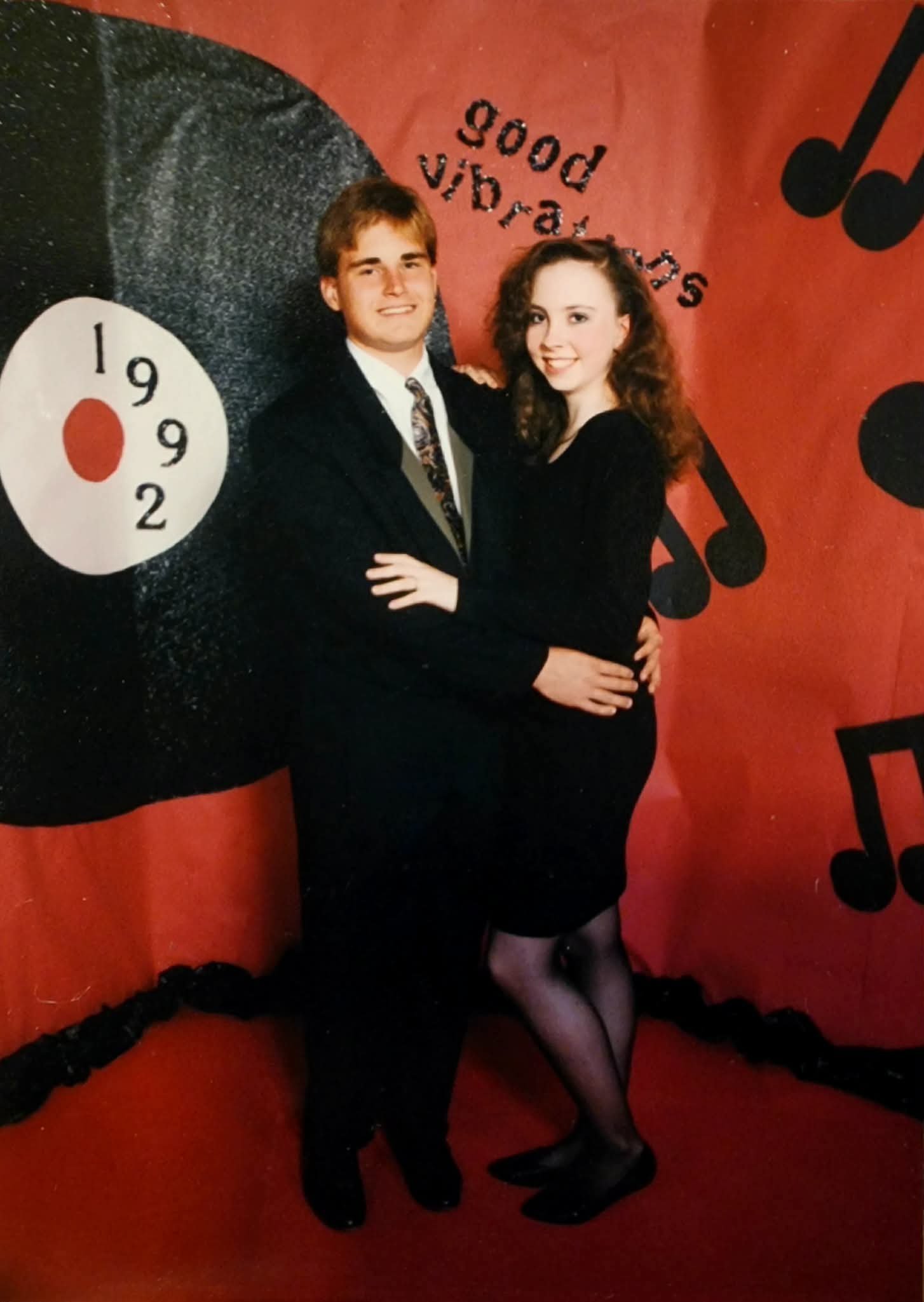
Erin Keane apologizes to her Shakespeare teachers for this essay, though she thinks Dr. Gatton would have secretly gotten a kick out of it had he known who Axl Rose even was. The author of RUNAWAY: Notes on the Myths That Made Me, one of NPR’s favorite books of 2022, and Demolition of the Promised Land, a collection of poems about Bruce Springsteen and other mythical creatures, she is chief content officer at Salon.com and teaches creative writing in the Naslund-Mann Graduate School of Writing at Spalding University.