
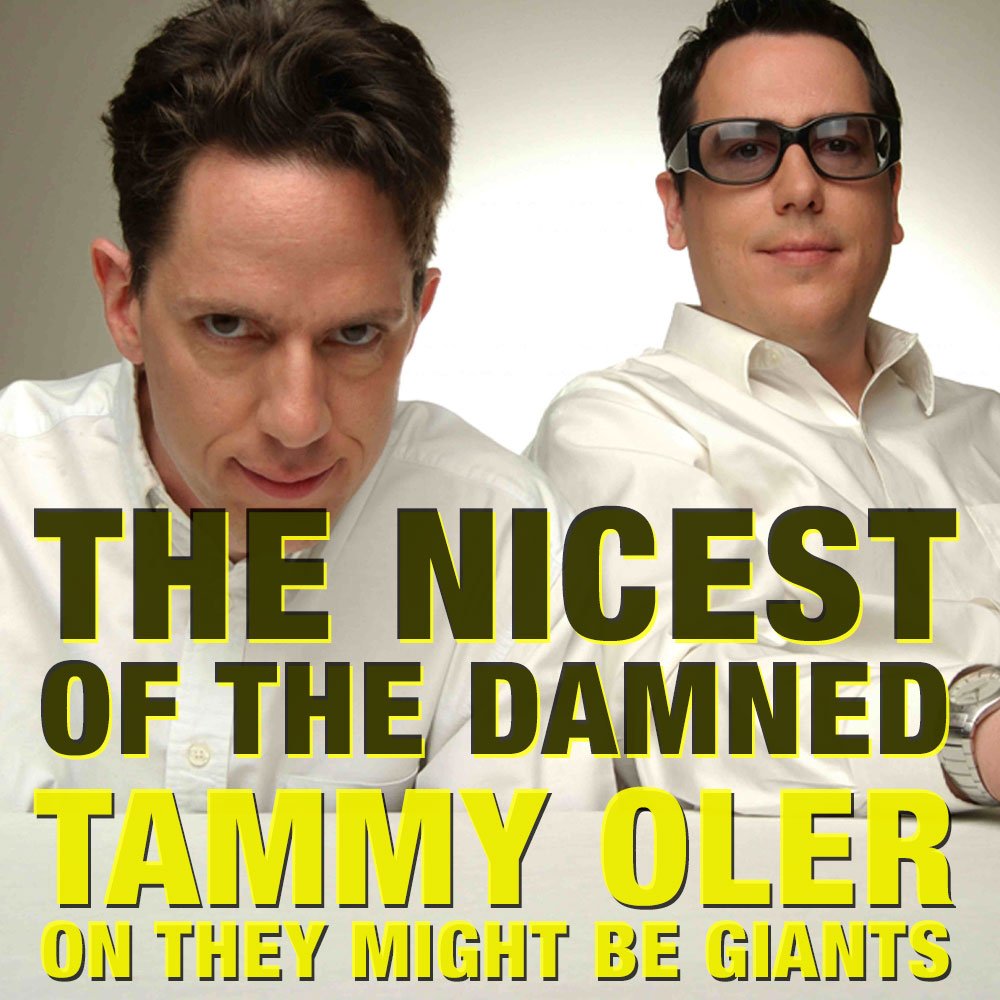
The Nicest of the Damned: Tammy Oler on “Road Movie to Berlin” and the Sadness of Now
How do you talk about the strange and terrible sadness of now? Not the events of now, but the feelings? I don’t have the words. But I know where I can find them, and they’re in the most unexpected of places: the final track on They Might Be Giant’s third album Flood.
We’re in a road movie to Berlin, friends, and we can’t drive out the way we drove in.
*
I mean this sincerely. “Road Movie to Berlin” is a surprisingly sad song. And it’s a strange and bleak coda to an album full of buoyant all-timers like “Birdhouse in your Soul” and “Particle Man,” songs that embody the unique ability of They Might Be Giants to explore depressing topics like disappointment, loneliness, and regret without actually bumming you out. I think “Road Movie to Berlin” is the saddest song they’ve ever recorded.
Fundamentally, all road movies are about transformation: a journey that liberates and changes you, even if you die in the end. But “Road Movie to Berlin” subverts expectations. As the song starts, we’re already on a road somewhere, and we’ve passed all the exit ramps. John Flansburgh's vocals are slowed down to a somber and ominous tone. There’s no way to turn back or turn off, and we’re not getting out of this by reversing course. This is a one-way, unmarked trip ultimately heading right into a wall. The Wall.
Flood was released in January of 1990, less than two months after the fall of the Berlin Wall. I was just a teenager when it happened, standing in my socks on the linoleum floor watching Peter Jennings reporting live from the Brandenburg Gate on our small kitchen TV. It was an electric feeling, seeing all the people gathered around the Wall, climbing on it, dancing. It was the first time I felt that I was truly watching history happen. I knew: the world was not the same as it had been the day before, and that was a good thing.
“Road Movie to Berlin” had been written before the Wall came down, and the song traded on the irrevocable fact that Berlin was a divided city. The asynchronous sadness of the song made it feel like it was from another time. I took my cassette tape of Flood with me on two trips I made to Berlin in the early 90s, where I felt like I was walking through the beginning of a new chapter. The whole place felt like a testimony to the upward trajectory of history, that ultimately we were only ever going to make progress. You probably won’t find too many people who think “Road Movie to Berlin” is the stand-out track from Flood, but it was such a curious artifact to carry around that it became unforgettable to me.
*
Now, though, it seems that the sadness of that 36-year-old song is sadly perfect for where we find ourselves. Revisiting “Road Movie to Berlin” helps me put words to the fresh grief that seems to get lodged in my throat each day. And the freshness of my grief reminds me of how asymmetrical sadness can be. The fears I’m feeling now have been a permanent condition for so many others.
“Road Movie to Berlin” pulls no punches, especially its second verse: “We were once so close to heaven / Peter came out and gave us medals / Declaring us the nicest of the damned.” Could there be a more piercing sentiment for right now? This is the source of the suppressed panic I detect in so many people, including those I’ve only known to be either clear-eyed or hopeful up to now: the fear that we will try our hardest, that we will do everything right, and it still might not save us. Despite our best intentions and all of our good works – despite the fact that we are right – we might not be able to fix this.
There’s an extra verse to the song that didn’t make it into the album recording, but the band will often play it live: “You said you were the King of Liars / And I believed you and called you sire / But I realize now that I have been deceived.” It adds a sense of betrayal, of being duped by the whole system, that makes the song even more prescient and unsettling.
I see people invoke history more and more at protests these days. History will judge you. History will not be kind. You are on the wrong side of history. I share those feelings, but I also think that looking to history is another way to cope with right now. Everyone I know is listening to history podcasts. We’re imagining a future in which our efforts will be recognized, a future in which better people will look back at this moment and agree that we were right. But we can be the nice guys and still be damned; any future vindication we might earn won’t save us from losing right now.
When I saw the Berlin Wall coming down, it reinforced a belief to me that history was a series of chapters that began and ended. Even the worst chapters ended, and we could emerge from them stronger, and then we still had so many more chapters to write. I’ve never thought that things would just work themselves out. But I’ve always thought that our actions, collectively and over time, would result in better, brighter chapters ahead. As a teenager, it seemed like there could be an endless number of these future chapters.
But I’m in my fifties now, a little less than a decade younger than the two Johns of They Might Be Giants, and I’m acutely aware that there is less time ahead of me than behind me. Thinking of future chapters offers me no solace. How long will this one go on? Will I actually get to see a brighter next chapter? Are we tilting into autocracy? I just don’t know. And that’s a very different answer than I would have given as a teenager, or even two years ago.
*
I’m pretty unbothered by our insignificance on a cosmic scale, and the idea of cosmic indifference comes up in a lot of They Might be Giants songs. But when I hear the lyrics “Time won't find the lost / It'll sweep up our skeleton bones,” I can only think of the human scale at the moment, and those words just press the point that almost none of us will be remembered, good or bad, no matter what we do right now.
This might sound like I’m saying that our actions don’t matter in the end. But what I really believe is that the end doesn’t matter to our actions. We do something now because doing nothing is simply intolerable. This is it, this is all we get, and we have to live with ourselves and each other while we’re here.
“Road Movie to Berlin” reminds me that the best I can do in the face of all this sadness and uncertainty is keep driving. If there’s any comfort to be found in this, it’s that we’re in it together. So take the wheel, and I will take the pedals.
Tammy Oler is a writer based in Brooklyn. Her work has appeared in Slate, Vulture, Bitch and Geek, among other publications. She maintains a newsletter of writing at buttondown.com/wishyouwerehere.