
sweet 16 game
(1) Celine Dion, “My Heart Will Go On”
vs
(13) Kristin Hersh, “Your Ghost”
Read the essays, listen to the songs, and vote. Winner is the song/essay with the most votes at the end of the game. If there is a tie, we will play a one-hour overtime (and repeat until we have a winner). Polls close @ 9am Arizona time on 3/18/26.
“Far Across the Distance”: melissa fite johnson on Experiencing “My Heart Will Go On” Then and Now
On a recent walk with my husband, we talked about nostalgia—why it’s powerful, how we each define it. In particular, I was processing why I often feel nostalgic for incredibly painful moments in my life, which feels especially strange since I’m so much happier now. I don’t wish to go back—at least not literally, if time travel were a thing. But I love keeping journals. I love documenting and reflecting and considering how I got here, wherever here is. And sad memories are often the most defining ones. Celine Dion’s “My Heart Will Go On” is a portal to the worst few months of my life. It’s also one of my favorite songs. Both things are true at once.
In 1998, I saw Titanic twice in the theater. The first time was in late January, when the film finally came to the theater in my small Kansas town. In my journal from that year, I called the process of standing in line for hours to buy tickets with my friends “an adventure,” complete with elaborate plans to buy tickets to Spice World and switch theaters if it sold out. We made a whole evening of it—dinner at the Mall Deli, trying on dresses at Maurices, stuffing tickets from arcade games into our purses. Then we had to stand in line again to get good seats—there were twelve of us, and we took up a whole row. Even though we knew the movie would be heartbreaking, we were wild with excitement. We’d come prepared with travel tissue packs; we were looking forward to crying through Titanic the way we’d looked forward to shrieking through Scream and I Know What You Did Last Summer. Secondhand emotions, so satisfying and safe. We were young and invincible. Nothing could touch us.
The second time was in mid-March with my new boyfriend. In my journal, I wrote that Titanic “was actually sadder the second time around. It was nice to sit next to [him]—he stroked my arm until I felt better.” He and I were together for only two weeks, and later he told his friends we’d only been hanging out, not going out. He didn’t know why I thought it was more than it was, even though we went much farther sexually than I was ready for. In my journal, I wrote, “We hung out in his room. We talked a lot, which was nice. Then we did some things—I can’t quite decide if I should view them as being shameful or beautiful.” It wasn’t pressure so much as praise that lowered my defenses. Because of Titanic and movies like it, I believed in love that took only a few days to bloom. I wasn’t wary of grand statements like “Rose, you’re the most amazingly astounding, wonderful girl—woman—that I’ve ever known.” When this boy told me I was beautiful and that he’d wanted to kiss me for a long time, I’d been waiting my whole life to hear something like that. I was ready to open myself to whoever said it first. After he broke up with me, he told his friends he’d only hung around me because I was stupid and easy and had big breasts.
And then on April 3, my father died, an event that should be unrelated to that boy and Titanic, but it all feels like one memory. One soundtrack—“Near, far, wherever you are,” a lyric that meant a lot because I wasn’t sure about religion or heaven. One regret, that I’d wasted the last weeks of my father’s life pinned beneath this boy who thought so little of me. When I try to conjure that time—relive it more than remember it—I am walking the halls of my high school, wearing an oversized hoodie so no one can see my body, hoping no one brings up my father because I can’t talk about him without crying. I am sixteen.
In a late 90s talk show appearance, Celine Dion addressed her tendency to beat her chest with her own fist at the climax of her songs: “When I sing sometimes, I get emotional and I hit myself—I don’t know why! I don’t know why I do that.” She hit herself especially hard during her Oscars performance, spooking her heart of the ocean necklace right off her chest. I watched that moment in my childhood living room with my dad less than two weeks before he died.
I’ve been thinking a lot about that—emotion and violence, emotion and pain. I am trying to understand why I love a song that I so associate with the end of my father’s life and the worst few months of mine. It’s nice to remember him, and maybe that’s all it is. That’s such a simple, normal explanation. But maybe I’m still the girl who finds a strange pleasure in sadness, even when it’s real, even when it transcends a radio or screen. Don’t all of us sometimes put on an album or movie expressly because we know it will make us cry? Don’t we read through old journal entries documenting our most gut-wrenching memories? We know it will hurt, but the hurting reminds us we’re still here.
In my journal, I wrote, “That night, at home, Dad began complaining that he was having trouble breathing. After a while he asked me to call 911. An ambulance came and they took Daddy to the hospital. He was crying and they gave him oxygen and it was horrible. In the ER they said they thought he’d had a heart attack.”
He didn’t die that night. I took Mom’s car and got McDonald’s for her and me, and we ate it in the hospital waiting room. He died two nights later, after being moved from ICU to a regular room. Since he seemed to be doing better, I took a break from the hospital to go to the movies with my friends.
In my journal, I wrote, “When I left he’d been having a little trouble breathing, but he said he’d be OK. I kissed his forehead, told him I loved him, and I never saw him again.”
My friends and I didn’t see Titanic the night my father died, though it was still playing, of course. It played in theaters for nearly ten months. It’s hard to explain to my students, who are the age I was when it came out, how much of a phenomenon both the film and the song were. Halfway through 1998, “My Heart Will Go On” was already considered the most played song of the year. In this era of streaming movies at home and everyone making their own playlists, it feels to me like there aren’t as many unifying pop culture touchstones, the things that will remind everyone in the same age bracket of a certain winter or spring.
Maybe to test this theory, I asked a few students what they consider their generation’s version of “My Heart Will Go On,” their version of Titanic. Their answers were fantastic but totally varied, which makes me think there really isn’t a contemporary equivalent. For songs, they brought up My Chemical Romance and Billie Eilish, both of which feel appropriately dramatic, and one student suggested Adele, which I think speaks to a respect for Celine Dion’s powerhouse voice. For films, they mentioned Downton Abbey for its attention to class systems, the Bollywood movie Saiyaara for its love story, and Pirates of the Caribbean “because it’s ocean related.”
I also asked my students whether they thought Titanic and “My Heart Will Go On” were more romantic or sad, and they were all torn. One student called them “sad but cute”; another, “romantic with a hint of sadness.” Finally, someone found the word “bittersweet,” which might capture the spirit best of all.
Last summer, I was surprised that “My Heart Will Go On” wasn’t on the longlist of options for this tournament because it was considered more romantic than sad. I’d thought of the song as sad for so long, it was hard to think of it as anything else. However, it’s true that the first image that opening flute solo prompts—universally, I think, though usually I speak only for myself—is undeniably romantic: Jack and Rose on the bow of the ship, homecoming dance pose, his hands on her stomach, her hands covering his, her engagement ring from another man glinting in the sunlight, their faces close in anticipation of their first kiss. But it’s also true that the song makes me cry every time I hear it.
As I’m always telling my students, two things can be true at once. In another favorite romantic movie of mine, Before Sunset, Ethan Hawke’s character discusses an idea for his next novel: “I’ve always wanted to write a book where the whole thing happens within the space of one pop song.” He describes a scene from his would-be protagonist’s life, where his young daughter is dancing to a song on a table, and then a scene from his past, where his first love climbs onto his parked car and dances to the same song. The protagonist somehow understands that he is not merely being reminded of the past; he is there, and he is also in the present with his daughter. He is living both moments simultaneously.
I married a man who also saw Titanic more than once in the theater—a different theater, in a town not so far from mine. He held some other girl’s hand. Knowing him, he wasn’t dreaming of her or me or anyone to complete his life. He was already firmly himself; he loved pro wrestling and sketch comedy and alternative rock. He wasn’t an obvious romantic. Even so, he fell in love with the movie, and with “My Heart Will Go On,” as much as I did. And though he’s hilarious and sarcastic, there is nothing ironic about his love for these things. There’s a story his cousin loves to tell about how he got drunk one night and insisted she drive him to Walmart so he could buy the Titanic soundtrack, a double cassette. In the morning, his roommates played it to coax him awake, and he refused to be embarrassed. He stood by it, then and now.
My husband and I didn’t know each other when the movie came out, or when that song poured from every teenager’s car radio. But the fact that we both loved them fervently when we were young has informed our relationship since it began in 2003. He and I once waited to leave a hotel room one morning, for wherever we needed to be, because the end of Titanic was playing on cable. We’ve seen the movie together in the theater twice—in 2012, for the 100th anniversary of the ship’s sinking, and in 2023, for our local theater’s tradition of luring in our generation with beloved movies from our youth. We’ve been to three Titanic exhibits—two at Union Station in Kansas City, and the Titanic Museum Attraction in Branson, MO. And we’ve seen Celine Dion in concert; our sole reason for going was to hear “My Heart Will Go On.” Celine did not disappoint. She came out dressed as an iceberg, billowing white layers everywhere. My husband and I clutched each other and sang. We were both crying, but we were so happy. We couldn’t believe how lucky we felt not to know such sadness anymore. So maybe it’s true, the song is more romantic than sad—or at least maybe it’s finally true, true now as I’d wished it were then.
Celine Dion’s “My Heart Will Go On” is a time capsule of an incredibly sad time for me, but it isn’t only that. The story of my life does take place during the length of one pop song—this pop song. When I hear it, there are two of me, “far across the distance and spaces between us.” Two of me existing at once. I am walking my high school halls in an oversized hoodie, devastated and aching for my father. And I am beside my husband in the theater, final credits rolling. He and I turn to each other, not sure how embarrassed we should be by our red eyes and wet cheeks, this song soaring almost ridiculously behind us.
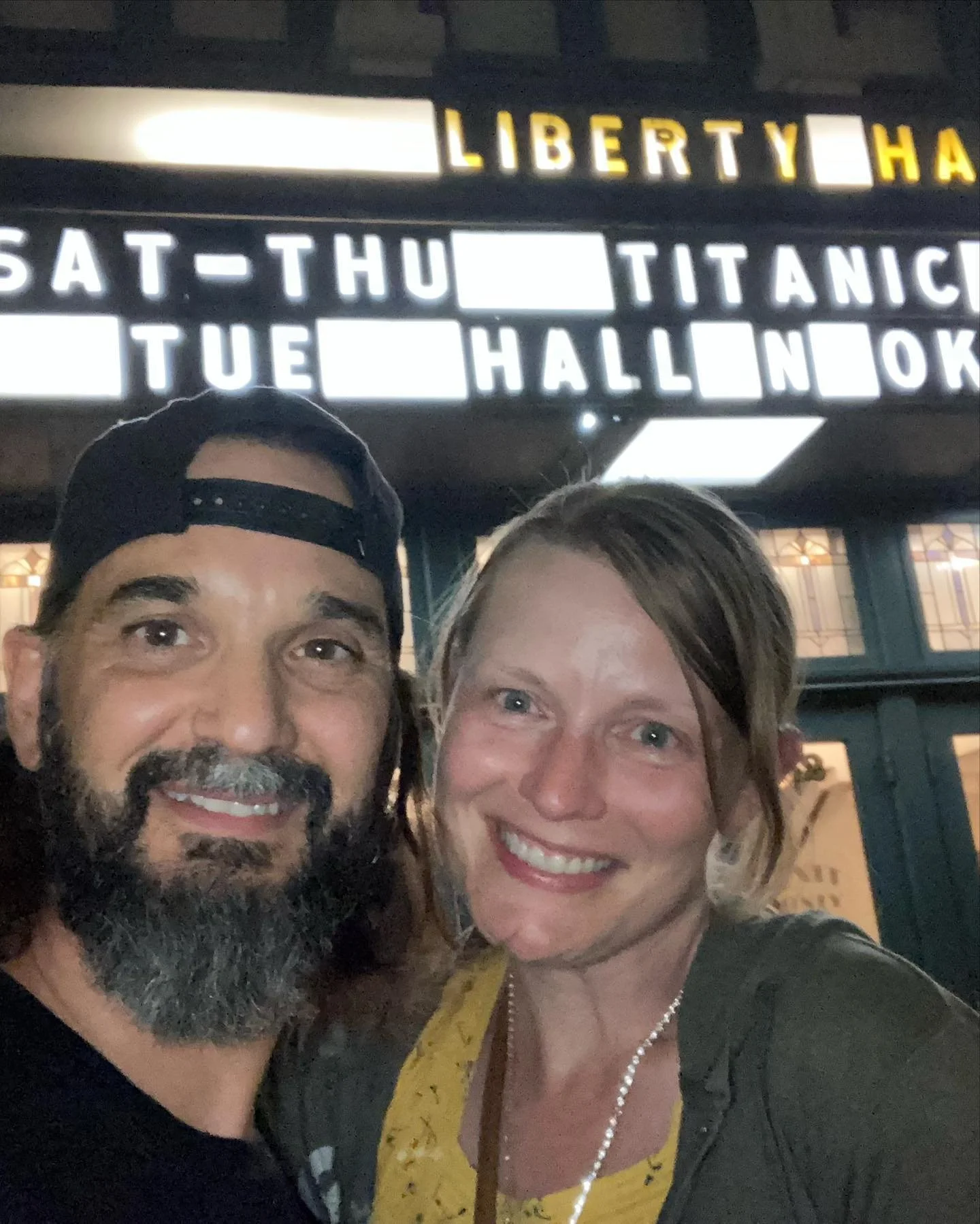
Melissa Fite Johnson is the author of three poetry collections, most recently Midlife Abecedarian (Riot in Your Throat, 2024). Her work has appeared or is forthcoming in Ploughshares, Pleiades, Southern Review, HAD, Ilanot Review, Poet Lore, DIAGRAM, and elsewhere, and has received a special mention for the Pushcart Prize. Melissa, a high school English teacher, is a poetry editor for The Weight Journal for high school students. She and her husband live with their dogs in Lawrence, KS.
annie zaleski on kristin hersh’s “your ghost”
On April 22, 1994, Kristin Hersh appeared on Late Night With Conan O’Brien. Conan introduces her as a housewife and a mother of two “who also happens to be the lead singer of the band Throwing Muses.” (Turns out the 1990s were not quite as enlightened as we might have thought.) Sitting on a high stool with her legs crossed, she proceeded to perform a languid version of her current single “Your Ghost.”
This take is much slower than the one on her debut solo album, Hips and Makers. Hersh plucks each guitar chord deliberately and sings as though she’s in a trance, even moving her head in a circular motion in rhythm with the music. The melancholy in her voice stings like an icy wind on exposed skin.
Released several months before this performance, Hips and Makers was a far cry from Hersh’s plugged-in electric work with Throwing Muses, the band she’d fronted for a decade. Hersh wrote and recorded Hips and Makers in a horse stable near her house, co-producing the record with Lenny Kaye. The music she made was sparse and cutting, dominated by intricate acoustic guitar and occasional meditative cello from Jane Scarpantoni. The album demanded attention, as Hersh vacillated between delicate compositions like “Your Ghost” and ones with more heft; “A Loon” and “Sundrops” especially resemble ornate folk-punk.
Nevertheless, Hersh didn’t plan on using these tunes—which she wrote for her then-husband/then-manager Billy O’Connell—to launch a solo career. To hear Hersh tell it, Hips and Makers was a fluke. “I was taken entirely by surprise by this record,” she said with a laugh in an early 1994 interview. “It wasn’t my idea. It was my husband’s. And it took years of convincing on his part to get me to take it seriously as a genre.
“The effect of acoustic instruments is so muscular, so physical,” she added. “You don’t have to go through any cords and amps and pickups and buttons and lies before you get there.”
Appropriately, Hersh searched far and wide for the perfect acoustic guitar to suit Hips and Makers. "I didn't want my record to have a shuffling, percussive sound or a wimpy Celtic approach because that's not what my songs are about,” she told Guitar in 1994. “Some blues lines sound really great on a bright kinda guitar like a Guild but I needed so much more than that as I had so many involved parts to play.
Hersh finally found her desired instrument in the attic of a music store in Kansas after the owner gave her a “tiny, beautiful guitar” made by an Austin, Texas, man named Bill Collings. “I played one chord and choked up – there were tears in my eyes!” she continued. “I couldn't believe how wonderful it sounded and I knew that I had to have one." Collings ended up making her a custom model.
Thanks to her discerning eye (and ear), the guitar tone on “Your Ghost” is particularly exquisite, like honey-gold rain. The song’s arrangement is also precise: With methodical patience, Hersh vacillates between wary minor chords and cliffhanger major chords, creating depth out of simple strums. Calling it folk or acoustic rock doesn’t feel quite correct; instead, it feels like something slightly antique, slightly mystical.
I’ve been on a huge Throwing Muses kick since early 2025, as the disquiet lurking beneath the surface of the band’s music captures how I’ve felt in the last year: rattled, unsettled, uneasy. My love for the band stretches back decades and encompasses the group’s many complexities. I’m forever drawn to the musical tension between beauty and sadness, turmoil and tranquility, chaos and contemplation. And as a vocalist, Hersh exudes fragility and strength—a weary but resilient character who feels everything intensely.
Like many 1990s kids, I fell in love with Throwing Muses via their 1995 album University, which arrived in a post-Nirvana world when weirdos and misfits had a mainstream platform. I was so entranced by the bouncy, bracing “Bright Yellow Gun” that I bought the whole album with one of my hard-won Columbia House record club selections. The rest of University also resonated with me, with striking moments such as “Shimmer” and “Teller” existing alongside more otherworldly moments such as the delicate “That’s All You Wanted” and hypnotic “Crabtown.”
University arrived roughly a year after Hips and Makers. As it turns out, the two records are inextricably linked. In an interview that aired in January 1994, Hersh noted that Throwing Muses were in the studio in New Orleans recording. “Ironically, the acoustic project has given the Muses a lot more time to work on their record,” she said with a laugh. “It’s become a very carefully done project, when [you’re] usually pushing yourselves to get product out. Now we have time to sit with it and make sure that it’s perfect.” A Billboard article, meanwhile, noted that the band had actually finished University the previous year.
Although polished enough to land on the radio, the latter didn’t sound overproduced or labored over. Hips and Makers also sounded raw. Lyrically, however, Hersh told an interviewer the subject matter of these songs didn’t diverge markedly from her past work; it was how she delivered the lyrics that differed.
“I don’t think that it’s strikingly more personal than the Muses songs, just more invitingly personal instead of aggressively personal,” she told an interviewer. “I’m not screeching so much. And there’s so much silence and space around it. It sounds like you walked into someone’s bedroom.”
Accordingly, Hersh told HITS in 1994 that she wrote “Your Ghost” in Scotland, after a late night drinking whiskey in a bar with her bandmates, roadies and others. “I had never done that before,” she confessed. “So we were up until 4 a.m. and when I went upstairs, I was just burning and pacing and I couldn’t sleep.”
The way she describes the arrival of “Your Ghost” is magical. “I threw open the windows and this huge moon came shining in, as goofy as it sounds. Well, I’m not one to start thinking, ‘I must write a song. I’m an artist with a capital A.’ Actually I just thought, ‘I’m never going to drink whiskey again.’ But I grabbed some stationery and wrote down all the words to ‘Your Ghost’ and what I thought the chords would be. And when it was done, I shut the windows and cooled down.”
“Your Ghost” might be considered the inverse of Kate Bush’s “Wuthering Heights.” On the latter, the ghost Cathy floats through the night until she reaches Heathcliff and begs him to let her in through a window. She’s on the outside looking in, asking to be back into his life.
In “Your Ghost,” however, a restless Hersh wants companionship. Awake in the middle of the night, she’s haunted by the silence in her house and doesn’t want to be alone with her thoughts. Instead, she imagines a comforting fantasy: dialing up her ghost—referred to simply as “you”—and calling and calling until they come to visit her. Delightfully, Hersh narrates this reunion, describing a lively presence (“Let him walk down your hallway, it's not this quiet”) and fanciful movements (“Slide down your receiver, sprint across the wire”) that end in solace and connection: “Follow my number / Slide into my hand.”
Unfortunately, this happy reconciliation is fleeting. The lonely pre-chorus imagery (“It's the blaze across my nightgown/It's the phone's ring”) represents moonlight and the sound of the phone, two sharp reminders of this spirit. As Hersh sings these lines, Jane Scarpantoni’s cello eases into the mix, amplifying the emotional ache in long, low strokes. And then comes the chorus, the line “I think last night you were driving circles around me” repeated multiple times. It’s a disorienting admission, as if Hersh isn’t quite sure she encountered her ghost. Did she sense their presence? Or was that the night talking? Did the visit actually happen?
The second chorus reinforces the end of this pleasant fantasy. She can’t go on with her life—or start her day—until she tucks her memories away (“I can't drink this coffee till I put you in my closet”) and she unfairly chastises herself for giving into her nostalgia: “I take it from his whisper/You're not that tough.”
Hersh is much too hard on herself. After all, missing someone is disorienting and confusing; grief can pop up when we least expect it. But it’s comforting to think that someone we love is just a phone call away, even in the afterlife, and that we can summon them at will to come visit. Giving into fond memories isn’t a sign of weakness; instead, it’s a way to keep someone alive.
I can’t remember where I first heard “Your Ghost.” Maybe it was on the late-night MTV show 120 Minutes, which played all the cool alternative videos. According to statistics, the “Your Ghost” clip aired once in February 1994, on the same episode Hersh contributed a fierce live acoustic version of “Sundrops.”
It’s more likely I heard “Your Ghost” on the radio, either in Cleveland or on the modern rock station in St. Louis, a city I visited frequently in 1994. Colloquially known as 105.7 The Point, this station was forward-thinking and open-minded. Archival playlists show that the station had “Your Ghost” in ultra-heavy rotation, alongside Morrissey, Material Issue, Soundgarden, Crowded House, Sarah McLachlan, and Enigma.
Either way, teenage me would have sought out “Your Ghost” because Michael Stipe was on it. In 1994, I was at the height of my R.E.M. obsession and needed to hear absolutely everything even tangentially associated with the group.
I had been profoundly moved by the band’s 1992 album Automatic for the People. At that point in my life, when nothing but possibility loomed ahead of me, I didn’t fully understand R.E.M.’s ruminations on mortality, grief, politics, and restlessness. But these songs stirred something in me and made me think bigger. One of the first album reviews I ever attempted was on Automatic for the People. I didn’t know how to be a music critic (or a writer, for that matter) but I felt compelled to articulate why these songs mattered so much to me.
As it turns out, Hersh was also drawn to the way Stipe instinctively used his voice to access deeper truths. “I just heard his voice in one of my ears, and ‘Your Ghost’ being played in the studio in the other,” Hersh said in an interview. “Suddenly I knew what could save the song: ‘Michael, would you sing on this song? I think it would save it.’”
Much to Hersh’s delight, Stipe was game to collaborate. “He has an unbelievably beautiful, deep voice at the same time as it whines in high tones,” she continued. “It flies around. I had already tried to save the depth in the song with a low thundering drum, a big marching drum that sometimes roars out below it all. It sounded very experimental until Michael sang. His voice balanced all these fragments from the drum and the cello at the same time as it introduced a certain character into the song.”
Stipe’s contributions do indeed add new wrinkles to the spirit visit. He’s the titular ghost, conspiratorial and wise. He first emerges during the chorus, shadowing Hersh as both sing the lines “I think last night you were driving circles around me.” Turns out she wasn’t imagining this ghostly presence; instead, she and the phantom are in lockstep. Vocally, Hersh and Stipe also sound perfect together, their twin murmurs unified by shared memory and sadness.
On the second runthrough of the chorus, “Your Ghost” has a breakthrough. Stipe repeats the line “You were in my dream” on his own, in a voice that cracks with need and longing, as Hersh chimes in with “I think last night,” before both agree: “You were driving circles around me.” The lyrical shift is poignant. Hersh isn’t the only one thinking of her ghost. Her ghost also thinks of her. Everything she’s imagining is true, and their connection survived into the afterlife. Despite singing slightly different lines, they always converge at the same place. “Your Ghost” is bittersweet, sure, but comforting rather than isolating.
Of course, Hersh never gives a firm description of who this mysterious “you” is to her; instead, this apparition is whoever we need it to be. But in an interview with Billboard, she had a much different take on the meaning of “Your Ghost,” one that wasn’t quite so morose. "When someone dies on you, it's hard to think, ‘How nice,’” she said. “But when you're used to them not being there, you have another angel, another ghost there with you. That's a sweet way to think of it."
In an odd footnote, Hips and Makers also functioned as a reverse olive branch of sorts, created so Hersh could cut ties with her then-label, Warner Bros. “I bought myself out of my contract by trading them my first solo record for my freedom,” she said in one interview. In other chats, she was even blunter about the transactional role of Hips and Makers, and how releasing that and University did indeed free her from her record contract.
“I had already said to [the label], ‘Look, I’m never going to give you bimbo product. Let us go and I’m out of here,’ and their response was, ‘No, it doesn’t work like that. We’re going to destroy you instead,’” she said.
“So I offered them a solo record, thinking that they were never going to allow it. I mean, they didn’t like my band so why would they like one-third of my band? When they said okay, I thought they were just being nice or feeling sorry for me or something. I didn’t honestly think they were going to release it. Why would they? I mean, if you listen to it, it doesn’t make any sense.”
Incredibly, Hips and Makers made sense to a lot of people. The album peaked at No. 7 on the UK albums chart and No. 1 on an indie albums chart. In America, it became Hersh’s highest-charting album yet, reaching No. 10 on Billboard’s Heatseekers chart and No. 197 on the overall albums chart. “Your Ghost” appeared on the With Honors soundtrack, four songs after Madonna’s blockbuster megahit “I’ll Remember,” and became a No. 1 hit in Iceland of all places.
“Your Ghost” has had a very long tail, with covers performed by The Dandy Warhols, Damien Rice and Greg Laswell, among others. In the mid-2000s, Hersh also re-did “Your Ghost” with her band 50 Foot Wave, transforming the song into a doomgaze elegy scratched with sunburned guitars and noisy distortion.
At first, Hersh sounds like she recorded her vocals underwater. However, as the song crests to the end in a tangle of metallic chaos, she starts howling like a possessed banshee with strep throat. The quiet grief of the original has festered into something feral and raw, like an angry blister that keeps coming back. Perhaps the porous connection between the living and the dead calcified, or maybe the passage of time dredged up other emotions.
In the end, perhaps “Your Ghost” represents the unique experiences that haunt your own life—the losses, the loves, the grief, the happiness. Over time they might evolve from benign phantoms into angry apparitions (and back again) but they are never very far away.
“It’s simple without being simplistic,” Hersh said in 1994 to describe the song. “My songs aren’t usually that specific. I believe your life’s experiences make chemicals in your body that have to match the chemicals in the song so that the song can almost inject you with something that feels like a color or chemical shooting through you and only then do you qualify as the singer of that song. My life experience plays a huge part in these songs, but I don’t think they’re stories about me. Everybody I’ve ever lost is in that song.”
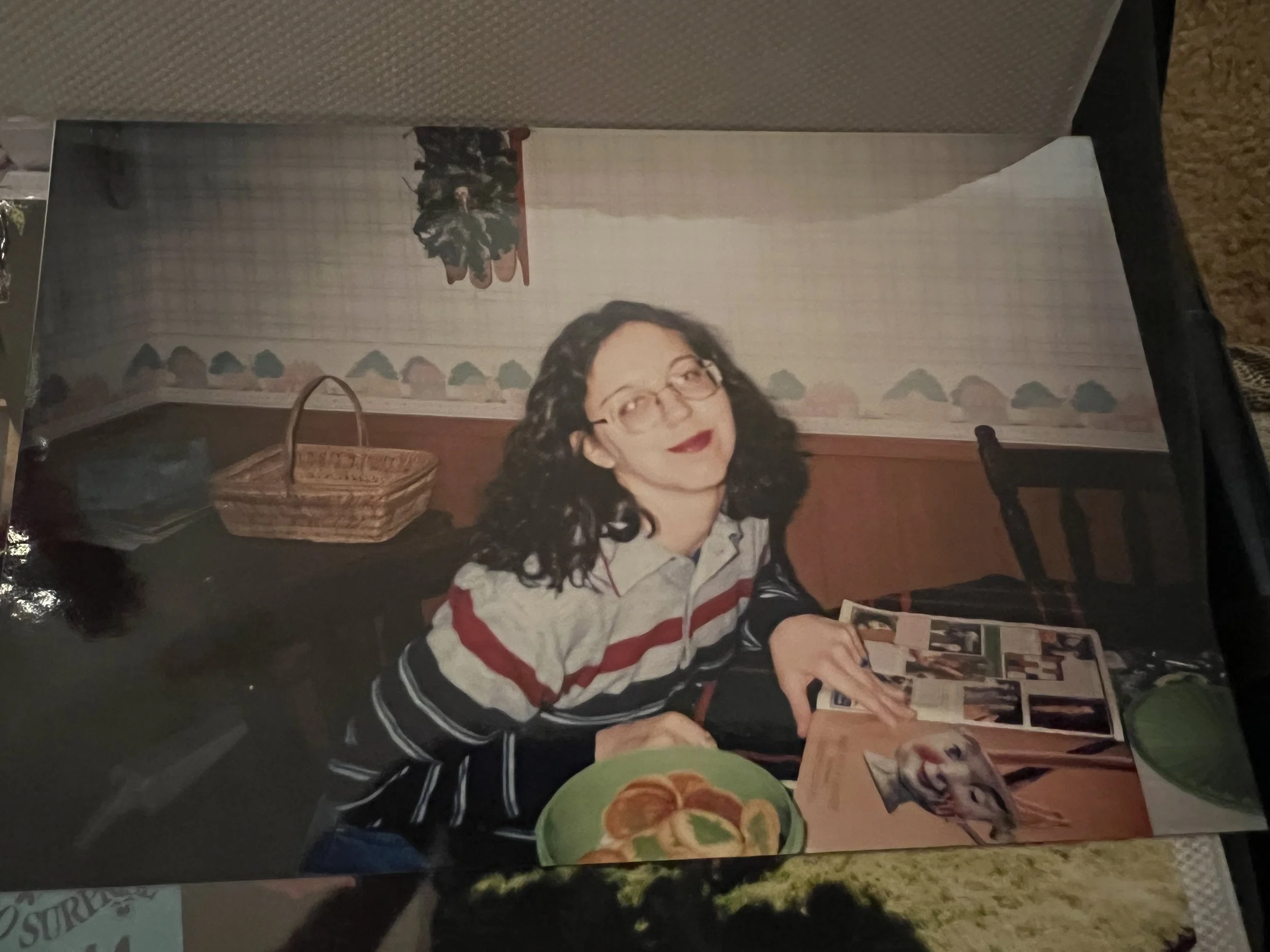
Annie Zaleski is a New York Times best-selling author, journalist and editor with work in Rolling Stone, NPR Music, The Guardian, Variety, The Los Angeles Times, Stereogum, Salon, Billboard, Classic Pop, and Record Collector.
I’m also the author of Taylor Swift: The Stories Behind the Songs and Beyoncé: The Stories Behind the Songs, as well as a 33 1/3 book on Duran Duran’s Rio; the illustrated biographies I Got You Babe: A Celebration of Cher; Lady Gaga: Applause, Pink, Raise Your Glass, and Harry Styles: A Sign of the Times; and the music history books This is Christmas, Song by Song and We Found Love.
I’ve also contributed essays to multiple books, along with liner notes to the 2016 reissue of R.E.M.’s Out of Time, and reissues by Game Theory, ZZ Top and Jason Mraz. Additionally, I was commissioned by the Rock & Roll Hall of Fame to write induction essays for Duran Duran, George Michael, Cher, and Cyndi Lauper.