

sweet 16 game
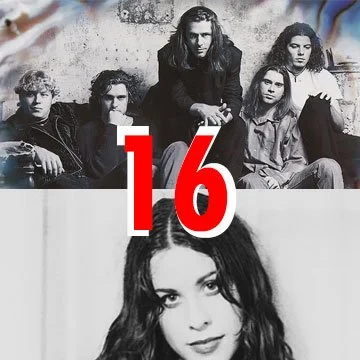
(6) Collective Soul, “The World I Know”
vs
(7) Alanis Morissette, “Uninvited”
Read the essays, listen to the songs, and vote. Winner is the song/essay with the most votes at the end of the game. If there is a tie, we will play a one-hour overtime (and repeat until we have a winner). Polls close @ 9am Arizona time on 3/19/26.
DON’T KNOW WHAT GOOD FEELS LIKE UNTIL YOU FEEL BAD: JAMES CHARLESWORTH ON “THE WORLD I KNOW”
[EXT. JERSEY CITY – EARLY MORNING]The Colgate Clock in the pre-dawn gloom. A mournful dirge on acoustic guitar. A harried BUSINESS MAN in suit and tie checks his watch as he trudges along a chain-link fence backdropped by the Hudson and the skyline of lower Manhattan. Through his eyes we rise from a subway station into the steel canyons of the city, its windblown sidewalks and sewer grates. At a bodega, he procures a plain bagel and a steaming coffee.From his place on the periphery, where he’s been eying the Business Man with a pensive sort of curiosity, ED ROLAND, lead singer and songwriter of Collective Soul, gazes earnestly into the camera and, his long hair lifting in a slight breeze, begins to sing.ED ROLAND (singing)Has our conscience shown?Has the sweet breeze blown?*
In the fall of 1994, on an afternoon his newly famous band had been flown by private jet to New York City at the behest of NBC to perform as live musical guests on Late Night with Conan O’Brien, preacher’s son Ed Roland stepped outside a midtown hotel room and went for a long walk up and down Broadway. As usual, he had the beginnings of a song in his head.
“It was a different New York City then,” he would remember later. “There was still some grit and dirt… especially around Times Square and Union Square. There were homeless people living in cardboard boxes. Then somebody pulled up in a limousine with a fur coat on and walked right by.”
It’s easy to picture him, tall and traversing the city in the trench coat he dons for the video, long hair ablow across his drawn equine face, a handsomeness that will one day make him pop up on Playgirl’s annual list of the sexiest rock stars. But in the video he looks less like a sex symbol and more like some prophet or professor or wiseman, this son of a Baptist minister and Elton John devotee who has always insisted on “the separation of Church and rock ‘n’ roll,” but whose songwriting style is undeniably laced with the spiritual, woven with references to heaven and littered with allusions to guiding lights and paced with the rhythms of a church choir. When Ed Roland was fifteen, he was in a car accident that killed his best friend; when he was twenty-three, he lost his other best friend to a heroin overdose; for a full decade he struggled to find his place in the music industry before finding massive success almost accidentally at the age of thirty. If nothing else, the man who strode those streets and avenues of Midtown that day was one attuned to the highs and lows of the world, the struggles and redemptions that contour our lives and give them depth and meaning.
“I took a two-hour walk,”—he would say later of the day he wrote the song that would become his band’s second biggest hit—“and just absorbed and observed from the highs and lows of what society was offering the greatest city in the world. I was looking at what the good was [and] what the bad was. But also, you don’t know what bad feels like until you feel good. You don’t know what good feels like until you feel bad.”
*
[EXT. MANHATTAN – MORNING]The Business Man waits in line to board a bus. Preoccupied with his copy of the Times proclaiming headlines of despair (“War Victims; Camp Children Starve”), he fails to notice a woman next to him begging for change.ED ROLAND (singing V.O.)Has all kindness gone?Hope still lingers on...From his seat on the bus, the Business Man observes as the woman turns and trudges off. He winces, and his face shifts toward the camera, eyes meeting ours as if imploring us to absolve him of his guilt.ED ROLAND (singing V.O.)I drink myself of new-found pity...*
I was drunk the first time I saw the video for “The World I Know.” Not the festive carefree drunk you see glamorous actors pantomiming in movies; not the vividly and artistically rendered fever dream drunk you read in certain books. Rural central Pennsylvania: October 1995. At the height of Collective Soul’s fame, I was an eighteen-year-old part-time pizza delivery boy living at my parents’ house, unenthusiastically enrolled in my first semester at the local branch campus of the state university, and on the day in question I had skipped my Friday afternoon classes with a couple friends to drink a case of Stoney’s at one of the friends’ father’s house while he was at work. The Stoney’s was a rare splurge. Typically in those days we subsisted on forties of Silver Thunder malt liquor that could be procured for $1.25 and tasted like gasoline with a pound of sugar poured in, or glass flasks of fortified wines like Cisco or Mad Dog 20/20. I don’t remember what the impetus was for the Stoney’s: one of us must have aced a test, or more likely failed it (my major was D.U.S., i.e. Division of Undergraduate Studies, i.e. I’m mostly here for the parties). What I remember about that afternoon, as I sat on the couch watching the opening frames of the video, was thinking “ugghh jeezus, fucking Collective Soul…”
I was not a Collective Soul fan. It wasn’t necessarily that I hated their music: they had some pretty cool guitar riffs, and at least one of my friends was the owner of their self-titled second album, which had come out earlier that year. It was more that something about their music struck me as—how do I put it?—too mainstream for my taste. Maybe a little too uplifting? In the aftermath of the dissolution of grunge I had returned to my metal roots and was passing through the doorways of Green Day and Rancid into more obscure hardcore melodic punk rock. All I knew about Collective Soul was that they were a Christian band (they’re not) and that their song “December” from earlier that year was hotly rumored to be “about a blow job” (it’s not).
Probably my dislike for Collective Soul was rooted in something else entirely: a manifestation of internal anxiety that had something to do with low self-esteem, something to do with the insecurities of adolescence: an unwillingness to look unguarded emotion in the eyes combined with a mistrust of anyone who purported to have found something that made them feel less lonely and uncertain. It was this same anxiety that had made me turn to alcohol. I’d started drinking in my mid-teens, somewhere around the time I began to realize that the thing that was holding me back was this nervous stress that shuddered through my body like an electric current anytime I found myself in social situations. Best I could tell, the kids I saw with bottles of Icehouse or Red Dog or Zima or Mickey’s wide mouths in their hands seemed not to suffer from this affliction. I crossed the threshold with reluctance and fear—I’d heard stories all my life of family members who’d struggled with alcohol, stories told in the guise of humor but always underneath I could sense the warning—and then from the first sip these admonitions were forgotten and my life with alcohol became a long straight road with a series of green lights turning yellow that I had to accelerate through, the pedal floored so I could make it before those red lights of my reservations and my guilt arrived.
That was my situation on that day I sat on the couch at my friend’s dad’s house watching the video for “The World I Know,” three years into an entertainment that had become a habit that had become a dependency. Picture me there: dingy flannel shirt and loose jeans, feet up on the coffee table and watching obliviously as the morose Business Man in the music video navigated the day-to-day drudgery of his morning commute. Years later, after I’d left home and embraced a new identity as a grad student studying creative writing at a liberal arts school in Boston, I would have been quick to identify these opening scenes with the world-weary Business Man as an easy example of what we liked to call a Last Chance to Change Story: a moody tale of a protagonist mired in a mournful state of mind, clearly on his way to some reckoning or epiphany or catharsis that would confront him with the opportunity to face down his ennui and his angst and his malaise and either find a way to overcome it or succumb to it.
But on that day in October ’95—half-drunk, my GPA hovering around a 2.0—I lacked the perspective to identify such narratives, let alone recognize them in myself. Picture me: clad in my backwards baseball cap and clutching a brown Stoney’s bottle. The world I knew was so small then, not much larger than the ten-mile radius stretching from my parents’ house to the local branch campus of the state university. What did I understand, back then, about last chances to change?
*
[EXT. MANHATTAN – MORNING]ED ROLAND (singing)All the words that I’ve been reading /Now have started the act of bleeding into one...The newsprint blurs as the Business Man’s eyes fill with tears. In broad daylight on a city street, he weeps. A metal fire escape scales a yellow brick brownstone, and it is at its base that he tosses aside the newspaper. Halfway up the ladder of the fire escape, he discards his briefcase, its contents spilling out upon the concrete sidewalk. He pulls off his suitcoat and sends it parachuting down...[EXT. ROOFTOP – MORNING]Alone, surrounded by the city’s anonymous rooflines and water towers, the Business Man spins in a rotating spiral of grief, raises his palms to his face while his tears roll down.*
In the summer of 1993, the band that would become known as Collective Soul, which was not really a band at all at that point, released its debut album, which was not so much an album as a collection of demos conceived and recorded largely by one man in the basement of his home in Stockbridge, Georgia. At thirty years old, Ed Roland had by this point mostly given up on his dreams of rock stardom. After fronting a series of bands in the Atlanta underground scene to middling success, he had settled on this last-ditch effort of throwing together a demo tape and putting it out on a local label in the hopes of selling the publishing rights.
The story likely would’ve ended there, were it not for a DJ at a college radio station at Georgia State University in Atlanta who took a shine to the opening track—which happened to be called “Shine”—and put it into regular rotation. The song itself was a bit of a curiosity: with its droning drop-D guitar riffs and shifting dynamics and healthy dose of Eddie Vedder-style yarling in the choruses and the double-time outro (“Shine on meeheeheeya! Meeheeheeya!”), it was nothing extraordinarily new per se, but there was a certain novelty in the delivery, a freshness in the combination of influences. Within days, it became the station’s most requested and most played song, and when station management contacted Ed Roland to see if his band could play some local shows, he accepted—despite the fact that he did not have a band—and then cobbled one together consisting of his little brother and a couple other musicians who’d contributed to the demo and a friend or two he knew from cub scouts and little league baseball. Other radio stations around the south picked up the song and experienced similar overwhelmingly positive reactions, and as the calendar turned to 1994, “Shine” rose up the Billboard charts so fast even Atlantic Records could not ignore it. They signed Collective Soul, rereleased Ed Roland’s basement demo without even bothering to remaster it or update the chintzy cover art, and sent the band on a year-long cross-country tour opening for Aerosmith. They secured them a prime-time slot on the main stage at Woodstock ’94 in front of 300,000 people, and then, just a month later, with “Shine” peaking at number 11 on the Billboard charts—less than two years after Ed Roland had recorded it by himself in his basement studio as a last ditch effort to salvage a fleeting dream—the spot on Late Night with Conan O’Brien.
“The World I Know” is Ed Roland’s tribute to that journey, an ode to that afternoon in New York City when he had the opportunity, for the first time, to look back on how far he had come. It may have been written on a piece of hotel stationery when he got back from his two-hour walk spent observing the highs and lows of society—jotted down before he took the elevator to the lobby to catch a limo to Rockefeller Center—but it was formed in the grief of his adolescent loss, forged in the decade of struggle he’d overcome before the light of opportunity shined down on him. Ed Roland had no way of knowing, of course, that his band’s moment of massive fame was already on the downswing, that although they have released a total of thirteen albums over their undeniably successful thirty-year career, they would never again achieve the success they’d stumbled upon with “Shine.” And yet from its mournful opening dirge to the soaring major chords of its powerful chorus, “The World I Know” succeeds in achieving something more lasting and memorable and heartfelt than any of the heavy riffs and yarling of their first and biggest hit.
That afternoon at my friend’s father’s house, I knew nothing about Ed Roland or his journey (I thought he was in a Christian band who’d recorded a song about a blow job). I had not yet arrived at any such crossroads or catharsis or epiphany as the Business Man. I didn’t know anything about last chances to change or looking down from tall ledges. Perhaps it was just that I was half-drunk, or perhaps I really had bombed a test and was already feeling—somewhere in the hard to access regions of my teenage-boy brain where accountability and ambition lived—a sense of dejection and failure. Maybe it was adolescent hormones or some other circumstance weighing on me that I can’t recall now. But something about that particular song and that particular video on that particular day—when I watched the Business Man’s story and then saw how it ended—spoke to me through the soundproof walls of my ignorance, made me acknowledge something deep in my heart that forced me to turn away from my friends and twist my backwards baseball cap around to hide my eyes so they couldn’t see the emotion I was fighting, an intimation I did not yet have the serenity or the courage or the wisdom to understand or act upon, a fleeting comprehension that, while I could not yet see the light at the far end, I could at least recognize, maybe for the first time ever, the presence of a tunnel.
*
[EXT. ROOFTOP – MORNING]At the edge of the building, the Business Man removes his shoes and sits cross-legged at the ledge, looking down from this dizzying height.CLOSE UP ON BUSINESS MAN’S FACE: He nods, accepting his decision and his fate.The Business Man climbs a guardrail and lifts himself to stand upon the cornice of the brownstone. His arms stretch out and the camera angle rises behind him to show us the endless uncaring city as he leans forward into death......and a pigeon lands on his arm.*
On a raw and rainy night in September of last year, my fiancée and I drove an hour north from our home outside Boston to see Collective Soul. This was no Woodstock ’94 with a crowd of 300,000, no live performance on Late Night with Conan O’Brien for an audience of millions. Nope, this was a show for two thousand damp souls in a hangar-like venue in an off-season beach town a block from the Gulf of Maine. Yet it was a room full of Collective Soul fans—a group of which I suppose it is now fair to call me a member—a venue packed with people mostly our age and capable of looking back on those years in the mid-90s when Collective Soul had their heyday, each perhaps with their own stories of how this band’s strangely uplifting music touched them. Folks ready and willing to sing along, early in the show, when the band dialed up the drop-D riffs of “Shine,” the song that had flung them all those years ago into stardom. And folks who seemed to understand intuitively what was coming when, near the end of the evening, after the band had worked its way through their more recent catalog, Ed Roland inconspicuously exited stage right and ducked down a short staircase, accepted from a roadie an acoustic guitar that he slung over his shoulder, then trotted back up the stairs to take center stage beneath the floodlights. A field of held-aloft smart phones rose up before our eyes and Ed Roland—sixty-two years old now, gray hair tied back in a ponytail beneath a white cattleman’s hat, eyes shielded by sunglasses—strummed his guitar and, after a few measures, began to sing…
Last year I celebrated a quarter century of sobriety. That’s not true—I didn’t celebrate it. It just happened, without fanfare or deep reflection. I’ve been sober so long now that most of my closest friends can’t comprehend at all the person I was when I first saw the video for “The World I Know.” My wife, who was still my fiancée on that day she stood singing along with me in the crowd at the Collective Soul show, can barely fathom the teenage version of her husband whose indiscretions I infrequently describe for her. Redemption seldom resembles anything so obvious as a pigeon alighting on a shoulder; for me in my drinking days there were countless harbingers and omens, innumerable instances of the world trying to tell me what I was doing was stupid, reckless, reprehensible. In the end it wasn’t an avian intervention but flashing police cruiser lights, handcuffs, twenty-eight days at a treatment facility in the Pennsylvania woods.
Watching the story of the Business Man on that long ago day in my freshman year of college did not make me stop drinking, but still every time I hear “The World I Know,” a part of me is brought back to that day—and for a moment I can see that teenage version of myself, his ignorance and his confusion and his potential. Every time I hear that moment when the final chorus finishes up and the opening theme returns—altered this time from minor to major, the substitution of just one note in the chord progression turning that mournful dirge of the intro into a redemptive and joyful conclusion—I am able to access some small piece of that now unrecognizable person I once was. I am able to look the unguarded emotion in the eyes. I am able to acknowledge the bad and, in doing so, I get to embrace the good.
*
[INT. HAMPTON BEACH CASINO BALLROOM]When the second chorus arrives, the music stops. Ed Roland ceases his strumming and raises both arms as if in a summoning. The band stands silent around him, not even clapping to keep the beat. The only sound that fills the echoing space of the ballroom is a chant almost religious:2,000 VOICES (singing in unison)So I walk up on high / and I step to the edgeTo see my world below...Have to laugh at myself / while the tears roll downCuz it’s the world I know / well it’s the world I know...*
Why does “The World I Know” deserve your vote in this tournament of sadness? Because the best sad songs are not the ones that leave us mired in mournful hues and tones, but those that dip us down deep into our sorrows and our griefs, immerse us in them and make us feel them so fully that they threaten to drown us, only to lift us up, still dripping, into the light. And because in life—real life—there are no last chances to change. There is always still time to make a difference, to alter a course, to carve a new path.
No matter how dark this world we know might become, it is never too late to persist. Never too late to do everything we can to make the world we know a place we’re happy to call home.
Has all kindness gone?
Hope still lingers on…
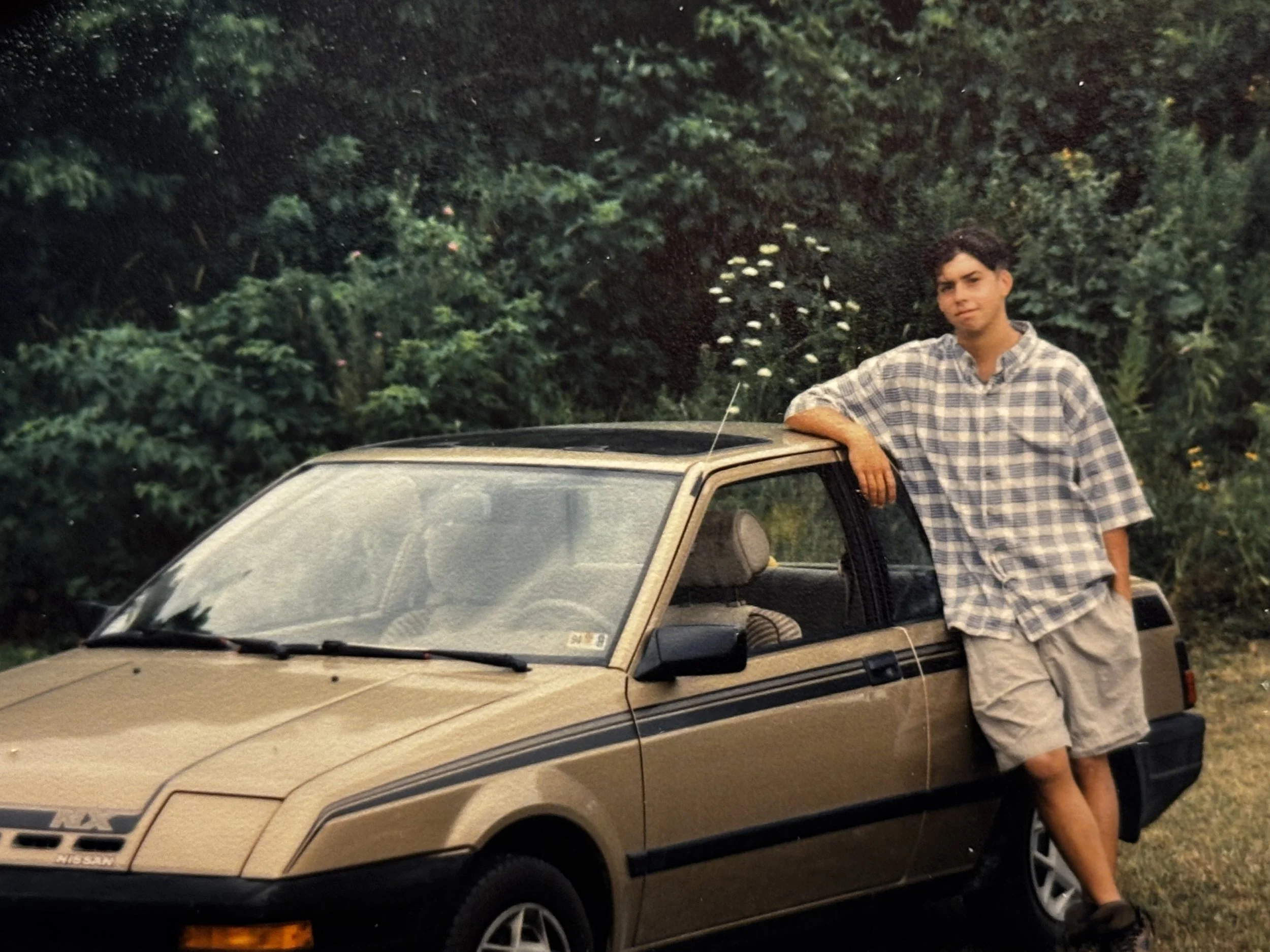
James Charlesworth (pictured here with his 1983 Nissan Pulsar that he bought for $500, c.1994) grew up eighty miles east of Pittsburgh and lives in Boston. He is the author of a novel, The Patricide of George Benjamin Hill, and four previous essays for March Xness.
Mother Rage: Lela Scott MacNeil on Alanis Morissette’s “Uninvited”
It’s 1998. I’m fourteen and poorly contained, spilling out everywhere, hoping no one notices. I’m waiting for Mom to pick me up from school. She’s late, which she is a lot, but I understand, because she has a lot of important things to do. While I wait, I listen to Alanis Morissette on my Discman. I don’t understand most of her lyrics but when I listen to her voice, to the feelings it holds, I feel held. Leaning against the brick schoolyard wall, I sink down into the protection of a woman who can say what she wants and feel what she feels. I’m full of her spirit, eyes closed, headbanging a little. I open my eyes. My breath catches as I see Mom pulling up.
I get in the car and say, “Hi Mom!” with a big smile.
“You’re so lucky,” says Mom. “My mother would never have picked me up from school like this.” I nod. Mom likes to tell me how lucky I am to have a mother like her. Not like my grandmother, sitting in the dark living room consuming only vodka and cigarettes after my grandfather divorced her. I know I’m lucky. I’m fiercely loyal to Mom. I take her side in every argument. People never understand her like I do, how hard a life she’s had, what it takes to make her happy.
“Grandma’s a bitch,” I say. Mom beams. I love making her smile. When she smiles, a light turns on inside her that fills me up too. Her happiness is the main thing I worry about. I ask how her day was. She likes when I ask her questions. She tells me this morning my dad was an asshole for absolutely no reason and then the woman checking her out at the grocery store gave her a nasty look. I ask a lot of questions, but even so, as she pulls into the garage, there’s a shift in her weather: pressure drops, clouds turn a sick green gray.
“You know, it’s your job to make me happy,” she says in a tight, wavering voice. “And I have to say, I’m not feeling very happy right now.” My muscles tighten. My mouth is dry.
“And what pisses me off most is you can’t fathom how much I gave up to be your mother.”
“I know.” I say. I hope she believes me. I know I’m a bad daughter and I know I’m lucky to have a mother like her and I’m willing to do anything to show her that I love her, that I’m grateful, that I understand her pain. “I know,” I say again.
“What do you know?” she hisses. Her face is red. My pulse is loud in my ears. “You have no fucking idea what it’s like to be me.” She’s right. I’m a piece of shit. A wave of gray green shame breaks over me.
Inside, she tells me Dad has called to say he’s working late and to have dinner without him.
“Isn’t that just like him,” she says. “And on a day when I’m feeling so lonely.”
“We could go out to eat,” I say hopefully. This often cheers her up.
“Ooo good idea! Where should we go?” She’s smiling. Good. I relax a little.
“Let’s get Indian food!” I say, because I know it’s her favorite. As the words leave me I see on her face it was the wrong answer. She rushes me, pins me to the floor.
“HOW CAN YOU SAY YOU WANT INDIAN FOOD WHEN YOU KNOW I’M TRYING TO LOSE WEIGHT??" she screams. My ears ring. I close my eyes. I can feel droplets of her spit hitting my face but I don’t hear the rest of her words. I’ve retreated inside myself.
In my mind, I’m in England, where I go each summer with my best friend Zoe to visit her Granny. Zoe’s Granny lives in Bovey Tracey, a picture postcard village on the edge of Dartmoor. In my mind, Zoe and I are standing on the bed in her Granny’s guest room, shouting along to Alanis. We’re about to get in trouble, for standing on the bed and for shouting about going down on someone in a theatre, but that’s not the part I remember.
I love every minute I spend in England. Zoe’s Granny is strict and proper. We practice our table manners for weeks before each trip so we don’t disappoint her: absolutely no elbows on the table, bring the soup to your mouth, not your mouth to the soup. Her rules make me feel safe, cared for. We spend our days exploring Tolkienesque landscapes with names like Hound Tor, Gara Rock, Fairyland. At night we eat baked beans on toast, courgettes and runner beans from the garden. Then Zoe’s mother reads to us from The BFG or Danny the Champion of the World and we fall asleep.
I come back to my body, to the room. Mom is in the corner, curled around herself, sobbing. I take her in my arms. Her tears soak my shirt but I don’t care. I love feeling so close to her. Too soon she pulls away, says she’s tired, crawls up the stairs to her bedroom.
I retreat to my room and get my Discman out of my backpack. Flipping through my 12 disc CD case, past Ace of Base, The Bridge and The Sign, I take out the City of Angels soundtrack. I liked the movie okay but mostly I bought the soundtrack because it has the new Alanis song on it, “Uninvited,” the first song she’s released in three long years since Jagged Little Pill. I press play and skip past track one (some dumb U2 song). The piano starts soft and sad. I feel a hard tug in my chest. Alanis’s voice comes in, telling us she’s flattered by our fascination with her. I turn the volume up loud enough to drown out the sound of Mom’s sobs. I let Alanis fill the space between my skull and the world. Her voice swells; she’s a hot blooded woman who wants things; she can uninvite you if she changes her mind. Here in the safety of my headphones Alanis sings everything I’m feeling, no judgement, no conditions. She doesn’t ask me to be smaller or quieter. Some long clenched thing inside me loosens a little. The tears I’ve been holding back spill out. I bite my tongue to keep myself quiet. If Mom hears me crying she’ll come yell at me again, call me sensitive, inconsiderate, a baby. Deep below my crust a molten core of rage begins a slow push towards the surface. I turn on one track repeat, dig my nails into my palms, let myself dissolve. Eventually I don’t exist outside of this song, this tender cave of feeling.
There’s a loud knock at my door. I jump, pull off my headphones. The door opens.
“Lela?” Mom’s voice is soft, childlike. I try to wipe away my tears before she notices. Her face is swollen but her eyes are clear. The storm has passed, for now. “Want to go to the Hard Rock Cafe?” she asks.
There’s only one right answer but I hesitate. I know she’s trying to make it up to me. Part of me wants so badly for things to be good between us. Part of me wants to escape and doesn’t know how. I pull on a smile.
“I love the Hard Rock Cafe,” I say. “We deserve it.” I don’t really love the Hard Rock Cafe but I’m good at pretending. At the restaurant we sit in a big round vinyl booth beneath photos of Metallica and order pulled pork sandwiches, onion rings, vanilla malts, all of Mom’s favorites.
“You know sweetie,” says Mom between bites of onion ring, “I think it’s important you understand something about me. I’m what’s called a highly sensitive empath, one of only two percent of the population.”
“What’s a highly sensitive empath?” I ask. I’m good at asking questions.
“It means I feel things more deeply than other people do. And I don’t just feel my own emotions, I actually absorb everyone else’s emotions around me. It’s a gift.” I nod. It’s true her feelings are bigger than everyone else’s. “And I don’t have the same filters other people have. I feel everything at once and sometimes it’s all just...too much.” She takes a loud slurp of her malt. I take a loud slurp of mine to show her how much fun I’m having. I eat until I feel sick.
As we’re finishing our food, she says, “Well, this is delicious. But after today, we have to pull ourselves together and stop eating like this.”
“We do?” I ask. Her eyes flash gray. Shit. That was the wrong question. I brace myself.
“Lela, now that you’re becoming a young woman you have to be careful about what you let inside your body. One day you’re going to fall in love with a man and want to get married. And that man isn’t going to want to marry you if you’re overweight.” She sucks up the rest of her malt. I take a sip of mine but the flavor is gone, it’s liquid cardboard.
“You know, I was barely eating anything when your Dad fell in love with me.” I do know, because she loves to tell this story. She wasn’t eating because of the stress of her divorce from her first husband. She divorced him because he told her she’d make a terrible mother.
“All I could force myself to eat each day was a smoothie,” she says now. “I made sure to eat that one smoothie every day. It’s important to take care of yourself.” I nod. “And that’s why your father saw me and fell for me. He said I was so skinny, he just wanted to feed me.” In all the times she’s told the story it’s never had such a clear equation: skinny = love. Walking out of the restaurant, I’m dizzy with fear and sugar and shame. Soon, with Mom’s strong encouragement, I start to starve myself.
In 1998, Alanis Morissette was twenty-four and still reeling from the treatment of a man who managed her teen pop star career back in Canada. He started sexually abusing her when she was fourteen, telling her things like If you weren’t so wise beyond your years I would have been able to control myself and I might want to marry you someday if you watch that weight and you keep your firm body. He controlled everything she sang, wore, ate. During music video shoots she’d get so hungry she’d sneak out to the fridge in the middle of the night and eat cold Velveeta slices. The next morning, he’d count the slices and she’d be in trouble. Of course she developed an eating disorder, of course.
I wish I’d known we had this in common back in 1998, as my anorexia bloomed and enveloped my life, as my mother’s vines of self loathing wrapped so tightly around my throat it was hard to breathe. I’m grateful I had Alanis’s music, at least, an emotional room of requirement where I could feel things I needed but wasn’t allowed to feel. Rage, at my mother, at my mother’s mother, at a world that filled us all with pain. Grief at not getting the mother I needed. Joy, because I was alive, and there were times when being alive was wondrous, like standing on Zoe’s Granny’s bed shouting out Alanis, like eating courgettes and runner beans fresh from the garden, like getting so lost in a book or a song I forgot I hated myself.
It’s 2025. It’s my birthday. I’m forty-one. I’m in Las Vegas, at the Colosseum, watching Alanis perform. I’ve never seen her live before. I’ve read she calls her concerts “a space where if you want to cry through the whole thing, punch the air through the whole thing—whatever you need to do, I’m doing it with you.” Being so close to her voice fills my blood with a feverish thrill. I want to rush the stage and give her a hug. Therapists have told me my fourteen year old self still lives inside me and it’s important to listen to her, to give her what she needs. She needed this concert.
Alanis’s hair is long and wild. Her vibe is maternal. Her voice is exactly as I remember it. I feel my fourteen year old self behind me, a ghost tickling my shoulder, breath hot on my neck. I take a video for Zoe. I take a hundred blurry photos. I put my phone away. I want to be here for this.
“You like snow but only if it’s warm,” sings Alanis. “You like rain but only if it’s dry.” I sit next to hundreds of women my age and shout the words we learned as children. Time wobbles. The past presses down on me like a weighted blanket. What gives her voice this power to dissolve time? My inner fourteen year old jumps up and down to the beat, sings YOU YOU YOU OUGHTA KNOW.
This music opens up to me the way it used to, like a magic door in a fairy tale, but this time I can feel my fingertips, my guts. Her voice is supernatural. It creeps inside me, explodes from my chest, pin balls around the room, then pulls back into her throat, connecting her to us. To me. I needed this. The fourteen year old, yes, but also the forty-one year old. For so long I told myself I needed nothing, but it wasn’t true, and I’m grateful I don’t listen to that voice anymore.
Alanis tells us rage is her favorite feeling. We cheer. She tells us she’s a highly sensitive empath, one of only two percent of the population. My stomach drops. She says highly sensitive empaths and narcissists can look the same from the outside. I think about my mother and the Hard Rock Cafe. In the years since, I’ve looked up the term highly sensitive empath and learned it’s not an official diagnosis. It’s a pseudo-scientific self-applied label my mother used to make her inability to regulate her emotions sound like a superpower. I want to ask Alanis how she knows she’s a real highly sensitive empath and not just a narcissist who believes she’s a highly sensitive empath. Sitting in the dark I feel betrayed, beyond all logic and proportion.
It feels like a betrayal to realize the real fifty-one year old Alanis is not the same Alanis who imprinted on me at fourteen. Even so, her same voice twists, dives, carries all her (and my) many parts: sick/pretty, high/grounded, lost/hopeful. Sometimes she has to unhinge her jaw to let the full sound out. Her hair undulates like a fifth limb. As she told the Guardian, “my hair is a band mate. It’s a way of expressing and flailing and raging. It’s like a typewriter, it speaks on my behalf.”
She plays “Uninvited” as the first encore. I squeal at the familiar melancholy opening. I’ve been waiting all night. The song is deliberate, almost menacing. It knows what I don’t want to admit. Alanis calls it her fear of love song. The piano builds, builds until it’s shaking my teeth, the notes hanging thick and heavy as smoke. It’s almost too much, too much feeling, but I love it, I love her, I love her voice folding in on itself, half concealing lyrics that form a cave or a womb or a bottle of wine or a body. Her longing becomes my longing, our longing for the thing we fear most. Is she the shepherd or the uncharted territory? Am I?
Later, telling a friend about the concert, I say Alanis’s betrayal feels much easier to forgive than my mother’s.
“Of course,” says my friend. “Alanis owes you nothing.”
My mother used to love to brag that one time, at Esalen, Alanis kissed her on the mouth. It always made me angry in a way I didn’t understand until I started writing this essay. I needed the Alanis who raised me to exist apart from my mother. After I got over the betrayal at the Colosseum, I realized Alanis did me a favor by showing her true self; I saw that the Alanis who raised me was my own creation, an imaginary mother pieced together from glue and lyrics and chords and need. I feel less broken knowing even back then, some part of me was dressing up in Alanis’s voice to tell myself: hold on, there’s a whole life out there waiting for you.
I keep being confronted by a choice: learn to re-parent myself or let my pain hurt everyone around me, like my mother and her mother before her. I haven’t spoken to my mother in seven years. They’ve been full of rage and grief and joy, each new uninvited feeling more terrifying than the last. But I no longer feel shame when I eat, or when I’m sad, or happy. I still flinch at loud noises and I still have the daily stomach ache that started when I was fourteen. The body takes longer to re-parent than the mind I guess. These days I’m letting my body feel it all: hot/cold, loud/quiet, heavy/light, dark/bright. Sometimes my body feels so full of loss and love for the world I find myself crying on the street in downtown Los Angeles, fat ravens circling overhead, quoting poetry, asking me what I’m going to do with my one wild and precious life. I put on my headphones and press play on “Uninvited” one more time. The opening notes crawl through my ears. I shiver in the sun.
Lela Scott MacNeil was born in Los Alamos, like the atomic bomb. Her writing has appeared in Gertrude, Essay Daily, and Trouble in the Heartland: Crime Fiction Inspired by the Songs of Bruce Springsteen. Her March Vladness extracurricular essay is included in Hit Repeat Until I Hate Music: The March Xness Anthology. She lives in Downtown Los Angeles.