
Something I said to her: Brian a. Salmons on Red House Painters' "All Mixed Up"
If anything remains to separate Kozelek from his work, it’s that his music preaches that the least we owe one another is decency. —Laura Snapes
I don't know what she was to me. A friend? Yeah. But a bad one. A girlfriend? That'd be a helpful way to think about it, were it true. But it wasn't, and she would have thrown up in her mouth a little at the implication. We were close, but not in the usual, pleasant sense. A platonic relationship, but no meeting of the minds. No intimacy, no attraction or its tension. Ok, sure, early on I imagined sex was in the cards, but I never acted on the thought, nor gave it voice. No matter now. Whatever we were to each other, we were wrong for each other. That’s the story I’ve been telling myself for 20 plus years.
Let's go with "friends". My friendship with Nemesis lasted over 7 years. We lived together for 3 of those years in a midcentury ranch house that she bought on a quiet street in a Tampa suburb. She never let me forget that that house was my home by her grace alone. Even now, calling it "my home" doesn't feel right. I slept in that house. She slept there as often as not; she worked in Orlando and stayed with family there during the week. The house felt more home-like on those nights. I'd have it to myself for days at a time. Enough time to begin to relax and do the small things I enjoyed in life: genealogical research, listening to music, whatever.
But she always came home eventually. Friday nights usually. I'd hold my breath and remember to smile as she put the key in the door. She'd be weary from the drive down, but would greet me and smile back cautiously, her eyes searching my face for trouble, a trace friendlier when she sensed everything was probably ok. I'd help her unpack the car, listen to stories about the crazy shit her relatives said, how work was, the traffic. As I listened, I'd remember that, yes, I loved her and I missed her company, and maybe this is where I am supposed to be in life. I relaxed in those moments, too. But without fail, it'd become apparent that I'd forgotten to do something, or did something selfish, or didn't tell her something I should have, or told her something I shouldn't have, and lied. Her trust evaporated.
I sound kinda bad, yeah? Well I wasn't. Not really. I don't recall the things I did, said, didn't do, didn't say, or lied about, but I was never mean or rude to her. I never expressed anger or frustration at her. Living with Nemesis was a series of retreats, surrenders, and truces. The never-ending effacement of who I believed I was, or who I was capable of being. I guess. I mean, it wasn't all bad. Sometimes she was nice. But I knew that never lasted. I suspected I deserved better, but I wasn't really sure. So, I tolerated it, believed it to be my only possible world, a world she led me to, out of the malaise of my late teens. In hindsight, that malaise looks like the relational growing pains of a typical, emotionally immature young man, compounded perhaps with undiagnosed social anxiety disorder.
When I first became friends with Nemesis, she was understanding and caring enough, and said she wanted me to be better. I think she needed to rescue me. Fulfilling a need like that for a girl was something I'd only dreamed of until then.
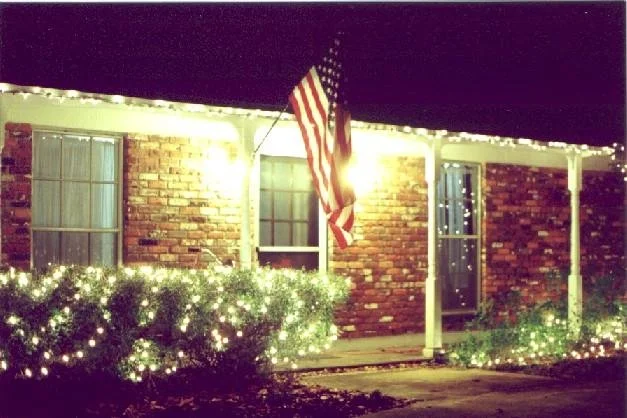
(The house on the quiet street in a Tampa suburb, 2000; photo by the author)
She says leave it to me
Everything will be alright
Red House Painters played Club Firestone in Orlando on 22 November 1996. I was there. I don't remember being there, but the fact of my presence registers in memory as true. My daily planner from 1996 shows the intention to be there: Friday, November 22—class 2:30-3:20—His Name Is Alive at 4:00 WPRK—work 4-8:30—Red House Painters show directly after work (Firestone). I'm not sure why I don't remember the RHP show. I do remember leaving Club Firestone after a concert once. The concertgoers, mostly white college kids like me, filed out of the door past the club-goers, mostly Black and Latina girls, as I recall, who'd begun entering during the last song. Who the hell's these motherfuckers?, one of them said. And that funny fear of my normalcy being challenged welled up in me and I probably swallowed hard. But then the DJ dropped 2Pac's “California Love” and the club-goers no longer cared who we were. I scuttled out the door with the others into the cool, welcoming night air.
Although I can't be sure, I think that was the RHP show. The one for-sure memory I have about that show is a dialogue between my friend Angel and someone else about how psyched our friend Darren was to go see RHP. Angel was unsympathetic and mocked Darren's excitement. He didn't like RHP. Until that moment, I'd been embarrassed to admit that I did like them and that I was going to see them live. RHP's sound was very clean, acoustic, easy to digest, very unlike other heavier, noisier bands we dug at that time, like Truman's Water, Polvo, Shellac, and Unsane, just to name a few. RHP sounded almost mainstream to me by comparison. Mainstream taste in music was an embarrassing admission of aesthetic laziness in my social group for whom noisy, experimental, transgressive music was de rigueur. I assumed this was the reason for Angel's distaste for RHP.
If there's a reason I zoomed in on this tiny corner of my surviving memory, it's this: my sole memory of a concert was a comment one person made to someone else about a third person's anticipation of the concert. I wasn't even part of that conversation. But there is a reason I remembered it. Learning that Darren—who wasn't in my core group of friends but whose taste in music I respected—also liked RHP, must have offered me a moment for growth, for self-knowledge to click into place: I should trust my own taste in music, no matter what Angel thought. And maybe I should trust my judgment in other matters, too. But as quickly as it materialized, that self-knowledge dissipated.
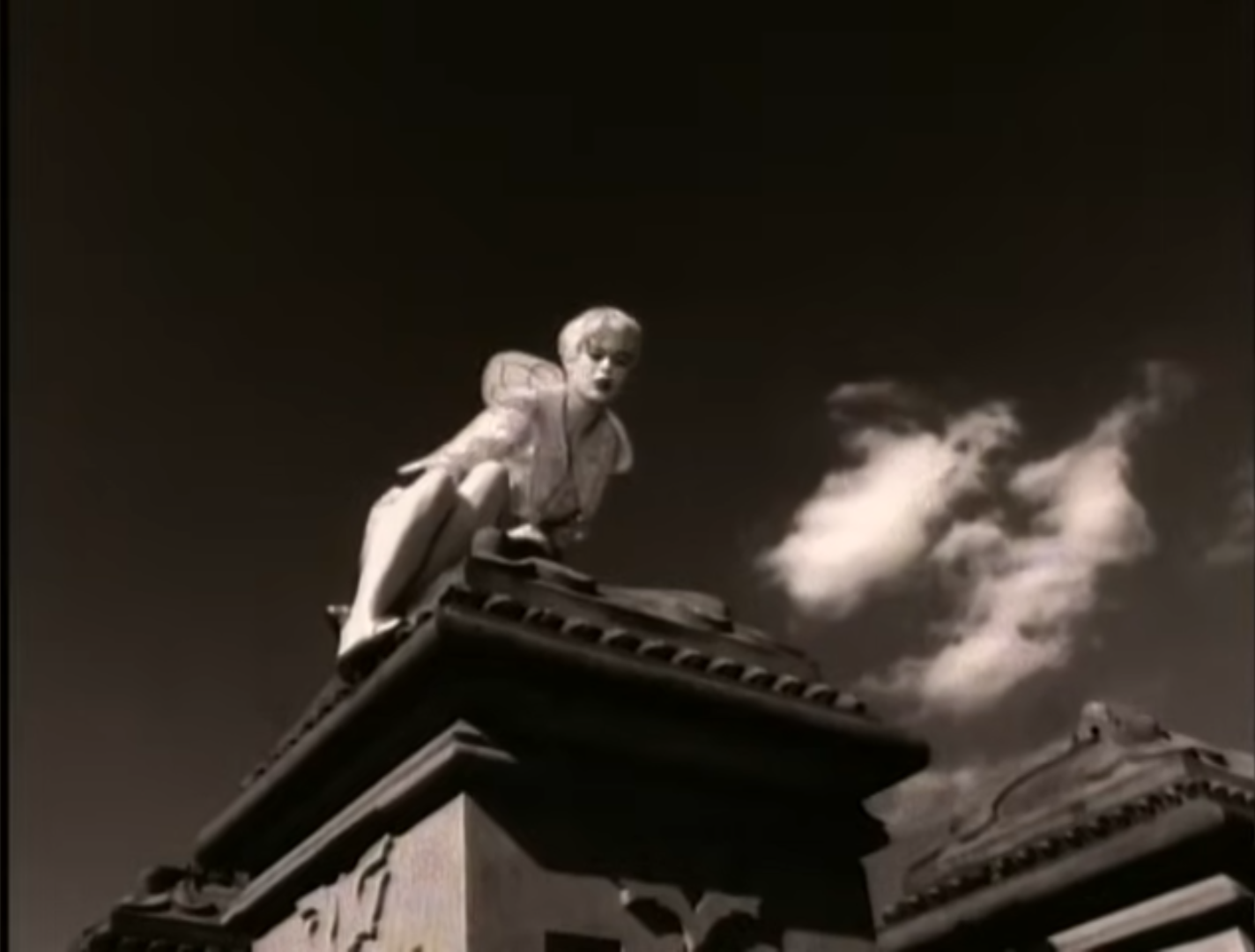
(Still of fairy from the music video for “All Mixed Up” directed by Phil Harder)
She's always out makin' pictures
She's always out makin' scenes
Phil Harder directed a music video for Red House Painters' cover of The Cars' "All Mixed Up". Shot on the streets of New York City, it featured an uncredited young actress as a fairy. She flies into the city, perches on a rooftop, takes some small interest in the band that is playing on a street corner, but mostly just wanders the city on foot, taking in the distressing immensity of the cityscape and the human misery within it. She takes pity on two homeless men and seems caring enough about their plight. One of the men seems as distraught as she is. The other is asleep, unaware of her theatrics. Even when she takes his paper cup and dramatically brushes the diamond-hard tears from her cheeks into it like a coin spill, he remains asleep. The fairy rides the elevated train, attempts to cross some streets. There's a montage of super-close-up shots of big truck grills racing around, which alternate with shots of the fairy wandering the same streets, confused and overwrought, or flying around above the city with a vaguely forced smile of contentment. Maybe she's "manic depressive", as we would have said in 1996. She's all mixed up emotionally. I don't know how the music video was received by fans when it was released, but one commenter on the Internet more recently characterized it as just a commercial hoop the band jumped through as a necessary part of signing to the Island Records family of companies. I see the fairy as a fortuitous metaphor for how I imagined Nemesis cared for me. I had a great imagination!
In an essay published in Autofocus in 2021, I alluded to "a noxious relationship with Nemesis that began soon after Nora and I savored Black Saint." It's time to explain that. The summer of '96 was formative for me. Saved and damned at the same time. Two long weeks staying with Nemesis in her apartment in Chicago. Her ex-boyfriend, Angel, was later convinced something had to have gone down in those two weeks. I assured him it was not like that (while wishing it had been). Nemesis showed me the way to sanity. The source of insanity?: consumerism and patriarchy. I pretended I understood. I believed my own pretense. I was devoted. I, I, I, I, I. I was the inescapable problem. I got drunk for the first time, on Crown Royal. We listened to Half Japanese's "This Could Be the Night" and Sonic Youth's "Kill Yr. Idols". Let that shit die. But one thing we didn't do was fuck, as I've said.
Life continued to unfurl in surprising ways. Nemesis and her new boyfriend, Gael, went to Austria. I made plans to meet up with them, enrolling in a foreign exchange student program. I arrived in Zeist at the start of September 1997. The Netherlands was close enough to Austria, but Nemesis and Gael had already moved back to Chicago by the time my plan went into irreversible action. So, I stayed a while, hiked the countryside, learned Dutch with fair fluency, visited Poland, and fell in love with Daciana of Bacău, who moved to Belgium six months later to become a nun.
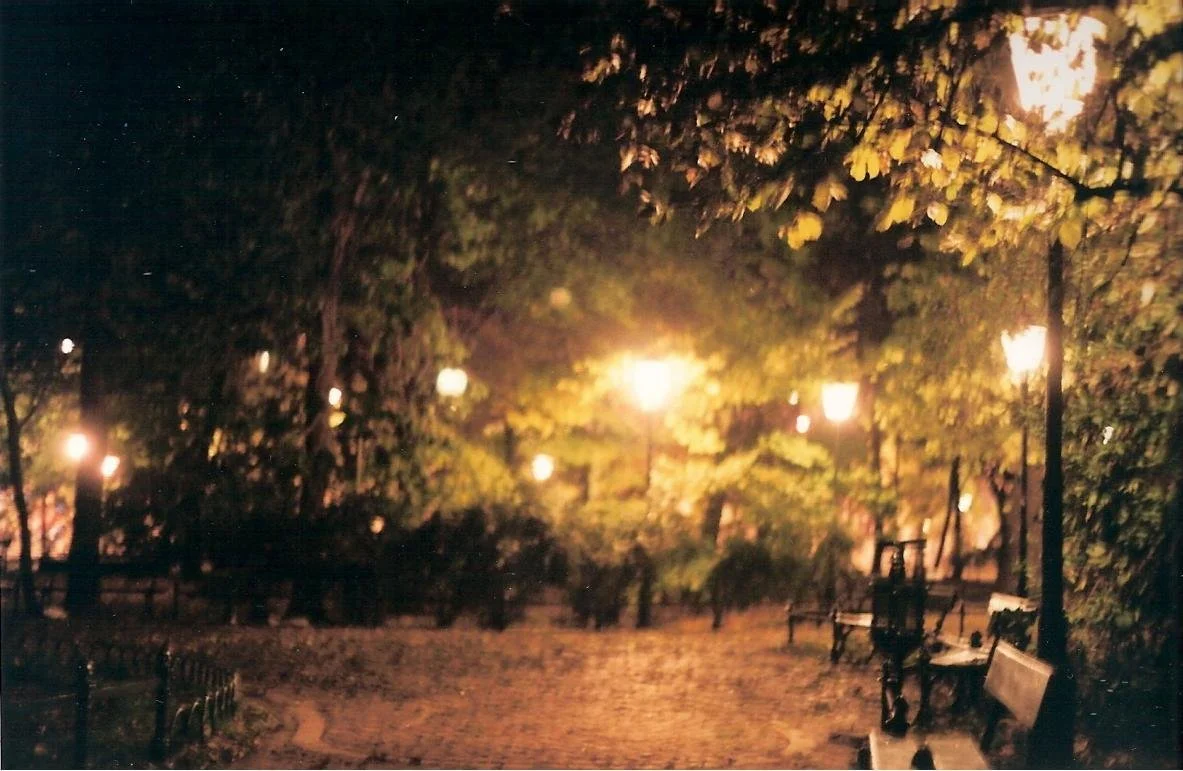
(A public park at night in Warsaw, Poland, 1997; photo by the author)
Before I left the US to start my ill-premised Dutch period, I ghosted most of my friends. (That term didn't exist in the 90s, but it meant not answering the phone or the door and not going to any social or cultural events where I might run into someone I knew.) Nemesis insisted it was necessary. It would be good for me. I thought so, too. I thought I felt freed of the bad influences of consumer culture. I trusted her. I read Rilke and Krishnamurti because she did. I listened to Cat Stevens and classic R&B because she did. When I returned home from the Netherlands on 1 June 1998, having driven Daciana to God's mystical arms, I cut ties with the rest of my American friends. Ash was my newest friend and the last to go. One afternoon that summer while riding in my 16-year-old brother's car, I saw Ash driving next to us and quickly ducked to avoid being seen as we passed him. Sucks to be you, my brother said with teasing pity.
I couldn't afford to need Ash, or any of them, anymore, she said. Nemesis and I were best friends now. My only friend. Her only friend. Gael broke up with her. One day you'll get it, he told her. She didn't get it. But I was there for her. We ate macrobiotic dinners and listened to urban adult contemporary hits on Star 94.5 on the terrazzo floors of her rented house in Orlando. It was the middle of winter. She cried for him. I cried for her. No touching, as I've said. "Hopeless" by Dionne Farris echoed off the floor and the cold, darkened casement windows.
By spring, she'd severed ties with me because I didn't get it. So, it was just me, no friends, not even Nemesis, in my new apartment. It was kinda good actually. I listened to music, loud, made oven pizzas, and drank lots of Anchor Steam. I cried in bed, stared at the ceiling fan, examined liner notes. I signed up for my first dial-up Internet connection and developed a porn addiction, a predictable and debilitating result of low self-esteem and social isolation. So, it wasn’t all good. But then, after a couple of months, she came back! Another chance. Happy times. She challenged me to make a big change in life with her. We started over, together, in the midcentury ranch house on the quiet street in the Tampa suburb, with a promise that I would do better.

(Self-portrait of the author, 1996)
She's always out the window
When it comes to makin' dreams
When I lived with Nemesis in her house, I also lived with a secret, eyebrow-raising sleep disorder called sexsomnia. It's a real thing; you can look it up in the DSM. Same family of disorders as sleepwalking, but instead of just walking to the kitchen or down the street at night, people with sexsomnia engage in sexual behavior while asleep. It can take years for a person to even know they have the disorder, often finding out when they start sleeping in the same bed with someone else. Their partners report being amused or even aroused by it and usually assume it to be conscious behavior on the part of the sexsomniac. That is, until weird things happen, like when he (it's up to 3 times more common in men) suddenly stops right before orgasm and literally falls back on the bed, dead asleep. Or when he tries to choke his partner and, the next day, doesn't remember anything. Amnesia is a common, but not necessary, element of sexsomnia. You can see how frightening and dangerous this thing could become. Although rare and hard to prove, it has been used as a defense in criminal proceedings against sexual offenders. (Is it rape if the rapist didn't know they were doing it? What if the victim had sexsomnia and the man didn't know she was acting involuntarily? What is consent in that situation?)
My sexsomniac behavior did not involve another person. Nemesis and I slept in separate bedrooms. Doors facing at the end of the hallway, but closed. And I was never a sleepwalker. But some nights, my mind regathered from the far reaches of the dream world and swept me to consciousness: in bed, palms against the wall, straddling the pillow, making reckless use of friction into the boxers I'd apparently removed and wadded up in my sleep. The ecstasy, underlain with panic. The post-climax dismay—how?!—and deep shame that I'd let it happen again. After that, irritation at needing an extra laundromat day, and a mild case of rug burn. Altogether regrettable.
I was fortunate that the only consent I violated was my own. (I mean, sort of?) Whatever the fuck that was, I thought, it would remain my shameful secret. Thank God no one knew. That's what I believed until Nemesis and I had an argument one day in the hallway, which she ended with, You think I don't know what you do in there at night? I said nothing, too humiliated by her revelation to bother explaining the inexplicable involuntariness of it. I barely believed it myself. No reason to suspect the DSM-4 could've redeemed my humiliation. There was no Reddit thread of others' experiences to consult for self-diagnosis and validation. (No, I have not had this diagnosed by a professional, but when I finally learned about sexsomnia a few years ago, it all clicked into place.) Back then, it was still the 90s and I just assumed there was something very wrong with me, and that if tried hard enough, if I cared enough about being a decent person, I could wake myself up, put the boxers back on, and go back sleep.
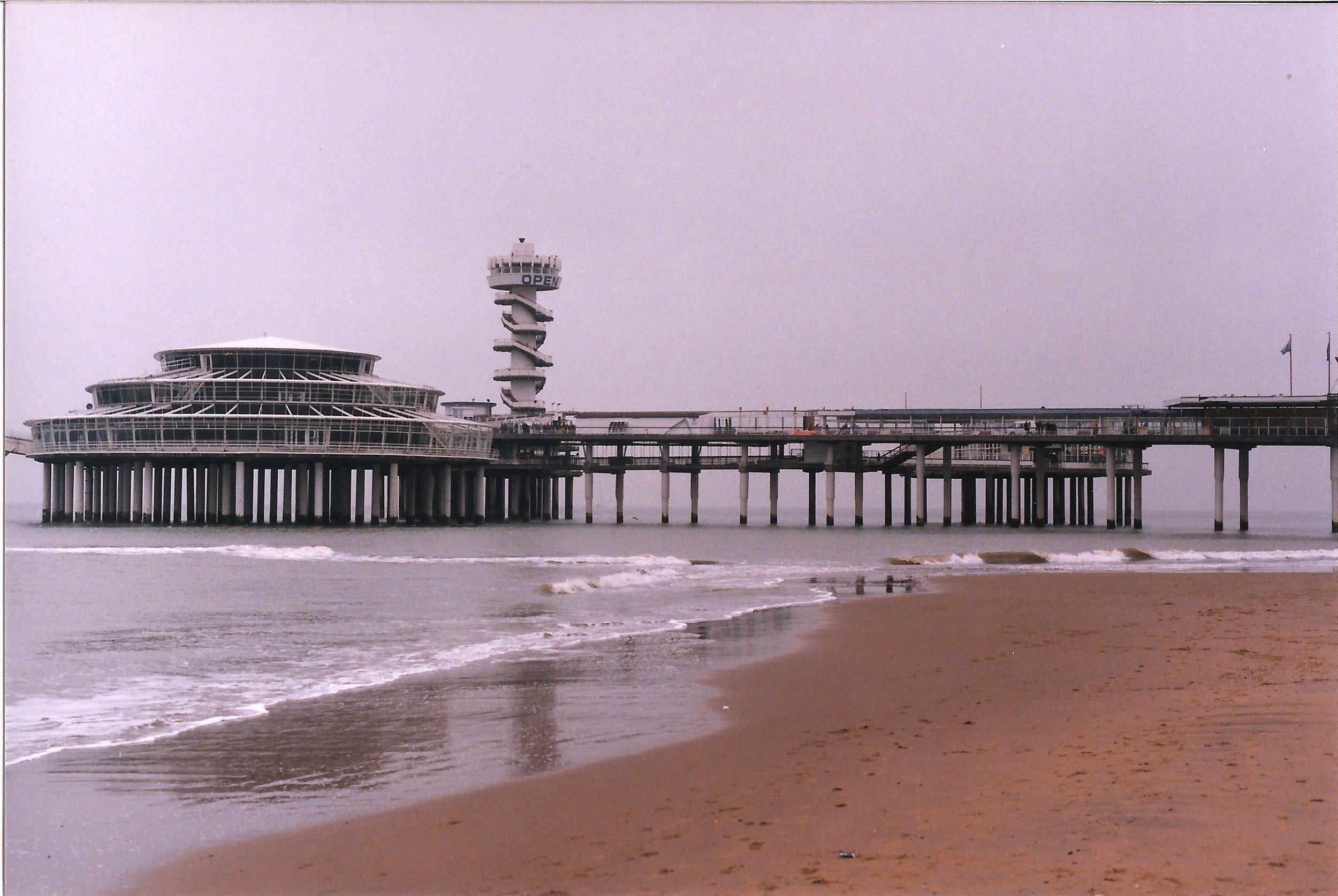
(The Scheveningen Pier, 1997; photo by the author)
She tricks me into thinkin'
I can't believe my eyes
On Saturday, 29 August 1996, I made the following notes (with typos) in my planner: "research manipulation of MMPI results by administrating doctor" and "St. John's Wart". This could have other interpretations, but only one is clearly correct to me. I took the Minnesota Multiphasic Personality Inventory—a standardized psychometric test of adult personality and psychopathology—and my results indicated no mental health conditions. Nemesis was convinced this result was invalid and, therefore, evidence of manipulation by the clinical psychologist administering the test. She was certain I had a personality disorder and told me to look for St. John's wort as a non-clinical treatment. St. John's wort is used to treat depression. The personality disorder that she—and therefore I—was convinced I suffered from was narcissistic personality disorder. She thought I was pathologically selfish. I ashamedly agreed.
It makes me angry thinking about it now. Such nonsense. I could be self-centered at times, sure. I still am. I catch myself at it, and I feel the same shame and engage in the same self-reflective analysis that I always have. Is there a disorder underlying that? Or is that just my personality, ramped up in the moment to an unbearable social weight? Where is the line between personality and personality disorder? My friend Eyes once told me crazy people are just on a different level of consciousness. We were in high school and his offhand comment—meant to explicate the lyrics to some song on Sonic Youth’s Bad Moon Rising—made a lot of sense to me. Maybe I was just operating on a different level of consciousness. Not a higher level, mind you, I'm not comparing. Just advocating for my sanity. No manipulation.
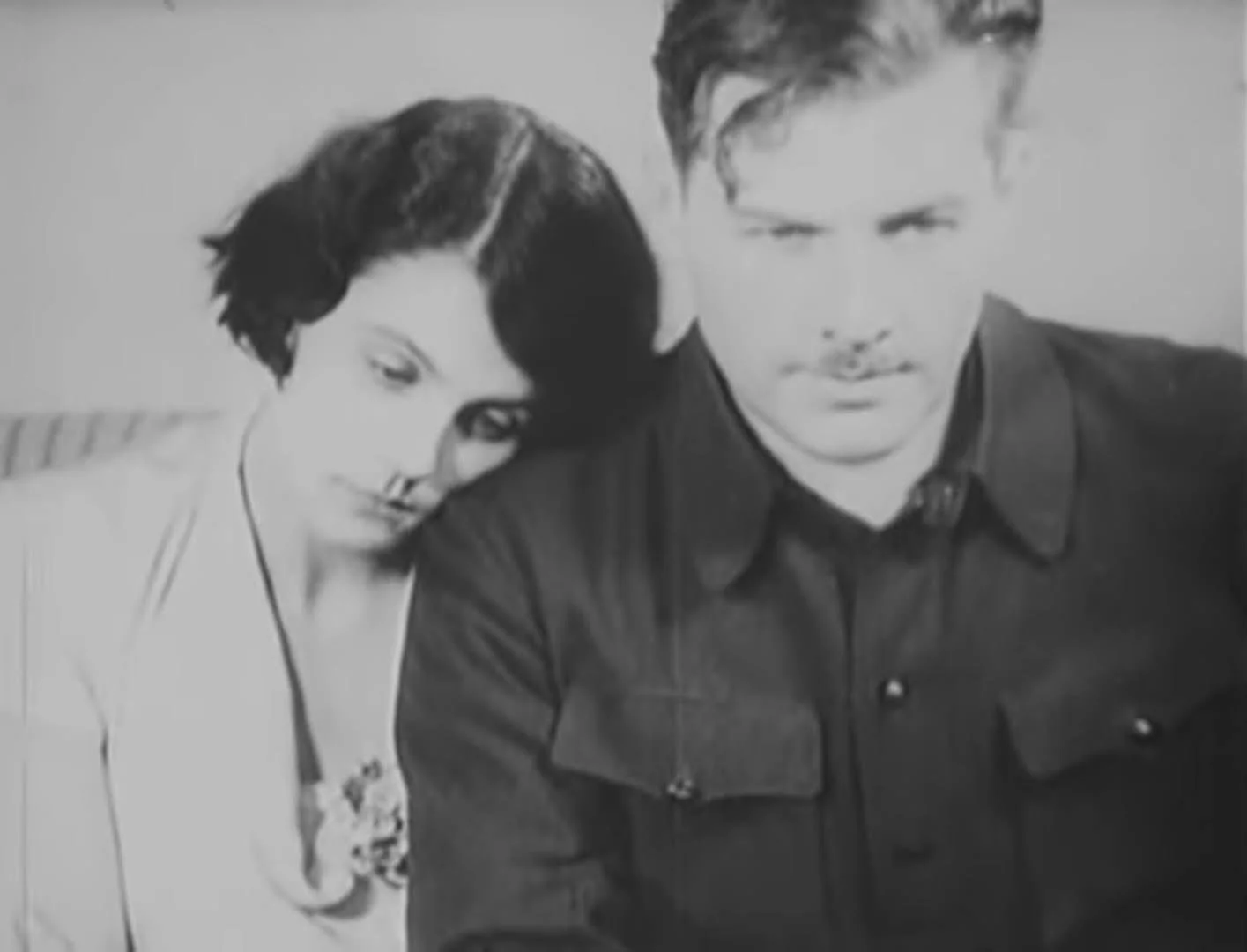
(Still from the movie Counterplan, 1932)
I wait for her forever
But she never does arrive
There used to be a pier in Titusville, Florida, near where State Road 50 dead-ends at U.S. Route 1, that juts into the Indian River. I don't know if it’s still there, but one evening in early November 1996, a couple of weeks before the RHP show, I spent an hour or so at the end of that pier watching the light drain from the sky. It was a particularly bad day. Since returning to Orlando that summer after two weeks with Nemesis in her apartment in Chicago, I was distraught. My fantasy that we'd fall in lonesome love like the leads in an old movie and hate the world together, with Music for Egon Schiele as the soundtrack, fell to pieces soon after I arrived. Those two weeks were a confusing mélange of bliss and hurt. A recipe I learned to want. Nemesis and Gael were still happy. Fine. That's just great. I liked, wanted, her happiness. That's not why I was sad. That couldn't be it.
I felt trapped, but I could get out of my apartment easily enough. From Orlando, I drove straight east to the Atlantic Ocean, because I knew it was possible and unpredictable for a guy as predictable as me. I hit the road in my blue '86 Geo Prizm, like Pirsig sans motorcycle. Past the campus, the flatwoods hugged the road running east, the scrawny slash pines reached and curved like straw brushes, and the dwarf palmettos bunched at their waists. Not long ago, this landscape would sometimes call to me in the thought of a final comfort. I could really lay down out there and no one would ever find me and that would’ve been sad but ok. But that afternoon, I pushed a dubbed copy of Songs for a Blue Guitar into the cassette deck and remembered how to love myself, without Nemesis or fucking Gael.
Sitting alone at the end of the pier, looking out across the vast salt marsh at the white box of the Vehicle Assembly Building, tiny from that distance though I knew it comfortably housed a spaceship, I felt better. At home, in some way. I wasn't where I wanted to be in life, but this pier was alright right now. Besides, I didn't know where I wanted to be. I was 20. I could love myself, and love what others have to love about themselves and everything would be alright. That moment at the pier served as a ground line to reality during the 7 years Nemesis and I were friends; in other words, most of my 20s. I needed that moment when things got really bad, to remind me that I do fundamentally have worth. I'm not all bad. I am a decent man, despite what she would have me believe.
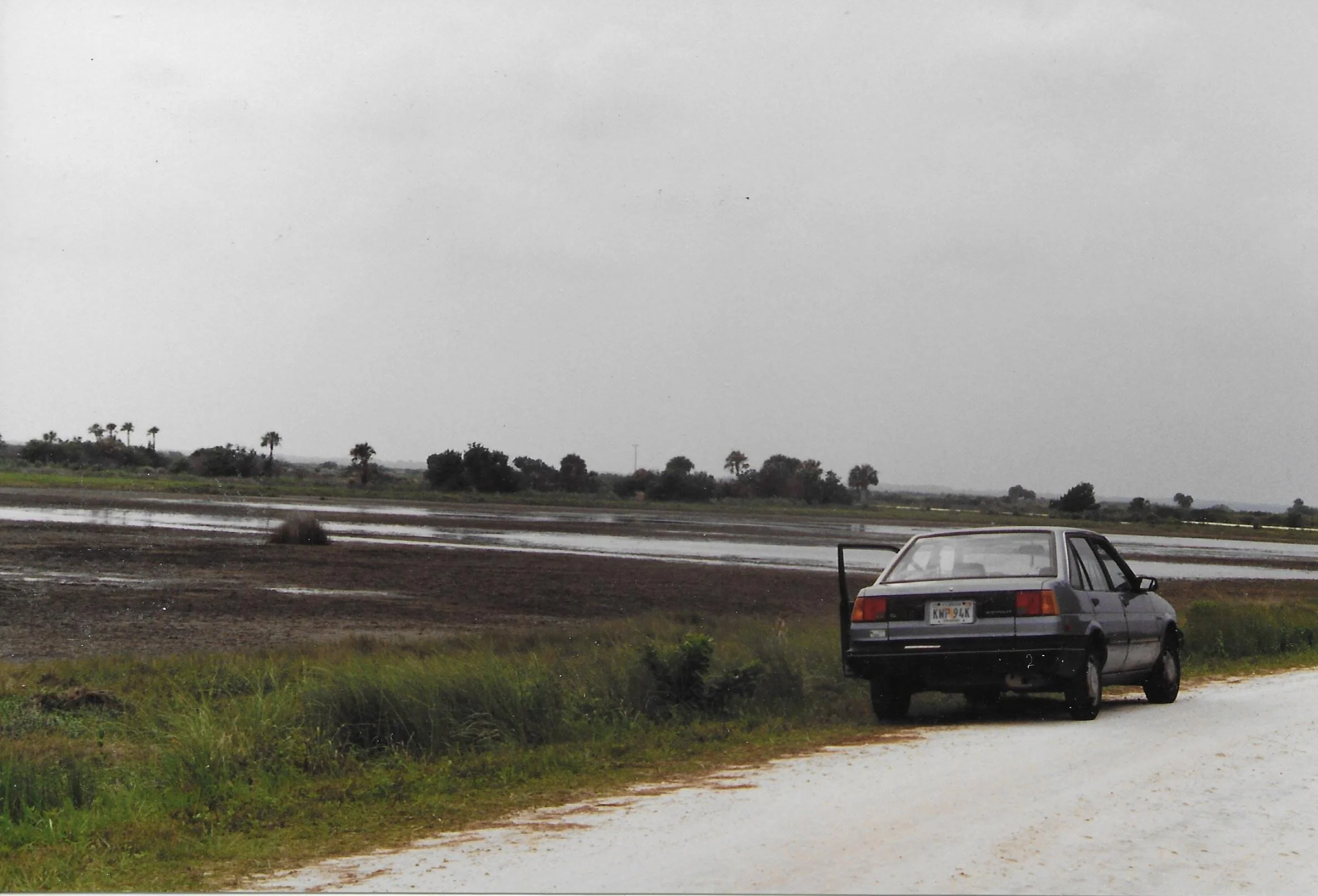
(The author’s '86 Geo Prizm at Florida’s Space Coast, 1996; photo by the author)
She shadows me in the mirror
She never leaves on the light
The epigraph at the start of this essay comes from Laura Snapes' 2015 profile in The Guardian of Mark Kozelek, the man behind Red House Painters. Snapes was trying to reconcile the fact that Kozelek was such an asshole to her and others with the fact that his music is sublime. A difficult task, and one I agree was worth undertaking, but her analysis predates the nadir of his assholery by about 5 years. If you don't already know, in 2020 and 2021 Kozelek was the subject of a couple of Pitchfork exposés by Amy Zimmerman, in which his Me Too-worthy misdeeds were chronicled in all their cringy, icky, and sometimes shocking license. It's the behavior of a man who's forgotten how to love himself and, thereby, acts in ways that betray humanity—his own and others'—even as he believes, half-heartedly, in better moments, that he's a decent man.
I thought writing this essay would provide some clarity and closure. It was supposed to be an honest assessment of my relationship with Nemesis, through which I open my heart to forgiveness and acceptance of more responsibility for our mutually produced torpor. But I don't feel that way. I'm still bothered. I haven't really figured anything out. The timeline, my memories, my emotions, my understanding, they're all mixed up. My story of us has not changed much; it’s just a little better written.
Perhaps if I'd never met Nemesis, my life would have turned out more like Kozelek's. That's an admission I did not set out to give in this essay, and not just because it opens to consideration whether I am capable of the same cruel, ego-indulgent things he is accused of. The admission could also mean that my insecurity is not her fault. That it was always there, disguised as shyness and introversion, tamped down by her cruelty. That without her, it could have spun up and out of control. That not only was she pathological and a horrible friend, she was also right about me. That I’m still mixed up and the work is not done.
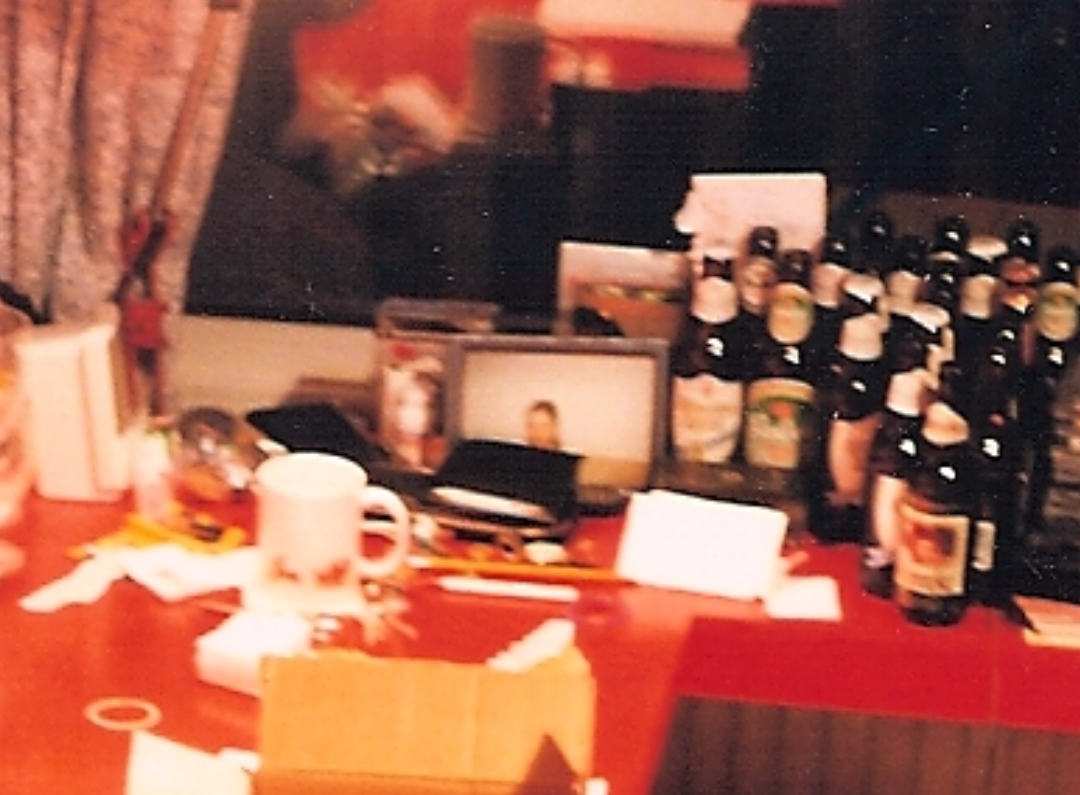
(The author’s desk in his flat in Zeist, with framed photo of Nemesis; photo by the author)
As Nemesis drove home from Orlando one Friday evening in December of probably 2000, I began raking the backyard at the house on the quiet street in a Tampa suburb. The sun went down, but I continued raking in the dark, determined to finish it before she arrived. Maybe I’d promised to finish it, or I just wanted to surprise her with an unasked job well done. I didn't notice that she’d returned, until she began turning on lights in the house. Not finding me inside, she peeked out the back door, spotted my silhouette moving in the dark, and called through the screened porch. Brian? The fuck are you doin’, dude? I could hear a smile, her amusement. I dunno, raking? She urged me to stop and join her inside. Not to fuck, obviously. She brought Checkers take-out and had some stories to share. I flipped on the Christmas lights on my way inside.
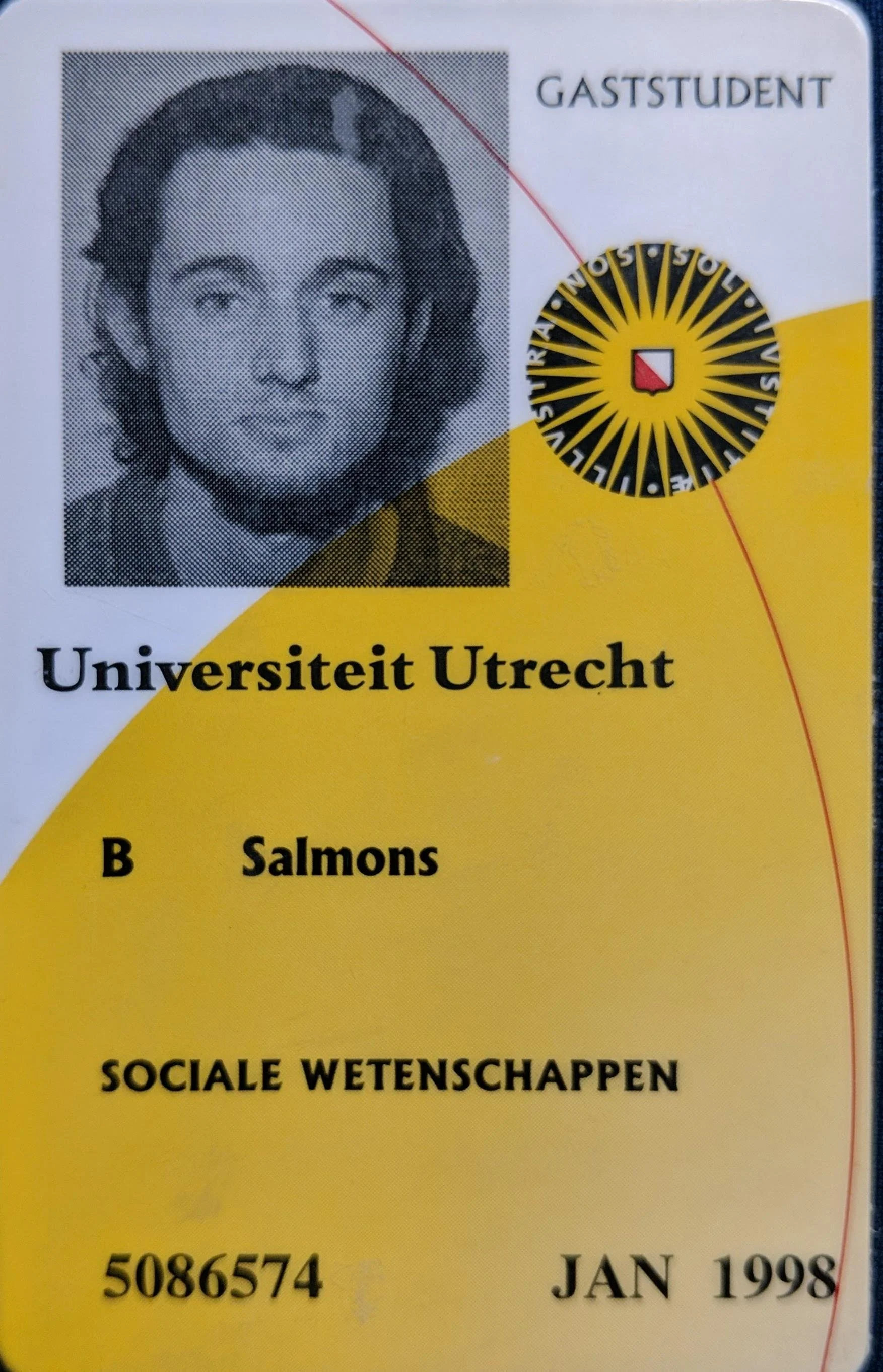
Brian A. Salmons lives in Orlando, Florida. He competed in the March Fadness 80s bracket (https://marchxness.com/1stround-lippsvseu). He’s also written for Qu, The Ekphrastic Review, Autofocus Lit, Stereo Stories, Memoir Mixtapes, Arkansas International, and others. IG @teacup_should_be, Bsky @brianasalmons.bsky.social