

final four
(6) Ben Folds Five, “Brick”
smashed
(13) Ani DiFranco, “You Had Time”
389-346
and will play in the national championship
Read the essays, listen to the songs, and vote. Winner is the song/essay with the most votes at the end of the game. If there is a tie, we will play a one-hour overtime (and repeat until we have a winner). Polls close @ 9am Arizona time on 3/28/26.
Cicily Bennion on Ben Folds Five’s “Brick”
This essay begins in 1999 with my brother on a bike, a twenty-year-old riding straight through the intersection just as the car on his left turned right. I still remember how my mother screamed when she got the call saying he’d been run over. I was six years old and didn’t yet know how to calibrate for her big reactions. Piecing together what I could from her side of the conversation, I thought my brother was dead. But it was only a broken leg. A bad break, though. One that required surgery and a permanent metal rod in the bone. My brother got a payout from the driver, or rather her insurance, just enough money to make a college kid feel rich. With it he bought a brand new first generation iPod and some DJing equipment and played at house parties on the weekends until he graduated and moved to New York City and got a job and, eventually, a new iPod.
It must have been 2005 when he approached me with the old one. He’d kept it a while. I was, by then, in the fifth grade, and though iPods had been around for a few years, no one I knew had one. Not really even any adults. They were an extravagance that didn’t seem to have reached my small town. “I decided not to wipe it,” he said as he handed it over. He’d considered going through and removing the songs with swearing but that would have been too much work. I’d just have to be cool.
And that’s how I went from listening to my one Gavin DeGraw CD on repeat to soaking up what was to me at the time an immense library of songs. Thinking back on it, it seems I got stuck for a while at the B’s: The Beatles, Beck, Ben Folds, Ben Folds Five, Bright Eyes, but I eventually made my way through the rest of the alphabet: Counting Crows, Death Cab For Cutie, Fiona Apple, The Gorillaz, Metric, Nirvana, Outkast, The Police, The Postal Service, Radiohead, Red Hot Chili Peppers, Weezer. Surely there were others. They’re gone now from memory.
It would be difficult to overstate the importance of that iPod’s appearance in my life. It carried me through some very awkward reading years as I went from elementary to middle school. In elementary school, my reading had been intensely incentivized with a point system and leader board. Top readers had their photos displayed in the hall, and my face was always up there. I was ploughing through several books a week. But when I entered sixth grade, the middle school library felt like a wasteland. I didn’t know what I was searching for, but I knew I was too old to read any more about Junie B. Jones, the Boxcar kids, or Beezus and Ramona. I’d never heard of a middle grade novel in my life, and the world of YA literature felt far off. The librarian suggested a few titles, but they all fell flat, and I soon got a vague sense that she didn’t like me much anyway, which mattered very much to me then, just as it would now, and so I became a girl who no longer haunted the stacks.
Without books I felt aimless. I was, at one point, desperate enough for recommendations that while watching Jeopardy with my mother, something about the correct response “Who is Lolita?” caught my attention. There is, of course, an online database of every answer and question ever aired on Jeopardy, and so I can tell you now that the clue must have been this one from January of 2008: “Dolores Haze, all in my brain, is the real name of this title Nabokov girl; ‘scuse her while she kisses that guy!” The category was “Tarts,” and all the other solutions in the column were women and girls whose bodies had been leveraged and displayed—Salome, Lady Godiva, a 1950s stripper by the name of Blaze Starr. The whole thing was distasteful, I know, but I was ignorant to that. To me, it was just disorienting and nonsensical enough that I became intrigued and went searching for the book in question only to discover within a few pages that this was not the girlhood story I’d thought it was. It was my first and so far only attempt at reading Nabokov.
All this to say that there was a void in my life which the music on that iPod came to fill. I went from retiring to my room every evening to read to retiring to my room every evening to listen to my iPod. All that listening played the role that books might have had if I’d continued to read as intensely as I once did. My listening was always lyrics forward. I am still sometimes mystified when someone mentions a song’s bass line or drums. I hear those elements, sure, but it is and always has been the vocals that matter most. It was not, in this way, unlike reading. My listening expanded my vocabulary and taught me life lessons. It was from “At the Bottom of Everything” by Bright Eyes that I learned the word “arduous.” From The Postal Service’s “The District Sleeps Alone Tonight” that I learned the word “gaudy.” And it was Fiona Apple, as much as any novel I’ve ever read, who taught me what it is to both want a man and regret ever having him. I fell in love with “Paper Bag” and listened to it over and over, imitating Fiona’s bluesy vocals until I began to imagine that if I were ever to audition for American Idol, this would be the song with which I’d win over the judges. Today, I can only hope Simon Cowell would have been unnerved rather than wowed to hear me, barely a teenager at the time, croon “Honey, I don’t feel so good, don’t feel justified / Come on put a little love here in my void.” Even after all my years of being one, I still did not know I was a child.
When, in the sixth or seventh grade, a couple friends came over for an afternoon and decided they wanted to make a music video, I sat them down and played Ben Folds Five’s “Underground.” They had never heard of Ben Folds, and they’d wanted to choose something a bit more straightforwardly happy, but already I was becoming a person who was not particularly interested in or good at straightforwardly happy. Somehow, I managed to convince them that this was the song, but we didn’t get very far in our filming that afternoon. We captured only enough footage to cover the intro, a strange beginning in which drummer Darren Jessee declares plaintively, “I was never cool in school,” and then, a few bars later, shouts with bravado, “Hand me my nose ring!” We used one of my mother’s clip-on earrings as a prop for this. With her unpierced ears, the earring was not a toy to her, and she begged us not to lose that little hoop, but I’m quite certain we did.
When I took over my brother’s iPod, Ben Folds was one of the first artists I discovered. He had the distinct advantage of appearing twice in a row when scrolling through, first as “Ben Folds” and then again as “Ben Folds Five.” This doubling up intrigued me, and I began to listen. I soon sussed out what I know to be true today, that he’d made music as both a solo artist and a member of a group called Ben Folds Five. What I didn’t know then was that Ben Folds Five was, in fact, a trio. The group formed in 1993 in Chapel Hill, North Carolina and was made up of Ben Folds (vocals and piano), Robert Sledge (bass), and Darren Jessee (drums). One of the band’s stated aims was to make rock and roll music with no guitar, to show that such a thing was possible. In the ’90s rock scene, this was not a given. In my own listening, though, the lack of guitar was totally lost on me. I was too focused on what was there, namely Folds’s technically impressive, if unruly, piano playing. I had, by then, taken enough piano lessons to both appreciate the difficulty of what he was doing and also know that I would never be able to do it. I never noticed the group’s lack of guitar until I read about it years later.
As a band, Ben Folds Five had a relatively brief but glorious run. When they disbanded the first time in 2000, they’d released three studio albums in seven years. Their second album, Whatever and Ever Amen had sold over a million copies in the US and was certified platinum. Throughout that seven-year run, their songs had charted in the US, Australia, Canada, and the UK. When they split in 2000, they each went on to separate projects, with Folds beginning his successful and ongoing solo career. The band got back together for a brief period in the early 2010s, touring again and putting out a fourth studio album, but it is hard to recapture the magic of a thing long past, and in 2013, they disbanded once more.
By the time I began listening in the mid-2000s, Ben Folds Five had already broken up, not that I really knew or cared. As a fan, I was both pure and static. I had to be. The iPod was a fixed unit, and for as long as I listened to it, my musical world was set and unchanging, as if my taste and listening existed outside of time. I was interested in the way the band’s songs played with emotion. The songs were often not only sorrowful but world-weary. Still, these feelings were never just given straight. There was always some distancing device. In some songs, such as “Alice Childress” or “Boxing” this distance is accomplished by relying upon imagined interlocutors or alternative speakers. But most often, the distancing device is humor. Good examples of this can be found in “Army,” “Battle of Who Could Care Less,” and “Song for the Dumped.” That last one made me laugh out loud the first time I heard it. And it was catchy, too. I still remember singing along while I listened with headphones in my room and being shocked and a little thrilled when, having forgotten to self-censor, I found myself belting out, “Give me my money back / Give me my money back / You bitch!” I stopped, half expecting a parent to burst through the door and take the iPod away as a punishment for foul language, but when I took the headphones out, the house was quiet. My parents were not, despite my fears, in the habit of listening at my door.
I don’t point out the emotional distance of Ben Folds Five’s music to criticize it. In fact, it’s something I admire about Folds’s work, probably because I see something of myself in it, something of my own tendency to laugh at the wrong moment, the wrong thing. To play fast and loose. To unsettle my discontent by minimizing or dramatizing it. These are human tendencies not often reflected in our music. We have enough songs that are clear-eyed and honest. I need music as squirrelly in its feeling as I am.
But Folds’s most successful, most well-known song has none of these traits. “Brick,” released in 1997, is not at all the sort of cheeky, raucous “punk rock for sissies” the band usually put out. It is earnest and sad—sorrowful vocals over a simple piano tune, pared back drums, and cello. It peaked at number six on the US alternative charts and according to songstats.com has been streamed 70.9 million times across different platforms. For a song that came out long before streaming did, that’s a lot of staying power.
“Brick” is a song about the true story of an abortion. It is also a song about two kids in way over their heads, something made plain by the words of the chorus and its talk of “drowning slowly.” In his 2019 memoir, A Dream About Lightning Bugs, Folds writes about that time. He was a senior in high school when his girlfriend got pregnant. Just as it says in the song, he drove her to a clinic on the day after Christmas. Both the pregnancy and its termination were a secret they kept from their parents, but neither of them were equipped to handle such a thing on their own. Folds recounts how in that year, he developed mononucleosis and a case of recurring strep throat, and while he doesn’t claim that this was in any way directly related to the secret he and his girlfriend were keeping, there have been times in my own life where my body has failed due to my mind’s overwhelm, and I’m inclined to think that the same sort of thing may have been happening to him. He was ill so often in his senior year that he missed as much school as he’d been present for and he was falling badly behind. His girlfriend, too, was failing senior year. In the aftermath of the abortion, she was, Folds writes, “having an awful time of it all.” He began to worry that she might kill herself when he was away. He writes of trying in vain to “keep her from cutting her face with razor blades.” One morning, the two of them met in a church parking lot so he could give her some homework he’d done for her—he was trying to help her make it to graduation—and when she climbed into his car and out of the rain, she began to scream and shake uncontrollably. He drove her to the hospital, and a counselor there got their parents involved. Both sets of parents were, Folds writes, “more understanding than [he and his girlfriend] could have imagined.” In his memoir, he recounts, “it was all a great relief… A great weight was lifted. Once the secret was out, we were children again.”
The memoir doesn’t say, but if we take the song’s narrative to be true, the relationship dissolved soon after. There are not many relationships that could survive such trauma. They both graduated high school. Their lives went separate ways. In his book, Folds writes that he spoke with his old girlfriend on the phone in 1997 about the release of “Brick.” She told him then that she “felt better knowing something positive could come from it all.”
If the expectation is that I will now offer some comment on what Folds and his girlfriend lived through, then I am afraid I will have to disappoint. I have never had an abortion, and even if I had, this wouldn’t qualify me now to speak to what somebody else has gone through. The closest thing I’ve ever experienced is a possible miscarriage for which I was easily, unreservedly grateful. I was twenty-one years old and on a sort of extended honeymoon with my husband in Morocco. While eating breakfast on the rooftop terrace, I began to feel ill and excused myself to go back to our hotel room below. There, I saw that I was bleeding, dug through my luggage to find a box of tampons and soaked through one in a matter of minutes. There had never been so much blood before. I put in another, dressed again, then curled up on the canopy bed and let the pain in my belly rock me while I counted back the days on my fingers; I must have been late. My husband found me there and when I explained what was happening, he braced for my grief but there was none. I was on birth control but apparently it was not working. I wanted children, to be a mother, but only someday. I was not ready for, had no desire for, an infant yet.
That day we took a bus that wound us up through the Atlas Mountains. In a dingy rest stop bathroom, I washed blood from my dress in the sink and felt grateful. In photographs from that afternoon, the two of us are high, a valley of peaks below us, and I am, despite being slightly pale, absolutely radiant with relief. Now, looking back on it, I’m less certain what happened. Perhaps it was only a heavy period after starting a new birth control. But at the time I was sure I’d lost a baby, and I was sure I was not grieving.
When I read through online discussions of “Brick,” much of what is being said is ugly. There are, of course, people who object to the song simply because they object to abortion, and in the comment threads, sometimes individuals go head to head, finding themselves arguing about not a song but an issue. I’m not very sympathetic to this approach. I will admit, though, that there are aspects of the song itself that give me pause, though for entirely different reasons. When Folds sings that “she’s a brick” and he’s “drowning slowly,” I can’t help but wonder if the song is being fair, if there is not some way to take more ownership for the events unfolding. And when, in a sudden moment of direct address, Folds sings, “Can’t you see / It’s not me you’re dying for,” I want to ask what right he has to say this when he also, categorically, cannot be the one an unborn child lives for. He’d made a life he could not carry. When you do this, you don’t get to resent someone else for having to set it down. But in Folds’s fuller retelling of these events in his memoir, there is no trace of resentment. It must be that the song’s aim, if it has one, is not to assign blame but rather to recall the experience as it felt when he lived it. I cannot imagine what it would be like to hold with someone a secret that is killing them, to be both alone and together in that way, but it must feel very much like drowning. That Folds felt that way at the time, that he remained willing to say so years later, is not something I fault him for.
I first listened to “Brick,” even came to love “Brick,” outside of all this context. I didn’t look up the song or the band. I didn’t read interviews. I didn’t watch the music video. I just listened over and over again. With “Brick,” I did what I’ve done with many songs that I could not make sense of, which is to glom onto certain lines and phrases and create a story around those bits instead, largely disregarding the pieces that do not fit. When Folds sang, “Up the stairs to her apartment / She is balled up on the couch / Her mom and dad went down to Charlotte / They’re not home to find us out,” it did not occur to me to think he may have been singing about something that had happened years before, when he too was a kid with parents who might have found him out. It was a song sung by a man, and so to me the song was obviously about a man who had fallen for a younger girl. It didn’t matter that I couldn’t make heads or tails of the third verse: “They call her name at 7:30 / I pace around the parking lot / Then I walk down to buy her flowers / And sell some gifts that I got.” I see clearly now that this is the moment in which the abortion takes place and the boy pawns his Christmas gifts to pay for it. But listening on my iPod, I had no context clues to point me toward this and I was mystified. Not understanding, I put it aside. Some things, I figured, weren’t meant to make sense.
If the third verse is removed, the song takes on a new shape and meaning. In verses one and two, a man sings about leaving home early on Christmas morning to drive to an apartment where there is a girl waiting for him. Her parents are away. At the bridge, this girl is “not fine,” and the parents confront the two of them, saying, “it’s time to tell the truth,” and they break down because they are “tired of lying.” Finally, in the fourth verse, on the drive back to her apartment, they are together again for just a moment, and they both seem to realize just how alone they are in this relationship. The song ends with one final repetition of the chorus, one final insistence that this girl is the reason he is drowning.
Having disregarded that third verse, it seemed obvious to me just what the song was about. If my reading still seems far-fetched, it may help to know that by this time, I’d listened to The Police sing “Don’t Stand So Close To Me.” I’d heard Weezer’s “Across The Sea.” I’d seen a sixteen year old Britney Spears dancing in a sexy school-girl outfit in the music video for “…Baby One More Time.” And I’d watched Never Been Kissed, a romcom in which a journalist goes undercover at a local high school. When the cute English teacher with whom she’d had great chemistry learns she is not who she said she was, instead of being relieved to find he doesn’t actually have a crush on an underage girl, he’s mad that she lied. If “Brick” were the song I’d thought it was, it would have been just one more of many cultural artifacts that treat the teenage girl as irresistible, the ultimate siren.
I’d been misreading “Brick” for some time before my life began to resemble the song as I’d understood it. I was fifteen years old when the man at church found me. He was twice my age and married with four kids. Slowly, methodically, he worked at getting closer to me. He seemed willing to listen to most anything I had to say. I told him about things like how I dreaded summer, when I’d go long stretches without seeing anyone. Or the time when I rode my bike past the tennis court and found three friends there playing without me. I was always looking for people to play tennis with and they knew it. “Why wouldn’t you call me?” I’d asked them. “You can’t even play tennis with three people.” They were just idiot boys who couldn’t account for themselves, but I was hurt. I’d become paranoid that some of my friendships were less than genuine, that perhaps some people were less interested in spending time with me than they were in spending time at my parents’ over-the-top house with its extravagant movie room. I quietly stopped inviting people over for movie nights to see how long it would take for someone to invite me over for a change. Weeks and months passed. The man at church understood how upsetting and devastating all of this was to me when I confided in him about it. Occasionally, he confided in me too. He’d once had a problem with porn, he said. And when he’d been my age, he was constantly jerking off. His faith, he said, had helped him through it, and he was all better now. Did I ever do anything like that? The honest answer was that I did not. But it did, I guess, sometimes feel good to touch myself. He wanted to know if I’d ever had an orgasm and I couldn’t say for sure. Still, he was serious and stern about all this. I had, he said, a real problem. He’d help me get better.
By the time I was seventeen, he felt indispensable enough that I did not run when he passed me a note which read, “I think I am falling in love with you.” After I’d read it and blushed, he took the note back. Better that I not keep any evidence around, he said as he tore it up and put it in the trash. Despite his grand declaration, we’d never touched. But he was, he now told me often, completely overwhelmed by me. He wanted me in every way. He told me he’d prayed and God told him we were meant to be together. Never mind the fact that he was already married. He couldn’t say when, but he was sure someday he’d make me his wife. But waiting was so hard. I had to help him. Who else would understand? There was no one else he could turn to. By all of this, I was totally won over. His desperate need for me was such a stark contrast to the boys my own age, whose affections were tepid and fickle, changing on a dime. If nothing else, at least this man was constant. He was, it seemed, eternally tormented, and I convinced myself that I was doing a good thing by helping him. Days after my eighteenth birthday, he kissed me, his eager mouth colder and wetter than mine. It was my first kiss. When it ended, I stood there stunned. Kissing felt nothing like what I’d imagined. I was a senior in high school. I spent the rest of that year feverishly trying to answer his texts in time, juggling my fear of getting caught with my phone out in class with my fear of him when I did not reply quickly enough. Our conversations were a tug of war. I wanted to talk about my day: the calculus test I’d taken, whether he thought anyone would ask me to prom. He wanted to send me long screeds about all the ways and places he dreamed of fucking me. And had I touched myself lately? I would never get better, he scolded, unless I talked about it.
We saw each other at church once or twice a week, but that wasn’t enough, so he texted me every day. On a few occasions, I rode my bike to his work so he could kiss me in a back room. We didn’t have sex, he didn’t rape me, mostly, I suspect, because there was always someone just on the other side of a door or wall. He suggested a few times that we meet elsewhere, but I demurred. So instead, we mostly just texted. Every day, he asked me to send photos of myself. In the pictures I sent, I was always fully clothed and smiling. Here I am looking happy and sleepy after Thanksgiving dinner. Here I am months later in a springy top with freshly trimmed bangs and too much eyeliner. What he wanted, I’m sure, were nudes, though he never asked for such a thing directly. I was naive enough to believe him when he said he wasn’t jerking off to these photos, that he only missed and wanted to see me. And so I didn’t understand why he was so enraged and disgusted when one day, when he asked yet again for a picture of me, I sent an old baby photo. It was one my parents kept displayed at home. In it, I am a few months shy of two years old, wearing a white dress with puffy sleeves and sitting before a purple studio backdrop. I smile at the camera with one arm lifted, my little baby fingers come to rest just behind my ear. It looks a bit like I am striking a pose, but it’s more likely that I was twirling the hair that grew there—I’ve been a hair-twirler, my mother tells me, since forever. But the man from church seemed to find nothing about this photo cute or endearing. “Why would u send me this?” he wanted to know. Why, he demanded, would I think he wanted to see that? I was, at the time, completely dumbfounded by his strong reaction, but it makes me laugh now to think of it, the accusation that photo must have represented to him, how deeply offended he was by it.
Throughout all of this, I was, just as in the song, not fine. At school, I mostly managed to seem normal, but then I’d come home and go straight to bed, wake for dinner, do a bit of homework, then fall asleep again until morning, sometimes with my jeans and shoes and the lights still on. My grades were slipping. When it came time to apply for college, I dragged my feet and began to talk about not wanting to go at all. All of this alarmed my parents, but they talked me into applying to a few universities. The man from church, too, was encouraging me to go. Though he didn’t say so at the time, I’m sure he was eager to see me leave. It had been months and still, I was not putting out.
It was not 6am the day after Christmas when he finally asked to come over while my parents were out. Instead, it was a Sunday morning in June. I was still in bed, awake and on my phone. He’d been telling me again about all the ways he wanted to touch me. He could do it now, he said. My parents were gone already to church. They’d not be back again for hours and he knew it. I hesitated. The things he described sounded nice, or at least intriguing. I wanted to try them, but I’d never really gotten over my feeling that all of this was wrong. By now, his hold on me was beginning to weaken. The initial thrill of being wanted was wearing off. Lately, when I thought of him, I mostly felt trapped and burdened. I believed I loved him, but I also did not want to entangle myself further. I wrote back and said no, then got out of bed to make sure all the doors were locked.
After that, things changed. He stopped talking about how he hoped to someday marry me and began to talk about how we’d have to let each other go. I got the sense he wanted to let me down easy. He couldn’t risk leaving me scorned for fear I might tell his wife what he’d done. He’d spent so much time telling me just how it would devastate him, how it would destroy his life if she ever found out, and I felt a tremendous amount of pressure to never slip up, to never reveal that there was anything between us. Slowly, ever so slowly, he eased away. A few months after I left for college, he texted me out of the blue to tell me he’d gotten a new job. He was going to move thousands of miles away with his wife and kids. The message came through while I was in class, and when I did not reply immediately, he sent a whole slurry of texts. It was the first time I’d heard from him in weeks, but he still felt entitled to quick replies from me. When I got out of class, I saw the messages and sent a curt acknowledgment. He replied, “r u mad at me?” I thought for a moment and wrote back, “I just wish I’d never met you.” It is the last thing I ever said to him. I should have been meaner.
When I listen now to “Brick,” it is as if I am hearing two songs at once: the song as it is—unambiguous and set in its meaning—and the song I once imagined it to be, the anthem of a secret, dying affair between a man and a girl. There is much that might be considered troubling about the song as I’d first interpreted it, but since I’ve begun writing this essay, what disturbs me most about my misreading of “Brick” is how the song prefigured my later teen years, how listening to it, I’d effectively seen or dreamed my future. It’s enough to make me wonder if my early reading of “Brick” might not reveal a hidden, longstanding desire for that kind of romance. One that made me, at best, vulnerable when a predator came along or, at worst, guilty of some sort of weird seduction. This is, essentially, a question of my innocence or guilt, something with which I was extremely preoccupied in the months and years after the relationship dissolved. Away from the man at church, I had enough perspective to see how sick the relationship had been. But not understanding anything yet about abusers and their tactics of entrapment, I thought the sickness was a thing that resided in me as well as him. That I had ever been involved with a married man made me, I believed, unworthy of anyone’s love or affection in the future. I believed this so thoroughly that I was, for a time, desperately suicidal. It was only when I went to therapy that I began to get a more clear, complete picture of what happened to me. It felt like the decoding of a previously impenetrable third verse, how that changes the meaning of everything.
Most of the time, the fact that I was abused remains clear and unequivocal to me. But occasionally the vision slips, and that old self-loathing comes back up to the surface again. Listening to “Brick” and remembering what the song meant to me before I’d ever met that man at church, had me, for a few days, doubting myself again. In an earlier draft of this essay, I wrote about having wanted to “consume someone just as much as I wanted to be consumed.” I went on to explain that in a world where girls are constantly fetishized and sexualized, sometimes the only power they can dream up for themselves is this: to be someone’s brick. To overwhelm. To be the source of an infatuation wretched enough to leave a man wrecked and wasted, off the coast and heading nowhere. It was the sort of thing that felt profound when I wrote it. I was, I believed, complicating the narrative, showing my willingness to be flawed. The reader, I knew, doesn’t need to love me. I could be honest about where my shortcomings lie.
And then, I came up for air and remembered every time I tried to tell him no. How I told him to never text me again after he did it the first time. How I’d called him disgusting and meant it when he first said he liked to think of me in the shower. How, before he ever touched me or said he loved me, I’d begun to sense his encroachment and mustered all my courage to look him in the face and say, “I am not a homewrecker,” a term I wouldn’t use now, but at the time, it was the clearest language I had for my refusal. I was trying to draw boundaries, but none of that mattered. He was relentless. He spent years breaking down my defenses, until eventually, when he told me he needed me, I felt helpless to hear it. He was drowning, he said. I wanted to help him. If it’s true that sexualized girls can sometimes only imagine being powerful by being sexual, it’s also true that I felt powerless. I concede that the younger version of me found being desired a heady, irresistible thing, but I never wanted to leave anyone wrecked and wasted. I have never wanted to be the reason anyone was drowning. Even when I lived in complete conviction of my love for the man at church and of his love for me, even when I clung desperately to the lies he spun about the two of us being fated to marry one day—even then, I never once asked him to leave his wife. I’d seen his beautiful family sitting together on a pew at church. He told me he loved them, and so I’d wanted him to have that. I wanted him to have everything. If the idea of “Brick” was romantic to me, it was only because I was operating under a naive misconception that real love, true love would kill a person. It was all some Romeo and Juliet fever dream to me. I had no concept yet of love as a reason to live deeper and better. Love was, to me, an end. Never a means, never a beginning.
But just because I see it all clearly now does not mean others always do. My experience does not, from some vantage points, look so clearly like abuse. So many of the people I’ve shared this story with have heard, seemingly, a different song. One boyfriend said, “Oh, that’s not so bad. I thought you were going to say you’d been raped.” He said it gently, and he was an otherwise sophisticated and seemingly sensitive person, so I thought there must have been something true about his assessment, that something about what I’d gone through was inadequately traumatic, that I’d missed the threshold. He is one of a handful of people who have gotten hung up on the fact that there was no actual sex, no rape, involved. What are a few saucy texts from a married man? So he kissed me. Big deal.
But even if that is a big deal, there remains the trouble of my age. I was young and inexperienced and still in high school, but I was also eighteen before we kissed, which made me legally, if not functionally, an adult. Shouldn’t I bear more responsibility, then? But regardless of my age, what I’d found myself in was undeniably an abusive relationship. I was so afraid of him, of displeasing him, of accidentally betraying him that I once left class and threw up on the grass over a handful of angry texts. When I told him what had happened, he made me apologize even for that. Still now, so many years later, when I watch older men abuse teenaged girls on the screen or stage, it sometimes leaves me weeping and trembling, so physically depleted that I feel limp after the fact. Not to mention that dating like a normal person was impossible after the thing between us ended. I was the one who broke it off with “at least you weren’t raped” guy but later, I felt sure I’d made a mistake. When he wouldn’t take me back, I was crushed. I thought at the time that my devastation was because I missed him, but I can see now that it was really the sense of rejection I could not handle. I could not bear to be left again. But if I’d learned anything from the man at church, it was how to be sorry, so I tried that, begging and groveling for weeks to no avail.
None of this was what I’d been fantasizing about as a young girl listening to “Brick.” I was dreaming of something else entirely: of being a girl so intelligent and sophisticated that she could leave her girlhood behind simply by willing it. That she could transcend her own youth to attract someone much older than her. The fact that the song included a depiction of such a relationship’s inevitable failure, of the disapproving and prying parents, was, it seemed to me, only fair. That would be how such a thing would turn out in real life. I knew that already. But such a doomed romance was still romantic to me. If I am guilty of anything, it is of having believed myself to be like the girl in that dream: beautiful and smart enough to be different. To be a creature to whom the rules did not always apply. In a perfect world, it would be safe for girls to imagine that they are grown. In reality there are far too many men willing to swoop in and devour that girl not because she is, as she’s dreamed, sophisticated and womanly, but because she is, despite everything she believes, still a young, girlish thing. I am grateful for that last verse of “Brick,” for those lines in which Folds laments, “For the moment we’re alone / She’s alone, and I’m alone / And now I know it.” I could listen to the song and imagine a story of star-crossed lovers, a relationship which must overcome parents and other tragic circumstances, but so long as I heard those last lines and identified with them, there must have been some part of me that knew this relationship wasn’t fated but, in fact, doomed and lonely. I kept that knowledge in a place often just out of reach, but still, I kept it, and this was, most likely, the reason I did not get sucked in any deeper than I did.
And yet, other times, that knowledge was not out of reach. Other times, it came rearing up—angry and undeniable. It happened once while we were texting. He’d grown tired of always being the one to write all the dirty messages. He wanted me to do it this time. Imagine us, he said. Write it for me, and so, reluctantly, I did. What came out began much like all the vulgar, pornographic scenes he’d rendered for me. But then everything took a turn, and I could feel the oppressive weight of him atop me, hear myself asking him to stop, hear the request going unanswered. I could see how he’d finish, rise, and tuck himself back into his pants while I lay there bleeding and crying. And I knew he’d tell me to dress myself and go; the charade of loving me would be over with the act; he’d be done with me forever. I wrote this all out and sent it. He said I was crazy to think that way, but the scene did not feel as if I’d thought it at all. It felt like a thing given to me, not an imagined scenario but a vision of a possible future.
I won’t say I should have known better. To do so would be unfair to the reality that I was just a girl and that he was a man I trusted. But there are things I should have and could have done differently. I know that. And so, if I am not blameless, I might have to settle for being forgiven. So, I do. I forgive the girl that I was. I forgive her for having the audacity to believe a man who said she was special and that he loved her. I forgive her for trying to save him and please him. I forgive her for feeling intoxicated by the sense that she was, for the first time in her life, really and truly wanted. And I forgive her for not knowing where to turn even after she’d realized that this was not where she wanted to be. She wasn’t a brick, but she was drowning slowly. And still, by some miracle, she got us both to shore.

Cicily Bennion is a writer and essayist. Her favorite Ben Folds song is probably actually “Phone In A Pool.” Find a more informative bio at cicilybennion.com.
I Know You’re Going To Look at Me That Way: susanna donato On Ani DiFranco’s “You Had Time”
Before you even know if it’s sad, “You Had Time” starts with the piano, two full minutes of noodling. It isn’t until 2:07 that the guitar comes in, somehow sacred, organ-like, the snik of DiFranco’s fingers on the strings dotting the mellow, melancholic sound. Maybe it will be OK, you think, but then, twenty-five seconds later, DiFranco’s voice starts softly, asking:
How can I go home
With nothing to say?
I know you’re going to look at me that way
DiFranco didn’t know how to play piano when she recorded the song, “but that wasn’t stopping me at the time,” she told Rolling Stone in 2024. Later versions of the song don’t include the piano, but the song is better, sadder, with the hesitation in those keys. She’s pretending to be a pianist playing around with writing a tune, but in actuality, she just doesn’t know what she’s doing. The pianist is a carefully constructed façade, like the person the lover thinks is coming home.
“You Had Time” does something essential for a sad song: it’s impossible to hear it without surfacing your own heartbreak. Writing about it, I’ve found myself putting words to why two people I once loved very much decided not to love me anymore. The stumbling keyboard at the beginning provides, as advertised, time to consider the pain of an off-key relationship. And you can do a lot of thinking in two and a half minutes.
The piano intro, and then the guitar, haul us in by the nape of our neck to hear a love song. Then it comes into focus, a role we’ve played on one side or another: the panicky anticipation of heartbreak.
Ani knows the “you” so well that she predicts what they’ll say, but it’s all in her head. We accompany her from the station to the car, the luggage being loaded, the rolled-down window, the jokes about whatever the vehicle is passing, in a shared limbo. Maybe, in real time, she’s backstage, in the shower, on the bus, or sitting on her suitcase on the curb waiting for her ride. Regardless, none of this is real. Not yet.
A narrator should be culpable, and Ani is culpable. She has decided but wishes she hadn’t. We feel the sickening weight of knowing the faithful Labrador of a partner—so happy to see her, so willing to carry the heavy stuff—is going to get kicked, and we’re the ones to kick it. The only question is when.
To talk about Ani DiFranco is to consider two personas. There’s DiFranco, the celebrated folk singer, noted guitarist (especially as a woman guitarist), and record-label entrepreneur. But her fans usually call her Ani. Ani the bravada legend with, as Jonathan Van Meter put it in his August 1997 Spin cover story, “an essential brattiness that’s the key to her appeal.” Ani the stand-in for our best friend or ourselves, brave, a bit cocky, impassioned. Ani the autobiographical truth-teller, the person we imagine we know, who told an interviewer in 1995, “There is just nothing that is too private or too personal, [that’s] just an excuse that people use for not talking about the difficult shit.”
“You Had Time” is the third-to-last song on DiFranco’s fifth album, Out of Range, released in March 1994, when she was twenty-three and I was twenty-one. I only saw her play live once, November of that same year, at the Mercury Café in Denver, a hippie coffeehouse that served heavy vegetarian food and maxed out at 500 attendees in its dancehall that also hosted jazz bands and swing dance nights. She laughed a lot. I don’t remember whether she played “You Had Time,” although reviews of other 1994 gigs laud her live renditions of the song as “vulnerable,” a “lovely ballad,” “moving,” “somber.” At that time, she was playing around 120 shows a year, many at colleges: Mount Holyoke, University of Wisconsin, Virginia Tech, Duke, Evergreen State. The next year, when she returned to Denver, she played the opulent, 1,900-seat art deco Paramount Theatre—no more hippie attics for her.
Surely I’d heard of DiFranco when she was launching her career in New York City in the early 1990s, where I was attending Barnard College. The Barnard Bulletin reports that she performed on campus sometime in 1990 and again at Columbia’s Postcrypt Coffeehouse in 1991, in the same tiny room beneath St. Paul’s Chapel where my writing group met every week or so over bottles of purloined wine.
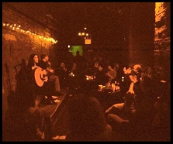
Not Ani, but folk duo Open Book performing at Postcrypt Coffeehouse
In 1994, though, I was back in Denver, an Ivy League dropout supporting myself as a receptionist and listening thirstily to the women artists who were becoming more prominent on the edgier side of popular music, Ani but also Liz Phair and PJ Harvey. Ani had a hard edge, a ferocity I could relate to. We were both from unhappy families. We both came from steel towns, she from Buffalo, New York, and I from Pueblo, Colorado. We both were on our own early: she became an emancipated minor at fifteen, while I left Barnard at nineteen to work my way through my last two years of college at an uncool outpost of a state school, the first among my friends to fly without a net. She was a girl who knew what she didn’t want. I was a girl hoping someone would want me.
You are a china shop
And I am a bull
You are really good food
And I am full
When I hear “You Had Time,” it summons the two most powerful relationships in my life up to the time I first heard it, in 1994. My best friend, whom I’ll call Annette, and C., whom I’ll call my college boyfriend, a term that simplifies and understates (or is it overstates?) the situation between us.
C. and I met in high school, then again at Columbia. An odd array of synchronicities bound us together with an understanding deeper than words, from our parents’ marrying on the exact same day to being fish out of water at a fancy college, both from humble backgrounds. I wanted to believe I possessed enough “inner brattiness” to not be completely transparent. But, mesmerized, I spent two years waiting to see if he would decide I was what he wanted while he came and went, dropping in from out of town or from another relationship. This sounds like I could see it objectively at the time, which is not true. I was a wagging tail, perpetually awaiting his return. I could catch his scent from miles away. I was young enough to believe I could love him so hard he would stop being confused about why he almost loved me back.
When Out of Range arrived, I was sharing an apartment with Annette. After meeting in seventh-grade homeroom, she and I were inseparable through middle school, high school, and straight into our twenties. We drank our first illicit beers together, smoked a zillion clove cigarettes, wore men’s white V-neck Ts and the same oversized, broken-in 501s that Ani is wearing on the cover of her next album. After I dropped out of Barnard, Annette wound up following me back to Denver from her own college. After work and evening classes, we’d eat dinner on my futon while watching Northern Exposure. We roadtripped to Carhenge and the Grand Canyon and to pick peaches, slept back-to-back like puppies, laughed until we got hiccups, cried until we laughed. Throughout our friendship, I wrote off Annette’s adolescent aggressions: telling a mutual friend I was a bitch; sharing secrets with others, knowing the information—and my exclusion from it—would get back to me; dismissing my loyalty when I cut off a mutual friend who called Annette a vile nickname of her own creation. Each betrayal devastated me, but I didn’t know there could exist a kind of love that allowed me to be an equal. I’d been conditioned to understand connection as ultimatum: I would take whatever love was offered, and I would like it.
Also, the drama of love can be deliciously painful when you’re young. In 1993, leaving New York again after visiting C. for a few days, I wept most of the way across the country, leaning against the airplane window. I felt more real for our separation’s torment.
Our relationship lasted six more months. Always, there was tenderness between us, private jokes and swapped mix tapes and a shared sense of beauty; we spoke for hours about art and music, books and films, the way we saw the world. But we were 1,600 miles apart. Video calls were still science fiction, texting didn’t exist, and email wasn’t yet commonplace, so the last year of our relationship was often telephonic (with long-distance costing at least 16 cents a minute, a penny less than I earned) or epistolary. At some point, my ultrasonic hearing suggested that his off and on was leaning off again. Because I was more articulate on paper, where I had time to think, I wrote him a letter explaining that I could no longer bear the uncertain back-and-forth amid the chaos of our burgeoning adult lives. Too chicken to call it off—well, I didn’t want to call it off—I ended with, “The ball is in your court.”
I dreamed that he wrote back, “How would I answer a letter like that?” In reality, he never responded at all. At the time, I thought this meant he was unconcerned about things ending, perhaps relieved to be rid of me, and perhaps he was. I struggled to believe I was worth more than I was getting. Anyway, our situation was impossible. He was working toward building a career in another country, where he was born; we’d talked around that eventuality but never found words to address how it might work between us. I wanted marriage and kids in my life someday and still felt the burn of the time he’d said, “I know what marriage means: no more fun.” In the end, the reverberation of his silence amounted to an agreement. The ball was in his court, but its rebounds dribbled away; it rolled into a corner; dead leaves clotted around it. How can I go home with nothing to say? One option is simply not to return. From afar, you can’t hear the other person’s silence. You can tell yourself they understand. You can convince yourself everything is fine. Or so I imagine.
You’ll say,
Did they love you or what?
I’ll say,
They love what I do
The only one who really loves me is you.
After a February 1994 show at Wetlands, a small, psychedelic venue near the Holland Tunnel, Ani was interviewed by Harold Channer for his TV show on the Manhattan Neighborhood Network. It’s surreal to see her in the faded-out video, against the graffiti-muraled walls where, while attending Barnard, I’d seen acts like the Dead Milkmen and River Phoenix’s band Aleka’s Attic.
The week she played was six weeks after I wrote to C. Back in Denver, I knew nothing about her performance. According to my journal, I was having a week that sounds like a movie montage of being a Gen Xer in 1994: I saw Reality Bites. I heard Beck’s song “Loser” for the first time. I went to a Mardi Gras party where we played spin the bottle, and I danced with a friend in his kitchen, hydroplaning on the wet tile floor, laughing so hard I thought I might asphyxiate; the next day, I seemed to have pulled something in my elbow. Some musician friends took me to see the acid jazz guitarist Ronny Jordan, and when I came home, I found one of C.’s hairs in my blanket. Through it all, I was trying to convince myself I would not die if I never heard from C. I was missing C., and trying to resist missing him, but also delighting in it.
Ani felt like me, passionate and interested, able to experience the missing and the pain and the delight in the pain, curious about what came next, even if she was braver than I. She was the inverse of a slacker, with the earnestness of a folkie rather than the sardonic, cynical aesthetic that characterized the emerging Gen X culture. In the interview, between politely waiting out Channer’s mansplaining, Ani expanded on the idea of telling her story “as a form of political work …. I think that there’s a lot of people out there who feel that their story—and rightly so—that their stories are not being told on TV or, you know, in history books, who feel that their voices aren’t included.”

Watching back this interview and her performance reminds me that it cannot be overstated how important Ani was to me and many of us girls. She felt like a defender and a megaphone. Fifteen years before #MeToo, she validated that we weren’t crazy, that a lot of men were, frankly, bad. She put voice to our suspicion that there is no winning while being a woman, like the time my parents scolded me for looking like “a tramp” when I was eleven years old (the same age as the girl in “Letter to a John,” another song on Out of Range), because I’d purchased a cropped top and dared to think it looked cute on my pubescent body, trying to be the girl the world wanted me to be. Songs about having been abused, about an abortion, about hitching a ride with a friend who has your back—we hadn’t really heard that, let alone seen someone our age turn down a record deal, launch her own label, and release a song about leaving a period bloodstain on the music execs’ fancy chair. All while using fake nails, not for beauty but as taped-on claws, enabling the distinct, percussive playing that has even spawned an instructional article in Guitar Player about how to mimic her sound.
Listening anew, I hear the attitude that Van Meter called brattiness, and I marvel at how wise, and careless, a twenty-three-year-old can be. My journal harbors my realization that I would no longer be responsible for bolstering C.’s self-esteem, as well as my encounter with a guy at my favorite coffee shop who interrupted my writing to ask what I was writing and offer to read it, then, when I said no, told me I would never get anywhere with an attitude like that. I was trying to convince myself I could live without focusing on a man while still being open to loving someone, evaluating a carousel of boys at a pace that shocked friends accustomed to my reserve and intense loyalty. In hindsight, I wanted not to care because look where caring had got me at an age, a time, so full of not-caring. All this makes “You Had Time” sadder still, because it’s about someone who bothers to know and love you.
Just as intensely as with C., I remember the last beats of my friendship with Annette, a few years later, when we were twenty-five. There was an evening when we ripped off pieces of a fresh-baked loaf of bread. I smeared mine with butter and felt somehow affronted that she opted to eat hers bare. Around that time, she called late one night, sobbing that her seven-year relationship had ended. The news meant the end of an era for me, too. Through those seven years, Annette and I, her boyfriend, and a couple of other friends had knitted tightly together. I’d imagined our friendships could last a lifetime, weaving in other partners, children, pets, life. The breakup killed that dream, a grief I did not let myself acknowledge as I instinctively leapt to comfort Annette. In the next days and weeks, I left message after message on her machine. Weeks passed. Months. She never called back, never at all. That spring, when I ran into her at an event, she glanced at me and then looked away, like I was a stranger.
What had I done to end thirteen years of friendship in a heartbeat? Was I too leashed, in her mind, to memories of her ex? Had I been too impassioned in my readiness to defend her? Looking back, I recognize that I was prone to loving people who never gave themselves completely. People like the Ani of this song, who’ll tell you how wonderful you are while dumping you. At the song’s start, I’m allied with Ani, sympathetic to her ambivalence. But partway through, I feel for the oblivious waiting lover, that idiot. Why can’t you see what’s happening, you chump? They’re beside me at the bar where I got drunk one night, deep in my grief over Annette’s disappearance: my elbows on the elbow-worn spots where the finish had rubbed off, my forehead on the old wood, sobbing while a girl I barely knew rubbed my back.
What did you do out there?
And what did you decide?
You said you needed time
And you had time
In “You Had Time,” the narrator has gone blank. Pre-emptive grief creates a void, and if DiFranco understands one thing, it’s how to manipulate voids. She explains in her memoir No Walls and the Recurring Dream, “An acoustic guitar’s ability to make sound and silence sit right next to each other is at the core of its power. As with any rhythm instrument, the spaces are essential.”
The space of time. The space between knowing and not knowing how to play the piano. The space of your long future unfurling after you break someone’s heart. The space after I dropped the letter to C. in a mailbox and before I deeply understood that he wouldn’t write back, that we’d never talk again, that I would fall in love with someone else, a different love growing its own strong roots around the lacuna of that heartbreak.
Again, for all the things the “you” in this song tells Ani, they never actually get a chance to speak—it’s all a projection. Beautiful, poignant, even real. But how does the “you” experience this episode? The more I think about it, the uneasier I feel. What imagined voice narrated my absence from C.’s or Annette’s lives? How much—or how little—does that construction align with who I really am?
Nick Hornby writes that “You Had Time” is “perhaps the gentlest and most generous-spirited breakup song I know.” Of the china shop and very good food, he asks, “How many of us wouldn’t have felt better about being dumped if someone said that to us?” Perhaps he’s right.
A week before I got married, a mutual friend happened to run into C. in New York and told him the news. She reported that he was so shocked, his hands were shaking when they exchanged numbers to “catch up soon.” To my surprise, I realized he might have actually loved me. A gratifying insight, years too late. All along, I’d thought I was the Labrador, but maybe we both were.
Later still, one evening in my early thirties, I popped into the grocery store for a pint of ice cream and ran into Annette and her husband. Warily, we said hello; we made plans to meet. Over the next five years, we regained some of our closeness: having dinner, spending New Year’s Eve together with our families, thrift-shopping like the old days but this time for maternity clothes when she was newly pregnant with her second child and I felt sure I’d soon conceive mine. I told her, tentatively, how painful our split had been. True to form, she didn’t really have an explanation for dematerializing the way she had. I didn’t want to push; for me, our reunion felt like fitting a lost rib back into place, too fragile to dislodge. When I look back at our emails from that time, my voice sounds stiff, a stenosis lingering where the fracture had occurred. Once, I asked about our old letters, hoping to draw on them for the memoir I was writing. She told me she’d thrown them into the Burning Man pyre. It felt perversely good to know I had mattered enough to require purging. After a few years, she fizzled into silence again. I can’t imagine we’ll ever reconnect; ghosts shouldn’t be chased more than once.
Listening so intently to “You Had Time” lifts the veil between the me I’ve become—comfortable or at least resigned to people vanishing from my life—and the me who loved so hard, I could hear voices that weren’t even speaking. The young me thought Ani was unfair. Now, I have more insight into how C. or Annette may have struggled with what to do about me. I loved ferociously, but I demanded much of two young people trying to feel their own way into the world. Maybe they didn’t want to bear my flawed love along as they peered through the dark, or maybe they were not strong enough. For me, the outcome was the same. The Ani of the song relegates her partner to being a voice from beyond before their relationship is even over. Now, I credit her for knowing her own mind, and I see a sort of compassion there. I hope she had the courage to speak, but if not, I hope the song fulfilled its purpose; I hope that, one day, her partner could hear how much she loved them.
Looking back into my own shadows, maybe Hornby’s assessment is right. My pain might have been lessened if I’d known that C. and Annette left me, not because they did not love me, but despite it. After all, having someone see all you are and still not want you is devastating. But not wanting someone and not loving them are two different things.
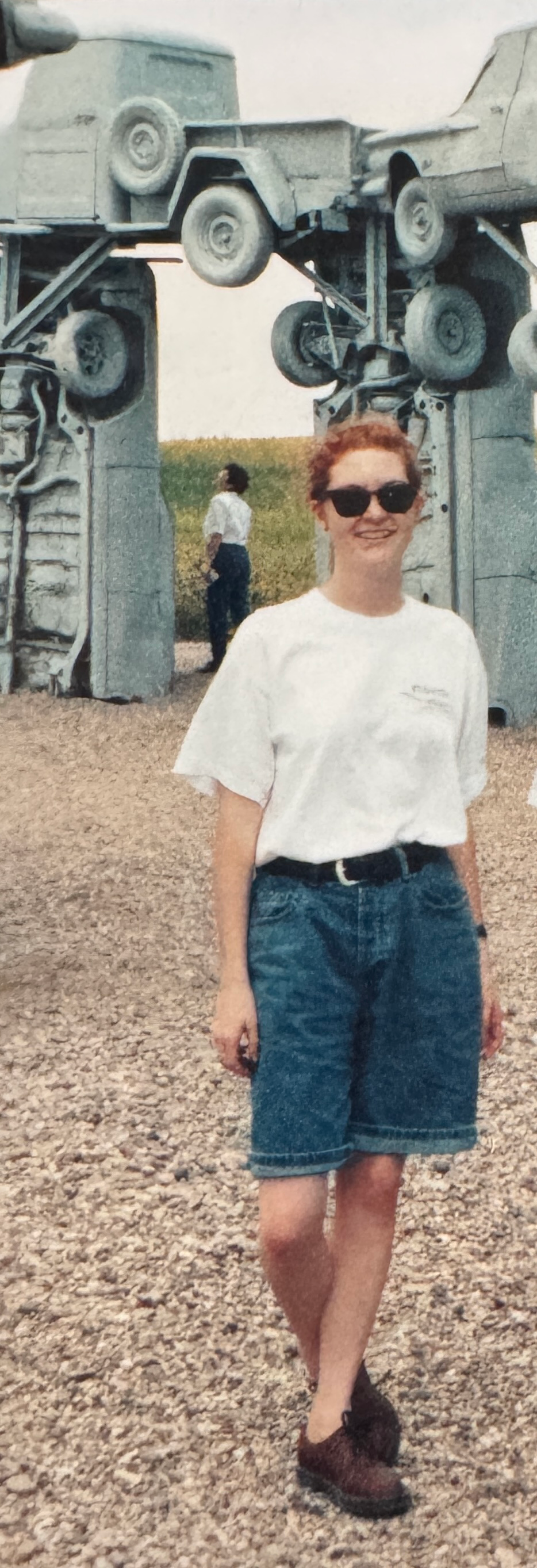
Susanna Donato’s work has appeared in the anthology A Harp in the Stars: An Anthology of Lyric Essays (University of Nebraska, 2021), Electric Literature, Redivider, Entropy, Proximity, and elsewhere. She is completing a memoir, The Only Girl in the Record Store, about growing up as a music-obsessed, Gothy, redheaded preacher’s kid.