
elite 8
(6) Ben Folds Five, “Brick”
edged
(5) Bush, “Glycerine”
301-300
to cement a spot in the final four
Read the essays, listen to the songs, and vote. Winner is the song/essay with the most votes at the end of the game. If there is a tie, we will play a one-hour overtime (and repeat until we have a winner). Polls close @ 9am Arizona time on 3/25/26.
Safer Grunge for Sad and Angry Kids Like You: Jason Thayer on “Glycerine”
“No.” Your mom shakes her head, the decision final.
“Why?” you whine, clutching the Nirvana CD.
“I don’t want you listening to music that’s so—” She pauses, searching for the right word. “So sad.” Lips pressed tightly together, Mom blinks fast, eyelids like windshield wipers in a coastal storm. She is determined not to cry in the Fred Meyer Electronics department as she thinks about the constellation of sad things in your life, the fear of what this music might stoke in you.
Mom doesn’t know a single Nirvana song, but the news still talks about Kurt Cobain and how he fumbled a shotgun into his mouth and pulled the trigger with his toe. Mom also knows that ever since your own dad died of a heart attack, you’ve started screaming out, “I’m going to kill myself!” in the face of life’s smallest injustices. When you can’t find your shoes, when you miss the bus to school, when you die in Super Mario World, that’s it, you are going to kill yourself. As a single parent raising a 10-year-old with precocious suicidal ideations, Mom holds the line on the Nirvana Embargo of 1995.
If Cobain’s caterwaul is a handful of jagged rocks chucked into a wood chipper, Gavin Rossdale’s moan is smooth pea gravel spread across the playground, crunching softly under the feet of kids at recess.
His band, Bush, is a safer version of grunge for sad and angry kids like you. Watching Bush play MTV’s Spring Break ‘96, you are immediately transfixed. The rest of the band disappears into the shadows as Gavin steps forward, strumming the opening chords of “Glycerine.” Night has fallen on Panama City Beach and the crowd sways, flicking lighters, Gavin’s mouth obscured by the shadow of the mic, his moisturized ringlets brushing those perfect cheekbones. And that voice, the way it breaks when he sings, “I’m never alone, I’m alone all the time.”
His good looks are not lost on you, a husky middle schooler who the gym teacher calls Melon Belly. But it’s not like you have a crush on Gavin Rossdale—you don’t want to be with him, you want to be him so desperately you feel an ache in your chest when you watch him onstage, the purple sky opening up, spilling out rain as the chorus kicks in. Even the sky melts when he croons, “Don’t let the days go by.”
When Gavin Rossdale wrote “Glycerine” in the midst of breaking up with his model girlfriend, he could not have anticipated the effect it would have on you, a kid in Seaside, Oregon, sitting crosslegged on the living room floor, curtains drawn against the sunlight, watching MTV Spring Break ‘96, a bowl of chocolate chip mint ice cream melting in your lap.
After that, you search out any and all media you can find about Bush—or, more specifically, anything about their lead singer. You tape pictures of Gavin to your bedroom wall, cut from the SPIN cover story on Bush titled “Don’t Hate Them Because He’s Beautiful.” You take the clipping to the woman who cuts your hair and ask, “Can you make me look like this?” She chuckles a little, says “I’ll see what I can do” before giving you the same blunt, too-high bangs as usual, a cut that does no favors to your big wire glasses, your puffy pubescent face.
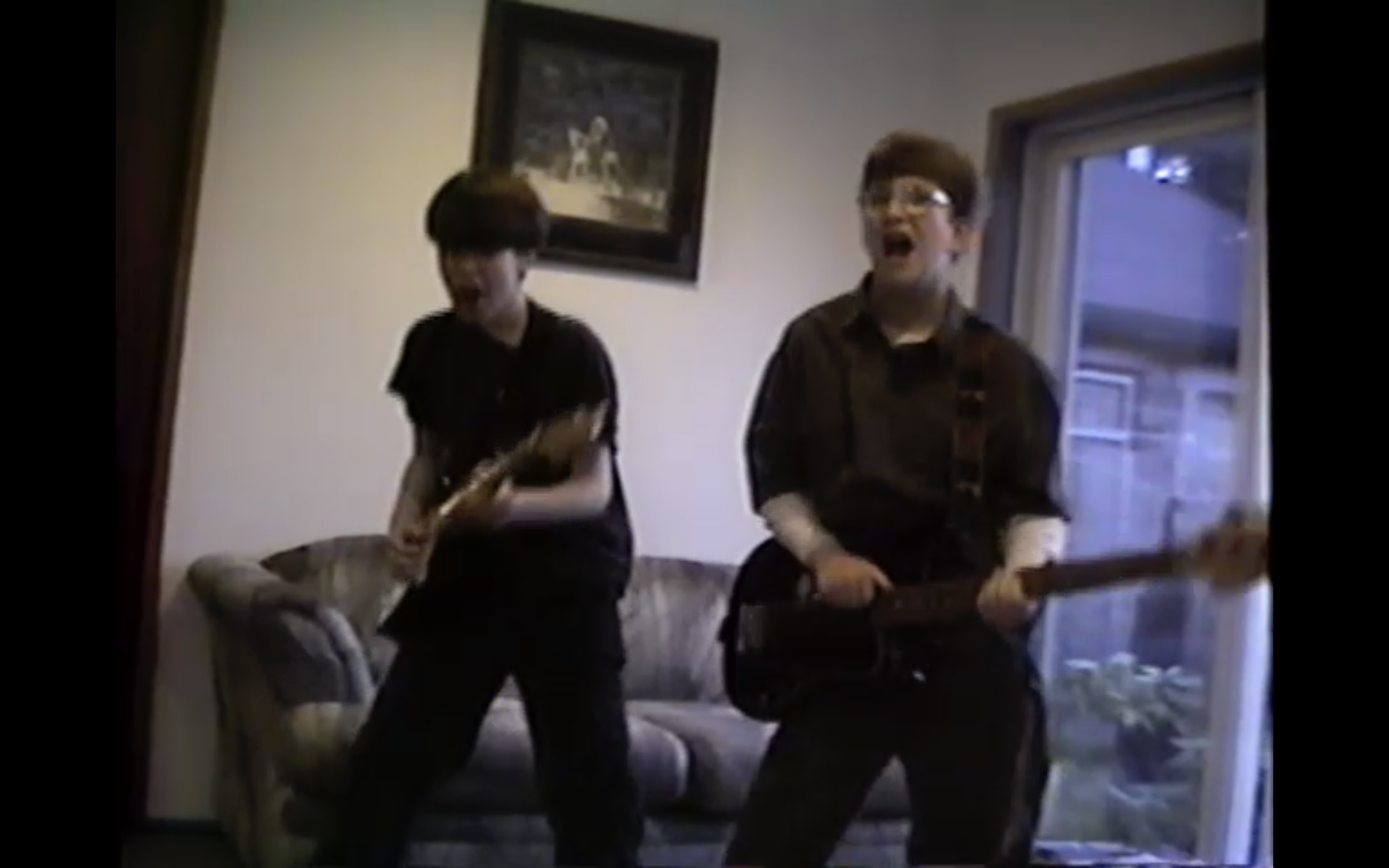
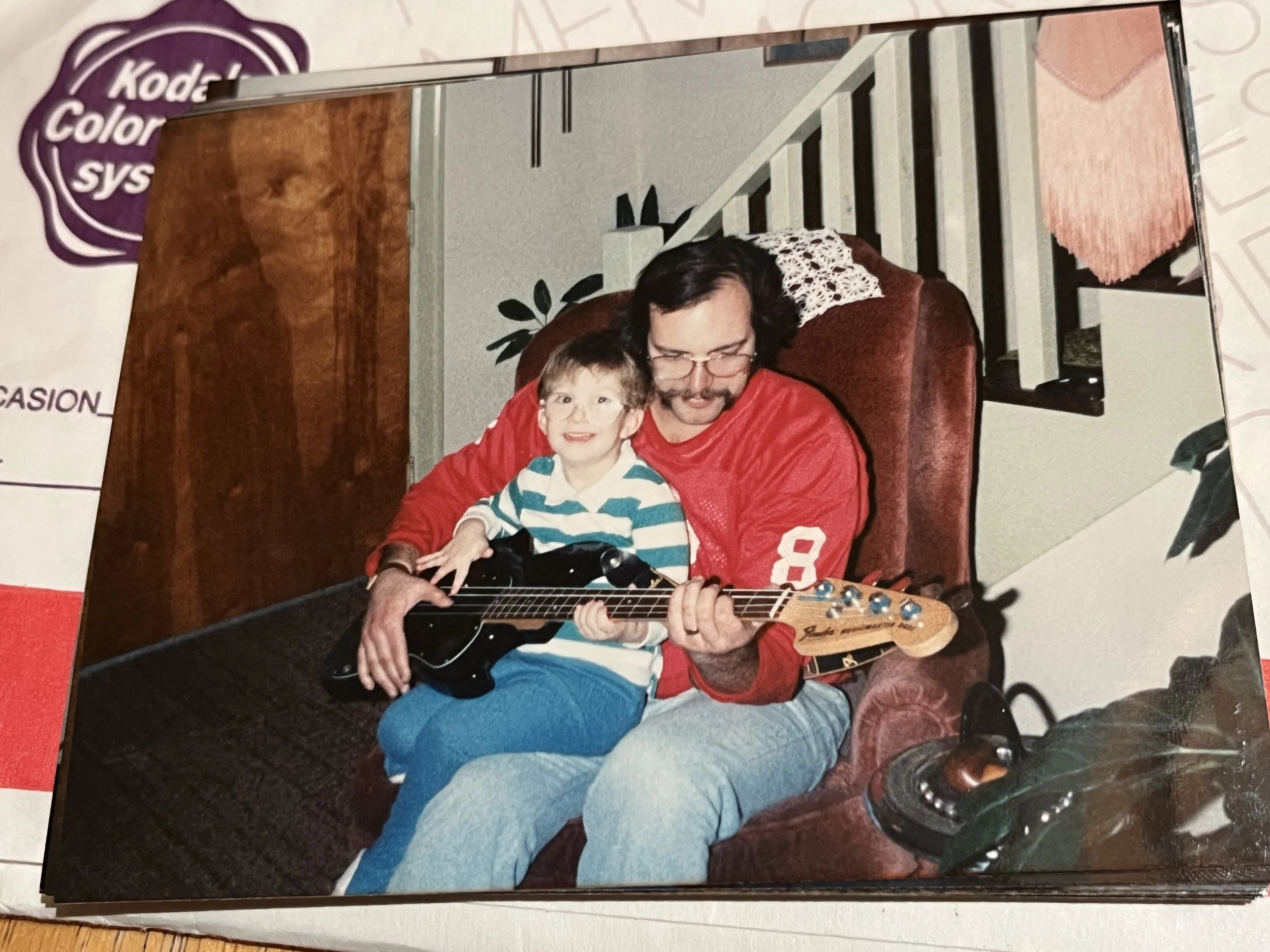
Your best friend, Israel, has the look you want: thick auburn hair cut into a bowl, an upturned nose, a whisper of freckles across perpetually flushed cheeks. He looks natural with his Fender Stratacastor slung across his chest as you both pantomime “Glycerine” while your older sisters film your performance on the VHS camcorder. Israel knows the chorus but you sing every single lyric, strumming hard at the bass guitar your dad had played in his band, Myth, before you were born. On the outside, Israel looks more like Gavin, sure, but on the inside, you are Gavin.
Israel likes Bush, but he can’t listen to them at home. His mom, a born-again Christian, has an embargo of her own: no “worldly” music. Just as Bush becomes a safer version of Nirvana for you, DC Talk is the Jesus Freak alternative for Israel, both your single mothers wary of the power the men singing these songs have in shaping who their sons will become.
“Rossdale’s got a very lazy bunch of existential demons,” quips James Hannaham, alluding to the singer’s privileged upbringing in the SPIN cover story you pore over while listening to Bush’s Sixteen Stone on repeat.
Because he is beautiful and untroubled, that same year Rolling Stone puts a shirtless Gavin on the cover, finger coyly tugging at his bottom lip, inlaid with the question: “Why Won’t Anyone Take Gavin Rossdale Seriously?”
The son of a doctor and a model, Gavin was raised in a wealthy London neighborhood, literal and metaphorical oceans away from you and Israel, who grew up a block from each other in a rusted out tourist town, your fractured families hovering around the poverty line. This is the alchemy of fandom: no matter the distance between us, we find ourselves in the words our idols sing.
By 1997, there’s a lively debate as to who is the better lyricist, Gavin or Kurt Cobain, on bushnet.com, a forum you find listed in the liner notes of Bush’s remix album, Deconstructed. You immediately burn through your weekly ration of dial-up internet, scouring the responses. The consensus of even the biggest Bush fans is that Cobain wrote better lyrics.
“What does ‘I live in a wheel where everyone steals’ actually mean???” bushfan81 posts to the thread, referencing the “Glycerine” lyrics.
In The Creative Act: A Way of Being, Zenned-out music producer Rick Rubin writes that making art requires tapping into “the Source,” a creative energy suspended in the ether. He argues there is resonance in the work we create even if we don’t yet know it. The power of art lies in its malleability, each reader wrapped in their own tapestry of experience that dictates the meaning they unearth, intended or not.
In other words, it doesn’t matter what these lyrics mean to Gavin, it matters what they mean to you.
When you hear him sing about living in a wheel where everyone steals, you think about the cruelty of the world you know. You think about losing your father when you were seven, and in “Glycerine,” you see the value of a loss like this. The guitar’s overdriven hum, quieted by Gavin’s callused fingertips, the aching moan of those cello strings, his strained voice: the act of making something this beautiful out of personal pain is revelatory. Listening to it again and again in your bedroom, you know exactly what you can do with sadness, and soon you begin scrawling your own lyrics into notebooks you keep hidden in the back of your dresser.
Shortly after you begin mapping your adolescent emotions, Israel becomes a skater, JNCO’s enveloping his legs, a tight white t-shirt clinging to his chest, a fake silver chain around his neck. A labret piercing skewers his bottom lip, his shaggy bowl cut now twisted into spikes rising from his scalp like the devil his mother tried to shield him from. He carves his initials in Olde English into his bicep using India ink and his sister’s diabetic syringes. Ditching DC Talk, he favors Nu-metal, which is easier to slip past his mom’s blocade now that he has a Discman.
Around this time, you review Golden State—Bush’s fourth studio album—for your high school newspaper, dismissing it as “recycled grunge.” You are a teenager and your taste has evolved. You are hooked into Modest Mouse and Sleater Kinney and Elliott Smith, the holy trinity of Pacific Northwest indie.
By the end of sophomore year, Israel stops showing up to school. Soon there are rumors that he is dead.
“He’s not dead,” you say.
“I don’t know, man,” a kid in your Biology class shakes his head, “he was really fucked up last time I saw him.”
After school, Israel laughs when you tell him about the rumor. “I’m just high,” he snorts. “Too high to go to school or not high enough.”
Israel runs a pawn shop out of his bedroom, fixing up and selling electronics. The two of you lug an old tube TV that someone traded him out to his backyard. He cues up Limp Bizkit’s “Break Stuff,” cranks it in the headphones he’s slung loose around his neck so you can hear too. The two of you smash the shit out of the TV, hurling rocks at the screen, driving your heels into the set, beating on it with wooden boards you pull from the crumbling fence lining the yard. The TV hisses. Israel finds a ball peen hammer and swings it hard into the guts of the television, keeps swinging, even after his hands are bloody and the song has ended, shards of glass glittering like fallen stars across the dried up lawn.
After high school, you lose touch with Israel. You go to college, you graduate, you move two thousand miles from Oregon, waiting tables at the Fairmont Hotel in downtown Chicago. The restaurant manager has put Gavin Rossdale’s 2008 solo hit, “Love Remains the Same,” on the breakfast playlist, sandwiching the glossy, overproduced song between Melissa Ethridge’s “Come to My Window” and Gotye’s “Somebody That I Used to Know.”
In the chorus, Gavin invites the listener to “drink to all that we have lost.” You oblige, pouring Cava into paper coffee cups every morning with the small and ancient Nigerian man who washes dishes and insists everyone call him “the President.” You affectionately call him Prezie, the two of you ducking down behind racks of steaming glasses in the dishpit, gulping Pinot Gris, Chardonnay, Sauvignon Blanc, then chasing it with swigs of black coffee to cover the smell on your breath.
You don’t know all that Prezie has lost, but earlier that month, the woman you moved to Chicago with told you she was no longer in love with you. You stood over the stove in your kitchen, stuttering in disbelief, stirring crumbles of blue cheese into heavy cream to coat the gnocchi you were making the two of you for dinner.
“Glycerine” takes its title from the temperamental chemical, nitroglycerin—a metaphor for Gavin’s volatile relationship. You have been in unstable relationships before, but this one was not that. Just months earlier, you had signed a lease on an apartment together and filled it with IKEA furniture, staying up late to talk about how many kids you should have once the time came.
Despite what the title suggests, musically, “Glycerine” doesn’t feel combustible. It is the kind of measured song a person writes while musing on the challenges of their strained relationship, penning poetry about the half-life of infatuation and the bittersweet beauty in our fleeting connections, noting on the lyric sheet where the cellos come in, patiently strumming out a chart-topper. It is a song about instability, clearly written by a stable person.
Gavin wrote Bush’s follow up album, Razorblade Suitcase, in the weeks after the relationship finally fell apart, his longtime girlfriend packing her belongings out of the apartment they shared, the final vestiges of their life together gone. Unlike its predecessor, chocked full of radio-ready, post-grunge bangers like “Glycerine,” no song on this ragged breakup album would ever grace a coffee house playlist. Razorblade Suitcase is reality sinking in, Gavin flailing against the dissolution of the life he’s built, not having the energy to get the chords right—not wanting to get the chords right—just fucking angling the guitar at the amp and letting the feedback’s squeal stand in for his own anguish, his own urge to “lean into fire,” to embrace self-destruction, if he could even find the strength.
After your breakup, you write sad song after sad song, performing them with your gloomy, proto-goth band, Hotegaia. Jerking your body to the heavy-handed tom beat in Chicago’s dark basements, warehouses, and dive bars, you croon your guts out to acquaintances and strangers with creative haircuts. You close your eyes and go trance-like. On stage, it feels fucking incredible, making yourself this vulnerable, bathed in the blue gel lights you set up for each show, killing every other light in the space so that all definition in your face falls away.
But in a blink, the set is over and you snap back to reality, a twinge of fear radiating through your chest. The drinking helps with that, sanding down the raw anxiety of sharing parts of yourself that the world beyond the stage advises you to conceal.
For all the confidence his good looks should have leant him, Gavin must have also felt this gnawing anxiety—a problem he dealt with by smoking ungodly amounts of what the SPIN article calls, “cheba,” which is, you guess, what they called weed in 1996.
Animated by sparkling wine and sadness, your race toward radical vulnerability culminates with a solo project—you, alone on stage wearing all white, a splotch of fake blood smeared across your chest, pouring cheap champagne over your head as you sing sad-boy hip hop reviewed in the Chicago Reader like this: “The beats are lo-fi, gritty, and sometimes so skeletal they make his caustic words sound even bleaker—I had to take a few breaks in order to make it through the whole album, but it's worth it.”
Of all the songs you’ve written, none are like “Glycerine.” None are the kind that, in the years to come, you will feel comfortable sharing with your partner or your partner’s dad or your own mom or other musically-inclined parents with kids the same age as yours—even when they ask. It’s sad fucking music, but it’s not catchy or beautiful. Which is to say, it’s music most people don’t really want to hear.
Comedian Chris Fleming jokes that we love transgressive art—but only when it’s presented in a palatable package. “Be original,” Fleming says, “but run it by us first.” David Bowie could sell albums as an androgynous alien because his music was pure pop perfection, sung by someone whose cheekbones were only rivaled by Gavin Rossdale’s. “That’s a beautiful, beautiful jock,” scoffs Fleming.
In other words, write your sad song, but make sure it has an infectious chorus, and don’t say anything too fucked up, and if you could look really hot when singing it, that would be great, thanks.

A few years after you sing your last dark song in an equally dark Chicago basement, your sister calls to tell you that Israel has died. She read it on Facebook. No cause of death, just his older sister posting to let the world know.
You’ve tried writing about Israel before. One of the first short stories you ever wrote was about the last time you saw him, just after graduating high school. He was living in a single bedroom apartment with his sister in Seaside, sleeping on a futon in the living room. Nursing a bottle of MD 20/20, he showed you the blood stains on the recliner he was sitting in—evidence of an overdose that landed him in the hospital a couple weeks prior.
“I’m clean now,” he had grinned, taking a long draw off his cigarette. His dull eyes widened as the ember glowed orange, a tiny sunset held precariously between his yellowed fingers.
When you showed this story to the person you were dating at the time, she looked up from the pages, face scrunched in confusion. “How were you even friends with this guy? What could you have possibly had in common?”
“That’s the thing,” you said. “He and I have so much in common.”
Now, almost a decade after his death, you think about the time you and Israel dyed your hair with Kool-Aid on the last day of fifth grade, about the two of you wrestling, your cheeks rouged with adrenaline as your little boy bodies caromed off each other, careening around his bedroom. You think about staging talk shows with your sisters as the hosts—the two of you playing the musical guests, always Bush, adopting British accents in your interviews.
Searching the internet for anything you can find about Israel’s death, you soon get sidetracked looking for that performance of “Glycerine” in the rain. Unfathomably, you stumble upon a different rain-drenched rendition of the song, shot three years after Bush’s MTV Spring Break set. Woodstock ‘99 was massive, a few hundred thousand people held captive by the image on the big screen of Gavin, alone on stage, shirtless, wet locks sticking to those granite cheekbones. Even watching it now, you feel a familiar longing to be Gavin Rossdale up there, an ache at the canyon between you and him. You feel a charged anxiety just at the thought of how vulnerable you’ve made yourself over the years, singing words into a microphone that could never possibly resonate like his—a fear that peaks when you think about how you need to push past this insecurity in order to share parts of yourself with the people in your own life.
“I’m never alone, I’m alone all the time,” Gavin sings and the meaning of this contradiction finally clicks into place.
Your counselor, Ian, says your anxiety comes from a desire to connect with others and the fear of fumbling that connection. Ian says to feel this emotion—to embrace the anxiety and what it represents instead of trying to drown it out. Because craving connection with others, chasing it, is how we find communion; it’s how we survive our sadness.
Every time you tried to write about Israel, you kept circling around everything you and he had in common, but in the end, it’s what you didn’t that matters most.
At 10 years old, when you watched Gavin Rossdale play “Glycerine,” the downpour tracing his face, his voice breaking on the refrain, you longed to do what he did—to make loss worth its weight in your life, to use it as a bridge to others’ grief, to write a song that people felt so deeply they belted it out into the rain. Unmoored by sadness, this longing became your North Star, guiding you toward the shoreline and the ones who waved you down, welcomed you home.
Jason Thayer is the Editor-in-Chief of Complete Sentence. His writing has appeared in The Rumpus, HAD, and Fourth Genre, among others. He is working on a memoir and a new Hotegaia album, both works exploring how early trauma steers our lives.
Cicily Bennion on Ben Folds Five’s “Brick”
This essay begins in 1999 with my brother on a bike, a twenty-year-old riding straight through the intersection just as the car on his left turned right. I still remember how my mother screamed when she got the call saying he’d been run over. I was six years old and didn’t yet know how to calibrate for her big reactions. Piecing together what I could from her side of the conversation, I thought my brother was dead. But it was only a broken leg. A bad break, though. One that required surgery and a permanent metal rod in the bone. My brother got a payout from the driver, or rather her insurance, just enough money to make a college kid feel rich. With it he bought a brand new first generation iPod and some DJing equipment and played at house parties on the weekends until he graduated and moved to New York City and got a job and, eventually, a new iPod.
It must have been 2005 when he approached me with the old one. He’d kept it a while. I was, by then, in the fifth grade, and though iPods had been around for a few years, no one I knew had one. Not really even any adults. They were an extravagance that didn’t seem to have reached my small town. “I decided not to wipe it,” he said as he handed it over. He’d considered going through and removing the songs with swearing but that would have been too much work. I’d just have to be cool.
And that’s how I went from listening to my one Gavin DeGraw CD on repeat to soaking up what was to me at the time an immense library of songs. Thinking back on it, it seems I got stuck for a while at the B’s: The Beatles, Beck, Ben Folds, Ben Folds Five, Bright Eyes, but I eventually made my way through the rest of the alphabet: Counting Crows, Death Cab For Cutie, Fiona Apple, The Gorillaz, Metric, Nirvana, Outkast, The Police, The Postal Service, Radiohead, Red Hot Chili Peppers, Weezer. Surely there were others. They’re gone now from memory.
It would be difficult to overstate the importance of that iPod’s appearance in my life. It carried me through some very awkward reading years as I went from elementary to middle school. In elementary school, my reading had been intensely incentivized with a point system and leader board. Top readers had their photos displayed in the hall, and my face was always up there. I was ploughing through several books a week. But when I entered sixth grade, the middle school library felt like a wasteland. I didn’t know what I was searching for, but I knew I was too old to read any more about Junie B. Jones, the Boxcar kids, or Beezus and Ramona. I’d never heard of a middle grade novel in my life, and the world of YA literature felt far off. The librarian suggested a few titles, but they all fell flat, and I soon got a vague sense that she didn’t like me much anyway, which mattered very much to me then, just as it would now, and so I became a girl who no longer haunted the stacks.
Without books I felt aimless. I was, at one point, desperate enough for recommendations that while watching Jeopardy with my mother, something about the correct response “Who is Lolita?” caught my attention. There is, of course, an online database of every answer and question ever aired on Jeopardy, and so I can tell you now that the clue must have been this one from January of 2008: “Dolores Haze, all in my brain, is the real name of this title Nabokov girl; ‘scuse her while she kisses that guy!” The category was “Tarts,” and all the other solutions in the column were women and girls whose bodies had been leveraged and displayed—Salome, Lady Godiva, a 1950s stripper by the name of Blaze Starr. The whole thing was distasteful, I know, but I was ignorant to that. To me, it was just disorienting and nonsensical enough that I became intrigued and went searching for the book in question only to discover within a few pages that this was not the girlhood story I’d thought it was. It was my first and so far only attempt at reading Nabokov.
All this to say that there was a void in my life which the music on that iPod came to fill. I went from retiring to my room every evening to read to retiring to my room every evening to listen to my iPod. All that listening played the role that books might have had if I’d continued to read as intensely as I once did. My listening was always lyrics forward. I am still sometimes mystified when someone mentions a song’s bass line or drums. I hear those elements, sure, but it is and always has been the vocals that matter most. It was not, in this way, unlike reading. My listening expanded my vocabulary and taught me life lessons. It was from “At the Bottom of Everything” by Bright Eyes that I learned the word “arduous.” From The Postal Service’s “The District Sleeps Alone Tonight” that I learned the word “gaudy.” And it was Fiona Apple, as much as any novel I’ve ever read, who taught me what it is to both want a man and regret ever having him. I fell in love with “Paper Bag” and listened to it over and over, imitating Fiona’s bluesy vocals until I began to imagine that if I were ever to audition for American Idol, this would be the song with which I’d win over the judges. Today, I can only hope Simon Cowell would have been unnerved rather than wowed to hear me, barely a teenager at the time, croon “Honey, I don’t feel so good, don’t feel justified / Come on put a little love here in my void.” Even after all my years of being one, I still did not know I was a child.
When, in the sixth or seventh grade, a couple friends came over for an afternoon and decided they wanted to make a music video, I sat them down and played Ben Folds Five’s “Underground.” They had never heard of Ben Folds, and they’d wanted to choose something a bit more straightforwardly happy, but already I was becoming a person who was not particularly interested in or good at straightforwardly happy. Somehow, I managed to convince them that this was the song, but we didn’t get very far in our filming that afternoon. We captured only enough footage to cover the intro, a strange beginning in which drummer Darren Jessee declares plaintively, “I was never cool in school,” and then, a few bars later, shouts with bravado, “Hand me my nose ring!” We used one of my mother’s clip-on earrings as a prop for this. With her unpierced ears, the earring was not a toy to her, and she begged us not to lose that little hoop, but I’m quite certain we did.
When I took over my brother’s iPod, Ben Folds was one of the first artists I discovered. He had the distinct advantage of appearing twice in a row when scrolling through, first as “Ben Folds” and then again as “Ben Folds Five.” This doubling up intrigued me, and I began to listen. I soon sussed out what I know to be true today, that he’d made music as both a solo artist and a member of a group called Ben Folds Five. What I didn’t know then was that Ben Folds Five was, in fact, a trio. The group formed in 1993 in Chapel Hill, North Carolina and was made up of Ben Folds (vocals and piano), Robert Sledge (bass), and Darren Jessee (drums). One of the band’s stated aims was to make rock and roll music with no guitar, to show that such a thing was possible. In the ’90s rock scene, this was not a given. In my own listening, though, the lack of guitar was totally lost on me. I was too focused on what was there, namely Folds’s technically impressive, if unruly, piano playing. I had, by then, taken enough piano lessons to both appreciate the difficulty of what he was doing and also know that I would never be able to do it. I never noticed the group’s lack of guitar until I read about it years later.
As a band, Ben Folds Five had a relatively brief but glorious run. When they disbanded the first time in 2000, they’d released three studio albums in seven years. Their second album, Whatever and Ever Amen had sold over a million copies in the US and was certified platinum. Throughout that seven-year run, their songs had charted in the US, Australia, Canada, and the UK. When they split in 2000, they each went on to separate projects, with Folds beginning his successful and ongoing solo career. The band got back together for a brief period in the early 2010s, touring again and putting out a fourth studio album, but it is hard to recapture the magic of a thing long past, and in 2013, they disbanded once more.
By the time I began listening in the mid-2000s, Ben Folds Five had already broken up, not that I really knew or cared. As a fan, I was both pure and static. I had to be. The iPod was a fixed unit, and for as long as I listened to it, my musical world was set and unchanging, as if my taste and listening existed outside of time. I was interested in the way the band’s songs played with emotion. The songs were often not only sorrowful but world-weary. Still, these feelings were never just given straight. There was always some distancing device. In some songs, such as “Alice Childress” or “Boxing” this distance is accomplished by relying upon imagined interlocutors or alternative speakers. But most often, the distancing device is humor. Good examples of this can be found in “Army,” “Battle of Who Could Care Less,” and “Song for the Dumped.” That last one made me laugh out loud the first time I heard it. And it was catchy, too. I still remember singing along while I listened with headphones in my room and being shocked and a little thrilled when, having forgotten to self-censor, I found myself belting out, “Give me my money back / Give me my money back / You bitch!” I stopped, half expecting a parent to burst through the door and take the iPod away as a punishment for foul language, but when I took the headphones out, the house was quiet. My parents were not, despite my fears, in the habit of listening at my door.
I don’t point out the emotional distance of Ben Folds Five’s music to criticize it. In fact, it’s something I admire about Folds’s work, probably because I see something of myself in it, something of my own tendency to laugh at the wrong moment, the wrong thing. To play fast and loose. To unsettle my discontent by minimizing or dramatizing it. These are human tendencies not often reflected in our music. We have enough songs that are clear-eyed and honest. I need music as squirrelly in its feeling as I am.
But Folds’s most successful, most well-known song has none of these traits. “Brick,” released in 1997, is not at all the sort of cheeky, raucous “punk rock for sissies” the band usually put out. It is earnest and sad—sorrowful vocals over a simple piano tune, pared back drums, and cello. It peaked at number six on the US alternative charts and according to songstats.com has been streamed 70.9 million times across different platforms. For a song that came out long before streaming did, that’s a lot of staying power.
“Brick” is a song about the true story of an abortion. It is also a song about two kids in way over their heads, something made plain by the words of the chorus and its talk of “drowning slowly.” In his 2019 memoir, A Dream About Lightning Bugs, Folds writes about that time. He was a senior in high school when his girlfriend got pregnant. Just as it says in the song, he drove her to a clinic on the day after Christmas. Both the pregnancy and its termination were a secret they kept from their parents, but neither of them were equipped to handle such a thing on their own. Folds recounts how in that year, he developed mononucleosis and a case of recurring strep throat, and while he doesn’t claim that this was in any way directly related to the secret he and his girlfriend were keeping, there have been times in my own life where my body has failed due to my mind’s overwhelm, and I’m inclined to think that the same sort of thing may have been happening to him. He was ill so often in his senior year that he missed as much school as he’d been present for and he was falling badly behind. His girlfriend, too, was failing senior year. In the aftermath of the abortion, she was, Folds writes, “having an awful time of it all.” He began to worry that she might kill herself when he was away. He writes of trying in vain to “keep her from cutting her face with razor blades.” One morning, the two of them met in a church parking lot so he could give her some homework he’d done for her—he was trying to help her make it to graduation—and when she climbed into his car and out of the rain, she began to scream and shake uncontrollably. He drove her to the hospital, and a counselor there got their parents involved. Both sets of parents were, Folds writes, “more understanding than [he and his girlfriend] could have imagined.” In his memoir, he recounts, “it was all a great relief… A great weight was lifted. Once the secret was out, we were children again.”
The memoir doesn’t say, but if we take the song’s narrative to be true, the relationship dissolved soon after. There are not many relationships that could survive such trauma. They both graduated high school. Their lives went separate ways. In his book, Folds writes that he spoke with his old girlfriend on the phone in 1997 about the release of “Brick.” She told him then that she “felt better knowing something positive could come from it all.”
If the expectation is that I will now offer some comment on what Folds and his girlfriend lived through, then I am afraid I will have to disappoint. I have never had an abortion, and even if I had, this wouldn’t qualify me now to speak to what somebody else has gone through. The closest thing I’ve ever experienced is a possible miscarriage for which I was easily, unreservedly grateful. I was twenty-one years old and on a sort of extended honeymoon with my husband in Morocco. While eating breakfast on the rooftop terrace, I began to feel ill and excused myself to go back to our hotel room below. There, I saw that I was bleeding, dug through my luggage to find a box of tampons and soaked through one in a matter of minutes. There had never been so much blood before. I put in another, dressed again, then curled up on the canopy bed and let the pain in my belly rock me while I counted back the days on my fingers; I must have been late. My husband found me there and when I explained what was happening, he braced for my grief but there was none. I was on birth control but apparently it was not working. I wanted children, to be a mother, but only someday. I was not ready for, had no desire for, an infant yet.
That day we took a bus that wound us up through the Atlas Mountains. In a dingy rest stop bathroom, I washed blood from my dress in the sink and felt grateful. In photographs from that afternoon, the two of us are high, a valley of peaks below us, and I am, despite being slightly pale, absolutely radiant with relief. Now, looking back on it, I’m less certain what happened. Perhaps it was only a heavy period after starting a new birth control. But at the time I was sure I’d lost a baby, and I was sure I was not grieving.
When I read through online discussions of “Brick,” much of what is being said is ugly. There are, of course, people who object to the song simply because they object to abortion, and in the comment threads, sometimes individuals go head to head, finding themselves arguing about not a song but an issue. I’m not very sympathetic to this approach. I will admit, though, that there are aspects of the song itself that give me pause, though for entirely different reasons. When Folds sings that “she’s a brick” and he’s “drowning slowly,” I can’t help but wonder if the song is being fair, if there is not some way to take more ownership for the events unfolding. And when, in a sudden moment of direct address, Folds sings, “Can’t you see / It’s not me you’re dying for,” I want to ask what right he has to say this when he also, categorically, cannot be the one an unborn child lives for. He’d made a life he could not carry. When you do this, you don’t get to resent someone else for having to set it down. But in Folds’s fuller retelling of these events in his memoir, there is no trace of resentment. It must be that the song’s aim, if it has one, is not to assign blame but rather to recall the experience as it felt when he lived it. I cannot imagine what it would be like to hold with someone a secret that is killing them, to be both alone and together in that way, but it must feel very much like drowning. That Folds felt that way at the time, that he remained willing to say so years later, is not something I fault him for.
I first listened to “Brick,” even came to love “Brick,” outside of all this context. I didn’t look up the song or the band. I didn’t read interviews. I didn’t watch the music video. I just listened over and over again. With “Brick,” I did what I’ve done with many songs that I could not make sense of, which is to glom onto certain lines and phrases and create a story around those bits instead, largely disregarding the pieces that do not fit. When Folds sang, “Up the stairs to her apartment / She is balled up on the couch / Her mom and dad went down to Charlotte / They’re not home to find us out,” it did not occur to me to think he may have been singing about something that had happened years before, when he too was a kid with parents who might have found him out. It was a song sung by a man, and so to me the song was obviously about a man who had fallen for a younger girl. It didn’t matter that I couldn’t make heads or tails of the third verse: “They call her name at 7:30 / I pace around the parking lot / Then I walk down to buy her flowers / And sell some gifts that I got.” I see clearly now that this is the moment in which the abortion takes place and the boy pawns his Christmas gifts to pay for it. But listening on my iPod, I had no context clues to point me toward this and I was mystified. Not understanding, I put it aside. Some things, I figured, weren’t meant to make sense.
If the third verse is removed, the song takes on a new shape and meaning. In verses one and two, a man sings about leaving home early on Christmas morning to drive to an apartment where there is a girl waiting for him. Her parents are away. At the bridge, this girl is “not fine,” and the parents confront the two of them, saying, “it’s time to tell the truth,” and they break down because they are “tired of lying.” Finally, in the fourth verse, on the drive back to her apartment, they are together again for just a moment, and they both seem to realize just how alone they are in this relationship. The song ends with one final repetition of the chorus, one final insistence that this girl is the reason he is drowning.
Having disregarded that third verse, it seemed obvious to me just what the song was about. If my reading still seems far-fetched, it may help to know that by this time, I’d listened to The Police sing “Don’t Stand So Close To Me.” I’d heard Weezer’s “Across The Sea.” I’d seen a sixteen year old Britney Spears dancing in a sexy school-girl outfit in the music video for “…Baby One More Time.” And I’d watched Never Been Kissed, a romcom in which a journalist goes undercover at a local high school. When the cute English teacher with whom she’d had great chemistry learns she is not who she said she was, instead of being relieved to find he doesn’t actually have a crush on an underage girl, he’s mad that she lied. If “Brick” were the song I’d thought it was, it would have been just one more of many cultural artifacts that treat the teenage girl as irresistible, the ultimate siren.
I’d been misreading “Brick” for some time before my life began to resemble the song as I’d understood it. I was fifteen years old when the man at church found me. He was twice my age and married with four kids. Slowly, methodically, he worked at getting closer to me. He seemed willing to listen to most anything I had to say. I told him about things like how I dreaded summer, when I’d go long stretches without seeing anyone. Or the time when I rode my bike past the tennis court and found three friends there playing without me. I was always looking for people to play tennis with and they knew it. “Why wouldn’t you call me?” I’d asked them. “You can’t even play tennis with three people.” They were just idiot boys who couldn’t account for themselves, but I was hurt. I’d become paranoid that some of my friendships were less than genuine, that perhaps some people were less interested in spending time with me than they were in spending time at my parents’ over-the-top house with its extravagant movie room. I quietly stopped inviting people over for movie nights to see how long it would take for someone to invite me over for a change. Weeks and months passed. The man at church understood how upsetting and devastating all of this was to me when I confided in him about it. Occasionally, he confided in me too. He’d once had a problem with porn, he said. And when he’d been my age, he was constantly jerking off. His faith, he said, had helped him through it, and he was all better now. Did I ever do anything like that? The honest answer was that I did not. But it did, I guess, sometimes feel good to touch myself. He wanted to know if I’d ever had an orgasm and I couldn’t say for sure. Still, he was serious and stern about all this. I had, he said, a real problem. He’d help me get better.
By the time I was seventeen, he felt indispensable enough that I did not run when he passed me a note which read, “I think I am falling in love with you.” After I’d read it and blushed, he took the note back. Better that I not keep any evidence around, he said as he tore it up and put it in the trash. Despite his grand declaration, we’d never touched. But he was, he now told me often, completely overwhelmed by me. He wanted me in every way. He told me he’d prayed and God told him we were meant to be together. Never mind the fact that he was already married. He couldn’t say when, but he was sure someday he’d make me his wife. But waiting was so hard. I had to help him. Who else would understand? There was no one else he could turn to. By all of this, I was totally won over. His desperate need for me was such a stark contrast to the boys my own age, whose affections were tepid and fickle, changing on a dime. If nothing else, at least this man was constant. He was, it seemed, eternally tormented, and I convinced myself that I was doing a good thing by helping him. Days after my eighteenth birthday, he kissed me, his eager mouth colder and wetter than mine. It was my first kiss. When it ended, I stood there stunned. Kissing felt nothing like what I’d imagined. I was a senior in high school. I spent the rest of that year feverishly trying to answer his texts in time, juggling my fear of getting caught with my phone out in class with my fear of him when I did not reply quickly enough. Our conversations were a tug of war. I wanted to talk about my day: the calculus test I’d taken, whether he thought anyone would ask me to prom. He wanted to send me long screeds about all the ways and places he dreamed of fucking me. And had I touched myself lately? I would never get better, he scolded, unless I talked about it.
We saw each other at church once or twice a week, but that wasn’t enough, so he texted me every day. On a few occasions, I rode my bike to his work so he could kiss me in a back room. We didn’t have sex, he didn’t rape me, mostly, I suspect, because there was always someone just on the other side of a door or wall. He suggested a few times that we meet elsewhere, but I demurred. So instead, we mostly just texted. Every day, he asked me to send photos of myself. In the pictures I sent, I was always fully clothed and smiling. Here I am looking happy and sleepy after Thanksgiving dinner. Here I am months later in a springy top with freshly trimmed bangs and too much eyeliner. What he wanted, I’m sure, were nudes, though he never asked for such a thing directly. I was naive enough to believe him when he said he wasn’t jerking off to these photos, that he only missed and wanted to see me. And so I didn’t understand why he was so enraged and disgusted when one day, when he asked yet again for a picture of me, I sent an old baby photo. It was one my parents kept displayed at home. In it, I am a few months shy of two years old, wearing a white dress with puffy sleeves and sitting before a purple studio backdrop. I smile at the camera with one arm lifted, my little baby fingers come to rest just behind my ear. It looks a bit like I am striking a pose, but it’s more likely that I was twirling the hair that grew there—I’ve been a hair-twirler, my mother tells me, since forever. But the man from church seemed to find nothing about this photo cute or endearing. “Why would u send me this?” he wanted to know. Why, he demanded, would I think he wanted to see that? I was, at the time, completely dumbfounded by his strong reaction, but it makes me laugh now to think of it, the accusation that photo must have represented to him, how deeply offended he was by it.
Throughout all of this, I was, just as in the song, not fine. At school, I mostly managed to seem normal, but then I’d come home and go straight to bed, wake for dinner, do a bit of homework, then fall asleep again until morning, sometimes with my jeans and shoes and the lights still on. My grades were slipping. When it came time to apply for college, I dragged my feet and began to talk about not wanting to go at all. All of this alarmed my parents, but they talked me into applying to a few universities. The man from church, too, was encouraging me to go. Though he didn’t say so at the time, I’m sure he was eager to see me leave. It had been months and still, I was not putting out.
It was not 6am the day after Christmas when he finally asked to come over while my parents were out. Instead, it was a Sunday morning in June. I was still in bed, awake and on my phone. He’d been telling me again about all the ways he wanted to touch me. He could do it now, he said. My parents were gone already to church. They’d not be back again for hours and he knew it. I hesitated. The things he described sounded nice, or at least intriguing. I wanted to try them, but I’d never really gotten over my feeling that all of this was wrong. By now, his hold on me was beginning to weaken. The initial thrill of being wanted was wearing off. Lately, when I thought of him, I mostly felt trapped and burdened. I believed I loved him, but I also did not want to entangle myself further. I wrote back and said no, then got out of bed to make sure all the doors were locked.
After that, things changed. He stopped talking about how he hoped to someday marry me and began to talk about how we’d have to let each other go. I got the sense he wanted to let me down easy. He couldn’t risk leaving me scorned for fear I might tell his wife what he’d done. He’d spent so much time telling me just how it would devastate him, how it would destroy his life if she ever found out, and I felt a tremendous amount of pressure to never slip up, to never reveal that there was anything between us. Slowly, ever so slowly, he eased away. A few months after I left for college, he texted me out of the blue to tell me he’d gotten a new job. He was going to move thousands of miles away with his wife and kids. The message came through while I was in class, and when I did not reply immediately, he sent a whole slurry of texts. It was the first time I’d heard from him in weeks, but he still felt entitled to quick replies from me. When I got out of class, I saw the messages and sent a curt acknowledgment. He replied, “r u mad at me?” I thought for a moment and wrote back, “I just wish I’d never met you.” It is the last thing I ever said to him. I should have been meaner.
When I listen now to “Brick,” it is as if I am hearing two songs at once: the song as it is—unambiguous and set in its meaning—and the song I once imagined it to be, the anthem of a secret, dying affair between a man and a girl. There is much that might be considered troubling about the song as I’d first interpreted it, but since I’ve begun writing this essay, what disturbs me most about my misreading of “Brick” is how the song prefigured my later teen years, how listening to it, I’d effectively seen or dreamed my future. It’s enough to make me wonder if my early reading of “Brick” might not reveal a hidden, longstanding desire for that kind of romance. One that made me, at best, vulnerable when a predator came along or, at worst, guilty of some sort of weird seduction. This is, essentially, a question of my innocence or guilt, something with which I was extremely preoccupied in the months and years after the relationship dissolved. Away from the man at church, I had enough perspective to see how sick the relationship had been. But not understanding anything yet about abusers and their tactics of entrapment, I thought the sickness was a thing that resided in me as well as him. That I had ever been involved with a married man made me, I believed, unworthy of anyone’s love or affection in the future. I believed this so thoroughly that I was, for a time, desperately suicidal. It was only when I went to therapy that I began to get a more clear, complete picture of what happened to me. It felt like the decoding of a previously impenetrable third verse, how that changes the meaning of everything.
Most of the time, the fact that I was abused remains clear and unequivocal to me. But occasionally the vision slips, and that old self-loathing comes back up to the surface again. Listening to “Brick” and remembering what the song meant to me before I’d ever met that man at church, had me, for a few days, doubting myself again. In an earlier draft of this essay, I wrote about having wanted to “consume someone just as much as I wanted to be consumed.” I went on to explain that in a world where girls are constantly fetishized and sexualized, sometimes the only power they can dream up for themselves is this: to be someone’s brick. To overwhelm. To be the source of an infatuation wretched enough to leave a man wrecked and wasted, off the coast and heading nowhere. It was the sort of thing that felt profound when I wrote it. I was, I believed, complicating the narrative, showing my willingness to be flawed. The reader, I knew, doesn’t need to love me. I could be honest about where my shortcomings lie.
And then, I came up for air and remembered every time I tried to tell him no. How I told him to never text me again after he did it the first time. How I’d called him disgusting and meant it when he first said he liked to think of me in the shower. How, before he ever touched me or said he loved me, I’d begun to sense his encroachment and mustered all my courage to look him in the face and say, “I am not a homewrecker,” a term I wouldn’t use now, but at the time, it was the clearest language I had for my refusal. I was trying to draw boundaries, but none of that mattered. He was relentless. He spent years breaking down my defenses, until eventually, when he told me he needed me, I felt helpless to hear it. He was drowning, he said. I wanted to help him. If it’s true that sexualized girls can sometimes only imagine being powerful by being sexual, it’s also true that I felt powerless. I concede that the younger version of me found being desired a heady, irresistible thing, but I never wanted to leave anyone wrecked and wasted. I have never wanted to be the reason anyone was drowning. Even when I lived in complete conviction of my love for the man at church and of his love for me, even when I clung desperately to the lies he spun about the two of us being fated to marry one day—even then, I never once asked him to leave his wife. I’d seen his beautiful family sitting together on a pew at church. He told me he loved them, and so I’d wanted him to have that. I wanted him to have everything. If the idea of “Brick” was romantic to me, it was only because I was operating under a naive misconception that real love, true love would kill a person. It was all some Romeo and Juliet fever dream to me. I had no concept yet of love as a reason to live deeper and better. Love was, to me, an end. Never a means, never a beginning.
But just because I see it all clearly now does not mean others always do. My experience does not, from some vantage points, look so clearly like abuse. So many of the people I’ve shared this story with have heard, seemingly, a different song. One boyfriend said, “Oh, that’s not so bad. I thought you were going to say you’d been raped.” He said it gently, and he was an otherwise sophisticated and seemingly sensitive person, so I thought there must have been something true about his assessment, that something about what I’d gone through was inadequately traumatic, that I’d missed the threshold. He is one of a handful of people who have gotten hung up on the fact that there was no actual sex, no rape, involved. What are a few saucy texts from a married man? So he kissed me. Big deal.
But even if that is a big deal, there remains the trouble of my age. I was young and inexperienced and still in high school, but I was also eighteen before we kissed, which made me legally, if not functionally, an adult. Shouldn’t I bear more responsibility, then? But regardless of my age, what I’d found myself in was undeniably an abusive relationship. I was so afraid of him, of displeasing him, of accidentally betraying him that I once left class and threw up on the grass over a handful of angry texts. When I told him what had happened, he made me apologize even for that. Still now, so many years later, when I watch older men abuse teenaged girls on the screen or stage, it sometimes leaves me weeping and trembling, so physically depleted that I feel limp after the fact. Not to mention that dating like a normal person was impossible after the thing between us ended. I was the one who broke it off with “at least you weren’t raped” guy but later, I felt sure I’d made a mistake. When he wouldn’t take me back, I was crushed. I thought at the time that my devastation was because I missed him, but I can see now that it was really the sense of rejection I could not handle. I could not bear to be left again. But if I’d learned anything from the man at church, it was how to be sorry, so I tried that, begging and groveling for weeks to no avail.
None of this was what I’d been fantasizing about as a young girl listening to “Brick.” I was dreaming of something else entirely: of being a girl so intelligent and sophisticated that she could leave her girlhood behind simply by willing it. That she could transcend her own youth to attract someone much older than her. The fact that the song included a depiction of such a relationship’s inevitable failure, of the disapproving and prying parents, was, it seemed to me, only fair. That would be how such a thing would turn out in real life. I knew that already. But such a doomed romance was still romantic to me. If I am guilty of anything, it is of having believed myself to be like the girl in that dream: beautiful and smart enough to be different. To be a creature to whom the rules did not always apply. In a perfect world, it would be safe for girls to imagine that they are grown. In reality there are far too many men willing to swoop in and devour that girl not because she is, as she’s dreamed, sophisticated and womanly, but because she is, despite everything she believes, still a young, girlish thing. I am grateful for that last verse of “Brick,” for those lines in which Folds laments, “For the moment we’re alone / She’s alone, and I’m alone / And now I know it.” I could listen to the song and imagine a story of star-crossed lovers, a relationship which must overcome parents and other tragic circumstances, but so long as I heard those last lines and identified with them, there must have been some part of me that knew this relationship wasn’t fated but, in fact, doomed and lonely. I kept that knowledge in a place often just out of reach, but still, I kept it, and this was, most likely, the reason I did not get sucked in any deeper than I did.
And yet, other times, that knowledge was not out of reach. Other times, it came rearing up—angry and undeniable. It happened once while we were texting. He’d grown tired of always being the one to write all the dirty messages. He wanted me to do it this time. Imagine us, he said. Write it for me, and so, reluctantly, I did. What came out began much like all the vulgar, pornographic scenes he’d rendered for me. But then everything took a turn, and I could feel the oppressive weight of him atop me, hear myself asking him to stop, hear the request going unanswered. I could see how he’d finish, rise, and tuck himself back into his pants while I lay there bleeding and crying. And I knew he’d tell me to dress myself and go; the charade of loving me would be over with the act; he’d be done with me forever. I wrote this all out and sent it. He said I was crazy to think that way, but the scene did not feel as if I’d thought it at all. It felt like a thing given to me, not an imagined scenario but a vision of a possible future.
I won’t say I should have known better. To do so would be unfair to the reality that I was just a girl and that he was a man I trusted. But there are things I should have and could have done differently. I know that. And so, if I am not blameless, I might have to settle for being forgiven. So, I do. I forgive the girl that I was. I forgive her for having the audacity to believe a man who said she was special and that he loved her. I forgive her for trying to save him and please him. I forgive her for feeling intoxicated by the sense that she was, for the first time in her life, really and truly wanted. And I forgive her for not knowing where to turn even after she’d realized that this was not where she wanted to be. She wasn’t a brick, but she was drowning slowly. And still, by some miracle, she got us both to shore.

Cicily Bennion is a writer and essayist. Her favorite Ben Folds song is probably actually “Phone In A Pool.” Find a more informative bio at cicilybennion.com.