
elite 8
(1) Celine Dion, “My Heart Will Go On”
went right on past
(3) Counting Crows, “Round Here”
360-284
for a final four berth
Read the essays, listen to the songs, and vote. Winner is the song/essay with the most votes at the end of the game. If there is a tie, we will play a one-hour overtime (and repeat until we have a winner). Polls close @ 9am Arizona time on 3/24/26.
A Ghost into the Fog: Melissa Faliveno on Counting Crows’ “Round Here”
Lately, I’ve been watching the crows. When the mornings are warm, I sit on the front porch of my little house in the woods, drinking coffee, watching from a white wooden rocking chair. When it’s cold, I watch from the living room window, in an old cat-shredded chair that’s crossed several state lines, said cat and her claws curled in my lap. This morning, I watch from my office, and the cat watches too, her little black paws on the windowsill. She’s black like the crows, and nearly the same size. The crows are huge. Together we watch them, their big, black bodies poking along the ground beneath the feeder, their iridescent feathers flashing indigo in the sun. Sometimes, if they get so bold, they jump onto the feeder, making it sway wildly beneath their weight, seed spilling for their friends. They’re social creatures, the crows; they move in packs, they talk to each other, their sounds filling up the still morning air.
It’s a little on the nose, but some days I count them. Some days there’s a half-dozen in the yard. They show up early, before the rest of the birds, and any movement startles them. They rise up in one great, winged mass, swinging high into the loblolly pines. Today, there are only two, pecking beneath the feeder, and I notice how close they stay to each other. One will wander a few paces away, to see what treasures await in the deeper woods, but always circles back. The crows are never alone.
My mother once told me that if you feed the crows, they’ll bring you gifts. Shiny objects like feathers and stones, things that flash like they do, bright in the sun. I’ve been sitting here on my porch, at these windows, trying to play it cool, waiting to see if they’ll bring me something shiny, decide I’m a friend.
When I started watching the crows it was fall, a season that comes late in North Carolina, where I live now. The trees turn only a muted brown, not the bright reds and yellows of home. It was Halloween, and I sat on the porch with a cauldron of candy, leaning fully into my crone era, waiting to see if the kids would come, thinking about the Halloweens of my Midwestern past, bundled up in winter coats over costumes, traipsing through snow. The kids didn’t come, but the next morning the crows were back. And now, somehow, it’s winter, and time is slipping by fast. But the sun is out, and the weather is mild, and I’m watching the crows, and I’m thinking about home. About the last time I went back, in August, a season when the windows of my childhood bedroom are always open, and the morning breeze blows in, and I get up from bed and sit on the deck with my dad. My mom sleeps late these days, so it’s just me and him, drinking coffee, not talking much, listening to the birds. My dad likes to mimic them, and does a good impression. On the ground, the crows hop around in packs. Some birdsongs are sad—here the mourning dove, whose low cry sounds so much like longing. But the crows don’t sound sad at all. They caw and caw, calling to each other, a community whose collective word feels far too violent for its nature. Sometimes their calls might sound like warning, sometimes they sound a little insane. But most of the time, they sound happy.
When I was a teenager, I was sad. Like many teenagers in semi-rural small-town America, I also spent a lot of time driving around. Mostly at night, and in my memory almost always listening to Counting Crows. In particular, their 1993 platinum debut, August and Everything After. Sometimes I drove with friends—we’d spin around the backroads, which roped out beyond our little town, snaking between cornfields, then back down the single-stoplight Main Street—waiting for something to happen. To find a party at someone’s house, or at the rock quarry outside town. Back before anyone had cell phones, we’d drive with the windows down, shouting to other kids as we passed, pulling up to packs of cars idling at the Cenex, trying to find something—anything—to do. Something—anything—to be, other than what we were.
But most of the time, I drove alone. At night, heading anywhere or nowhere, I’d pass the turn to my house and keep going. Drive out beyond the town limits, where the streetlights end and the houses turn to cornfields, where the hills and trees stretch on forever. I had a destination, where I slowed but never stopped, winding in sharp S curves down to a valley, dense with fog at night. I’d slow down and look in my rearview, up to a house on the hill, then press on. I’d pull over a few miles up the road, turn around and pass the driveway again, wondering what life might be like up on that hill, inside the yellow house, which you could see from the road back then, soft light burning in the windows against the dark.
What feels arguably stalkerish now felt like desperation then: colossal, compulsive, all-consuming. Sometimes, on that drive, I listened to This Desert Life—Mrs. Potter’s Lullaby another sad song we both loved, me and the man who lived in that house, and I put it on a mixtape for him. But it was that first album that played most in my Chevy Cavalier—an album so sad, so full of longing, I could wrap it around me and wear it. I could sing along with Adam Duritz, his voice sadness and longing incarnate; I could sing and cry with the windows down, where no one could hear, my voice swallowed up by the cool Midwestern night.
Round here, I’d sing, she’s always on my mind. Round here, we’ve got lots of time.
I knew we didn’t have time. That time, in fact, was spinning on, and soon I would be gone; that I’d leave this town, and the man inside the house on the hill—who I loved so much and shouldn’t; who I loved so much I thought I’d die; who I loved before I knew what love really was. That I’d leave my home, and the house in which I lived, a house defined back then by sadness and silence, which I couldn’t bear to be inside. And I would find a new home, a new life, somewhere far away.
“Round Here” is a song about Los Angeles, but it could be a song about anywhere. It’s about a girl, Maria—who shows up in several Counting Crows songs, a composite of a real girl Duritz knew and of Duritz himself—who goes to LA to be someone. Maybe it’s a song about the crush of desires and dreams. Maybe it’s about leaving home. Mostly, I think, it’s a song about being deeply sad, and deeply unwell; about how both can create a distance so vast it might never be crossed, how the loneliness on the other side of that chasm can eventually kill you.
I grew up in one place, but I’ve lived far away, in several places, for a long time. I find myself, these days, writing a lot about distance. Duritz, who moved around as a kid and spent a lot of time driving across the country, writes about distance too.
“I’m obsessed with the scope of this country, the sheer size of it,” he said in an interview with Route magazine. “What it takes for people to cross it. The distances people will go to be with each other, and the distances people will go and be separated from each other.”
For Duritz, who long suffered from depression and dissociative disorder, his songs are also about isolation, disconnection, and the desire to connect.
“By the time I got into adulthood,” Duritz said, “I didn’t really have a sense of myself outside of the here and now. Like, this is where we are, and the future seems very uncertain; the past seems like a blur that has no permanence…. I looked for ways to get out of the solitude and connect with people. When you write a song you feel like it could connect with everybody, which might connect you with somebody.”
Round Here is a song for anyone, anywhere, who’s ever found themselves on the other side of the chasm. For anyone who’s tried to carve out their name—in some new place, in some new life—in the hope they might be found. Like we did when we were kids, in the trees of the woods near my house, with our Swiss Army knives, carving letters in bark, circling our names with another in a heart, saying We were here. Or, Come find us. Or, Please don’t forget us.
There’s a sadness specific to adolescence. Not every teenager is sad—I had a few happy friends, but their happiness was mystifying to me. I couldn’t talk to them about my sadness. My sadness—much like, I’d wager, any sad teenager’s—was a sadness far greater than any sadness before it. My sadness was a mountain, a massive looming thing I scaled alone. It was too big, too secret, too inarticulable for anyone to understand. I did tell one friend, eventually, a girl who knew sadness too. But she was the only one who knew.
Maria says she’s dying, through the door I hear her crying
Why, I don’t know
I listen to the song now, and try to access the sadness I felt then. But while I can locate threads of it—can’t you see my walls are crumbling?—I can’t quite pull the knot. I suppose it’s a gift, that I don’t feel sadness like I used to. That I don’t think about dying, like I used to. I know some people who still do, who white-knuckle it through life and eventually let go—their leaving itself a kind of sadness that threatens to pull me under.
The difference, these days, is that I eventually resurface. The difference is that I want to. When I was young, I swam in the deep end of sadness. I luxuriated in those murky waters, and whatever might dwell in their depths. I let my body go limp, liked the weight of the water as I sank. I liked the sinking. I sought it.
She looks up at the building, said she’s thinking of jumping
She said she’s tired of life, she must be tired of something
I knew that feeling once. I listen, try to find it, inhabit it again. I hear the crescendo and crash, Adam’s voice like a wave that breaks and he lets it. I try to sink with him, but just keep treading the surface. I play the song again.
It’s August—two Augusts after a person I loved very much let go, after I heard his voice calling across an ocean, and then he was gone—and I’m home in Wisconsin, the place we lived together, both a blink and a lifetime ago, when I still felt everything so deeply. I turn the volume up and roll the windows down and the song starts from the beginning, and I hear those first lonely guitar notes, the riff that echoes like a ghost through the song, but the distance just can’t be crossed. There are too many miles between then and now, and no matter how long I drive, I never get to where I’m going, can’t remember where I’ve been.
“A lot of my songs are about looking at things that have gone,” Duritz says, “trying to come to grips with what it means to have done something, and try and remember it, that a part of your life that is not here today, even just yesterday, but especially a year ago or ten years ago. What all of those things have to do with you now, because they never seem to leave you, but they’re also not here with you, you know what I mean? And I think that sense of displacement has just been embedded in everything from the beginning.”
When I think of Round Here, I have this image in my mind. It’s a cornfield in summer, and it’s dawn, and the fog hangs heavy above the stalks, suspended like a painting, like something permanent—not something that will be burned away by the sun. It could be Wisconsin or North Carolina, New York or Ohio, all the places I’ve lived, where I’ve seen this very image. It could be anywhere, in this vast country, where the same landscape passes as a highway cuts through it. Maybe there are two crows perched atop the corn, their bodies in mist, here and then gone. It’s melodramatic, I know. Maybe that’s the point. I hear the opening lines—Step out the front door like a ghost into the fog / where no one notices the contrast of white on white—and they feel a lot like this attempt to access the past, the feeling that lived inside it. I step out the front door like a ghost into the fog and try to peer back through time, but all I can see are pale yellow lines, the dark silhouette of trees, and in between the words—would you catch me if I’m falling, catch me if I’m falling?—I squint, but the fog is too thick. I can’t see nothing, nothing.
Counting Crows have released eight studio albums, but it’s only the first three I loved—1996’s Recovering the Satellites is excellent, and 1999’s This Desert Life is perfect, both made of perfect sad anthems. But Duritz often speaks about the lasting impact of August and Everything After, and specifically Round Here.
“This is the song, to me,” he says. “The song that made the band. I think it’s what keeps people coming back for thirty years.”
It’s the song to me, too. It’s hard to pinpoint the saddest song on that saddest record—let us also give sad props to Perfect Blue Buildings, Time and Time Again, Raining in Baltimore, and Sullivan Street, the latter which was once my own sad favorite. It’s all the kind of sad that sinks into itself, and invites you to sink too; the kind of sad that says I’m almost drowning in her sea, and lets itself drown. But Round Here is so sad that sometimes I can’t listen. So sad I skip ahead to Omaha. So sad I can’t resist dipping my toe in the water anyway, and eventually step in.
The last Counting Crows CD I bought was their fourth, 2002’s Hard Candy, but I didn’t listen much. At some point, I stopped listening altogether. I’m not sure why. Maybe my tastes changed, and I got into indie rock, snobbishly eschewing the pop-rock of my past. Or maybe those first three records meant so much to me that I wanted to preserve them, and the sadness they allowed me to feel so fully—back when there was still a sharpness to everything, before time began to dull the edges. When music gave me the space to feel what I couldn’t feel elsewhere, by which I mean it made me feel less alone. I think of August and Everything After, and Round Here, like the fog that sits in the valleys, that settles above the corn, where the crows will perch at dawn—suspended across the distance—and hold onto everything I can.
It’s morning in North Carolina, and I’m sitting in my office, and the cat is on my desk, her head on my arm, her paws on the keyboard. I have to keep sliding them off the space bar as I watch the video, and she yells at me as Adam sings. Outside, the sun is coming in bright through the trees, and I can hear the crows in the yard. One for sorrow, two for joy. I’m watching the 1997 performance of Round Here at New York’s Hammerstein Ballroom, recorded for the live album Across a Wire. I’ve heard the recording, but I’ve never seen the video. It’s a nine-minute version of the song, which I normally wouldn’t tolerate, but time is passing quickly. As is common for Duritz’s live performances, there’s a lot of improvisation. He adds new lyrics, gets creative with rhythm. Like the band’s 1994 performance of Round Here on Saturday Night Live, which sent them sailing forty spots up the Billboard charts, it’s mesmerizing. It’s like jazz, watching Duritz sing. There’s something so alive in it. Maybe the kind of alive that knows death—knows how close we are to it, what a miracle it is to survive. Near the halfway mark, he offers a whole new verse—I was out on the radio, just starting to change / somewhere out in America, it’s starting to rain—and something is happening here, miles and years away from there. I can see the way he wore his sadness then, and I remember the way I did too, hoping for someone to see. I watch it move through his body and into the air, out to the audience, and he’s trying to tell them something, give them something of himself, hoping they’ll take it, hoping they’ll listen.
There’s another new line at end, and he repeats it again and again. And I’m sitting at my desk with the cat on my arm, and outside my window the crows are in the yard. They’re in the trees. I hear them calling.
Could you tell me, they say, one thing you will remember about me?
On that last trip home, in August, I meet up with three high school friends, including the one who knew my secrets, who knew sadness like me. We all played softball together back then, and we meet at the field on the hillside—in the summer ‘neath the sunshine, I am feathered by the moonlight, that bright refrain of Murder of One, the last, hopeful track on the album, playing in my head—and below us we can see the dugout and the chain-link fence through which we once threaded our fingers, the empty scoreboard and the sand and the ghosts of white lines between bases, fading in the dusk. There’s live music playing, and when the band wraps and the stage is struck, the town packs up and heads home. And as the sun sets, we stay.
We stay here on the hill, camp chairs in a circle, as the summer night turns dark. We’re wearing hoodies like we did in high school, though we’re over forty now, the chill working its way up our sleeves and into our skin, but we don’t mind—we’re here together, and we’re telling stories and laughing. At one point, I have to pee. There are bathrooms down the hill, the ones we used back then, adjusting our hair and makeup before games, but it’s too far away and far too dark, so I scuttle over to a nearby hill and squat, my friends laughing behind me, and it seems like no time has passed—like I’m seventeen and hanging out at the softball field at night, and my friends are threatening to shine the flashlights of their phones on me, though we didn’t have phones back then. And I jog back to our circle and we laugh some more, and then they have to get home and put their kids to bed, and we fold up our chairs and say goodbye.
And I drive back home the way I always did, down Main Street, through the single stoplight, and in the CD player is August and Everything After, and Round Here starts to play. I pass the bar where I worked, the house where I went to a party and remembered nothing—round here, we always stand up straight / round here, something radiates—past the antique shop and gas station, then left on 78. Past the cemetery and funeral home, the streetlights few and then gone, past the turn to the house where I grew up, past the cornfields and into the trees, the route I know by heart. I follow the S curves and Adam sings into the night, and I sing along—I walk in the air between the rain through myself and back again / where? I don’t know—and the windows are down and the music is loud, and I’m trying to find the feeling, the longing that was bone-deep, blood-deep, that pulsed to the rhythm of my own young and beating and brightly living heart, hammering against my chest like morse code, shining in the dark like a lighthouse, like a beacon calling into the night, waiting for someone to call back. And in that call, a longing to be seen, or loved, or saved, or known. More than anything, I think, to be taken care of.
I fly down the hill and into the valley, where the fog sits heavy and thick—exactly where I knew it would be, exactly where I left it. I glance in the rearview as I pass—she walks along the edge of where the ocean meets the land—then pull over on the shoulder and turn around. I drive past again, one last time, peering through the dark and up the drive. But the trees have grown over now, and I can’t see the house at all.
So I head back the way I came, winding up the S curves again, past the house where a girl who was once my best friend lived, where her dog was hit by a car that day when we were twelve, before we disappeared from one another’s lives for reasons I no longer remember. I drive on, Adam’s voice high and lonesome like wheels on the road—she says, it’s only in my head—which has been newly paved, the old gray asphalt now shiny and black, the yellow lines bright against my headlights. I drive on, and wonder if these roads and this place remember me like I remember them, or if my leaving has become permanent, the memory of me gone, a distance too far to cross, and I’m just another name etched into a dying tree, a ghost into the fog, drifting around these back roads, past these cornfields, where in the morning the crows will perch upon the stalks, just like they do where I live now. I drive on in the dark until the streetlights come, and the town where I grew up is almost in view, and Round Here is playing loud, and Adam is trying to tell me something, and I know I can hear it if I just listen closely enough, but as I get to the old neighborhood I roll the windows up and turn the volume down, and I flip on my signal and turn, like I always eventually do, down the road that takes me home.
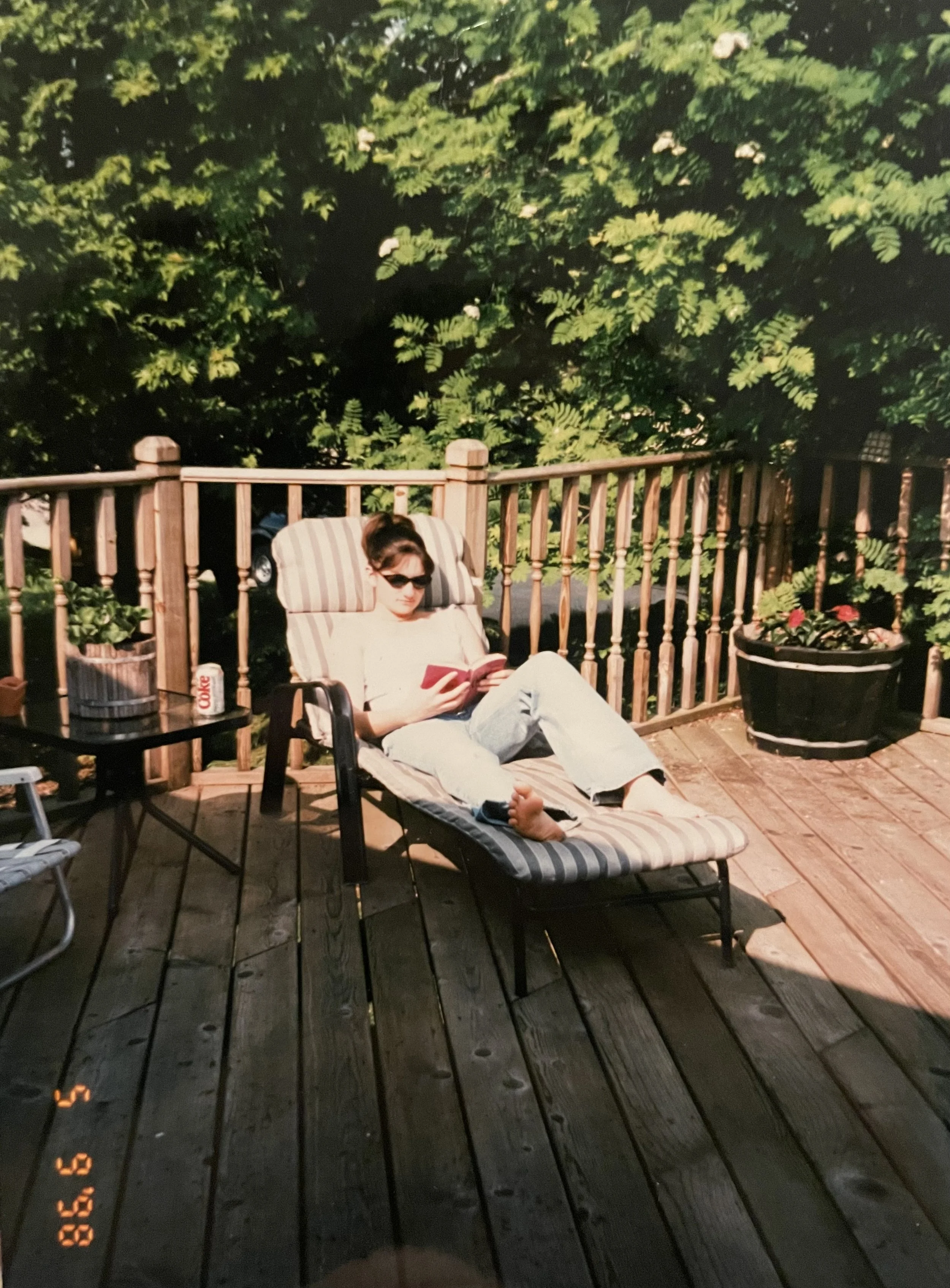
Melissa Faliveno is the author of the novel Hemlock, just out from Little, Brown, and the essay collection Tomboyland, named a Best Book of 2020 by NPR, New York Public Library, Oprah Magazine, Electric Literature, and Debutiful, and recipient of a 2021 Award for Outstanding Literary Achievement from the Wisconsin Library Association. Her work has appeared in Esquire, Paris Review, Kenyon Review, Literary Hub, Prairie Schooner, Brevity, Diagram, and Brooklyn Rail, among others, and in the anthologies Sex and the Single Woman and Hit Repeat Until I Hate Music. She is an assistant professor of creative writing at the University of North Carolina and lives in the woods outside Chapel Hill. www.melissafaliveno.com
“Far Across the Distance”: melissa fite johnson on Experiencing “My Heart Will Go On” Then and Now
On a recent walk with my husband, we talked about nostalgia—why it’s powerful, how we each define it. In particular, I was processing why I often feel nostalgic for incredibly painful moments in my life, which feels especially strange since I’m so much happier now. I don’t wish to go back—at least not literally, if time travel were a thing. But I love keeping journals. I love documenting and reflecting and considering how I got here, wherever here is. And sad memories are often the most defining ones. Celine Dion’s “My Heart Will Go On” is a portal to the worst few months of my life. It’s also one of my favorite songs. Both things are true at once.
In 1998, I saw Titanic twice in the theater. The first time was in late January, when the film finally came to the theater in my small Kansas town. In my journal from that year, I called the process of standing in line for hours to buy tickets with my friends “an adventure,” complete with elaborate plans to buy tickets to Spice World and switch theaters if it sold out. We made a whole evening of it—dinner at the Mall Deli, trying on dresses at Maurices, stuffing tickets from arcade games into our purses. Then we had to stand in line again to get good seats—there were twelve of us, and we took up a whole row. Even though we knew the movie would be heartbreaking, we were wild with excitement. We’d come prepared with travel tissue packs; we were looking forward to crying through Titanic the way we’d looked forward to shrieking through Scream and I Know What You Did Last Summer. Secondhand emotions, so satisfying and safe. We were young and invincible. Nothing could touch us.
The second time was in mid-March with my new boyfriend. In my journal, I wrote that Titanic “was actually sadder the second time around. It was nice to sit next to [him]—he stroked my arm until I felt better.” He and I were together for only two weeks, and later he told his friends we’d only been hanging out, not going out. He didn’t know why I thought it was more than it was, even though we went much farther sexually than I was ready for. In my journal, I wrote, “We hung out in his room. We talked a lot, which was nice. Then we did some things—I can’t quite decide if I should view them as being shameful or beautiful.” It wasn’t pressure so much as praise that lowered my defenses. Because of Titanic and movies like it, I believed in love that took only a few days to bloom. I wasn’t wary of grand statements like “Rose, you’re the most amazingly astounding, wonderful girl—woman—that I’ve ever known.” When this boy told me I was beautiful and that he’d wanted to kiss me for a long time, I’d been waiting my whole life to hear something like that. I was ready to open myself to whoever said it first. After he broke up with me, he told his friends he’d only hung around me because I was stupid and easy and had big breasts.
And then on April 3, my father died, an event that should be unrelated to that boy and Titanic, but it all feels like one memory. One soundtrack—“Near, far, wherever you are,” a lyric that meant a lot because I wasn’t sure about religion or heaven. One regret, that I’d wasted the last weeks of my father’s life pinned beneath this boy who thought so little of me. When I try to conjure that time—relive it more than remember it—I am walking the halls of my high school, wearing an oversized hoodie so no one can see my body, hoping no one brings up my father because I can’t talk about him without crying. I am sixteen.
In a late 90s talk show appearance, Celine Dion addressed her tendency to beat her chest with her own fist at the climax of her songs: “When I sing sometimes, I get emotional and I hit myself—I don’t know why! I don’t know why I do that.” She hit herself especially hard during her Oscars performance, spooking her heart of the ocean necklace right off her chest. I watched that moment in my childhood living room with my dad less than two weeks before he died.
I’ve been thinking a lot about that—emotion and violence, emotion and pain. I am trying to understand why I love a song that I so associate with the end of my father’s life and the worst few months of mine. It’s nice to remember him, and maybe that’s all it is. That’s such a simple, normal explanation. But maybe I’m still the girl who finds a strange pleasure in sadness, even when it’s real, even when it transcends a radio or screen. Don’t all of us sometimes put on an album or movie expressly because we know it will make us cry? Don’t we read through old journal entries documenting our most gut-wrenching memories? We know it will hurt, but the hurting reminds us we’re still here.
In my journal, I wrote, “That night, at home, Dad began complaining that he was having trouble breathing. After a while he asked me to call 911. An ambulance came and they took Daddy to the hospital. He was crying and they gave him oxygen and it was horrible. In the ER they said they thought he’d had a heart attack.”
He didn’t die that night. I took Mom’s car and got McDonald’s for her and me, and we ate it in the hospital waiting room. He died two nights later, after being moved from ICU to a regular room. Since he seemed to be doing better, I took a break from the hospital to go to the movies with my friends.
In my journal, I wrote, “When I left he’d been having a little trouble breathing, but he said he’d be OK. I kissed his forehead, told him I loved him, and I never saw him again.”
My friends and I didn’t see Titanic the night my father died, though it was still playing, of course. It played in theaters for nearly ten months. It’s hard to explain to my students, who are the age I was when it came out, how much of a phenomenon both the film and the song were. Halfway through 1998, “My Heart Will Go On” was already considered the most played song of the year. In this era of streaming movies at home and everyone making their own playlists, it feels to me like there aren’t as many unifying pop culture touchstones, the things that will remind everyone in the same age bracket of a certain winter or spring.
Maybe to test this theory, I asked a few students what they consider their generation’s version of “My Heart Will Go On,” their version of Titanic. Their answers were fantastic but totally varied, which makes me think there really isn’t a contemporary equivalent. For songs, they brought up My Chemical Romance and Billie Eilish, both of which feel appropriately dramatic, and one student suggested Adele, which I think speaks to a respect for Celine Dion’s powerhouse voice. For films, they mentioned Downton Abbey for its attention to class systems, the Bollywood movie Saiyaara for its love story, and Pirates of the Caribbean “because it’s ocean related.”
I also asked my students whether they thought Titanic and “My Heart Will Go On” were more romantic or sad, and they were all torn. One student called them “sad but cute”; another, “romantic with a hint of sadness.” Finally, someone found the word “bittersweet,” which might capture the spirit best of all.
Last summer, I was surprised that “My Heart Will Go On” wasn’t on the longlist of options for this tournament because it was considered more romantic than sad. I’d thought of the song as sad for so long, it was hard to think of it as anything else. However, it’s true that the first image that opening flute solo prompts—universally, I think, though usually I speak only for myself—is undeniably romantic: Jack and Rose on the bow of the ship, homecoming dance pose, his hands on her stomach, her hands covering his, her engagement ring from another man glinting in the sunlight, their faces close in anticipation of their first kiss. But it’s also true that the song makes me cry every time I hear it.
As I’m always telling my students, two things can be true at once. In another favorite romantic movie of mine, Before Sunset, Ethan Hawke’s character discusses an idea for his next novel: “I’ve always wanted to write a book where the whole thing happens within the space of one pop song.” He describes a scene from his would-be protagonist’s life, where his young daughter is dancing to a song on a table, and then a scene from his past, where his first love climbs onto his parked car and dances to the same song. The protagonist somehow understands that he is not merely being reminded of the past; he is there, and he is also in the present with his daughter. He is living both moments simultaneously.
I married a man who also saw Titanic more than once in the theater—a different theater, in a town not so far from mine. He held some other girl’s hand. Knowing him, he wasn’t dreaming of her or me or anyone to complete his life. He was already firmly himself; he loved pro wrestling and sketch comedy and alternative rock. He wasn’t an obvious romantic. Even so, he fell in love with the movie, and with “My Heart Will Go On,” as much as I did. And though he’s hilarious and sarcastic, there is nothing ironic about his love for these things. There’s a story his cousin loves to tell about how he got drunk one night and insisted she drive him to Walmart so he could buy the Titanic soundtrack, a double cassette. In the morning, his roommates played it to coax him awake, and he refused to be embarrassed. He stood by it, then and now.
My husband and I didn’t know each other when the movie came out, or when that song poured from every teenager’s car radio. But the fact that we both loved them fervently when we were young has informed our relationship since it began in 2003. He and I once waited to leave a hotel room one morning, for wherever we needed to be, because the end of Titanic was playing on cable. We’ve seen the movie together in the theater twice—in 2012, for the 100th anniversary of the ship’s sinking, and in 2023, for our local theater’s tradition of luring in our generation with beloved movies from our youth. We’ve been to three Titanic exhibits—two at Union Station in Kansas City, and the Titanic Museum Attraction in Branson, MO. And we’ve seen Celine Dion in concert; our sole reason for going was to hear “My Heart Will Go On.” Celine did not disappoint. She came out dressed as an iceberg, billowing white layers everywhere. My husband and I clutched each other and sang. We were both crying, but we were so happy. We couldn’t believe how lucky we felt not to know such sadness anymore. So maybe it’s true, the song is more romantic than sad—or at least maybe it’s finally true, true now as I’d wished it were then.
Celine Dion’s “My Heart Will Go On” is a time capsule of an incredibly sad time for me, but it isn’t only that. The story of my life does take place during the length of one pop song—this pop song. When I hear it, there are two of me, “far across the distance and spaces between us.” Two of me existing at once. I am walking my high school halls in an oversized hoodie, devastated and aching for my father. And I am beside my husband in the theater, final credits rolling. He and I turn to each other, not sure how embarrassed we should be by our red eyes and wet cheeks, this song soaring almost ridiculously behind us.
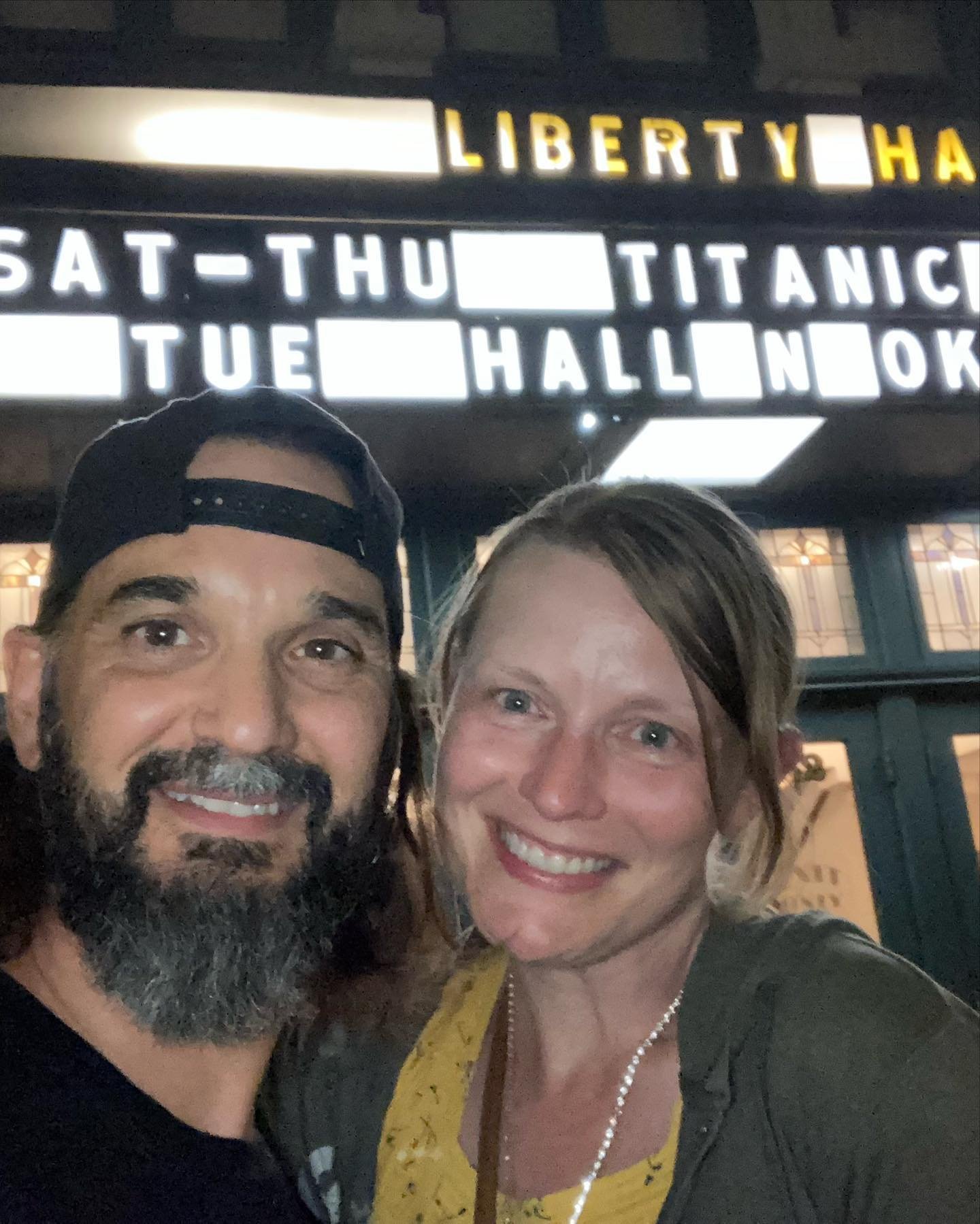
Melissa Fite Johnson is the author of three poetry collections, most recently Midlife Abecedarian (Riot in Your Throat, 2024). Her work has appeared or is forthcoming in Ploughshares, Pleiades, Southern Review, HAD, Ilanot Review, Poet Lore, DIAGRAM, and elsewhere, and has received a special mention for the Pushcart Prize. Melissa, a high school English teacher, is a poetry editor for The Weight Journal for high school students. She and her husband live with their dogs in Lawrence, KS.