
second round game
(7) Hootie & the Blowfish, “Let Her Cry”
picked
(2) Cranberries, “Linger”
96-83
and will play in the sweet 16
Read the essays, listen to the songs, and vote. Winner is the song/essay with the most votes at the end of the game. If there is a tie, we will play a one-hour overtime (and repeat until we have a winner). Polls close @ 9am Arizona time on 3/14/26.
On Friendship, Crows, and Learning to Let It Linger: silas hansen on “linger”
I can’t be certain that it was truly the first time I heard the song, but it’s certainly the first time I processed the song as I heard it. I was almost 31, it was January 2018, and I was with some friends. I can’t remember where we were—someone’s house? The bar? Probably playing euchre, or talking, almost certainly drinking—but I remember the song coming on, and everyone getting really quiet.
“What song is this?” I asked.
“You’ve never heard ‘Linger’?!” someone asked.
We were still relatively new friends back then. In the years since, those friends are no longer surprised when I tell them I’ve never actually sat down to listen to Phish, or watch a David Lynch movie, or that I’d never even heard of Paul Thomas Anderson before seeing the trailer for One Battle After Another; hell, I didn’t even see Jaws for the first time until 2025, when they re-released it for the fiftieth anniversary.
They’re all 6-10 years older than me, all Gen Xers or Xennials to my very middle-Millennial existence (b. 1987), and they’re now used to introducing me to things, to treating me like a little brother.
“RIP,” someone said.
It was probably a friend I’ll call M., who would have recently turned 42. Let’s say it was.
At the time, we’d only known each other for a couple of years, but he has since become one of my closest friends, someone I love deeply and whose presence in my life feels invaluable. When he found out that I was trans—not from me—he pulled me aside and said, “I don’t care and we never have to talk about it again, but I wanted you to know I know.” We have talked about it since, but only if I bring it up first and he always raises his hand—legitimately raises his hand—before asking a follow-up question.
“She died yesterday,” he added, when he saw my confused face. “The lead singer.”
Everyone stayed quiet the rest of the song, myself included. I didn’t know anything about the band, or the lead singer, or the song for that matter. I didn’t process the lyrics—I never do, not until I’m able to read them as I hear them—but I was drawn in anyway, by the softness of the music, by the haunting way she sings. I did what I always do: I sent myself a text message that said “The Cranberries - Linger” and then promptly forgot about it for another six weeks.
*
Eventually, I did go back to the song—probably when M. or someone else from that night asked me about it—and then discovered other hits like “Zombie,” about the 1993 IRA bombing in Warrington, England and “Dreams,” which was featured in the hilarious Channel 4 sit-com Derry Girls. But it is always “Linger” that I return to—there’s something about the simplicity of the lyrics, the softness of those opening chords, the way even the percussion feels softer—probably brushes, according to my friend Nic.
Dolores O’Riordan, the lead singer with that haunting voice, was still a teenager when she wrote it, as part of her audition to sing for the band. They—called The Cranberries Saw Us at the time (a great pun, if I’m being honest, though kind of a terrible band name)—already had the music, so they gave O’Riordan a demo of just the instrumentals and asked her to work on it. She came back the next week with “Linger,” which became the band’s break-out hit, peaking at number 3 in Ireland and number 8 in the U.S.
The lyrics are quite simple, as is the song itself—just a few chords. “We were terrible when we started,” guitarist/songwriter Noel Hogan said in a 2017 interview with The Guardian. “I knew about five chords and four of them are probably in ‘Linger.’”
In that same interview, O’Riordan talked about the song’s origins:
It was inspired by a night I had at a club called Madonna’s. This guy asked me to dance and I thought he was lovely. Until then, I’d always thought that putting tongues in mouths was disgusting, but when he gave me my first proper kiss, I did indeed “have to let it linger.” I couldn’t wait to see him again. But at the next disco, he walked straight past me and asked my friend to dance. I was devastated. Everyone saw me being dumped, publicly, at the disco. Everything’s so dramatic when you’re 17, so I poured it into the song.
When I ask people about this song and why they love it, they tell me about their first loves, about the way the song brings them back to that moment. They talk about the nostalgia, the way she encapsulates what it feels like to get your heart broken when you’re young, when it feels like the end of the world, even though it only lasted for a few moments in the grand scheme of things. It’s a kind of feeling that only exists when you’re that age, before your prefrontal cortex is fully developed, when, as O’Riordan said, “everything is so dramatic.”
But that’s not what the song makes me think about. I didn’t ever have that. I didn’t date in high school, or college, or even graduate school, beyond a couple of first dates that never went anywhere. I was always an “old soul” (neurodivergent, I’d likely say now) and was in a hurry to grow up, to get out of my tiny rural hometown and be on my own. I had friends, but in retrospect wasn’t particularly close with any of them. I kept people at a distance—even my parents, my brother, even the people who were supposedly my closest friends.
I was 35 before I had my first serious relationship and even now, inching toward 40, I’ve only really dated two people and I ended both relationships because I felt overwhelming guilt about the fact that I didn’t feel as strongly about them as they clearly felt about me.
I just don’t know that I’m capable of feeling that kind of intensity for another person in a romantic or sexual context. I used to tell myself that I was probably capable, but it just hadn’t happened yet. Now, I think I’m probably too old: I didn’t develop those neural pathways when I was a teenager, when everyone else seemed to.
That’s what the song made me think about—not the loss of something I’d experienced, but the realization that I will likely never feel that, that it’s a feeling entirely out of my reach.
*
Before I came out as a trans man in my early twenties, started T, grew a beard, changed my name and pronouns, most of my closest friends were women. I had been a Women and Gender Studies major in undergrad, watched The L Word most weeks in my friends’ apartment, served as the maid of honor in my childhood friend’s wedding when I was 20. It felt natural to me, even as my body changed, to be in those spaces.
Even fourteen years into living full-time as a man, with my bald head and a beard that many cis men covet, I am still most comfortable with women. A few times, this has led to conflict: some friends have been convinced I had feelings for them, and I regularly feel a sense of grief—not because I regret my transition, but because I wish that it hadn’t changed those relationships—when I’m (quite reasonably) left out of a “girls’ night.” When they inevitably start dating someone, I end up a third wheel.
But I also began to crave friendship with cis, straight men. I’d been friends with men before, of course, but it felt different now that I was one of them. Thankfully, I’ve developed those big brother/little brother relationships with enough of my friends that I’ve learned. One of the first lessons was that straight men talk at bars, while playing golf, while watching sports.
“It’s so we don’t have to make eye contact if it gets too emotional,” M. told me once.
We were at one of the downtown bars late at night, probably around 1 am. I don’t remember what we’d talked about and I doubt that I would share it with you even if I did, but I remember that it was about grief and that we both teared up and I remember feeling so shocked, so honored, that he let me see that.
I was in my mid-thirties by then, and I had started therapy, and I was just starting to let my guard down a little bit, to let friends see the things I tried to keep hidden. I had chosen him in particular because it felt safe. I drank a lot more back then, particularly with him, and so I had, over the years, let him see parts of my inner life—typically after we’d both had far too much whiskey—that I didn’t share with anyone else and he responded without judgment, without it changing anything between us. I could cry in front of him—something I had spent most of my life trying to learn not to do, and failing—and he didn’t make me feel ashamed. He modeled for me that it’s possible to be confident in your masculinity without being a dick to everyone around you, that the coolest and most manly thing you can do is be kind.
*
I can’t pinpoint exactly when things got weird between us, but they did.
I sometimes end up developing intense feelings for friends—it’s not a romantic or sexual desire, but I do think it’s probably similar. When it happens, I feel this constant need to be around the other person, to know them and have them know me. It’s like my whole world revolves around them. I had, to this point, only ever felt this way with women. When that had happened in the past, they would almost always believe that I had feelings I didn’t have and I’d bolt the second things got weird. I’d throw myself into something else—different friendships, work—until those feelings started to ebb. Usually, those friendships didn’t last.
With M., though, bolting didn’t seem possible, even as it was increasingly clear that he had noticed. I couldn’t just cut him out of my life. I didn’t know how. It didn’t seem as simple as it used to. The thought of losing him the way I’d lost the others made it all worse.
I was having near-daily panic attacks (some about him and the situation between us, but mostly about everything else—being alone, the extended days of the pandemic, my job) and constantly reaching out for reassurance, for company. I took every single little thing personally: an unanswered text or finding out that he and another mutual friend had hung out without inviting me felt like the end of the world.
Once, both of us drunk after hours of drinking whiskey, a few months into this, he asked me if I had feelings for him. “It’s okay if you do,” he said. He told me that he didn’t feel the same way, but we could figure it out. We could still be friends. I almost believed him.
I didn’t, I don’t, at least not in the way he meant, but the question still terrified me. All I could think about was all of the other times I’d been asked that question—far less understanding, far more accusatory—and it triggered something in my brain that, in the months that followed, made the strangeness between us even worse. I don’t remember how I responded—probably with an adamant “No,” though I’m sure he still had suspicions. I don’t blame him. I probably would have thought the same. We haven’t talked about it since.
The truth is that it’s complicated. Did I want to date him, sleep with him, marry him? No. While I am, occasionally, attracted to men, M.’s not my type. But did I want to spend all of my time with him? Did I follow him around like a lost puppy, constantly needing him to tell me he wasn’t mad at me, that we were fine, that I mattered to him? Did I unconsciously stake my entire self-worth on whether or not he wanted to spend time with me?
I am ashamed to admit that the answers are yes, yes, yes.
It’s been three years now since we had that conversation. I’ve kept going to therapy, I found the right meds and got my brain chemistry under control, I’ve forged new friendships with people who are able to give me the kind of reassurance I need without it feeling like a burden. M. is still a part of my life, but our friendship is different now, less comfortable than it once was. It didn’t tank our friendship like I feared it might, but it has certainly changed it.
Back in August, when I first chose “Linger” as the subject of this essay, I kept thinking of M. when I sat down to write about it, no matter how much I tried to not make it about him. It made sense, though: I was grieving the way it used to be between us. When I talked to my therapist, he asked me what I wanted from M., what I needed for closure. I said I didn’t want closure—I wanted things to go back to normal, to have fun with him again without it always feeling so heavy, so hard, so complicated.
*
A couple of months ago, just before Christmas, M. invited me to grab a drink with him. Although we’d been to several of the same social gatherings, had played golf in a group a couple of times over the summer, we hadn’t spent time together one-on-one in months.
At the bar that night, M. told me about his new morning routine: He walked around downtown while smoking a cigarette and visited a murder of crows he’d discovered roosting in a tree on the community college’s downtown campus, a block from the bar. He had started leaving them gifts, he said: a handful of peanuts, some aluminum foil crumpled into balls.
“You’re living my dream,” I said. “I’ve always wanted to befriend a crow.”
“Done,” he said.
M. caught the bartender’s attention and asked for some of the foil they kept so people could wrap up their leftover pizza. We sat there and made handfuls of shiny foil balls as offerings while we finished our drinks.
We went out the back door, into the bitter cold Indiana air, and he pointed across the street, where what seemed like a hundred crows all roosted in a tree. We stood there for a few moments, just watching, in silence.
Finally, I asked, “Do they ever interact with you?” I imagined him like the pigeon lady in Mary Poppins, feeding them by hand, maybe even with one on his shoulder. He’s the kind of guy that animals and children instinctively trust, so it seemed possible.
He half-laughed, half-coughed, taking a drag off his cigarette. “No. They usually just watch me.” We stood in silence for a little longer and then he said, suddenly, his voice softer, “You seem like you’re doing a lot better these days.”
“I am,” I said. “And I’m really sorry about—”
He shook his head, stopping me from finishing. “You just needed something I couldn’t give you.”
I wonder, now, if the reason I kept thinking about M. while writing about this sad song isn’t because of grief and isn’t because of any feelings I may or may not have had, but because of what I’ve learned from him: that sometimes you can’t avoid the discomfort. Sometimes you do just have to sit with it. Sometimes the only way to get through it is to address it head-on, to keep doing the hard thing until it’s not hard anymore, to not just bolt. Sometimes you do, in fact, have to let it linger.
We talked a little longer, about something inconsequential—football or a movie or some mutual friends—and then we walked across the street, closer to the birds. They caw-cawed loudly when they noticed us but didn’t move from their tree. We stopped on the sidewalk nearest them, where the lights from the building illuminated the concrete slabs.
“Here,” M. said, dropping his handful of aluminum foil balls into the light, motioning for me to do the same. “That way they can see them.”
We walked back to the bar’s parking lot, watching from a distance. The crows didn’t come down from the tree, not while we were out there, but I imagined them later that night, after downtown got quiet and they felt safe, coming down from the tree to investigate, to see what gifts these friends had left.
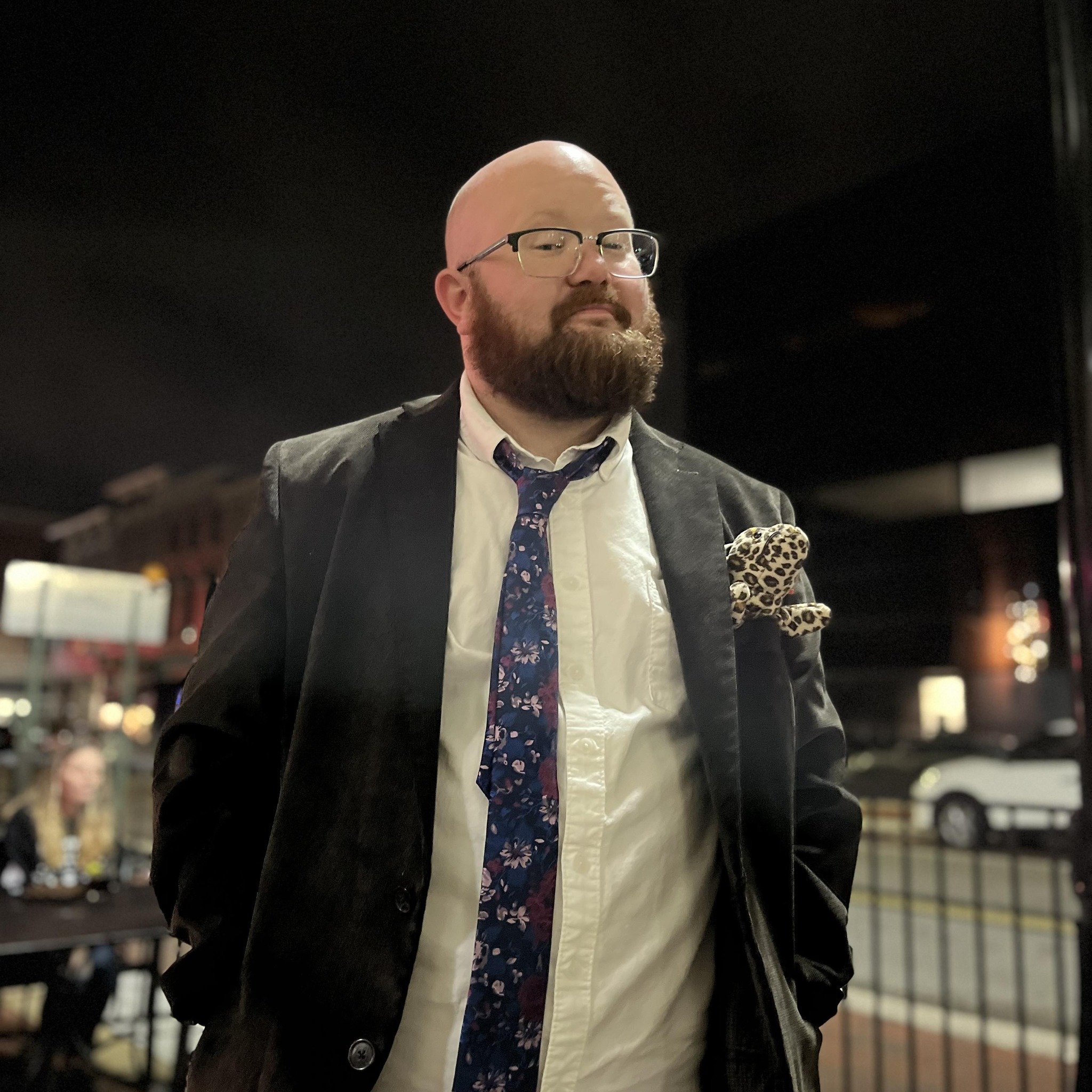
Silas Hansen’s essays have appeared in The Normal School, Colorado Review, Hobart, Slate, and elsewhere. A graduate of both SUNY College at Brockport and Ohio State, he (and his cats) now lives in Muncie, Indiana, where he teaches creative writing at Ball State University.
Help Me Fly Away: Katie Moulton on “Let Her Cry” by Hootie & the Blowfish
A great bar band will save your life. You’re in a low-ceilinged cavern amid a dim neon haze, a holding pen for tourists or college kids. In your hand: a bottle of light beer. Under your feet: planked floors simultaneously sticky and wet – something deep and incidental that can never be mopped up. We call that History. You’ve found yourself there, alone in every way that matters, already too old, the promised spark of the night emptied out: You’re a lighter and nothing’s catching. She sits alone by a lamppost, tryna find a thought that’s escaped her mind. You shuffle toward the low stage, where you can just make out the ball-capped heads of the band starting their set. Three genial white guys with haircuts on the spectrum from ROTC to surfer-dude, and a sweet-eyed Black guy at the center. All of them wearing cargo shorts and T-shirts with logos of a particular holy trinity: Gamecocks, Jim Beam, R.E.M. She said Dar’s the one I love the most, but Stipe’s not far behind.
Recall the band’s bright, primary-colored guitar riffs, a springy sway from the kit, a bassist who keeps it chugging. Now imagine the moment that Darius Rucker’s magnificent baritone vibrato first rumbles through the rafters and into your rib cage. The verses delivering a casual talky-blues, each phrase bottoming out into irresistibly round vowel sounds. Tell me you aren’t nodding to the stranger beside you like, these guys are pretty good. Then the arc into the major-key chorus—that sensation of legs hard-pumping the swing to the tippy-top of the parabola, the chains loosing and ker-chunking as your body falls back to earth. You’ve never heard this song before, but you know the words. Tell me you don’t shout to the new friend beside you, These guys should be famous! Tell me, by the end of their ballad “Let Her Cry,” you haven’t hit your knees to those beat-up planks, dropping tears into your fifth Bud. Tell me you haven’t decided to stick around to see what might happen tomorrow.
Hootie and the Blowfish were that bar band. Cracked Rear View, their breakthrough, world-dominating 1994 album, was that bar band committed to record. Hootie—the name of the band, not the man—formed in 1986, honed their skills over years of playing dollar-shows at bars around University of South Carolina, and emerged on the main stage in full homage to their heartland-rock predecessors: the Heartbreakers, John Mellencamp, Blood on the Tracks Bob Dylan. But these older purveyors of jangle-guitar anthems never quite suited where they came from, much as they may have tried to claim it. Petty was too wry, too literate. Mellencamp was too moody and mean. Dylan’s biography just one of his million masks. They were always going to leave for art, for soapboxes, for the shadow world. But Hootie and the Blowfish, with their earnestly euphemistic hearts-on-sleeves, fit the essence of their origin.
“At its peak, Hootie & the Blowfish was a genuinely excellent band,” Jon Caramanica wrote in a recent apologia in the New York Times. “Earthen, soothing, a little ragged. And also deft, flexible and unflashily skilled. It splendidly blended the Southern college rock of the late 1980s with shades of vintage soul, bluegrass, blues and more, rendering it all with omnivorous-bar-band acuity.” The historical record would call the band’s success a fish-out-of-water tale—a fluke (forgive me), quickly tossed back. Their success represented “the day grunge died,” Rucker has said, a seemingly straightforward moment between the politics and irony of grunge and Riot Grrl, and commercial hip-hop and then factory-line pop by Disney graduates. The band names were bad, the chords were major, and as Rucker imagined haters saying: “This little pop/rock band from South Carolina [keeps] telling me to hold their fuckin’ hand.”
The most indelible art has something wrong with it, and the best pure-pop songs are logically incoherent. Cracked Rear View’s lyrics are often jumbled, but the album builds a potently repetitive internal system. Every single song includes: Crying (usually the singer himself), Hands (holding, reaching, wearing rings), and an argument with Time. Though the big singles are remembered as lighthearted, self-deprecating love tunes, each one is undergirded with awareness of a broken world. Rucker says of their breakthrough hit “Hold My Hand”: “For me, that song was always about racism.” In many other tracks, the political message is less opaque; for one, “Drowning” explicitly rebuked the Confederate flag hanging from the South Carolina statehouse twenty years and many anti-Black hate crimes before it was finally removed. Other songs reckon with Rucker’s brother’s addictions, and six songs—half the total on album—overtly mention the loss of the singer’s mother. Rucker’s single mother, Carolyn, a nurse, raised six children, and died suddenly in 1992, before the band hit the big beyond South Carolina.
Near the end of “Let Her Cry,” the singer finally tries to leave the lover whose demons are killing her. At the moment in the last verse when Rucker’s voice swells and crashes, he cries out for help not to a friend or to God, but to his mother—Oh Mama, please…won’t you hold my hand?—who’s already gone.
She never lets me in/ only tells me where she’s been/ when she’s had too much to drink. “I was going to write ‘She Talks to Angels’ for Bonnie Raitt,” Rucker said about sitting down and writing “Let Her Cry” in one stream. The Blowfish have never disguised their influences, and this description is typically straightforward. But neither inspiration Rucker mentions gets close to the sadness of “Let Her Cry.” The Black Crowes song plots a point on the graph somewhere between the Rolling Stones’ “Angie” and Train’s “Meet Virginia” and never achieves liftoff into true sorrow. The singer is almost anthropologically marveling at his Addict Pixie Dream Girl: She’s a tragic fantasy; what does it cost him? I say that I don’t care/ I just run my hands through her dark hair. The existential blues of Raitt’s cover of John Prine’s “Angel from Montgomery” is at work in “Let Her Cry,” but the Rucker song is nowhere near as poetic or transcendent. Then I, pray to god ya gotta, help me fly away. And that inarticulate, been-down-so-long-it-looks-like-up, failure to transcend is what makes its sorrow so deep.
I want to convince you Hootie and the Blowfish deserved their shocking middlebrow success thirty years ago and that their moment deserves reconsideration now. I want to argue this song is good and quintessentially Nineties, that it combines all the best elements of country storycraft and gospel crying-to-God and sunny socially conscious pop-rock…but that’s not why I’m here.
I’m here because “Let Her Cry” is the saddest song. It’s a song about loving an addict, yes, and about losing that person you love long before they’re gone. But at the core, it’s a song about a powerlessness that can never be reconciled. Knowing the worst will come and slowly realizing that your role is only to watch it happen.
Maybe you’ve got your own Cryer. Maybe you’re the helpless god they call out to. Maybe it takes you a long time to call them back. What can you do? How do you live? How will you lose?
Rucker recalls playing this new song just after he wrote it, introducing it to the bar crowd as untitled. As the band packed up after the set, he was approached by a very drunk white frat bro. This happened a lot. Sometimes the same man lifting a bottle to his chorus would also call Rucker a slur to his face. This time, the fan had a note on the new song. “If she’s gonna cry,” the boy said, “I figure, just let her cry.”
*
I wrote all this before. All these words and a thousand others.
Darius Rucker’s voice has been rattling through my brain for weeks. I’ve got jokes about Rucker’s Burger King cowboy ads and bad puns about the prison of masculinity (“Every-Bro-dy Hurts”). I’ve got descriptions of the lead guitar’s triplets painting those tears clink-cascading down like rain. I’ve got Rucker saying he wants his tombstone to read, “He was a nice guy.” I’ve got my memory of being nine on a field trip to the state capitol and gaping up at Thomas Hart Benton’s “Social History of Missouri” mural, wrapped on four walls by hay harvests, Huck Finn and Jim on the Mississippi, Jesse James pointing a pistol at a train conductor, Frankie shooting Johnny for love, a Black man lynched, a mother wiping a baby’s ass at a civic rally, courtrooms and the Veiled Prophet parade, bondage and commerce, hypocrisy in religion, government, and law—the whole sinewy kaleidoscope of history and myth—then riding home with my 1994 Walkman cassette player, staring out the rain-flecked window at the green-gray world, winding and rewinding “Let Her Cry.” So I sat back down and had a beer and felt sorry for myself, saying— What did I know at nine. But didn’t I know? Didn’t we?
I had a wry observation about the second verse, when the singer thinks his troubled lover has abandoned him, but hasn’t even finished the breath of I wanted to look for youuu—before she walks right back in, barely a glitch in the cycle. In fact, the speaker in “Let Her Cry” never leaves their apartment, just keeps standing up and sitting back down on the same sad sofa, cracking and uncracking a longneck, trapped in the vortex of someone else’s addiction. But addiction never belongs to someone else. It remakes reality. It swallows the world.
Then my Cryer called. Telling me to call back. Telling me, Mindy—
My cousin, one year ahead. My flipped Gulf Coast shadow. Bleached and brown and unforgiving as the sun—
Knowing it was never going to go any other way doesn’t help when it finally goes.
You terrified me my whole life. You took the anger I’m so careful to smother and bury, and you coated yourself in it. I don’t know if you ever made it past eighth grade—you were already running wild then—but you knew plenty. You knew where to harvest the best bay scallops, nestled in the sea grass. You knew how to navigate the back passages of the hotel your mom managed. You knew how to distract the front desk and swipe extra key cards, sneaking into rooms with full ocean views. You never got a driver’s license, but you knew how to get rides and money and wine from old men. You knew how to hide but you didn’t know how to lie because no one paid enough attention to catch you.
Summer trips to the vast beach where you lived. Going out at night with flashlights, swinging the beams and watching a thousand translucent ghost crabs skitter across the sand. Once, when we were little, you disappeared. My mom, scared and mad, scolding your name into the wind and deafening darkness. There were only waves. There was no one coming. Then there you were, stomping out of the ocean like some skinny redneck nymph. I swear to god you were glowing. Mouth set, arms locked out in front of you, holding in two hands the biggest blue crab I’ve ever seen, before or since. How did you pluck it out of the dark? Why weren’t you afraid?
Our dads were brothers, and when we got older and they were both gone, swallowed up by drink and oxycontin, you liked to tell me that we were the same. That we understood them, that we shared this. This family curse. She says Dad’s the one I love the most, but Stipe’s not far behind. You were forty, Mindy, and today, in the pre-dawn on a friend’s couch in Indiana, you died in your sleep. You died like they did. Just later, a little younger. You died like they did, working at it every day.
This sorrow is about losing you, yes. But what hurts more is knowing nothing ever changed, that now nothing ever will. We’re spinning there, inside a narrative that never resolves. In the first verse of “Let Her Cry,” the singer comforts his lover, even as he suffers. In the second verse, he angrily pretends to ignore her cycle of despair: Let her cry—not my problem! From the instrumental break on, he’s the one who’s crying. If the sun comes up tomorrow—it’s not a guarantee. In the third verse, he tries to muster the strength to leave but is paralyzed by the dissonance of seeing a flash of “the same girl I fell in love with long ago”—even as she goes “in the back to get high.”
The song is wrestling with that old Serenity Prayer passed among addicts trying to be in recovery: God, grant me the serenity to accept the things I cannot change, the courage to change the things I can, and the wisdom to know the difference. In the end, the singer seems to realize all the things he will accept to stay close to her, to the traces of her he can still make out. That “wisdom” is where the pain is. He knows how much he’ll give up to love her, to witness her disintegration, how powerless he is. There’s nothing lonelier.
One time we danced together. We were in our mid-twenties, and in those years, I found cause to be down 30A more often. You knew every dune-path on the sugar sands of the panhandle, but you said Grayton was still your favorite. At Red Bar, we waited for a table with our moms and your little girl. She already looked like you—straight blonde ponytail, not a spare ounce on her. You were dating a grizzly biker your dead dad’s age. That day, you’d worn flip-flops on a ride, and you showed me where the exhaust pipe left burn marks on your ankles. The sun tilted through the windows, making a blinding latticework of the open space between a tiny stage and people eating hush puppies. The bar band kicked in. Gray hair and cargo shorts, roots-rock jangle, a rhythm section tighter than it had any right to be, a gang of guys who’d jammed themselves into a dependable machine that’ll run 200,000 miles, make you cheer and make you cry. You grabbed my wrist and said, Let’s go. I don’t remember the song, but it must have been “American Girl.” We ran to the front, nearly eye-to-eye with the singer. We danced. We shook and threw up our hands and tossed our heads and swung our asses in time. We were at some ragged edge, alive and surging in a few square feet of floor, and you were right, then – for that song, we were the same.
It got too painful and too dangerous to be around you. I stopped being able to see you behind your eyes. I said I was tired of the people I loved making me watch as they killed themselves. I told you so, because I had to say I tried. Now I don’t know your little girl. She must be fifteen now, living with your mom since before she can remember. Skinny and smart. The last lucid thing you posted on Facebook was a picture of the certificate they gave her at school for academic excellence.
I have my Cryer. The one I’ll never walk out on, who keeps me sitting back down on that same sad couch. I’ll be there with her, as much as I can, until she goes. Not because I believe if I fight hard enough, I’ll change or save her. Not because I believe I’m holding her together, but because I’m trying to realize that I never have. I’m trying to figure it out—how do I love her?—in the time we have left.
I started all this talking about a bar band. How a great one can save your life. I don’t believe that. But a song, being made in real time. A song can hold you, suspended. Can buoy you in the here and now. From there, you can catch a glimpse of your life, whatever you do or don’t do, happening all around you. On that makeshift dancefloor, we spun each other around. We sang into each other’s faces. I’d never seen you smile like that before. I’d never seen you look that light. I convinced myself that I had something to do with it. I had to believe I was that powerful. If you needed me near in order to cry, to feel understood, to stay above the surface— I wanted to let you, for as long as I could.
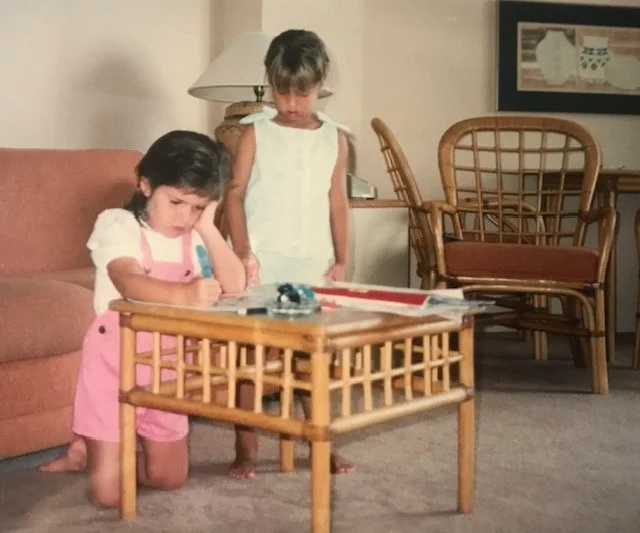
Katie Moulton is the author of the audio memoir Dead Dad Club: On Grief & Tom Petty. You can find links to more of her work at katiemoulton.com. She teaches at Johns Hopkins University and the Newport MFA. She wants to hold your hand.