
second round game
(12) Vince Gill, “Go Rest High on the Mountain”
LEFT
(4) Lisa Loeb, “Stay (I Missed You)”
76-63
AND WILL PLAY IN THE SWEET 16
Read the essays, listen to the songs, and vote. Winner is the song/essay with the most votes at the end of the game. If there is a tie, we will play a one-hour overtime (and repeat until we have a winner). Polls close @ 9am Arizona time on 3/12/26.
austin grossman on Lisa Loeb’s “Stay (I Missed You)”
[Any resemblance between people's lives or events in this essay and actual events or lives is purely coincidental. I have never met Lisa Loeb but a friend of mine did and says she is very nice.]
Lisa—
Lisa I didn’t—
Lisa I—okay yes I did say approximately that.
We were over at the big apartment on Highland Avenue, the usual crowd and that girl Lisa that Jeff had been seeing for a while now, except now they were in some kind of argument. Which was none of my business except we were stuck listening to them again. Maybe it could go in my novel.
Lisa I get it, it’s not really about the restaurant.
All of us were writers, practically, or musicians, or actors. Jeff was doing poetry at NYU in the fall. None of us were getting much of anywhere. Except Lisa actually. She’d gone to Brown for one thing and did music theory at Berklee. Plus she knew Ethan Hawke. Well a bunch of us knew Ethan but he actually paid attention to Lisa. She wrote music for one of his theater things, the kind people actually went to.
We’re late already and—please don’t make this about us.
It wasn't just that Ethan helped her make that video in his billion-dollar apartment. It's not like any of us could have done it. She had a pretty decent voice, yeah, although it was more stuff it was hard to quantify. It was going to come out soon, that one song she wrote, the way the kick drum hit and that little guitar riff leads off and then stops, quiets the space like the lights dimming at the start of the play, of the first line she sang like the words were just coming to her, the way it leads off and then breaks. Then in the vacuum of that pause we're sucked into the moment Lisa struggling to get the truth out, halting, failing honestly like any of us would.
Lisa I can't understand what you're saying. "Dying since the day they were born—" is that an Ethan thing? Well, I’m sorry but yes it does sound like a little him.
More people were showing up and it was harder to hear but she was talking over him, backing him up against the Bukowski section on the cinder-block bookshelf, where the red candle had dripped its wax, and one of those plastic Garfield phones that were always washing up on that beach in France. Not that I blame her, we were all a little tired of hearing from Jeff.
Did I have a little crush, fine, sure, who didn't? She was charming as hell the way she’d look at you and it was awkward but it was kind of like, yes, live in this awkward moment. When she talked she’d lean forward a little like she was trying to give the words an extra push because she needs them to get to you. She didn’t know what to do with her hands but it's like, who the hell knows what to do with their hands? Fuck those people. Who even needs to write a chorus?
Okay, about the glasses. People roll their eyes at the glasses now, but if you were not there for the glasses you do not understand about the glasses. They told a story. About how you used to watch sixties comedies and the smart best friend would wear those glasses to signify nobody would ever care about her, but you secretly knew she was the best character because you weren't like the others, you saw things differently. And then she's there saying hey we're grownups now, we can just be that character if we want. That's who we are.
I missed you too, Lisa of course I did but it was only five days. I didn't even want to be in the Poconos.
By then there was no question of going to a restaurant so we ordered Thai and all tried our hardest to ignore whatever godawful song they had on in the kitchen—please please just break up already. We watched an old Mary Tyler Moore episode and all sang along to the credits and mimed throwing our hats in the air, You're going to make it after all.
Yes you’re clever—it’s part of what I love about you—not every guy would say that.
Oh, god. Certainly Lisa and Jeff didn’t seem likely to make it. Jeff had feelings too, how he was running and running and nobody ever noticed, but we only wished he really would shut up because we'd rather hear her talk, words tumbling out in broken rhythms, the way she could stop just a fraction of a second between "I" and "—don't understand if you really care," and hold the whole room up as she checked herself, thinking on her feet.
We had our Predator 2 re-watch going so I don't even know if she took off or if they broke up or what. Maybe she didn’t leave after all, she was pretty into Jeff, and after all he really was good-looking and he’d published that poem about the bird except it was a metaphor—for Lisa probably—but still anyways it was a knockout. It never came to anything in the end but he got in early at Yahoo and he's fine now, that’s what I hear.
We’re all fine, or almost all who were there. We all went to good schools, and there never was a better year to graduate, 1994, right before it all took off. I never got my grad degree but fuck it, I wrote a couple of novels. The IT work keeps me afloat til I write the next one, and one of these days I'll break out. You'll see.
I just looked to see how Lisa's doing now. The one of us who made it, the first unsigned artist ever to get a number one song. She had two more in the Top 20, got a Grammy for a children's album. Her and Ethan’s video is still up on YouTube and will be there til the end of time. No more VHS, no more MTV but there’s Lisa still there in her plain black dress and singing, flickering between tenderness and challenge and grim determination, still figuring it out as she goes.
Thirty-nine million views. It's iconic, yes, but is it actually good? You certainly can't dance to it. Those lyrics in the middle make less sense the more you hear them, and at 3:04 it's pretty close to outstaying its welcome. You can call it a novelty but all that means is, I'd never heard anybody do it before, and for a moment it felt the only way anybody should be singing, ever. I guess I had a lot of feelings in the early nineties, we all did, the early years, when it was all a fraud, when I was never going to make it, back when they told us even history was at an end. Never such innocence again.
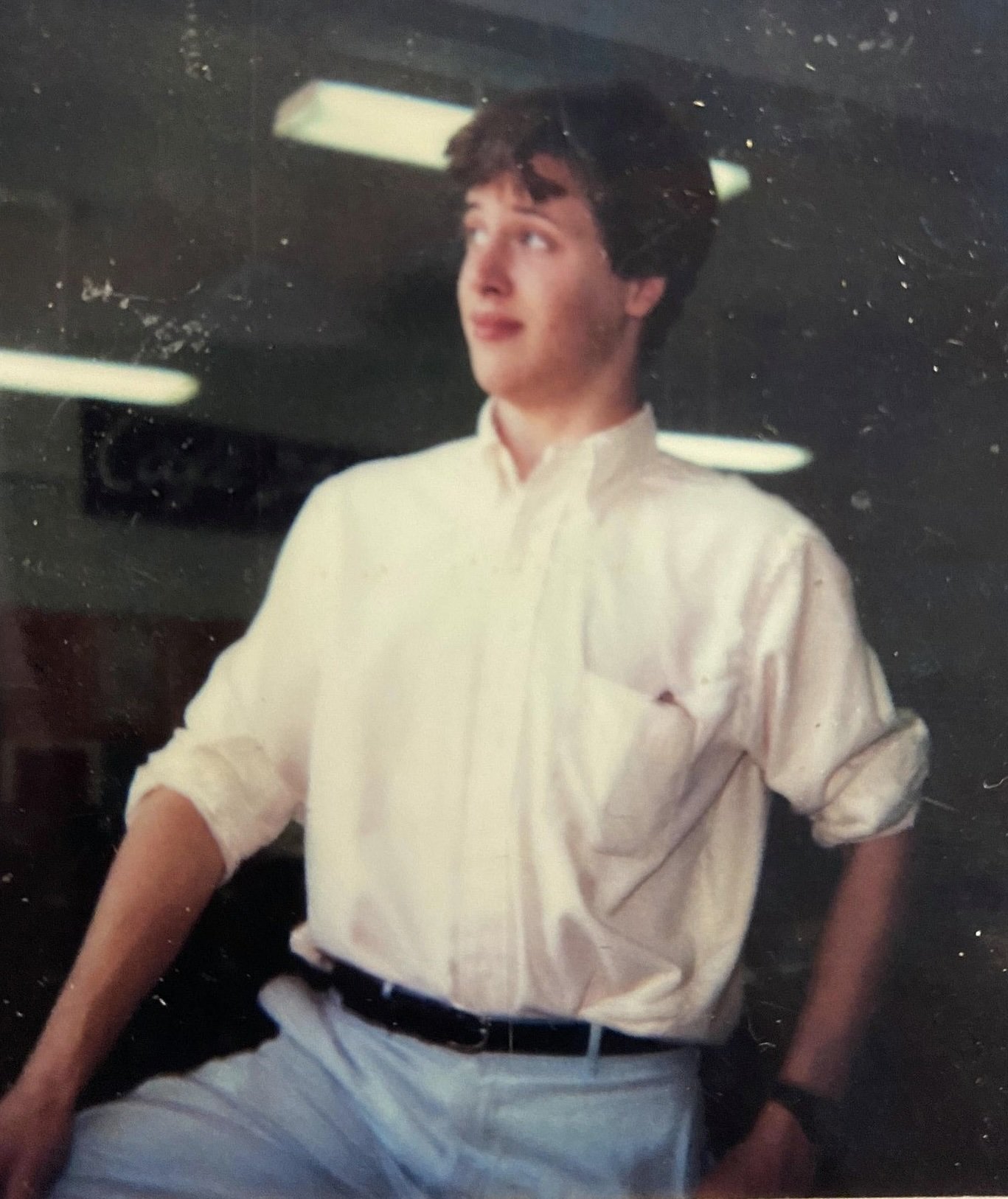
Austin Grossman is the author of Soon I Will Be Invincible, YOU, Crooked and, most recently, Fight Me. He is a professional game designer and writer on many games including Deus Ex and Dishonored.
“March is sadness”: amy rossi on “go rest high on that mountain”
That was what my mother texted when I told her the theme of this year’s Xness tournament. It’s a long month, with so many dates on the calendar weighed by memories. Among other reminders March carries, it’s one anniversary of loss after another: my grandfather, my uncle, and most recently, my father.
And it was easy to pick my song for this, when I saw my mother’s favorite singer on the list. But what I got was something more: a reminder of what the sadness of March means.
This is for you, Mom, and for anyone sitting with grief this month. I hope it brings you something too.
Vince Gill began writing “Go Rest High on That Mountain” in 1989, after his friend and fellow country singer Keith Whitley died at 34 of acute alcohol poisoning. He didn’t finish the song, though, and wouldn’t until 1993, when his older brother Bob Coen died of a heart attack at age 48.
Rolling Stone named it the 17th saddest song in country music, though such a list is a fool’s errand. One of my most steadfast beliefs is that a perfect sad song is one that does not tell you how to feel but instead lets you find your feelings—the difference between songs about sad things, perhaps, and truly sad songs.
The former is tricky, and I have little interest in songs whose sole aim is to evoke tears. For example, I’ve always hated Tim McGraw’s “Don’t Take the Girl” (in part due to the lyrical laziness of friends named Jimmy Johnson and Tommy Thompson). It’s too manipulative, using the idea of a 22-year-old potentially dying in childbirth to tell a boy’s story via a well-worn country songwriting technique: verse one, learn a childhood lesson; verse two, same lesson but with love; verse 3, same thing again but death and/or Jesus. It’s a storytelling song that rings hollow.
“Go Rest High On That Mountain” eschews such a familiar framework for something rooted in truth, but much more open-ended. It is deeply personal to Gill and broad enough to resonate with any listener. For me, it’s kin to Emmylou Harris’ “Boulder to Birmingham”—the kind of song where you feel the story behind it in your bones, not in the words, and want to know more.
And it’s both a song about something sad and a sad song. The fact that it sounds sad is part of Gill’s musical ability. Though from Oklahoma, he spent time playing bluegrass in Kentucky, the home of Bill Monroe and the high lonesome sound, which writer Kara Kundert describes as “that painful, heartbreaking high tenor pealing out mournfully in the happy-sad songs in our particular musical canon.”
You hear it in the chorus of the original recording of “Go Rest High”, when Ricky Skaggs and Patty Loveless and the three voices become something new entirely. In a New Yorker piece on the high lonesome sound, Amanda Petrusich says of the feeling: “In the language of our age, this is called ‘being present,’ but it feels more like ‘being electrified.’ Suddenly, you see and feel everything.”
And you hear it, too.
“Go Rest High” is infused with the specific grief of losing someone too soon. The first verse acknowledges a troubled life—Whitley had dealt with addiction and Coen had a traumatic brain injury in his 20s that led to him disappearing at times and experiencing homelessness. Gill sings “You weren’t afraid to face the devil / you were no stranger to the rain” and it’s peak country—the lines come from Whitley himself, and what better way to honor a friend and fellow artist?
The second verse takes us to the funeral, mourners gathered. Everyone is crying, but then Gill takes the kind of turn you can only take when you are writing not just for the sake of telling a story, but from a place of deep love. "Wish I could see the angels’ faces / When they hear your sweet voice sing,” he says. The way he hits the word “sweet” and the word itself is loaded with memory and tenderness, both personal and broad. Gill used to sing with his brother, Whitley’s voice was lovely but the voice of anyone we love is sweet, even when it’s off-key and atonal.
This gentle memory takes it from a song of mourning to a song of celebration. The two things we hold at once at once when we grieve.
My dad was an Xness cheerleader. Ever since my first time participating, he’d ask every year if I was involved again. I’d send him pieces I thought he’d like, and he would share my essays with his many Rotary Club friends on Facebook.
It makes sense. He loved being a dad, and he loved music. He raised us on the oldies, played air fiddle (while driving) to Charlie Daniels, drove me around in his red truck with “American Pie” playing, trying to explain what a levee was.
My father kept one curated playlist he called the perfect road trip playlist. After he died, in an incredible feat, my mom managed to extract it from his Spotify account on his mostly-defunct desktop and send it to me, and in the months that followed, I would listen to those songs as I drove around town, remembering how I shared with him Tesla’s cover of “Signs” and singing along to “Already Gone” as he drove me to high school.
One of my dad’s favorite songs was Billy Vera and the Beaters’ “At This Moment,” a despairing breakup anthem—right up there in the Sad Song Hall of Fame. I wondered what would happen the first time I heard it after he was gone. And when it finally came up on the playlist, I braced myself the moment those first notes filled my car. But somehow, I, a person who has cried at a comment on a recipe blog, kept it together as the song played on.
The song that did me in though, full sobbing in traffic on my way home from work? A late-90s one-hit wonder that I could not imagine my dad knowing. I can only guess he heard it on a sitcom series finale or something like that. The song’s appearance was so surprising that it shook me.
There were still things I could learn about my dad.
I’m not naming it because the memory is precious and mine, and the point is: anything can be a sad song, the saddest song even, if it hits at the right angle.
A thing I have thought about a lot with “Go Rest High” is the chorus: “Go to heaven a-shoutin’ / Love for the Father and the Son.” Gill is a devoutly Christian man, and while that can unfortunately mean a few different things in 2026, by almost all accounts, he cuts the figure of a man whose faith calls him to do unto others, not wield it like a weapon.
But if the best sad songs don’t tell you how to feel and instead get their power from a broad appeal to the range of human experiences—hitting at that right angle—what to make of a chorus, in a song with only two brief verses, that embodies a specific religious view? Does it detract from “Go Rest High”’s power?
I think the answer is found in what is perhaps the most famous performance of the song, at the 2013 memorial for George Jones. (An aside: the fact that a song written for two people who died young is also a suitable tribute for a man who died at 81 is a testament to the song’s breadth.)
Gill is accompanied by Patty Loveless, as he is during the original recording. He makes it through the first verse before the emotion becomes too much and his voice breaks at the first “go rest high.”
But Loveless is there, her voice enough to carry them both. She does not waver, holding him in her vocal and her gaze for the duration of the song—the inverse of the Stevie Nicks stare during “Silver Springs.” The beauty and power of this moment is hard to overstate.
This is the love the chorus is about, this is faith, and in this performance, I realized that “Go Rest High” is not asking listeners to share Gill’s same beliefs but to simply believe in something. Believe in love. Believe in your friends. Believe in the rainbow bridge.
Believe in your ability to grieve openly because you aren’t grieving alone.
This was always part of “Go Rest High,” why Loveless and Skaggs were there and why Gill often performs it live with others. This was always a song that needed other voices because that was always its point: shared memory, shared love, shared burden. I hadn’t heard it in that way before, but I will never hear it differently.
There are things that belong to both of my parents that I will carry for as long as I am lucky to be here, things like the expression lord love a duck and a delight in seeing a penny and the drive to give back. I will always think of my father when I hear Jim Croce and my mother when I hear Vince Gill.
“Go Rest High” is about the joy and the inevitable pain of carrying these things. The part where I still think, three years later, I can’t wait to tell Dad before remembering, but also the part where I can still tell my mother, sister or brother because the memories aren’t mine alone.
A phrase I came across once that keeps coming back: grief is the price we pay for love. The beauty of “Go Rest High on That Mountain” in 1994, in 2013, in 2026 is that it reminds us the cost is worth it.
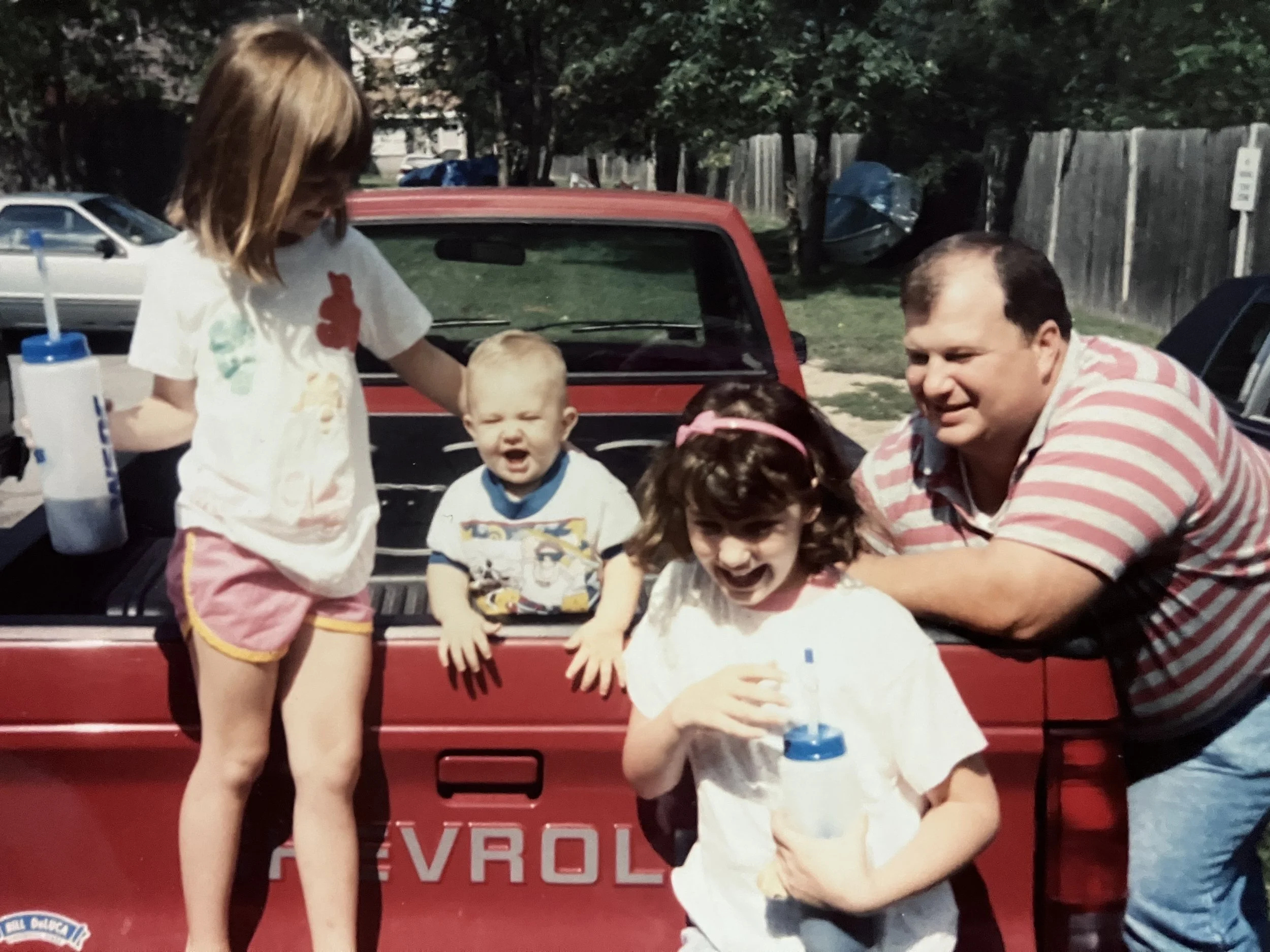
Amy Rossi is the author of The Cover Girl (MIRA/HarperCollins, 2025). She lives in North Carolina with her partner and two large dogs. Find out more at amyrossi.com