
second round game
(6) Ben Folds Five, “Brick”
trimmed
(14) Mazzy Star, “Flowers in December”
187-178
and will play in the sweet 16
Read the essays, listen to the songs, and vote. Winner is the song/essay with the most votes at the end of the game. If there is a tie, we will play a one-hour overtime (and repeat until we have a winner). Polls close @ 9am Arizona time on 3/13/26.
Cicily Bennion on Ben Folds Five’s “Brick”
This essay begins in 1999 with my brother on a bike, a twenty-year-old riding straight through the intersection just as the car on his left turned right. I still remember how my mother screamed when she got the call saying he’d been run over. I was six years old and didn’t yet know how to calibrate for her big reactions. Piecing together what I could from her side of the conversation, I thought my brother was dead. But it was only a broken leg. A bad break, though. One that required surgery and a permanent metal rod in the bone. My brother got a payout from the driver, or rather her insurance, just enough money to make a college kid feel rich. With it he bought a brand new first generation iPod and some DJing equipment and played at house parties on the weekends until he graduated and moved to New York City and got a job and, eventually, a new iPod.
It must have been 2005 when he approached me with the old one. He’d kept it a while. I was, by then, in the fifth grade, and though iPods had been around for a few years, no one I knew had one. Not really even any adults. They were an extravagance that didn’t seem to have reached my small town. “I decided not to wipe it,” he said as he handed it over. He’d considered going through and removing the songs with swearing but that would have been too much work. I’d just have to be cool.
And that’s how I went from listening to my one Gavin DeGraw CD on repeat to soaking up what was to me at the time an immense library of songs. Thinking back on it, it seems I got stuck for a while at the B’s: The Beatles, Beck, Ben Folds, Ben Folds Five, Bright Eyes, but I eventually made my way through the rest of the alphabet: Counting Crows, Death Cab For Cutie, Fiona Apple, The Gorillaz, Metric, Nirvana, Outkast, The Police, The Postal Service, Radiohead, Red Hot Chili Peppers, Weezer. Surely there were others. They’re gone now from memory.
It would be difficult to overstate the importance of that iPod’s appearance in my life. It carried me through some very awkward reading years as I went from elementary to middle school. In elementary school, my reading had been intensely incentivized with a point system and leader board. Top readers had their photos displayed in the hall, and my face was always up there. I was ploughing through several books a week. But when I entered sixth grade, the middle school library felt like a wasteland. I didn’t know what I was searching for, but I knew I was too old to read any more about Junie B. Jones, the Boxcar kids, or Beezus and Ramona. I’d never heard of a middle grade novel in my life, and the world of YA literature felt far off. The librarian suggested a few titles, but they all fell flat, and I soon got a vague sense that she didn’t like me much anyway, which mattered very much to me then, just as it would now, and so I became a girl who no longer haunted the stacks.
Without books I felt aimless. I was, at one point, desperate enough for recommendations that while watching Jeopardy with my mother, something about the correct response “Who is Lolita?” caught my attention. There is, of course, an online database of every answer and question ever aired on Jeopardy, and so I can tell you now that the clue must have been this one from January of 2008: “Dolores Haze, all in my brain, is the real name of this title Nabokov girl; ‘scuse her while she kisses that guy!” The category was “Tarts,” and all the other solutions in the column were women and girls whose bodies had been leveraged and displayed—Salome, Lady Godiva, a 1950s stripper by the name of Blaze Starr. The whole thing was distasteful, I know, but I was ignorant to that. To me, it was just disorienting and nonsensical enough that I became intrigued and went searching for the book in question only to discover within a few pages that this was not the girlhood story I’d thought it was. It was my first and so far only attempt at reading Nabokov.
All this to say that there was a void in my life which the music on that iPod came to fill. I went from retiring to my room every evening to read to retiring to my room every evening to listen to my iPod. All that listening played the role that books might have had if I’d continued to read as intensely as I once did. My listening was always lyrics forward. I am still sometimes mystified when someone mentions a song’s bass line or drums. I hear those elements, sure, but it is and always has been the vocals that matter most. It was not, in this way, unlike reading. My listening expanded my vocabulary and taught me life lessons. It was from “At the Bottom of Everything” by Bright Eyes that I learned the word “arduous.” From The Postal Service’s “The District Sleeps Alone Tonight” that I learned the word “gaudy.” And it was Fiona Apple, as much as any novel I’ve ever read, who taught me what it is to both want a man and regret ever having him. I fell in love with “Paper Bag” and listened to it over and over, imitating Fiona’s bluesy vocals until I began to imagine that if I were ever to audition for American Idol, this would be the song with which I’d win over the judges. Today, I can only hope Simon Cowell would have been unnerved rather than wowed to hear me, barely a teenager at the time, croon “Honey, I don’t feel so good, don’t feel justified / Come on put a little love here in my void.” Even after all my years of being one, I still did not know I was a child.
When, in the sixth or seventh grade, a couple friends came over for an afternoon and decided they wanted to make a music video, I sat them down and played Ben Folds Five’s “Underground.” They had never heard of Ben Folds, and they’d wanted to choose something a bit more straightforwardly happy, but already I was becoming a person who was not particularly interested in or good at straightforwardly happy. Somehow, I managed to convince them that this was the song, but we didn’t get very far in our filming that afternoon. We captured only enough footage to cover the intro, a strange beginning in which drummer Darren Jessee declares plaintively, “I was never cool in school,” and then, a few bars later, shouts with bravado, “Hand me my nose ring!” We used one of my mother’s clip-on earrings as a prop for this. With her unpierced ears, the earring was not a toy to her, and she begged us not to lose that little hoop, but I’m quite certain we did.
When I took over my brother’s iPod, Ben Folds was one of the first artists I discovered. He had the distinct advantage of appearing twice in a row when scrolling through, first as “Ben Folds” and then again as “Ben Folds Five.” This doubling up intrigued me, and I began to listen. I soon sussed out what I know to be true today, that he’d made music as both a solo artist and a member of a group called Ben Folds Five. What I didn’t know then was that Ben Folds Five was, in fact, a trio. The group formed in 1993 in Chapel Hill, North Carolina and was made up of Ben Folds (vocals and piano), Robert Sledge (bass), and Darren Jessee (drums). One of the band’s stated aims was to make rock and roll music with no guitar, to show that such a thing was possible. In the ’90s rock scene, this was not a given. In my own listening, though, the lack of guitar was totally lost on me. I was too focused on what was there, namely Folds’s technically impressive, if unruly, piano playing. I had, by then, taken enough piano lessons to both appreciate the difficulty of what he was doing and also know that I would never be able to do it. I never noticed the group’s lack of guitar until I read about it years later.
As a band, Ben Folds Five had a relatively brief but glorious run. When they disbanded the first time in 2000, they’d released three studio albums in seven years. Their second album, Whatever and Ever Amen had sold over a million copies in the US and was certified platinum. Throughout that seven-year run, their songs had charted in the US, Australia, Canada, and the UK. When they split in 2000, they each went on to separate projects, with Folds beginning his successful and ongoing solo career. The band got back together for a brief period in the early 2010s, touring again and putting out a fourth studio album, but it is hard to recapture the magic of a thing long past, and in 2013, they disbanded once more.
By the time I began listening in the mid-2000s, Ben Folds Five had already broken up, not that I really knew or cared. As a fan, I was both pure and static. I had to be. The iPod was a fixed unit, and for as long as I listened to it, my musical world was set and unchanging, as if my taste and listening existed outside of time. I was interested in the way the band’s songs played with emotion. The songs were often not only sorrowful but world-weary. Still, these feelings were never just given straight. There was always some distancing device. In some songs, such as “Alice Childress” or “Boxing” this distance is accomplished by relying upon imagined interlocutors or alternative speakers. But most often, the distancing device is humor. Good examples of this can be found in “Army,” “Battle of Who Could Care Less,” and “Song for the Dumped.” That last one made me laugh out loud the first time I heard it. And it was catchy, too. I still remember singing along while I listened with headphones in my room and being shocked and a little thrilled when, having forgotten to self-censor, I found myself belting out, “Give me my money back / Give me my money back / You bitch!” I stopped, half expecting a parent to burst through the door and take the iPod away as a punishment for foul language, but when I took the headphones out, the house was quiet. My parents were not, despite my fears, in the habit of listening at my door.
I don’t point out the emotional distance of Ben Folds Five’s music to criticize it. In fact, it’s something I admire about Folds’s work, probably because I see something of myself in it, something of my own tendency to laugh at the wrong moment, the wrong thing. To play fast and loose. To unsettle my discontent by minimizing or dramatizing it. These are human tendencies not often reflected in our music. We have enough songs that are clear-eyed and honest. I need music as squirrelly in its feeling as I am.
But Folds’s most successful, most well-known song has none of these traits. “Brick,” released in 1997, is not at all the sort of cheeky, raucous “punk rock for sissies” the band usually put out. It is earnest and sad—sorrowful vocals over a simple piano tune, pared back drums, and cello. It peaked at number six on the US alternative charts and according to songstats.com has been streamed 70.9 million times across different platforms. For a song that came out long before streaming did, that’s a lot of staying power.
“Brick” is a song about the true story of an abortion. It is also a song about two kids in way over their heads, something made plain by the words of the chorus and its talk of “drowning slowly.” In his 2019 memoir, A Dream About Lightning Bugs, Folds writes about that time. He was a senior in high school when his girlfriend got pregnant. Just as it says in the song, he drove her to a clinic on the day after Christmas. Both the pregnancy and its termination were a secret they kept from their parents, but neither of them were equipped to handle such a thing on their own. Folds recounts how in that year, he developed mononucleosis and a case of recurring strep throat, and while he doesn’t claim that this was in any way directly related to the secret he and his girlfriend were keeping, there have been times in my own life where my body has failed due to my mind’s overwhelm, and I’m inclined to think that the same sort of thing may have been happening to him. He was ill so often in his senior year that he missed as much school as he’d been present for and he was falling badly behind. His girlfriend, too, was failing senior year. In the aftermath of the abortion, she was, Folds writes, “having an awful time of it all.” He began to worry that she might kill herself when he was away. He writes of trying in vain to “keep her from cutting her face with razor blades.” One morning, the two of them met in a church parking lot so he could give her some homework he’d done for her—he was trying to help her make it to graduation—and when she climbed into his car and out of the rain, she began to scream and shake uncontrollably. He drove her to the hospital, and a counselor there got their parents involved. Both sets of parents were, Folds writes, “more understanding than [he and his girlfriend] could have imagined.” In his memoir, he recounts, “it was all a great relief… A great weight was lifted. Once the secret was out, we were children again.”
The memoir doesn’t say, but if we take the song’s narrative to be true, the relationship dissolved soon after. There are not many relationships that could survive such trauma. They both graduated high school. Their lives went separate ways. In his book, Folds writes that he spoke with his old girlfriend on the phone in 1997 about the release of “Brick.” She told him then that she “felt better knowing something positive could come from it all.”
If the expectation is that I will now offer some comment on what Folds and his girlfriend lived through, then I am afraid I will have to disappoint. I have never had an abortion, and even if I had, this wouldn’t qualify me now to speak to what somebody else has gone through. The closest thing I’ve ever experienced is a possible miscarriage for which I was easily, unreservedly grateful. I was twenty-one years old and on a sort of extended honeymoon with my husband in Morocco. While eating breakfast on the rooftop terrace, I began to feel ill and excused myself to go back to our hotel room below. There, I saw that I was bleeding, dug through my luggage to find a box of tampons and soaked through one in a matter of minutes. There had never been so much blood before. I put in another, dressed again, then curled up on the canopy bed and let the pain in my belly rock me while I counted back the days on my fingers; I must have been late. My husband found me there and when I explained what was happening, he braced for my grief but there was none. I was on birth control but apparently it was not working. I wanted children, to be a mother, but only someday. I was not ready for, had no desire for, an infant yet.
That day we took a bus that wound us up through the Atlas Mountains. In a dingy rest stop bathroom, I washed blood from my dress in the sink and felt grateful. In photographs from that afternoon, the two of us are high, a valley of peaks below us, and I am, despite being slightly pale, absolutely radiant with relief. Now, looking back on it, I’m less certain what happened. Perhaps it was only a heavy period after starting a new birth control. But at the time I was sure I’d lost a baby, and I was sure I was not grieving.
When I read through online discussions of “Brick,” much of what is being said is ugly. There are, of course, people who object to the song simply because they object to abortion, and in the comment threads, sometimes individuals go head to head, finding themselves arguing about not a song but an issue. I’m not very sympathetic to this approach. I will admit, though, that there are aspects of the song itself that give me pause, though for entirely different reasons. When Folds sings that “she’s a brick” and he’s “drowning slowly,” I can’t help but wonder if the song is being fair, if there is not some way to take more ownership for the events unfolding. And when, in a sudden moment of direct address, Folds sings, “Can’t you see / It’s not me you’re dying for,” I want to ask what right he has to say this when he also, categorically, cannot be the one an unborn child lives for. He’d made a life he could not carry. When you do this, you don’t get to resent someone else for having to set it down. But in Folds’s fuller retelling of these events in his memoir, there is no trace of resentment. It must be that the song’s aim, if it has one, is not to assign blame but rather to recall the experience as it felt when he lived it. I cannot imagine what it would be like to hold with someone a secret that is killing them, to be both alone and together in that way, but it must feel very much like drowning. That Folds felt that way at the time, that he remained willing to say so years later, is not something I fault him for.
I first listened to “Brick,” even came to love “Brick,” outside of all this context. I didn’t look up the song or the band. I didn’t read interviews. I didn’t watch the music video. I just listened over and over again. With “Brick,” I did what I’ve done with many songs that I could not make sense of, which is to glom onto certain lines and phrases and create a story around those bits instead, largely disregarding the pieces that do not fit. When Folds sang, “Up the stairs to her apartment / She is balled up on the couch / Her mom and dad went down to Charlotte / They’re not home to find us out,” it did not occur to me to think he may have been singing about something that had happened years before, when he too was a kid with parents who might have found him out. It was a song sung by a man, and so to me the song was obviously about a man who had fallen for a younger girl. It didn’t matter that I couldn’t make heads or tails of the third verse: “They call her name at 7:30 / I pace around the parking lot / Then I walk down to buy her flowers / And sell some gifts that I got.” I see clearly now that this is the moment in which the abortion takes place and the boy pawns his Christmas gifts to pay for it. But listening on my iPod, I had no context clues to point me toward this and I was mystified. Not understanding, I put it aside. Some things, I figured, weren’t meant to make sense.
If the third verse is removed, the song takes on a new shape and meaning. In verses one and two, a man sings about leaving home early on Christmas morning to drive to an apartment where there is a girl waiting for him. Her parents are away. At the bridge, this girl is “not fine,” and the parents confront the two of them, saying, “it’s time to tell the truth,” and they break down because they are “tired of lying.” Finally, in the fourth verse, on the drive back to her apartment, they are together again for just a moment, and they both seem to realize just how alone they are in this relationship. The song ends with one final repetition of the chorus, one final insistence that this girl is the reason he is drowning.
Having disregarded that third verse, it seemed obvious to me just what the song was about. If my reading still seems far-fetched, it may help to know that by this time, I’d listened to The Police sing “Don’t Stand So Close To Me.” I’d heard Weezer’s “Across The Sea.” I’d seen a sixteen year old Britney Spears dancing in a sexy school-girl outfit in the music video for “…Baby One More Time.” And I’d watched Never Been Kissed, a romcom in which a journalist goes undercover at a local high school. When the cute English teacher with whom she’d had great chemistry learns she is not who she said she was, instead of being relieved to find he doesn’t actually have a crush on an underage girl, he’s mad that she lied. If “Brick” were the song I’d thought it was, it would have been just one more of many cultural artifacts that treat the teenage girl as irresistible, the ultimate siren.
I’d been misreading “Brick” for some time before my life began to resemble the song as I’d understood it. I was fifteen years old when the man at church found me. He was twice my age and married with four kids. Slowly, methodically, he worked at getting closer to me. He seemed willing to listen to most anything I had to say. I told him about things like how I dreaded summer, when I’d go long stretches without seeing anyone. Or the time when I rode my bike past the tennis court and found three friends there playing without me. I was always looking for people to play tennis with and they knew it. “Why wouldn’t you call me?” I’d asked them. “You can’t even play tennis with three people.” They were just idiot boys who couldn’t account for themselves, but I was hurt. I’d become paranoid that some of my friendships were less than genuine, that perhaps some people were less interested in spending time with me than they were in spending time at my parents’ over-the-top house with its extravagant movie room. I quietly stopped inviting people over for movie nights to see how long it would take for someone to invite me over for a change. Weeks and months passed. The man at church understood how upsetting and devastating all of this was to me when I confided in him about it. Occasionally, he confided in me too. He’d once had a problem with porn, he said. And when he’d been my age, he was constantly jerking off. His faith, he said, had helped him through it, and he was all better now. Did I ever do anything like that? The honest answer was that I did not. But it did, I guess, sometimes feel good to touch myself. He wanted to know if I’d ever had an orgasm and I couldn’t say for sure. Still, he was serious and stern about all this. I had, he said, a real problem. He’d help me get better.
By the time I was seventeen, he felt indispensable enough that I did not run when he passed me a note which read, “I think I am falling in love with you.” After I’d read it and blushed, he took the note back. Better that I not keep any evidence around, he said as he tore it up and put it in the trash. Despite his grand declaration, we’d never touched. But he was, he now told me often, completely overwhelmed by me. He wanted me in every way. He told me he’d prayed and God told him we were meant to be together. Never mind the fact that he was already married. He couldn’t say when, but he was sure someday he’d make me his wife. But waiting was so hard. I had to help him. Who else would understand? There was no one else he could turn to. By all of this, I was totally won over. His desperate need for me was such a stark contrast to the boys my own age, whose affections were tepid and fickle, changing on a dime. If nothing else, at least this man was constant. He was, it seemed, eternally tormented, and I convinced myself that I was doing a good thing by helping him. Days after my eighteenth birthday, he kissed me, his eager mouth colder and wetter than mine. It was my first kiss. When it ended, I stood there stunned. Kissing felt nothing like what I’d imagined. I was a senior in high school. I spent the rest of that year feverishly trying to answer his texts in time, juggling my fear of getting caught with my phone out in class with my fear of him when I did not reply quickly enough. Our conversations were a tug of war. I wanted to talk about my day: the calculus test I’d taken, whether he thought anyone would ask me to prom. He wanted to send me long screeds about all the ways and places he dreamed of fucking me. And had I touched myself lately? I would never get better, he scolded, unless I talked about it.
We saw each other at church once or twice a week, but that wasn’t enough, so he texted me every day. On a few occasions, I rode my bike to his work so he could kiss me in a back room. We didn’t have sex, he didn’t rape me, mostly, I suspect, because there was always someone just on the other side of a door or wall. He suggested a few times that we meet elsewhere, but I demurred. So instead, we mostly just texted. Every day, he asked me to send photos of myself. In the pictures I sent, I was always fully clothed and smiling. Here I am looking happy and sleepy after Thanksgiving dinner. Here I am months later in a springy top with freshly trimmed bangs and too much eyeliner. What he wanted, I’m sure, were nudes, though he never asked for such a thing directly. I was naive enough to believe him when he said he wasn’t jerking off to these photos, that he only missed and wanted to see me. And so I didn’t understand why he was so enraged and disgusted when one day, when he asked yet again for a picture of me, I sent an old baby photo. It was one my parents kept displayed at home. In it, I am a few months shy of two years old, wearing a white dress with puffy sleeves and sitting before a purple studio backdrop. I smile at the camera with one arm lifted, my little baby fingers come to rest just behind my ear. It looks a bit like I am striking a pose, but it’s more likely that I was twirling the hair that grew there—I’ve been a hair-twirler, my mother tells me, since forever. But the man from church seemed to find nothing about this photo cute or endearing. “Why would u send me this?” he wanted to know. Why, he demanded, would I think he wanted to see that? I was, at the time, completely dumbfounded by his strong reaction, but it makes me laugh now to think of it, the accusation that photo must have represented to him, how deeply offended he was by it.
Throughout all of this, I was, just as in the song, not fine. At school, I mostly managed to seem normal, but then I’d come home and go straight to bed, wake for dinner, do a bit of homework, then fall asleep again until morning, sometimes with my jeans and shoes and the lights still on. My grades were slipping. When it came time to apply for college, I dragged my feet and began to talk about not wanting to go at all. All of this alarmed my parents, but they talked me into applying to a few universities. The man from church, too, was encouraging me to go. Though he didn’t say so at the time, I’m sure he was eager to see me leave. It had been months and still, I was not putting out.
It was not 6am the day after Christmas when he finally asked to come over while my parents were out. Instead, it was a Sunday morning in June. I was still in bed, awake and on my phone. He’d been telling me again about all the ways he wanted to touch me. He could do it now, he said. My parents were gone already to church. They’d not be back again for hours and he knew it. I hesitated. The things he described sounded nice, or at least intriguing. I wanted to try them, but I’d never really gotten over my feeling that all of this was wrong. By now, his hold on me was beginning to weaken. The initial thrill of being wanted was wearing off. Lately, when I thought of him, I mostly felt trapped and burdened. I believed I loved him, but I also did not want to entangle myself further. I wrote back and said no, then got out of bed to make sure all the doors were locked.
After that, things changed. He stopped talking about how he hoped to someday marry me and began to talk about how we’d have to let each other go. I got the sense he wanted to let me down easy. He couldn’t risk leaving me scorned for fear I might tell his wife what he’d done. He’d spent so much time telling me just how it would devastate him, how it would destroy his life if she ever found out, and I felt a tremendous amount of pressure to never slip up, to never reveal that there was anything between us. Slowly, ever so slowly, he eased away. A few months after I left for college, he texted me out of the blue to tell me he’d gotten a new job. He was going to move thousands of miles away with his wife and kids. The message came through while I was in class, and when I did not reply immediately, he sent a whole slurry of texts. It was the first time I’d heard from him in weeks, but he still felt entitled to quick replies from me. When I got out of class, I saw the messages and sent a curt acknowledgment. He replied, “r u mad at me?” I thought for a moment and wrote back, “I just wish I’d never met you.” It is the last thing I ever said to him. I should have been meaner.
When I listen now to “Brick,” it is as if I am hearing two songs at once: the song as it is—unambiguous and set in its meaning—and the song I once imagined it to be, the anthem of a secret, dying affair between a man and a girl. There is much that might be considered troubling about the song as I’d first interpreted it, but since I’ve begun writing this essay, what disturbs me most about my misreading of “Brick” is how the song prefigured my later teen years, how listening to it, I’d effectively seen or dreamed my future. It’s enough to make me wonder if my early reading of “Brick” might not reveal a hidden, longstanding desire for that kind of romance. One that made me, at best, vulnerable when a predator came along or, at worst, guilty of some sort of weird seduction. This is, essentially, a question of my innocence or guilt, something with which I was extremely preoccupied in the months and years after the relationship dissolved. Away from the man at church, I had enough perspective to see how sick the relationship had been. But not understanding anything yet about abusers and their tactics of entrapment, I thought the sickness was a thing that resided in me as well as him. That I had ever been involved with a married man made me, I believed, unworthy of anyone’s love or affection in the future. I believed this so thoroughly that I was, for a time, desperately suicidal. It was only when I went to therapy that I began to get a more clear, complete picture of what happened to me. It felt like the decoding of a previously impenetrable third verse, how that changes the meaning of everything.
Most of the time, the fact that I was abused remains clear and unequivocal to me. But occasionally the vision slips, and that old self-loathing comes back up to the surface again. Listening to “Brick” and remembering what the song meant to me before I’d ever met that man at church, had me, for a few days, doubting myself again. In an earlier draft of this essay, I wrote about having wanted to “consume someone just as much as I wanted to be consumed.” I went on to explain that in a world where girls are constantly fetishized and sexualized, sometimes the only power they can dream up for themselves is this: to be someone’s brick. To overwhelm. To be the source of an infatuation wretched enough to leave a man wrecked and wasted, off the coast and heading nowhere. It was the sort of thing that felt profound when I wrote it. I was, I believed, complicating the narrative, showing my willingness to be flawed. The reader, I knew, doesn’t need to love me. I could be honest about where my shortcomings lie.
And then, I came up for air and remembered every time I tried to tell him no. How I told him to never text me again after he did it the first time. How I’d called him disgusting and meant it when he first said he liked to think of me in the shower. How, before he ever touched me or said he loved me, I’d begun to sense his encroachment and mustered all my courage to look him in the face and say, “I am not a homewrecker,” a term I wouldn’t use now, but at the time, it was the clearest language I had for my refusal. I was trying to draw boundaries, but none of that mattered. He was relentless. He spent years breaking down my defenses, until eventually, when he told me he needed me, I felt helpless to hear it. He was drowning, he said. I wanted to help him. If it’s true that sexualized girls can sometimes only imagine being powerful by being sexual, it’s also true that I felt powerless. I concede that the younger version of me found being desired a heady, irresistible thing, but I never wanted to leave anyone wrecked and wasted. I have never wanted to be the reason anyone was drowning. Even when I lived in complete conviction of my love for the man at church and of his love for me, even when I clung desperately to the lies he spun about the two of us being fated to marry one day—even then, I never once asked him to leave his wife. I’d seen his beautiful family sitting together on a pew at church. He told me he loved them, and so I’d wanted him to have that. I wanted him to have everything. If the idea of “Brick” was romantic to me, it was only because I was operating under a naive misconception that real love, true love would kill a person. It was all some Romeo and Juliet fever dream to me. I had no concept yet of love as a reason to live deeper and better. Love was, to me, an end. Never a means, never a beginning.
But just because I see it all clearly now does not mean others always do. My experience does not, from some vantage points, look so clearly like abuse. So many of the people I’ve shared this story with have heard, seemingly, a different song. One boyfriend said, “Oh, that’s not so bad. I thought you were going to say you’d been raped.” He said it gently, and he was an otherwise sophisticated and seemingly sensitive person, so I thought there must have been something true about his assessment, that something about what I’d gone through was inadequately traumatic, that I’d missed the threshold. He is one of a handful of people who have gotten hung up on the fact that there was no actual sex, no rape, involved. What are a few saucy texts from a married man? So he kissed me. Big deal.
But even if that is a big deal, there remains the trouble of my age. I was young and inexperienced and still in high school, but I was also eighteen before we kissed, which made me legally, if not functionally, an adult. Shouldn’t I bear more responsibility, then? But regardless of my age, what I’d found myself in was undeniably an abusive relationship. I was so afraid of him, of displeasing him, of accidentally betraying him that I once left class and threw up on the grass over a handful of angry texts. When I told him what had happened, he made me apologize even for that. Still now, so many years later, when I watch older men abuse teenaged girls on the screen or stage, it sometimes leaves me weeping and trembling, so physically depleted that I feel limp after the fact. Not to mention that dating like a normal person was impossible after the thing between us ended. I was the one who broke it off with “at least you weren’t raped” guy but later, I felt sure I’d made a mistake. When he wouldn’t take me back, I was crushed. I thought at the time that my devastation was because I missed him, but I can see now that it was really the sense of rejection I could not handle. I could not bear to be left again. But if I’d learned anything from the man at church, it was how to be sorry, so I tried that, begging and groveling for weeks to no avail.
None of this was what I’d been fantasizing about as a young girl listening to “Brick.” I was dreaming of something else entirely: of being a girl so intelligent and sophisticated that she could leave her girlhood behind simply by willing it. That she could transcend her own youth to attract someone much older than her. The fact that the song included a depiction of such a relationship’s inevitable failure, of the disapproving and prying parents, was, it seemed to me, only fair. That would be how such a thing would turn out in real life. I knew that already. But such a doomed romance was still romantic to me. If I am guilty of anything, it is of having believed myself to be like the girl in that dream: beautiful and smart enough to be different. To be a creature to whom the rules did not always apply. In a perfect world, it would be safe for girls to imagine that they are grown. In reality there are far too many men willing to swoop in and devour that girl not because she is, as she’s dreamed, sophisticated and womanly, but because she is, despite everything she believes, still a young, girlish thing. I am grateful for that last verse of “Brick,” for those lines in which Folds laments, “For the moment we’re alone / She’s alone, and I’m alone / And now I know it.” I could listen to the song and imagine a story of star-crossed lovers, a relationship which must overcome parents and other tragic circumstances, but so long as I heard those last lines and identified with them, there must have been some part of me that knew this relationship wasn’t fated but, in fact, doomed and lonely. I kept that knowledge in a place often just out of reach, but still, I kept it, and this was, most likely, the reason I did not get sucked in any deeper than I did.
And yet, other times, that knowledge was not out of reach. Other times, it came rearing up—angry and undeniable. It happened once while we were texting. He’d grown tired of always being the one to write all the dirty messages. He wanted me to do it this time. Imagine us, he said. Write it for me, and so, reluctantly, I did. What came out began much like all the vulgar, pornographic scenes he’d rendered for me. But then everything took a turn, and I could feel the oppressive weight of him atop me, hear myself asking him to stop, hear the request going unanswered. I could see how he’d finish, rise, and tuck himself back into his pants while I lay there bleeding and crying. And I knew he’d tell me to dress myself and go; the charade of loving me would be over with the act; he’d be done with me forever. I wrote this all out and sent it. He said I was crazy to think that way, but the scene did not feel as if I’d thought it at all. It felt like a thing given to me, not an imagined scenario but a vision of a possible future.
I won’t say I should have known better. To do so would be unfair to the reality that I was just a girl and that he was a man I trusted. But there are things I should have and could have done differently. I know that. And so, if I am not blameless, I might have to settle for being forgiven. So, I do. I forgive the girl that I was. I forgive her for having the audacity to believe a man who said she was special and that he loved her. I forgive her for trying to save him and please him. I forgive her for feeling intoxicated by the sense that she was, for the first time in her life, really and truly wanted. And I forgive her for not knowing where to turn even after she’d realized that this was not where she wanted to be. She wasn’t a brick, but she was drowning slowly. And still, by some miracle, she got us both to shore.

Cicily Bennion is a writer and essayist. Her favorite Ben Folds song is probably actually “Phone In A Pool.” Find a more informative bio at cicilybennion.com.
THE YEAR OF SATURDAYS: The Little Prince, particles, and Mazzy Star’s “Flowers in December” by chelsea biondolillo
When the eponymous little prince first appears in Antoine de Saint-Exupéry’s book, he is walking toward a pilot whose plane has crashed in the desert. His first words to the pilot are, If you please—draw me a sheep!
BEFORE I LET YOU DOWN AGAIN
When Chris first appeared to me (in person), it was at approximately 10:30 am on the 13th, a Saturday, in the Powell’s City of Books café, though he had appeared virtually two days prior, as a match on a dating app. His first virtual words to me were, You were a cigarette girl? I thought those were only from the 40s? He bought a copy of my book that day, and a book on galaxies.
Two nights later, he texted me, Fuck it. I’m falling in love with you Chelsea. I let him know I needed time to catch up. I asked him if he knew the story of the little prince, the rose, the fox, and the snake. I told him, the lesson of the fox is that establishing ties takes patience and persistence. Done right, the payoff is that everything changes, even the way the wind sounds. He asked what the snake meant, and I said it’s a sad spot in the story.
The next day, after he read the fox chapter online, Chris texted:
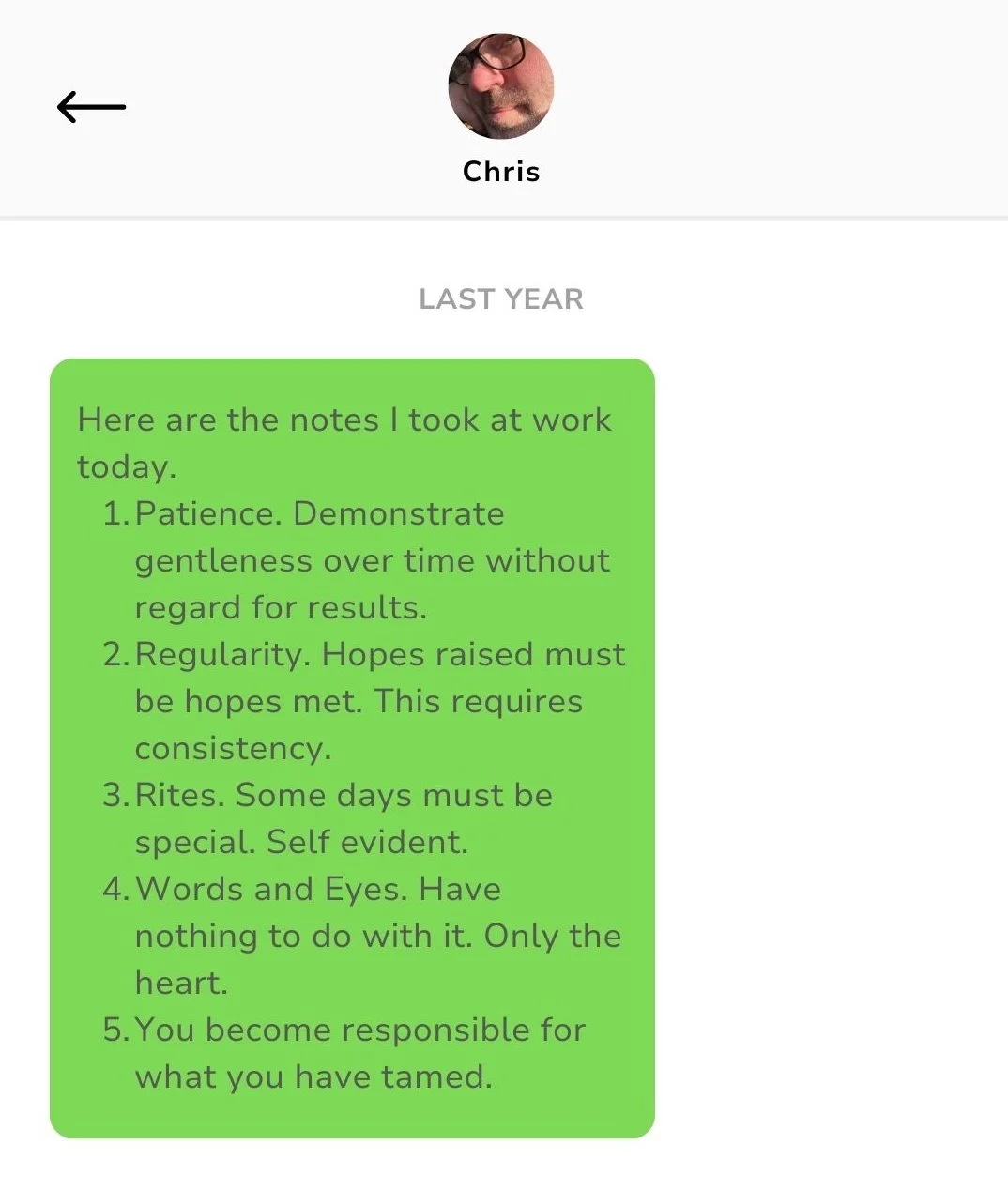
He was like that. Studious. While I knew him, he was an unfunded researcher at the University of Oregon gathering data on Higgs boson self-coupling.
I JUST WANT TO SEE YOU IN YOUR EYES
Though Chris said he would read more of The Little Prince, he never did, later admitting that he wasn’t interested in the story getting sad. He read my book cover to cover between our first and second dates. It was poignant rather than sad, he insisted.
The Higgs boson—a subatomic particle—was first proposed in 1964, but wasn’t discovered until 2012, at the Large Hadron Collider at the European Organization for Nuclear Research (CERN) facilities in Geneva, Switzerland. Chris was there, and his name is on page 30 of the resulting paper. “Along with thousands of other people,” he’d said when he dug the paper out to show me.
*
The pilot learns the little prince came to Earth from a small asteroid. To the prince it was his world, and so he called it a planet, a star.
Oh, Little Prince! Bit by bit I came to understand the secrets of your sad little life… For a long time you had found your only entertainment in the quiet pleasure of looking at the sunset.
—One day, you said to me, I saw the sunset 44 times!
And a little later you added:
—You know—one loves the sunset, when one is so sad…
—Were you so sad then, I asked, on the day of the 44 sunsets?
But the little prince made no reply.
I WOULDN’T HAVE TAKEN EVERYTHING OUT ON YOU
I couldn’t remember what color Chris’s eyes were after our first date. I thought blue, or possibly gray. But I did remember how he looked at me. His gaze had an impossible weight to it. Like he was taking in every particle of me.
A few days after our date, I asked him a series of questions. One was, “If you knew that in one year you would die suddenly, would you change anything about the way you are now living?” He said no, he was living the life he wanted to. I don’t remember many of his other answers, but that one stuck with me because it was so different from my own. If you could know which moments were going to mean everything, later, would you want to?
I ONLY THOUGHT YOU COULD UNDERSTAND
Our second date was the following week at the Newport Aquarium. Saturday, 10:30 again. He brought a paper he’d written as a primer on particle physics. I’d complained during the preceding week that I’d had nothing to read of his. Afterwards, while driving back to my mom’s, I texted him.
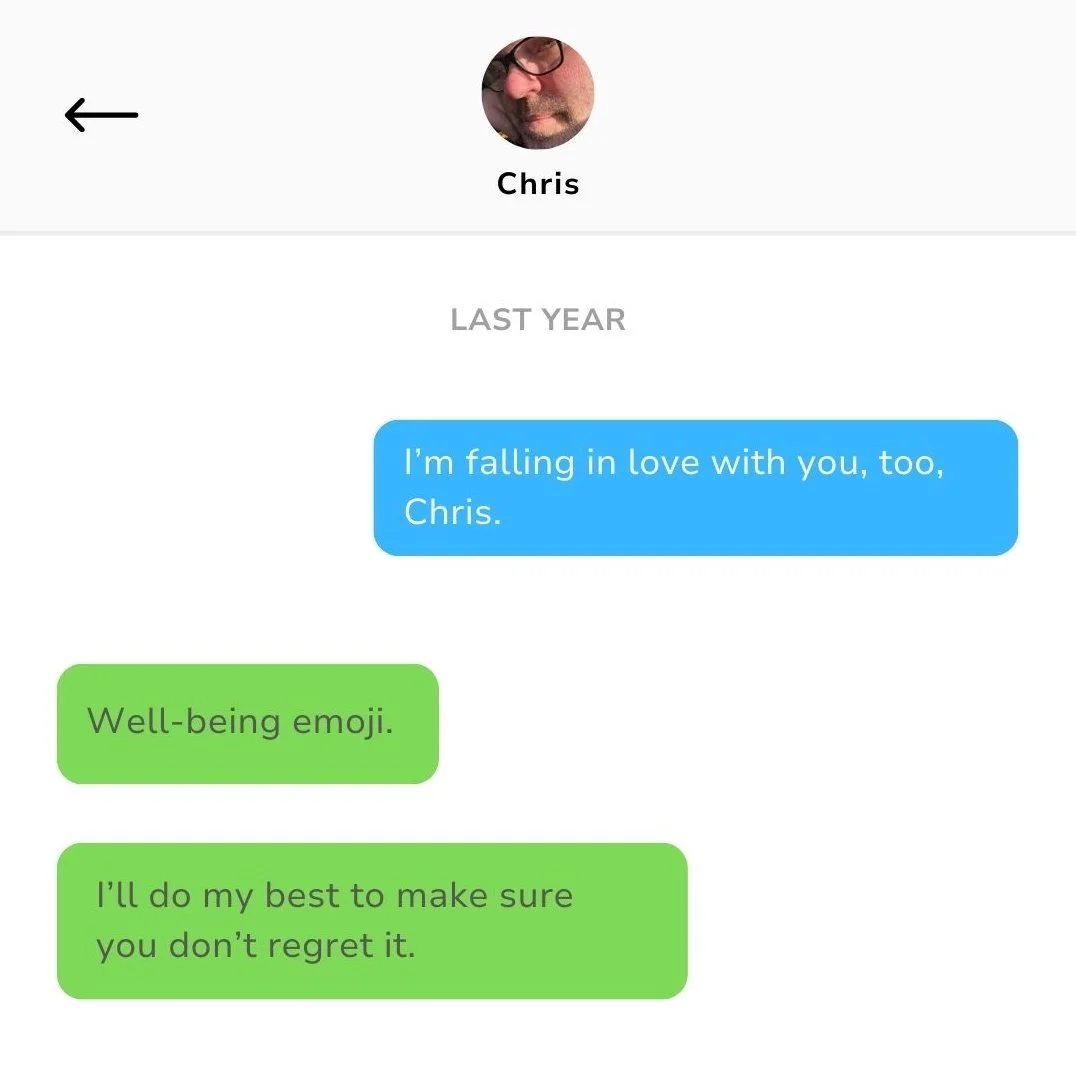
Three days after our second date, he took the morning train from Eugene just to kiss me for the first time, even though he had to take the next train back. After that, he called me sweetheart.
THEY SAY EVERY MAN GOES BLIND IN HIS HEART
In science, specifics are required for any story. Sometimes it can take thousands of people to tell an incredibly short story, because of how much can happen in the proverbial blink of an eye.
THEY SAY EVERYBODY STEALS SOMEBODY’S HEART AWAY
The discovery of the Higgs boson confirmed the existence of the Higgs field. The particle is like a wave and the field is like the ocean the wave is moving upon—when we can see and measure the wave, we can get a sense of the ocean beneath. The Higgs field was predicted by Standard Model Physics, and even though there are researchers trying to find where the holes in the Standard Model are (and Chris was one of them), it is the best model we’ve got so far for describing how the smallest components of matter interact with one another. In other words, the Standard Model describes how things in the universe come together and fly apart.
AND I’VE GOT NOTHING MORE TO SAY ABOUT IT
The little prince has left his home, we learn, because of a broken heart. He’s been traveling a while already when he meets the pilot. When he asks for the sheep, we don’t know it yet, but we are almost at the end of the story.
I know very little about the research Chris did, or wanted to do. After the Higgs discovery was announced, it seemed like everyone around him was grabbing lucrative corporate gigs, as though the work in their lifetime was done and there was nothing but reaping left, as though there wasn’t so much more they could discover. Some people who knew him then say this is when ‘physics broke his heart.’ Others say it was only ever people who did that.
NOTHING MORE THAN YOU WOULD ME
“Flowers in December” doesn’t exactly exemplify our story, but it’s a mood, and because he loved Mazzy Star, it reminds me of his room and his eyes and the soft stubble on his head after he shaved.
The first night he stayed over was the third Saturday of our acquaintance. In the middle of the night, from a blanket in my backyard, he pointed out three stars directly overhead, called the Summer Triangle. He was happy talking about celestial declination and dark matter and black holes.
After that, it was every Saturday at 10:30, whether we were together or not (though we were together more than not) and every 13th of the month.
SEND ME YOUR FLOWERS OF YOUR DECEMBER
Happy 1 month!
Happy week 5!
Chris lived in a house full of books and art. He loved jazz and the Criterion Collection. He also loved sci-fi and detective noir from the ‘60s, Jared Hess and Christopher Guest movies, The Office, Regina Spektor, REM, and Mazzy Star.
Happy week 11!
He had a long bank of east-facing windows, lined with giant monstera, rubber plants, crotons, dracaena. He loved watching the setting sun as its point of disappearance moved, month-by-month, from one side of the windows to the other.
SEND ME YOUR DREAMS OF YOUR CANDY WINE
Happy 5 months!
Early in our relationship, I noticed a photo printed on a piece of tin tucked behind a plant in one of his bedroom windows.
“Is this… Hope Sandoval?” My incredulity sounded like scoffing to him. I asked if he was a big fan—and he got tongue-tied. She’d helped him through some dark times, he mumbled. Teasing, I looked her up on online and asked if she was as “helpful” now. He grabbed the picture and bent it in half and made to throw it away.
“What have you done to Hope!” I tried to take it from him, but he held it out of reach. “You can’t throw that away. It matters to you. I was just kidding! I’ll stop!” I pleaded until he handed it over. I folded her back into shape, placed her back in the window.
One reason stories about heartbreak can be hard to sell is because in love, while the specifics are the story, too many specifics don’t leave room for a reader or listener. Hope Sandoval and Dave Robeck, in writing “Flowers in December” for Mazzy Star’s third album, avoid this problem by leaving nearly every specific out. There are flowers, it’s December, someone has been let down. Listeners write their own sad story into this spare outline, guided into their memories of loss by the minor chords and Hope’s melancholy voice.
I GOT JUST ONE THING I CAN’T GIVE YOU
Happy week 22!
He said finding me was like winning the lottery. I was more than family, his best friend. He said I was a badass, smarter than I ever gave myself credit for, and talented. He said over and over that I had to write another book, until I cried that I couldn’t, that my biggest fear was that I maybe never would. He comforted me then, saying I should just stop trying if the trying was breaking my heart so much. Like the little prince, there were parts of Chris’s story that he’d only ever speak of obliquely, if at all.
Happy half-iversary!
JUST ONE MORE THING OF MINE
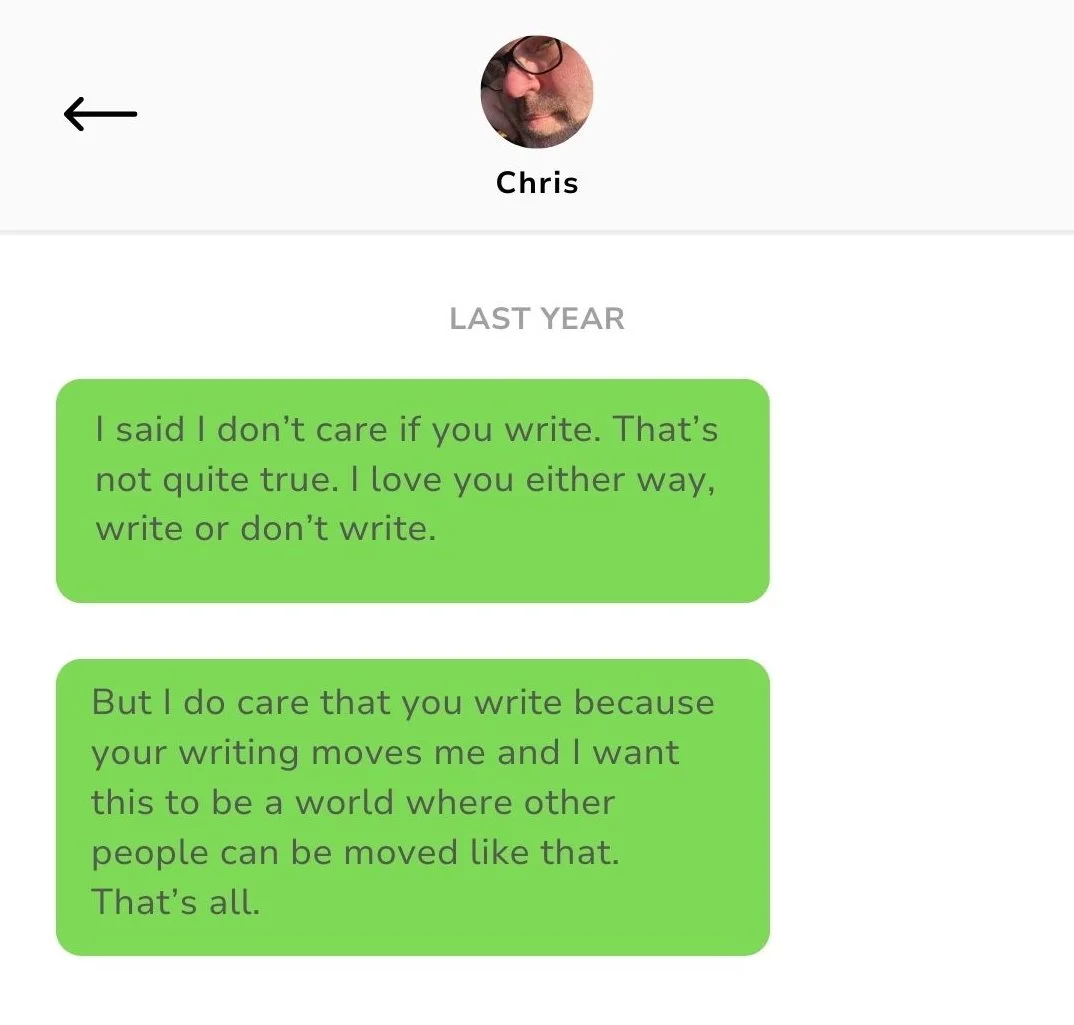
Since we lived two hours apart, much of the evidence of our love was texted while we navigated our separate lives.
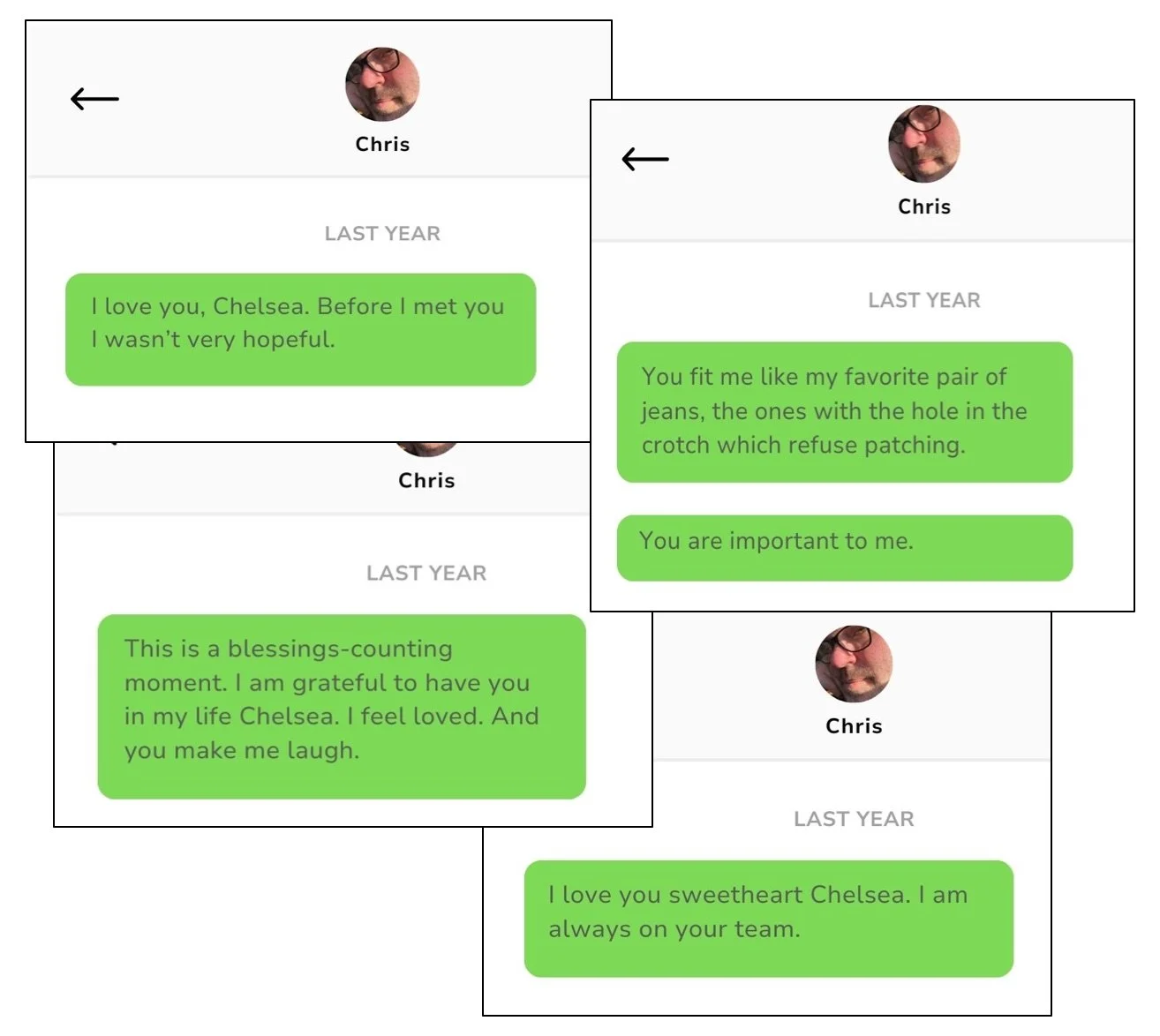
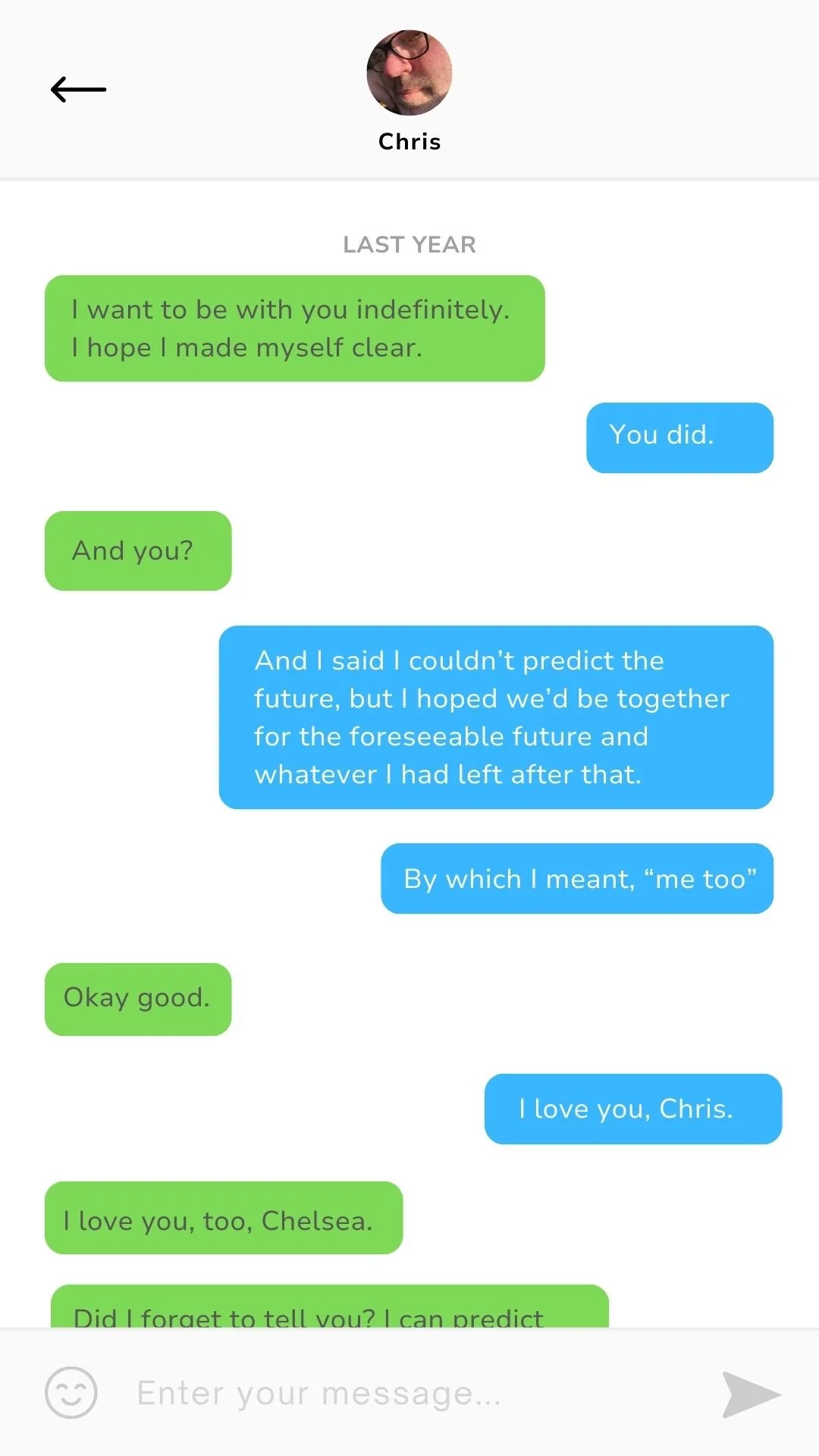
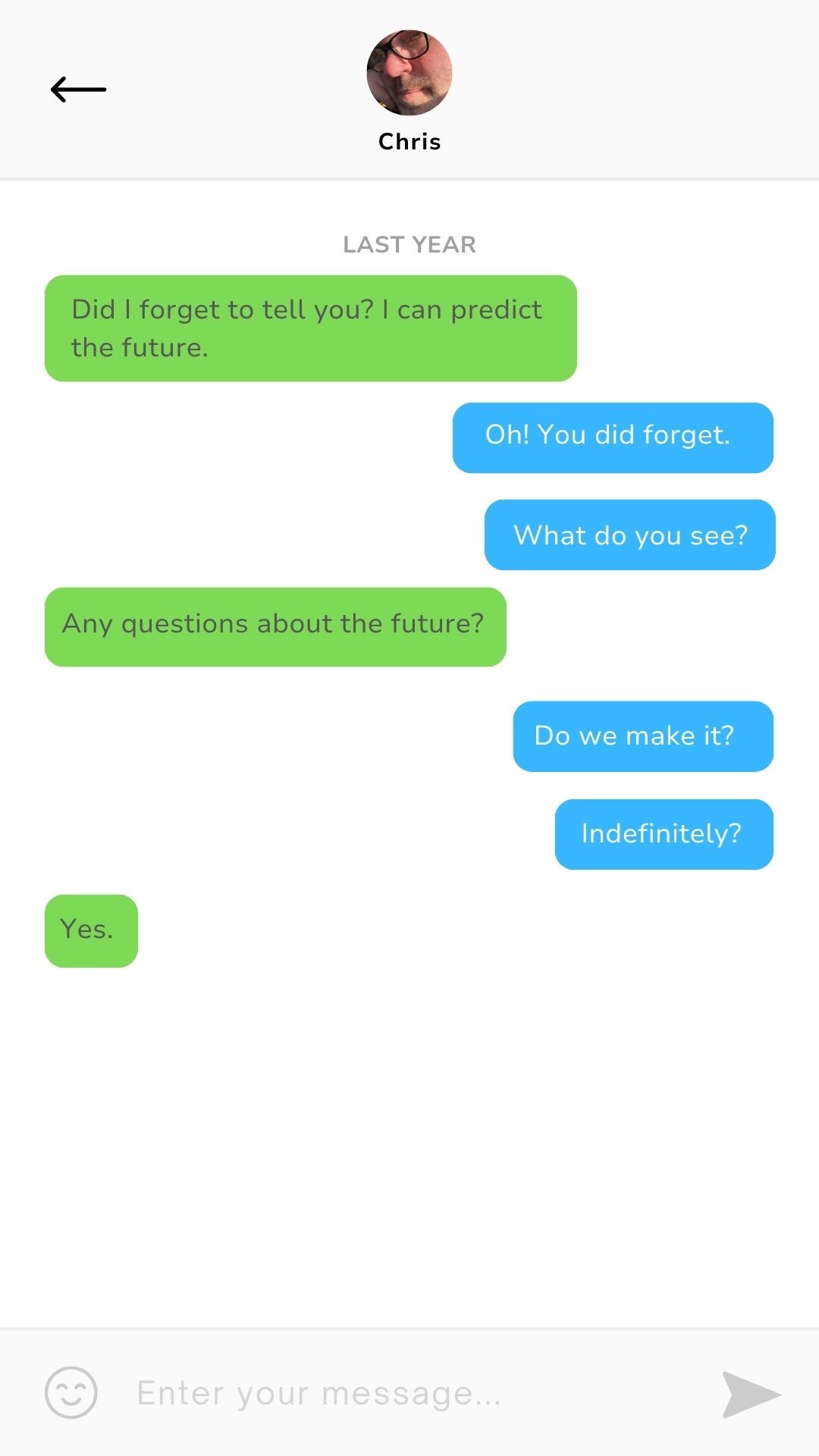
THEY SAY EVERY MAN GOES BLIND IN HIS HEART
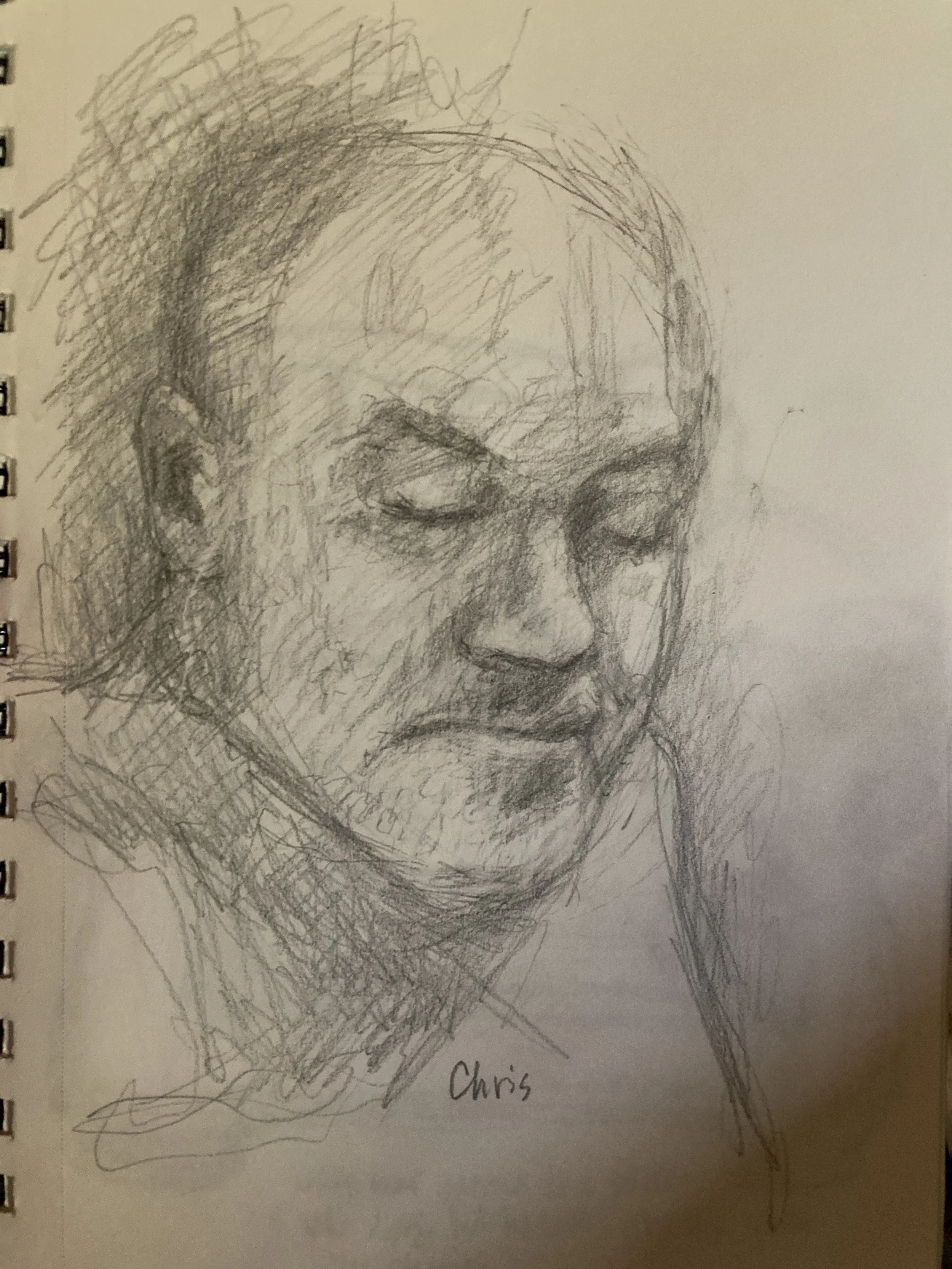
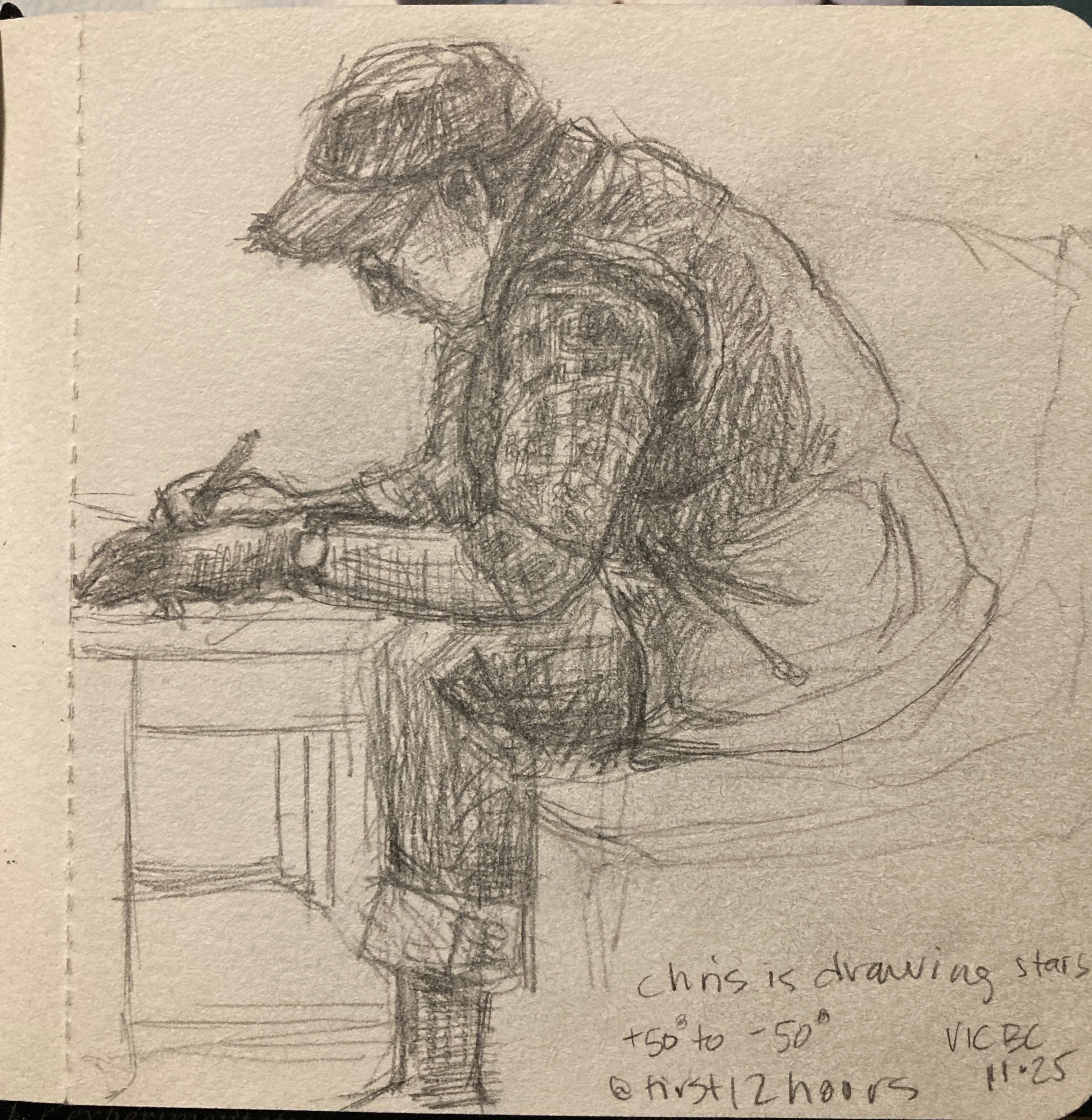
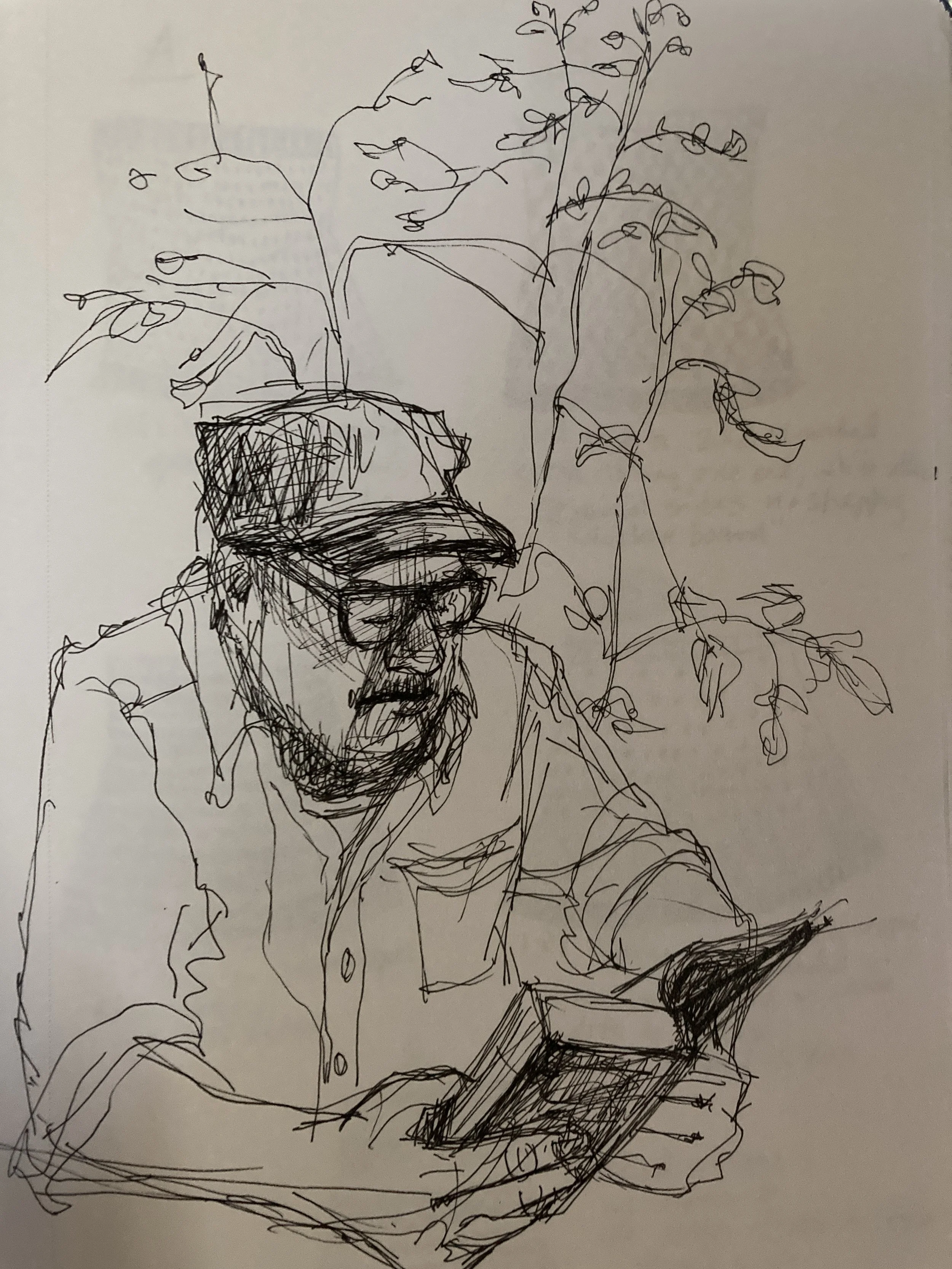
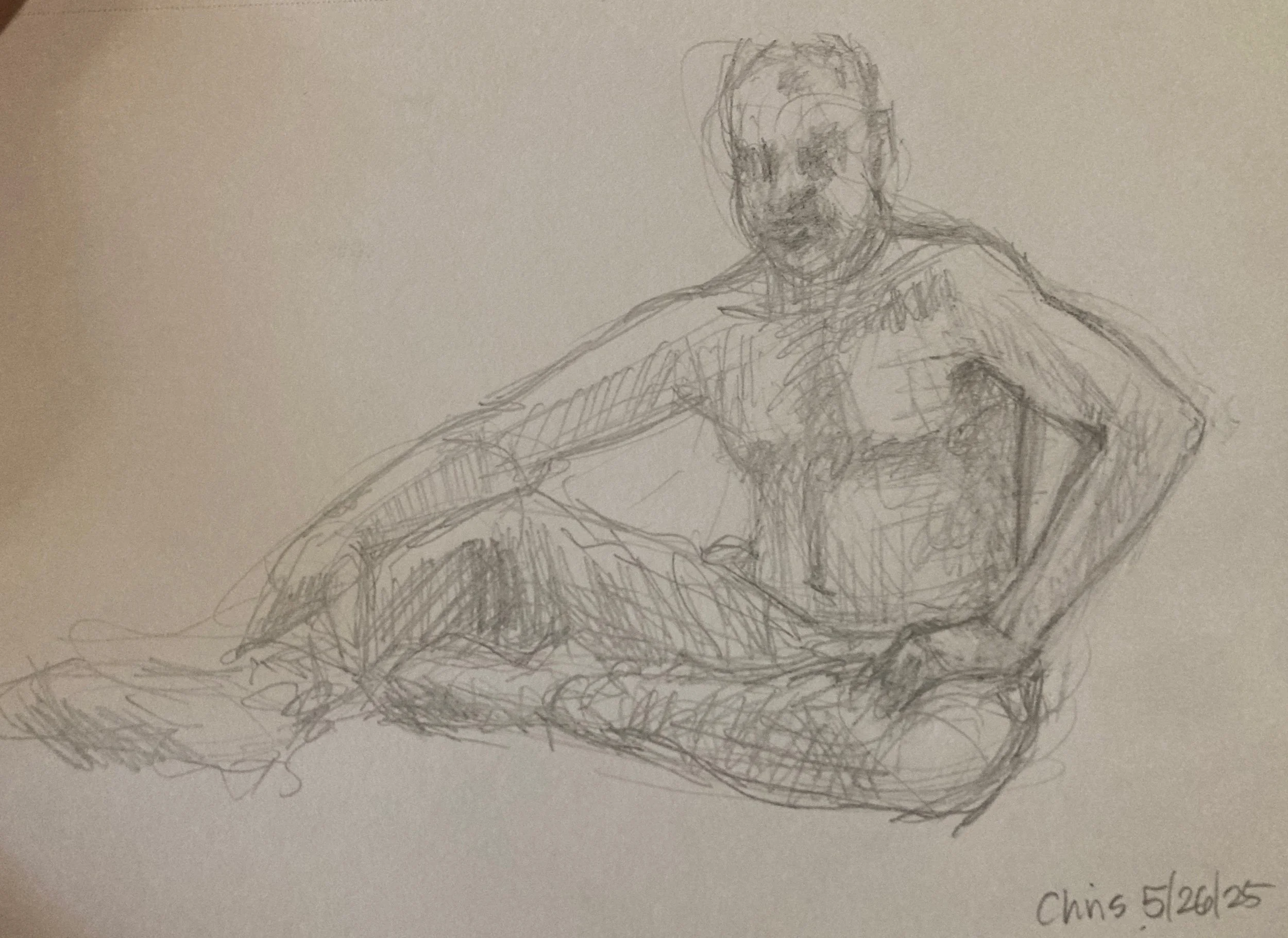
On the weekends, we lived a third life together. In Eugene, I watched him play soccer Saturday mornings. I bought a sketchbook and began filling it with drawings of him. He read while I studied Korean. In Estacada, he would often do yardwork—mowing, chopping wood, fixing things, while I cooked elaborate meals for him. He’d say, “Your boyfriend grew up in Nebraska. He knows his way around tools.” He taught me chess and I taught him gin. We went to bed early and got up late.
Happy week 30!
THEY SAY EVERYBODY STEALS SOMEBODY’S HEART AWAY
Once, after dinner with his two sons, I mentioned that he was a Hope Sandoval fanboy. Later, for Christmas, they bought him a Mazzy CD.
“Of course it’s one I already had,” he told me, “but this is the first time they bought me something related to one of my interests! They used to be inert blobs. They are these two fully awake souls now.” He was crying. He told me his biggest fear was that one day he’d be gone and they’d wonder if he ever loved one of them more than the other.
AND I’VE BEEN WONDERING WHY YOU LET ME DOWN
Happy 8th month!
Happy week 40!
It was not perfect. We argued. He could be jealous and cold, while I was quick to sob and cling. He was terrible at giving gifts. I always interrupted. He was stubborn; I was contrary. I could be impatient with our routine. He felt I lacked discipline.
AND I’VE BEEN TAKING IT ALL FOR GRANTED
But we believed in one another. He always wanted to hear what I had to say. I loved the way he took long seconds to think before answering questions. He changed the way I saw myself and my possibilities.
Saint-Exupéry’s pilot worries that his drawing skills haven’t captured the little prince or what knowing him was like. I worry my words can’t capture what Chris was like when he was with me. What we were like together. I worry I’m not accurately portraying his work or how he felt about it. I worry that in retelling this story, I’m hoping a mountain of facts will fill in not just our how but our why, too
Happy this-relationship-goes-to-11!
Happy week 51!
*
After the pilot has finished repairs on his plane, he finds the little prince sitting on a wall, speaking out loud to no one, about a meeting later that evening, about poison. When the pilot looks to the foot of the wall, he sees one of those yellow snakes that take just thirty seconds to bring your life to an end.
—What does this mean? I demanded. Why are you talking with snakes?
—I am glad that you’ve found what was the matter with your engine, he said. Now you can go back home. I, too, am going back home today…
Then sadly—
—It is much farther… It is much more difficult…
The Higgs boson is incredibly small, compared to the rest of the universe. It is also highly unstable, decaying into other particles within a tenth of a trillionth of a billionth of a second. This is only slightly faster than a zeptosecond, the shortest amount of time every measured.
SEND ME YOUR FLOWERS OF YOUR DECEMBER
I felt myself frozen by the sense of something irreparable. And I knew that I could not bear the thought of never hearing that laughter any more.
—Tonight it will be a year… My star, then, can be found right above the place where I came to Earth, a year ago…
—Little man, I said, tell me that it is only a bad dream—this affair of the snake, and the meeting-place, and the star…
SEND ME YOUR FLOWERS OF YOUR DECEMBER
After we fell in love so hard like that, after so many happy week’s, and eleven months’ worth of mini-celebrations—
BEFORE I LET YOU DOWN AGAIN
On a Saturday morning, 364 days after we met, and not even 26 hours before our one-year anniversary—
Chris sent me a text, Good morning, sweetheart like he had 164 times before, and then a picture of the soccer field, where he was playing his usual Saturday game—
SEND ME YOUR FLOWERS OF YOUR DECEMBER
And then, a few minutes later, his teammates would tell me, in the middle of a play, with no warning or reason, he collapsed. There was a retired cardiologist on the team who immediately began chest compressions. When the paramedics arrived, they got his pulse back, but only for a few minutes. He never regained consciousness.
—When your sorrow is comforted (time soothes all sorrows) you will be content that you have known me. You will always be my friend.
No one knew how to reach me, so I spent the rest of the morning sending dumb memes to his phone, as was my habit.
—I shall look as if I were suffering. I shall look a little as if I were dying. It is like that. Do not come to see that.
SEND ME
—You understand… It is too far. I cannot carry this body with me. It is too heavy.
I GOT JUST ONE THING I CAN'T GIVE YOU
I’d already gotten out the clothes I was going to wear for our anniversary date the next morning. His card was written, his gift, wrapped. We’d planned to meet at Powell’s at 10:30, like we had all those thirteenths before, and I was going to wear the same dress. It’s orange and summery, and a couple of hours after that first date, he’d texted that he liked it very much and had wanted to say so at the time.
—But it will be like an old abandoned shell. There is nothing sad about old shells…
Around 5 in the afternoon, I saw an email from his nephew. It said to call him ASAP, that it was about Chris. I called, not understanding what I should have from those few words, not understanding even after his nephew said, “Chris had a cardiac event today… and he didn’t pull through.” Pull through what, I asked. What do you mean? We have a date tomorrow…
AND I’VE BEEN WONDERING WHY YOU LET ME DOWN
That night, when it was dark and I felt his inarguable absence blowing through the new, hollow space behind my sternum. I played Regina Spektor and REM and Mazzy Star loud enough to drown out my ugly, ungraceful sobs. The only person in the universe I wanted to talk to was Chris, and I could not. I went outside and watched the Summer Triangle move across the sky.
It’s tough to visualize a number as small as a zeptosecond, but if you apply that fraction (a tenth of a trillionth of a billionth) to the full lifetime of the universe, 13.8 billion years, which is the largest known amount of time, it turns out to be 43.5 microseconds. A whole year, on the other hand, is seventy-two trillionths of the life of the universe, or 0.0000000072%. Even though it dwarfs the lifespan of the Higgs, Google’s AI says that compared to the life of the universe, a year is a number so small, “it rounds to nothing.”
SEND ME YOUR FLOWERS OF YOUR DECEMBER
In the days and weeks that followed, I knew a consuming grief that is difficult to recall, now. His family was polite, but I had no place in their process. They gave me a few of his books and several plants. I asked for one of his t-shirts, a hoodie. I was just another guest at his celebration of life, and our relationship didn’t even merit mention in his obituary.
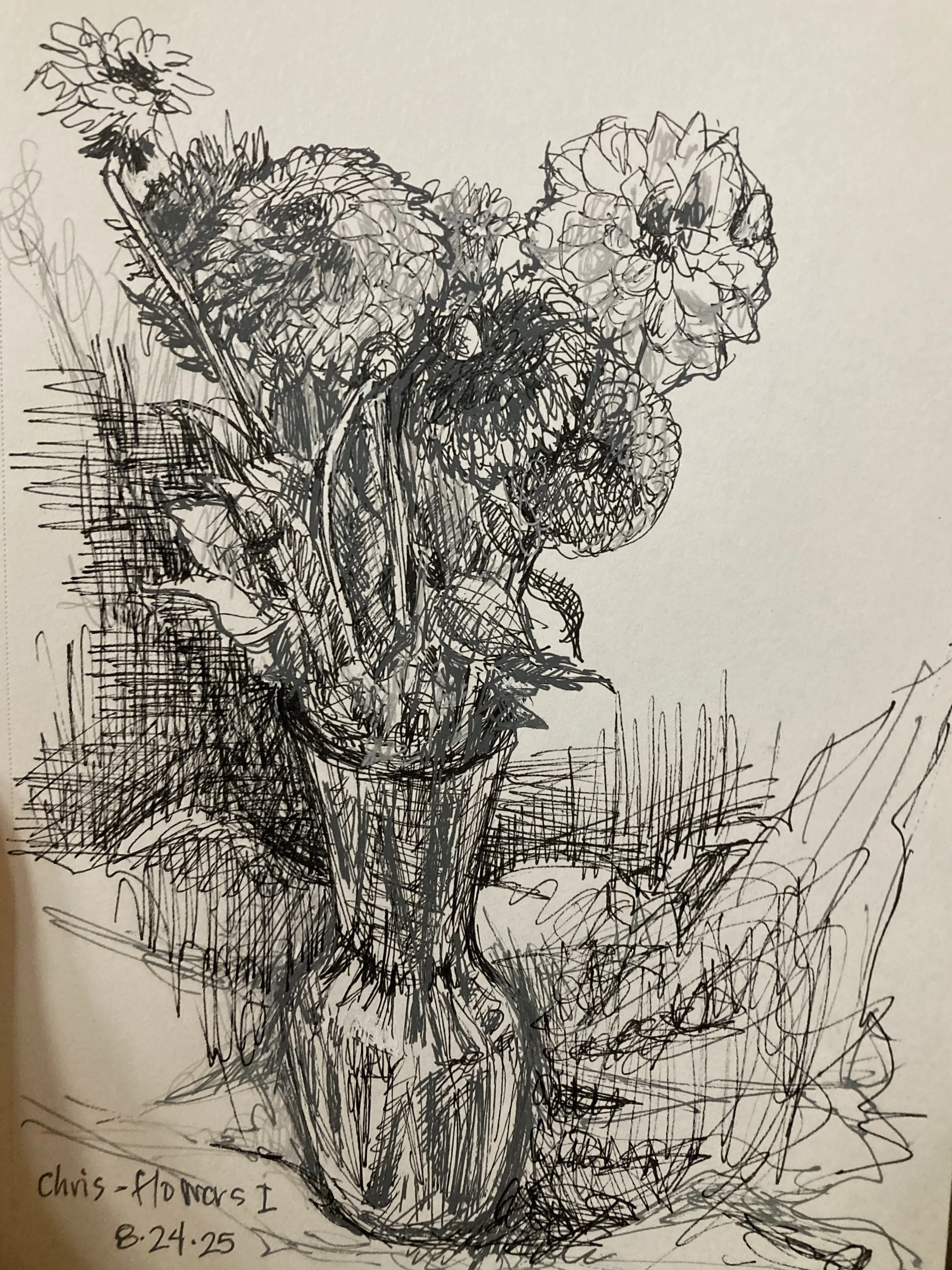
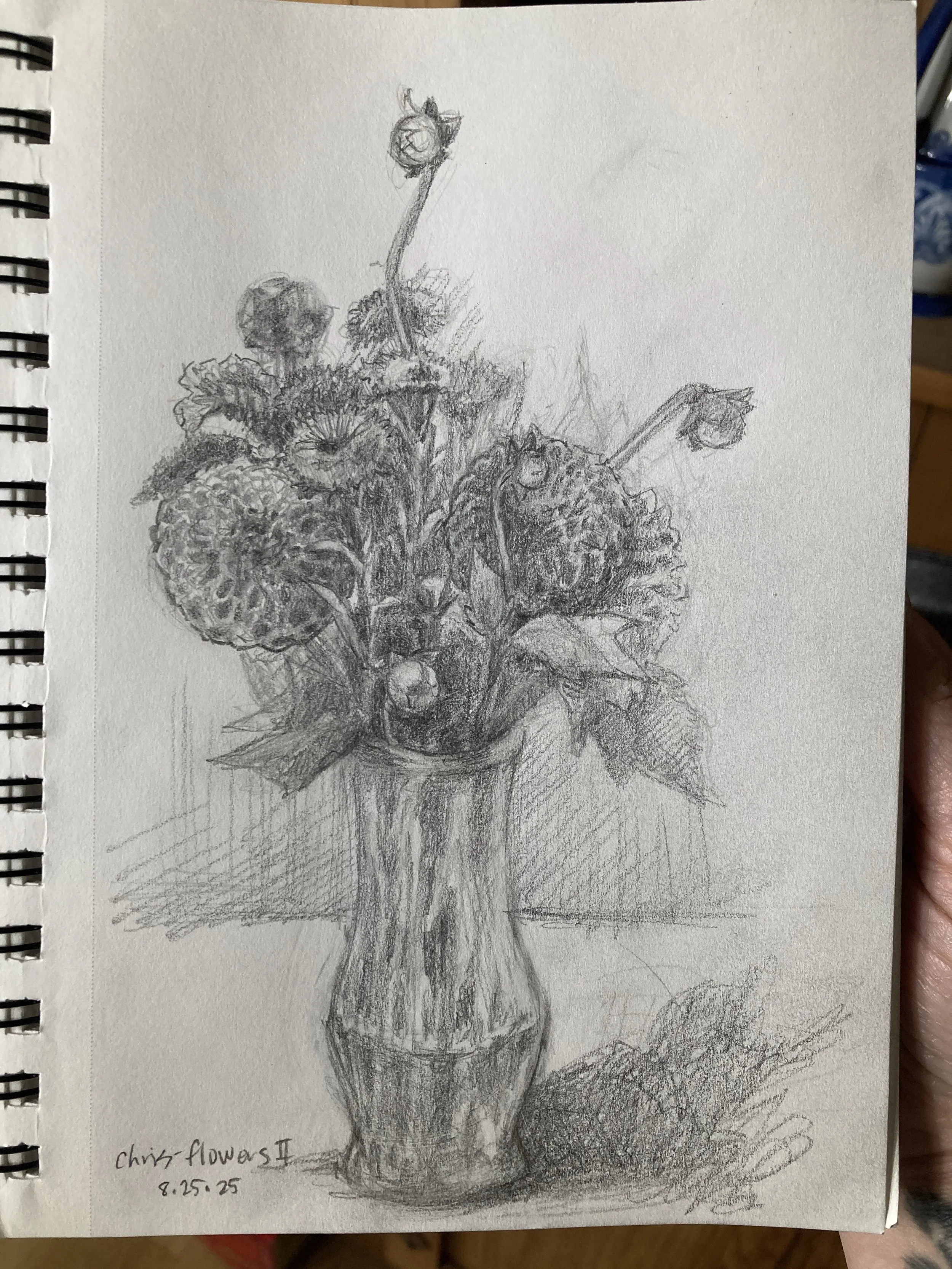
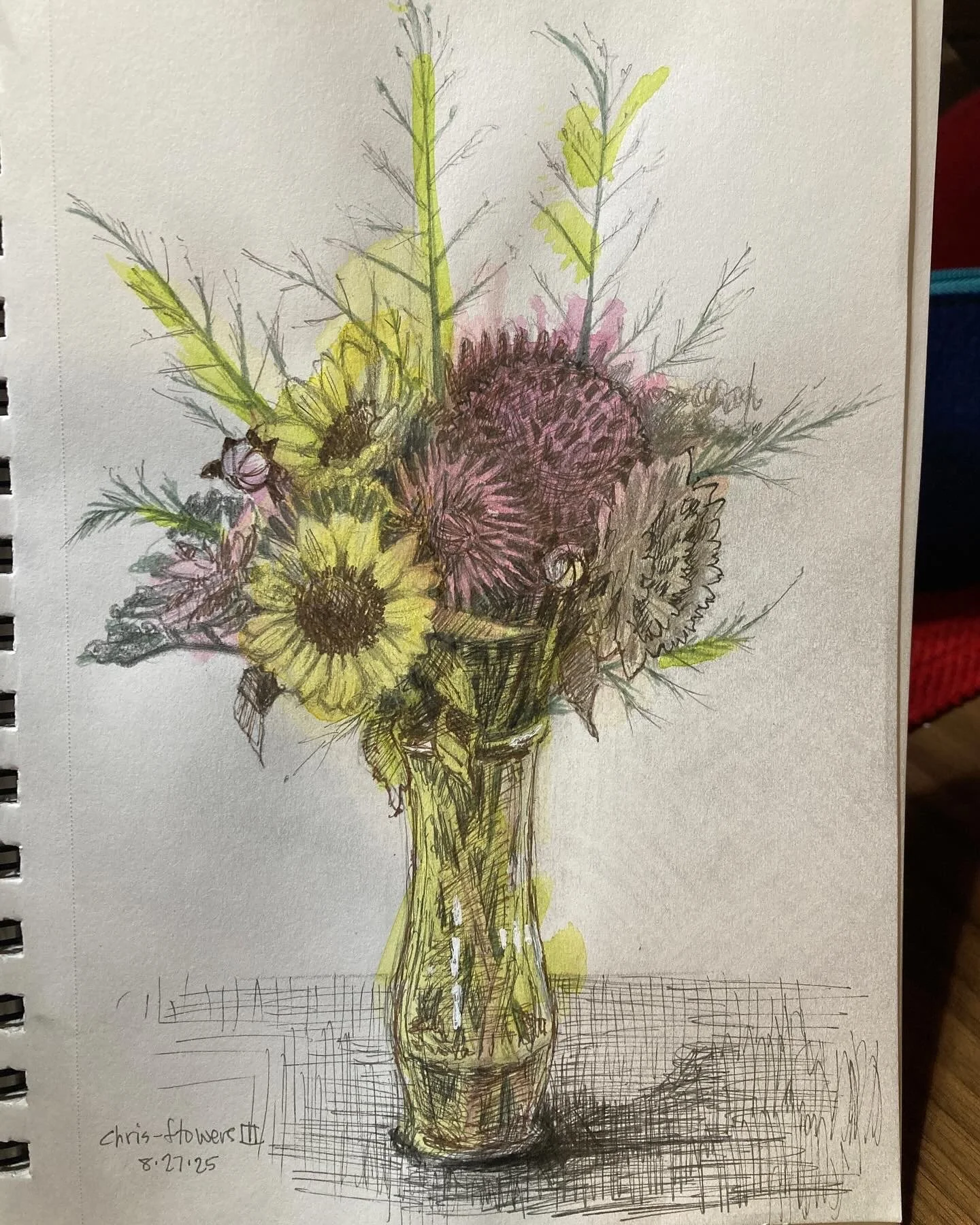
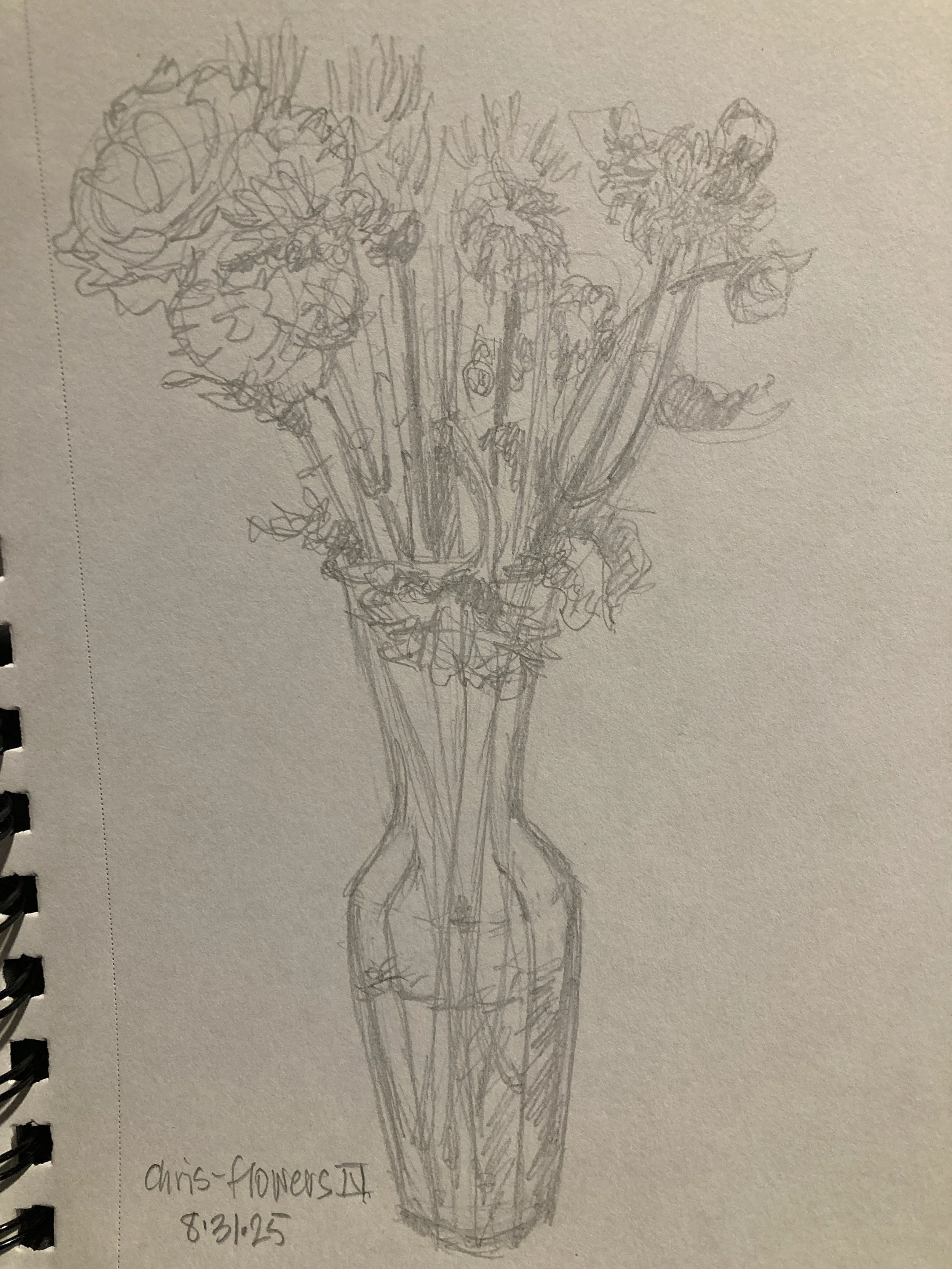
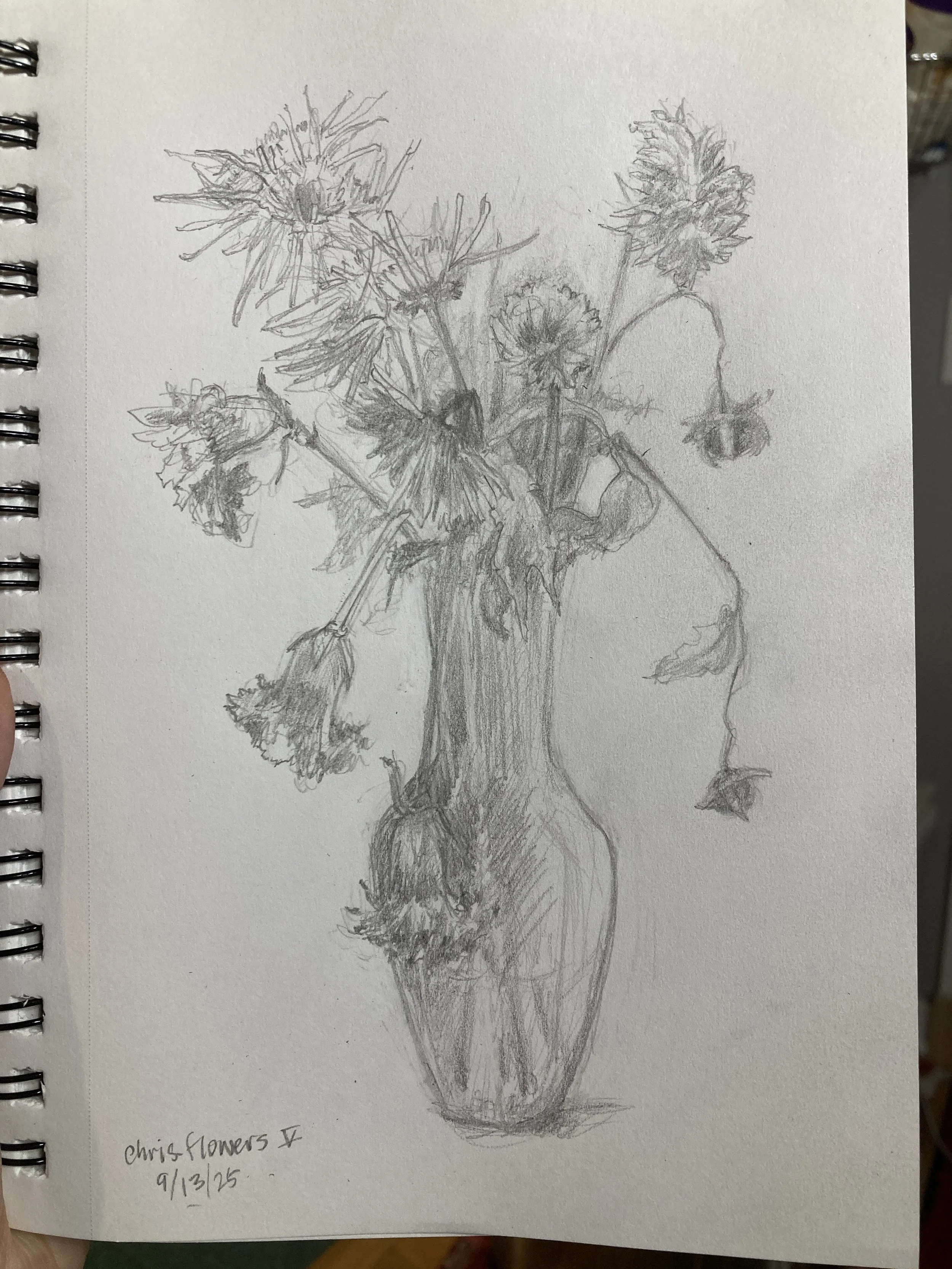
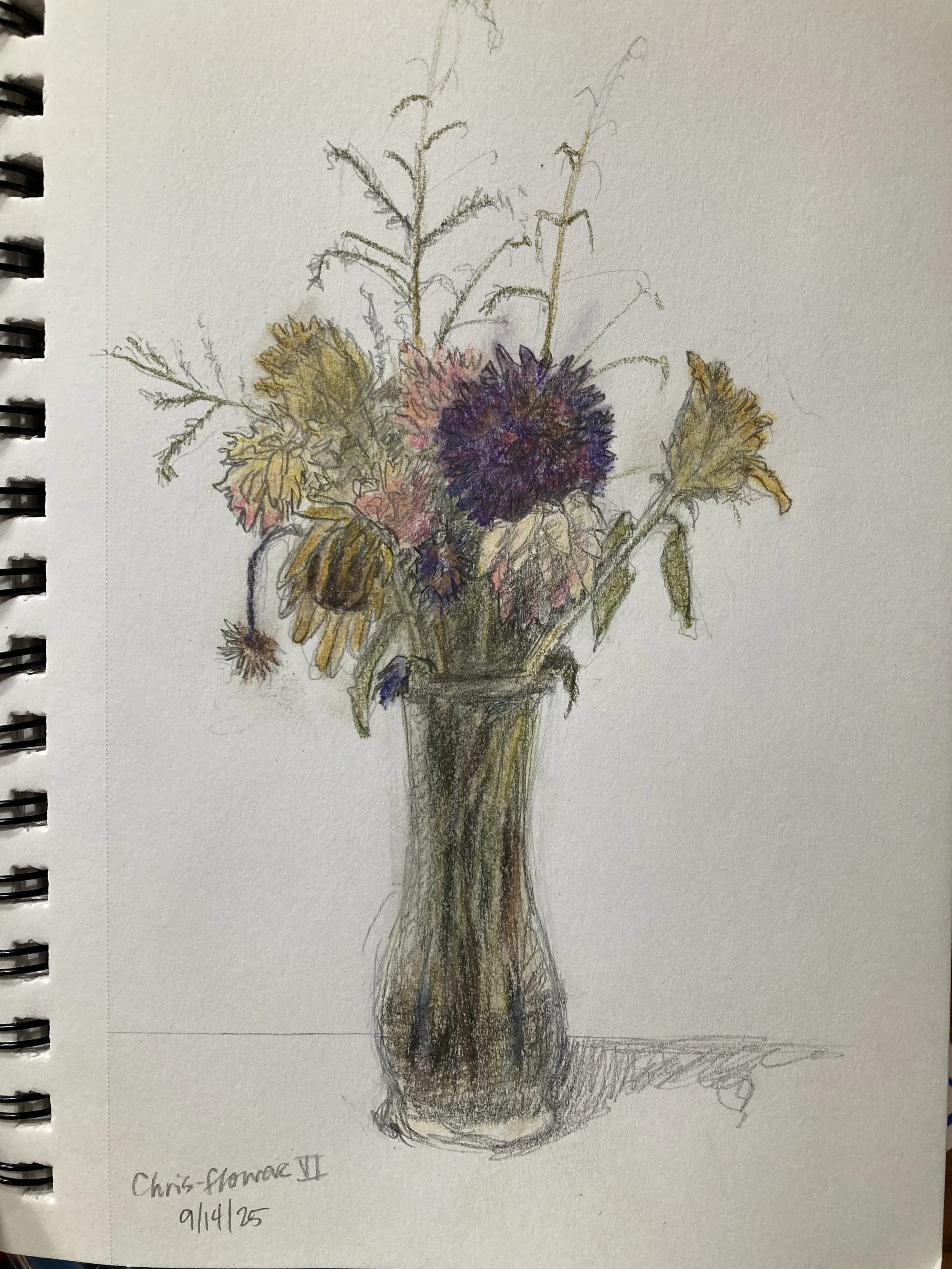
When I got home with three vases of the memorial flowers, I dug out the sketchbook that was supposed to be filled with drawings of him. Over the next several weeks, I drew the flowers, first as fresh blooms, then shriveled.
I GOT JUST ONE THING I CAN'T GIVE YOU
Maybe we came together just when we were supposed to, and flew apart that way, too. If you could choose how to spend your last year, would you pick falling in love?
JUST ONE MORE THING OF MINE
Does it seem uncanny—we celebrated every week and month, as if sensing we’d never get an anniversary? Another question I asked Chris in that first week, was “If you were to die this evening with no opportunity to communicate with anyone, what would you most regret not having told someone?” Chris had lost both parents and his only sister and he knew that one doesn’t always get tomorrow. He told me he loved me nearly every night I knew him. He told his boys he loved them every night they spent with him.
SEND ME YOUR FLOWERS
We couldn’t talk that final Friday night—a sharp stone I carried in my throat for weeks after he was gone—but I texted I love you! (like I had 86 times before) Xoxo. Luckily, he had read receipts on, so I know he saw it just before he fell asleep.
SEND ME YOUR DREAMS
Before he returns home, the little prince learns that what is essential is invisible to the eye. Though it’s not what Saint-Exupéry was angling at, Chris’s work on subatomic particles taught him that lesson well. But too, the fox tells the prince that it is the time spent on the people and things we care about that make them important.
That we celebrated 51 Saturdays and 11 thirteenths made our time together important.
Now, I buy flowers on the thirteenth of each month. There have been seven since Chris returned to the stuff of stars. As the little prince predicted, my sorrow has been comforted some. As Chris promised, I do not regret it.
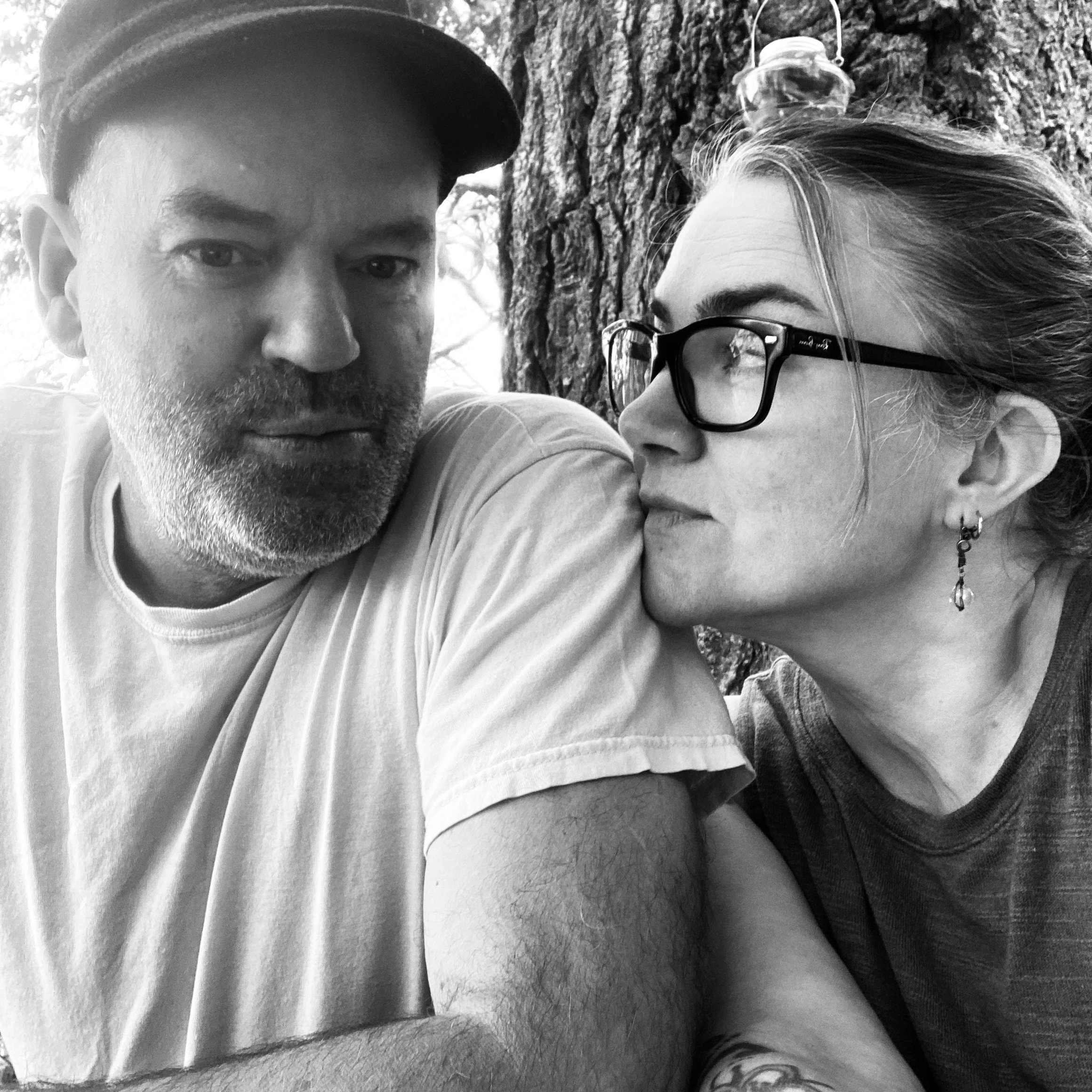
Chelsea Biondolillo is the author of The Skinned Bird. She lives in Oregon.