
second round game
(13) Ani DiFranco, “You Had Time”
outlasted
(5) Mariah Carey, “Without You”
106-54
for a spot in the sweet 16
Read the essays, listen to the songs, and vote. Winner is the song/essay with the most votes at the end of the game. If there is a tie, we will play a one-hour overtime (and repeat until we have a winner). Polls close @ 9am Arizona time on 3/17/26.
Erin Langner: Between the Lines of Mariah Carey’s “Without You”
Before Mariah Carey sings “Without You” at Proctor’s Theater in the summer of 1993, she tells the audience of young people at her feet that the song always made her cry when she was a little girl. She says it in a soft, less assured voice than we’ve since come to know. As I watch the performance on YouTube now, all I can think about is how in the year that she said this, I was a little girl. And that year, more than anything, I wanted no one to see me cry.
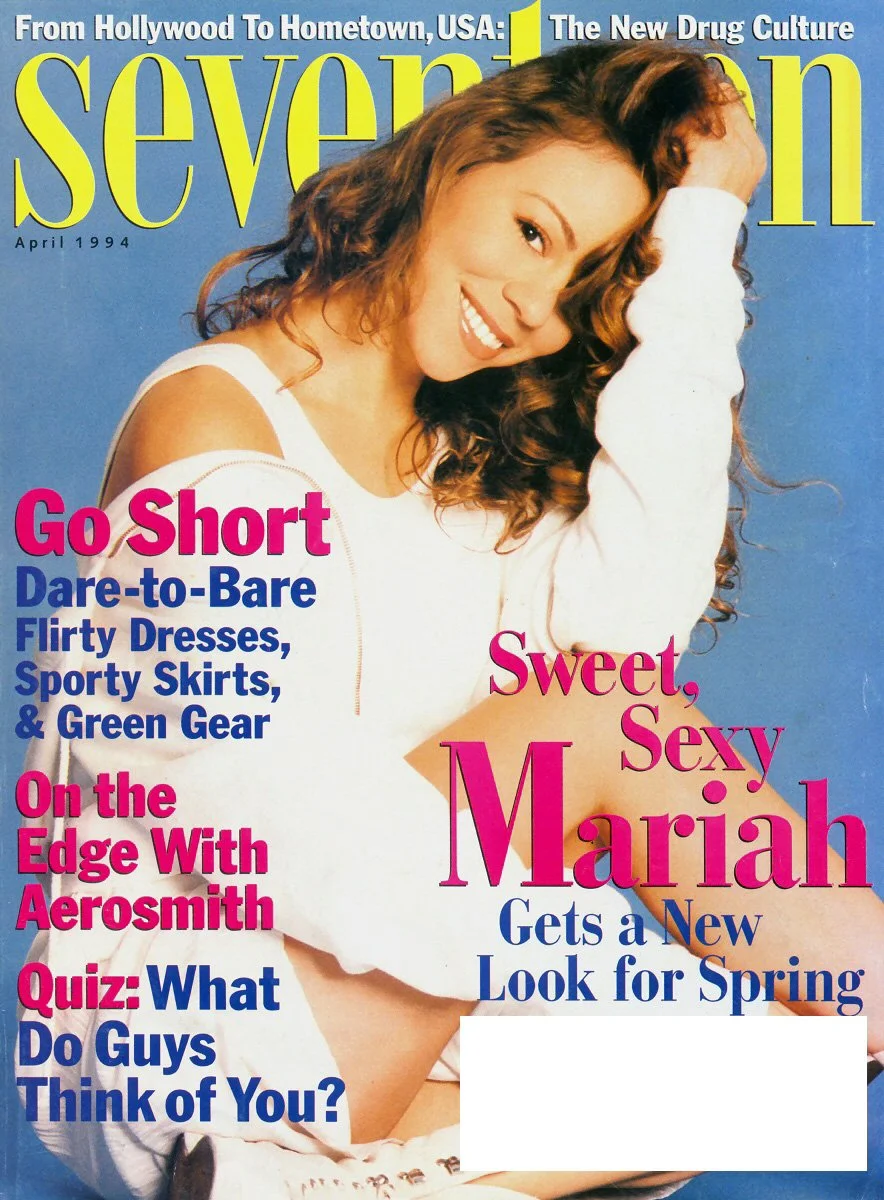
When Mariah belts out the song that night in upstate New York, she is twenty-four years old. She clutches her heart, she stamps her foot, her gaze lands somewhere well beyond the camera. I almost believe she’s missing the unnamed person in the song who is leaving. But this was recorded in July, which means Mariah had just married Tommy Mattola—the president of Sony music, twenty years her senior. The chunk of diamond flashes on her finger as she pulls the mic away from the stand. Her full-bodied melisma stretches the word “live” so long that it nearly slows time; it feels as if she wants to stay inside of the lyric for as long as possible. Or at least that’s what it sounds like to me now that I know her whole story. Back in 1993, I probably would have believed the article in Seventeen magazine that implied she had a happy marriage to go home to at the end of the night: “The two marry in a wedding fit for a princess (this one was literally adapted from the British royal wedding) and live happily ever after with horses and a dog in a sprawling ranch house in upstate New York. The end.”
Mariah Carey’s “Without You” is a cover of a cover, which might mislead you to think that it isn’t truly sad. How could borrowing someone else’s words ever conjure the same fullness of emotion as singing your own? But there is also liberation in the cover, which can become a physical shield against ascribing the lyrics to literal experiences of the person singing it. Or as Emily Lordi puts it in the New Yorker when she describes Mariah’s covers, they release her “from burden of autobiography that hounds female singers.” Other people’s words create space to forge a separate self—one away from the story that everyone believes to be yours.
I longed for that very separation when I was the little girl who didn’t want to cry; the impossibility of such a feat did not occur to me.Mariah would have been all over the radio that year, but now I hear mostly silence, because it was around when my mother died from cancer. At my own insistence, I was back at school exactly one week later. Once there, I was determined to project my fineness with full force, especially as I began to sense my new descriptor behind the eyes of every person I knew and didn’t know: I was now the girl whose mom died. The weight of it was suffocating in the degree to which it changed my life overnight; the last thing I wanted to do was talk about it. But the first thing I sensed behind the wondering eyes of the other kids standing before me—often out of the utmost concern—was how much they wanted to know what it was like.
My fourth-grade portrait was taken a few weeks later and tells the story of that whole year. I wore a long, V-neck cardigan, one side of which was magenta, the other purple; a pink plastic heart button kept the sweater’s two halves together at my waist. It was probably the last article of clothing I ever wore from Kids ‘R’ Us. My hair draped over my shoulders in long, dishwater-blonde strands that looked like they hadn’t been washed for days. Inspired by an older cousin, I’d begged my father to let me perm my bangs. Not knowing any better, or perhaps just out of sympathy, he’d let me do it, much to my detriment. In the portrait, they are piled atop my forehead, crinkled and disheveled.
And then, wrapped around my neck, tied in a loose knot, is a navy-blue bandana sprinkled with rhinestones. It was one my mother wore after her hair had fallen out, at least in part because I was terrified of seeing her bald head. She wasn’t usually one for frills; her wardrobe was comprised of mostly of earthtone cable knit sweaters and khakis. But the bandanas she wore were unlike everything else—bright pinks, blazing reds, and the bedazzled blue. They seemed to belong to a side of her that I never knew. After she died, the bandanas made their way into my own top dresser drawer. My desire to be close to her through them in such a public way surprises me now—that I was willing to touch the fabric, wrap it so intimately beside my skin that I could inhale some part of my mother’s scent that briefly outlived her between the threads. Somehow, I didn’t hide the bandanas in the same way I hid the rest of my grief. I was so curious about them, enchanted even by the possibility of being physically close to this other, brighter version of my mother.
In the photograph, the blue bandana clashed spectacularly with that jewel-toned sweater. And yet, there I am: smiling, my eyes looking somewhere slightly off beyond the camera, trying to convince everyone that this girl never cries.
*
It’s easy to imagine a Sony executive suggesting “Without You” for Mariah Carey’s Music Box album. On its surface, the song sounds like an answer to Whitney Houston’s “I Will Always Love You,” which came out the year before and won it all—Grammys. Billboard domination. Best-selling female song of all time. But that’s the story of another cover that overwrites another story of sadness. Meanwhile, Mariah’s previous album Emotions had underperformed in Sony’s eyes (eight million copies sold worldwide, against her debut’s fifteen million). Listening to Music Box, it seems that the Black music traditions that underlie much of Emotions (disco, Motown, gospel) were blamed for the sales figures—traditions that spoke to the biracial sense of self Mariah longed to center in her music. While those influences make more subtle appearances, Music Box abounds with the “adult contemporary” (white) genre of ballads that sold albums in the 1990s, including “Without You.”
Maybe that Sony executive made up the song’s backstory, about Mariah crying whenever she heard it. Or another story that came out later, about how she heard the song in a restaurant and knew it had to be on Music Box. At the time, Mariah rarely sang anything she hadn’t penned herself. She has writing credit on every song on the three albums that preceded Music Box except for one (a cover of The Jackson 5’s “I’ll Be There”). As someone who took her catalogue so seriously, I suspect Mariah knew the authentic depth of sadness that lives within “Without You,” despite its schmaltzy story of a lover’s departure and the devastation that ensues. Namely, the sadness of Badfinger—Welsh rock proteges of The Beatles who were largely buried alive by the weight of their potential. Badfinger members Pete Ham and Tom Evans wrote “Without You,” and the band recorded it in 1970. But the song found greater success when Harry Nilsson covered it in 1972. As Badfinger finally experienced some career momentum around that time, financial mismanagement left them with almost nothing to their name by 1975. Ham, whose girlfriend was eight months pregnant, hanged himself that year in their garage studio. Then, one night in 1983, Evans got into an argument over the "Without You" songwriting royalties and hanged himself in his garden.
A fractured self is sometimes the only kind that can survive the disconnect between how we expect the world to be and how it ends up being. That self, visibly disentangled from her autobiography, can at times be hard to witness. My father had my fourth-grade portrait on the mantel until recently, and whenever it caught my eye, I immediately wanted to look away. Though, whether it’s hard to look at because it captures the way I was trying so hard to separate my daily life from my grief, or because I was just so visibly sad, I’m not sure. I wonder the same of Mariah Carey—whether there’s a perceptible disconnect on Music Box that can be hard to listen to. In 1993, the LA Times wrote that “you don’t get much genuine emotion from any of these pop-soul songs.” The revile of such critics had roots in other problems (misogyny and racism, among others). But to say the album simply lacks authentic emotion is also untrue.
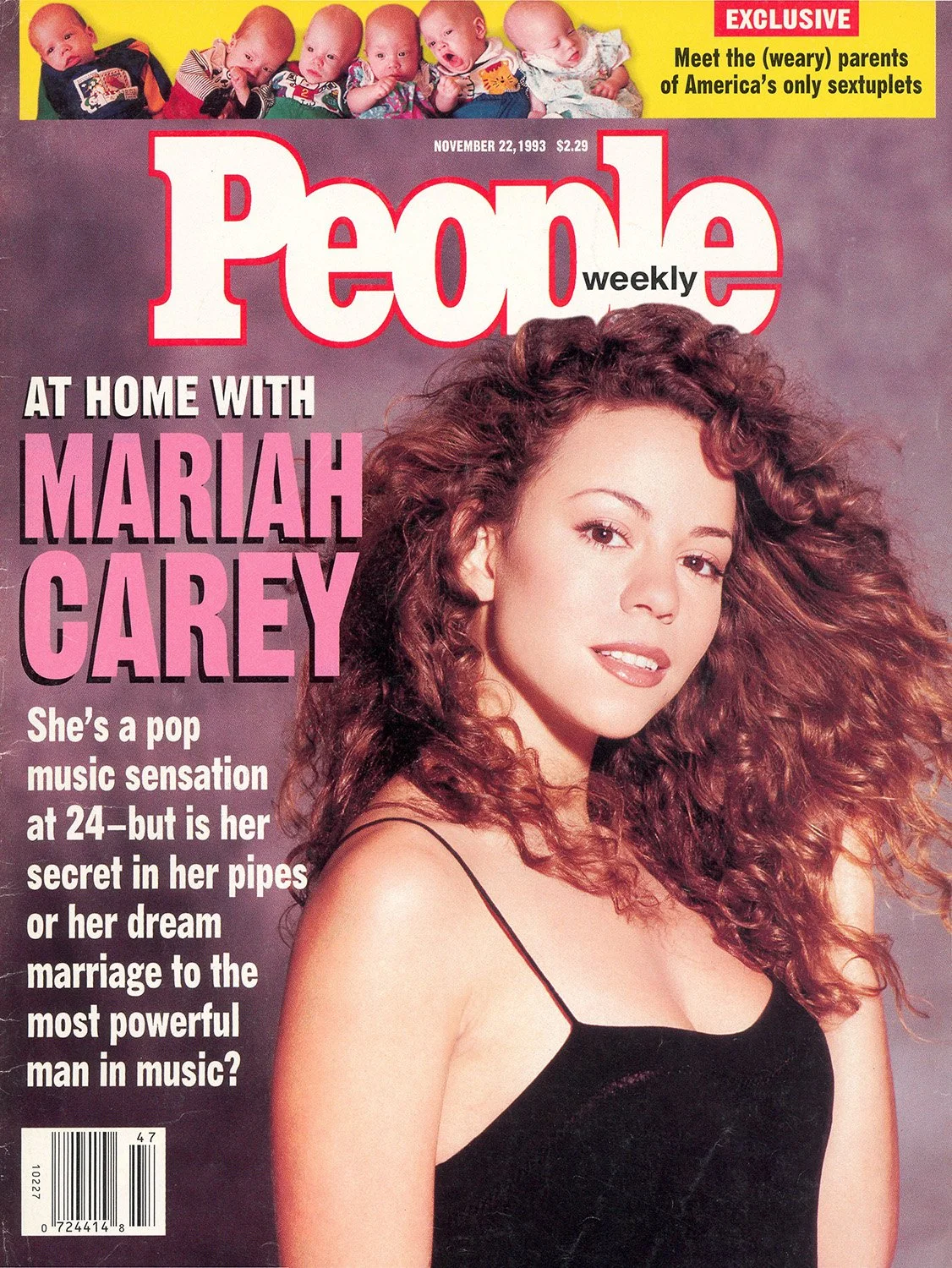
Authentic emotion lives between the lines. I hear it when Mariah sings one lyric of “Without You” in particular. It’s buried between the vocal acrobatics that fill the song’s repeated incantations. In an offhanded aside—sung in a lower register at odds with the most bankable parts of her musical personae—she sings, “I guess that’s just the way the story goes.” It feels like moment of the song that should go unnoticed. But when she sings it so knowingly, I hear someone who has experienced the way elements of your life—particularly ones you’d rather think about less—can become the story people tell about you repeatedly, until it defines you. The memoir that Mariah published decades later relays the more nuanced details of her early years as a backup singer who had been living on one dollar a day, deciding between a bagel and a subway ride, until her demo tape ended up in Tommy Mattola’s hands when she was nineteen. “Underneath the shine, I had some inkling there was a darker energy that came with him—a price to pay for his protection. But at nineteen, I was willing to pay it,” she writes in her book. Meanwhile, a headline in People 1993 distilled her life into a singular story: “…Is her secret in her pipes or her dream marriage to the most powerful man in music?”
When Mariah performs “Without You” at Proctor’s Theater a month after their wedding, everything is black. She wears a black shirt topped with a black vest and paired with black pants. With only occasional interludes from a spotlight, her figure fades into the stage. The darkness almost swallows her at times. Meanwhile, her voice moves across the octaves with such richness, I can only believe it comes from a place of despair, even if that emotion has nothing to do with the words that contain it. The full self often has a way of bleeding through even the thickest skin.
*
I received my first Mariah Carey CD at a sleepover my father allowed me to have for my eleventh birthday. By then I was in the fifth grade. I had gotten better at doing my hair myself, and I’d made new friends, who never asked me about my mother and whose fashion I tried to emulate: oversized t-shirts, neon leggings, black Reebok Princess sneakers.
When I opened the “Hero” maxi-single CD one of those friends gifted me, Mariah stood on the cover in a long black dress, her curled hair tumbling down her shoulders, her smile bright against an amber backdrop. Though I felt indifferent about the song, I was immediately filled with relief.
I knew I was supposed to like “Hero,” if only because it was on almost every radio station my nanny would flip through on the car radio when she picked me up from school. I was also old enough to recognize the clichés of the ballad. It sounded like things we were taught in school assemblies or at D.A.R.E. lessons with a police officer. I was an extremely good kid, but even I didn’t believe that “the hero lies in you.”
All of those girls in Reeboks who were sitting around me in a circle at the party ooohed and professed how much they loved Mariah Carey. I could see from the CD cover that she seemed like a deeply feminine person. I believed that loving this song would mean that I understood the important things that girls know. That I wasn’t just the girl whose mom died, a girl who knew nothing about the prospect of woman-ness that stretched out before me. I also only owned four other CDs at the time. The “Hero” disc went into heavy rotation, as if it could train me into becoming more like other girls and less like myself. Secretly, my favorite song on the album was an obscure remix of a song called “Dreamlover,” but I never told anyone this; it would have made it sound like I didn’t know what I was supposed to like. After listening to my CD for weeks, when I finally heard the original mix of “Dreamlover” on the radio one day, I was devastated by its levity. The opening synth notes sounded like the theme music to television shows I’d watched as a child, with happy endings that always resolved by the end of the half-hour.
I only learned recently about Mariah’s devotion to her remixes. Unlike a cover, the words are still hers, but some threads of the song’s original version expand while others contract, to surface a new meaning. She describes the remixes as a source of freedom while she was still married to Mattola. The “Dreamlover” that I loved was the “Theo’s Club Joint” mix. It opens with an atmospheric soundscape that plays behind Mariah’s drifting, high-register vocal until the drum machine interrupts with a thick beat and a reworked sample of “Blind Alley” by The Emotions. In short, Mariah’s love of hip hop shows itself in this version without reserve. The pop-princess of the original “Dreamlover” remains, but the new sounds enrich the lyrical buoyancy with a deep sense of gravity. The remix moves through this intentional push-and-pull over and over again, turning its narrator from someone lost in a wispy fantasy into one keenly aware of her desire’s distance from reality. I found that sound so infectious, I could only believe that this was the song’s real version.
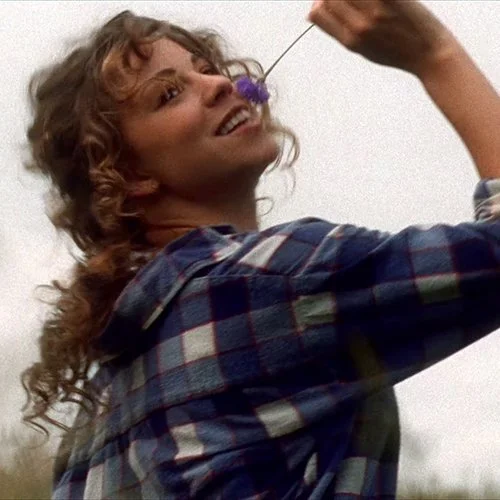
It's easy to hear the way the more complete sense of self that underlies the “Dreamlover” remix became “Fantasy” and then became whole albums, like Butterfly and The Emancipation of Mimi. Meanwhile, I suspect I’m still just living a fractured life, albeit one where other people’s words have connected it in places where I couldn’t. “Dreamlover” has been some of those words. The song was there for my first real crush. It was at the prom. It played at my bachelorette party. And recently, it was on in the car. Except this time, it was my daughter hearing her for the first time. We were heading south on the highway that slices our city in two. As the bass kicked in, I turned up the volume so we could feel it vibrating through our insides, like a heartbeat. We were on our way to an old roller rink, where I was going to teach her something my mother taught me when I was a little girl.
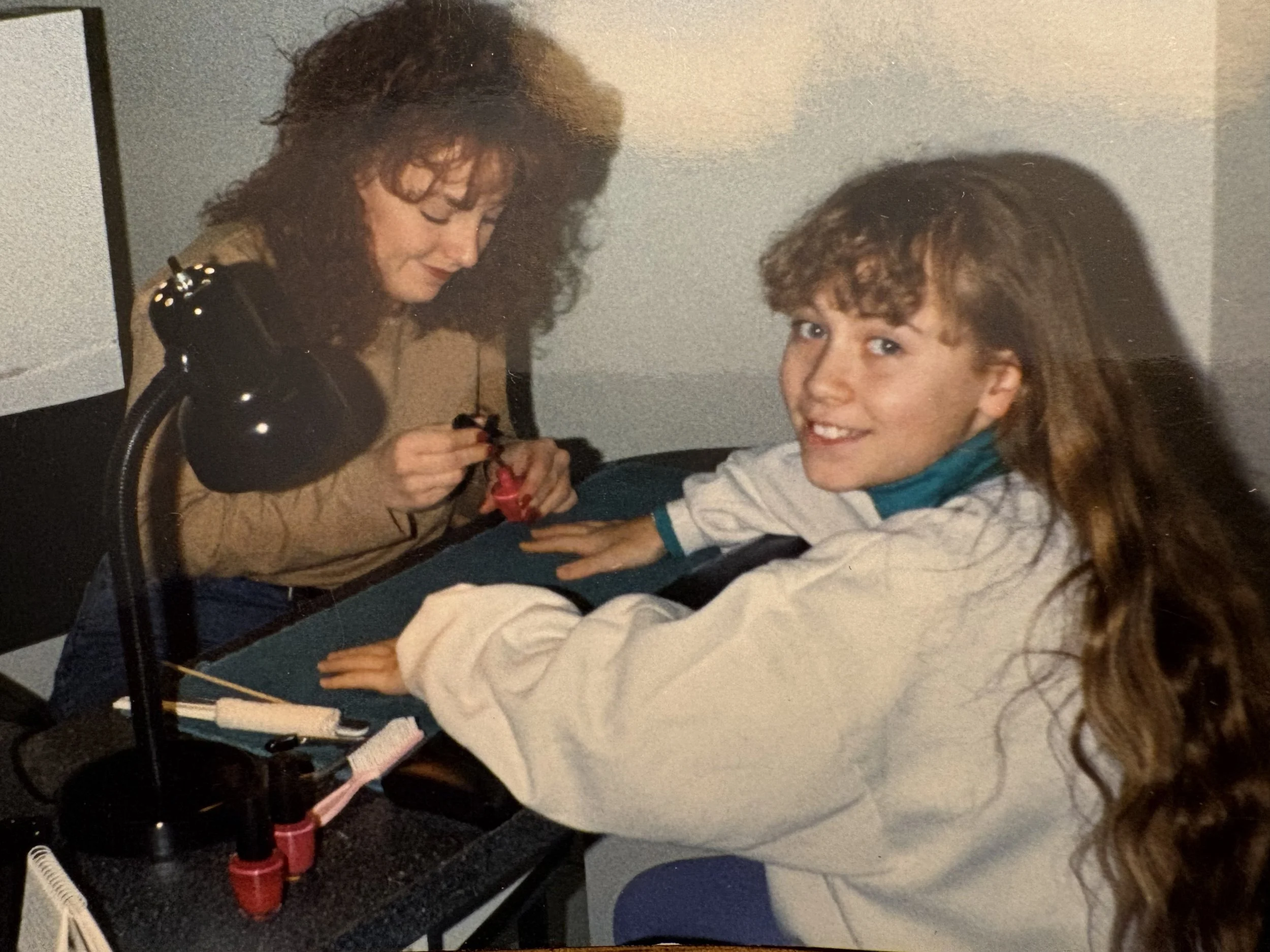
Erin Langner is the author of the essay collection Souvenirs from Paradise. She lives in Seattle, where she’s an editor at the Frye Art Museum. Despite not considering herself a Lamb, she loves Mariah Carey even more than she did before she began writing this essay.
I Know You’re Going To Look at Me That Way: susanna donato On Ani DiFranco’s “You Had Time”
Before you even know if it’s sad, “You Had Time” starts with the piano, two full minutes of noodling. It isn’t until 2:07 that the guitar comes in, somehow sacred, organ-like, the snik of DiFranco’s fingers on the strings dotting the mellow, melancholic sound. Maybe it will be OK, you think, but then, twenty-five seconds later, DiFranco’s voice starts softly, asking:
How can I go home
With nothing to say?
I know you’re going to look at me that way
DiFranco didn’t know how to play piano when she recorded the song, “but that wasn’t stopping me at the time,” she told Rolling Stone in 2024. Later versions of the song don’t include the piano, but the song is better, sadder, with the hesitation in those keys. She’s pretending to be a pianist playing around with writing a tune, but in actuality, she just doesn’t know what she’s doing. The pianist is a carefully constructed façade, like the person the lover thinks is coming home.
“You Had Time” does something essential for a sad song: it’s impossible to hear it without surfacing your own heartbreak. Writing about it, I’ve found myself putting words to why two people I once loved very much decided not to love me anymore. The stumbling keyboard at the beginning provides, as advertised, time to consider the pain of an off-key relationship. And you can do a lot of thinking in two and a half minutes.
The piano intro, and then the guitar, haul us in by the nape of our neck to hear a love song. Then it comes into focus, a role we’ve played on one side or another: the panicky anticipation of heartbreak.
Ani knows the “you” so well that she predicts what they’ll say, but it’s all in her head. We accompany her from the station to the car, the luggage being loaded, the rolled-down window, the jokes about whatever the vehicle is passing, in a shared limbo. Maybe, in real time, she’s backstage, in the shower, on the bus, or sitting on her suitcase on the curb waiting for her ride. Regardless, none of this is real. Not yet.
A narrator should be culpable, and Ani is culpable. She has decided but wishes she hadn’t. We feel the sickening weight of knowing the faithful Labrador of a partner—so happy to see her, so willing to carry the heavy stuff—is going to get kicked, and we’re the ones to kick it. The only question is when.
To talk about Ani DiFranco is to consider two personas. There’s DiFranco, the celebrated folk singer, noted guitarist (especially as a woman guitarist), and record-label entrepreneur. But her fans usually call her Ani. Ani the bravada legend with, as Jonathan Van Meter put it in his August 1997 Spin cover story, “an essential brattiness that’s the key to her appeal.” Ani the stand-in for our best friend or ourselves, brave, a bit cocky, impassioned. Ani the autobiographical truth-teller, the person we imagine we know, who told an interviewer in 1995, “There is just nothing that is too private or too personal, [that’s] just an excuse that people use for not talking about the difficult shit.”
“You Had Time” is the third-to-last song on DiFranco’s fifth album, Out of Range, released in March 1994, when she was twenty-three and I was twenty-one. I only saw her play live once, November of that same year, at the Mercury Café in Denver, a hippie coffeehouse that served heavy vegetarian food and maxed out at 500 attendees in its dancehall that also hosted jazz bands and swing dance nights. She laughed a lot. I don’t remember whether she played “You Had Time,” although reviews of other 1994 gigs laud her live renditions of the song as “vulnerable,” a “lovely ballad,” “moving,” “somber.” At that time, she was playing around 120 shows a year, many at colleges: Mount Holyoke, University of Wisconsin, Virginia Tech, Duke, Evergreen State. The next year, when she returned to Denver, she played the opulent, 1,900-seat art deco Paramount Theatre—no more hippie attics for her.
Surely I’d heard of DiFranco when she was launching her career in New York City in the early 1990s, where I was attending Barnard College. The Barnard Bulletin reports that she performed on campus sometime in 1990 and again at Columbia’s Postcrypt Coffeehouse in 1991, in the same tiny room beneath St. Paul’s Chapel where my writing group met every week or so over bottles of purloined wine.
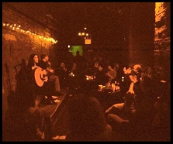
Not Ani, but folk duo Open Book performing at Postcrypt Coffeehouse
In 1994, though, I was back in Denver, an Ivy League dropout supporting myself as a receptionist and listening thirstily to the women artists who were becoming more prominent on the edgier side of popular music, Ani but also Liz Phair and PJ Harvey. Ani had a hard edge, a ferocity I could relate to. We were both from unhappy families. We both came from steel towns, she from Buffalo, New York, and I from Pueblo, Colorado. We both were on our own early: she became an emancipated minor at fifteen, while I left Barnard at nineteen to work my way through my last two years of college at an uncool outpost of a state school, the first among my friends to fly without a net. She was a girl who knew what she didn’t want. I was a girl hoping someone would want me.
You are a china shop
And I am a bull
You are really good food
And I am full
When I hear “You Had Time,” it summons the two most powerful relationships in my life up to the time I first heard it, in 1994. My best friend, whom I’ll call Annette, and C., whom I’ll call my college boyfriend, a term that simplifies and understates (or is it overstates?) the situation between us.
C. and I met in high school, then again at Columbia. An odd array of synchronicities bound us together with an understanding deeper than words, from our parents’ marrying on the exact same day to being fish out of water at a fancy college, both from humble backgrounds. I wanted to believe I possessed enough “inner brattiness” to not be completely transparent. But, mesmerized, I spent two years waiting to see if he would decide I was what he wanted while he came and went, dropping in from out of town or from another relationship. This sounds like I could see it objectively at the time, which is not true. I was a wagging tail, perpetually awaiting his return. I could catch his scent from miles away. I was young enough to believe I could love him so hard he would stop being confused about why he almost loved me back.
When Out of Range arrived, I was sharing an apartment with Annette. After meeting in seventh-grade homeroom, she and I were inseparable through middle school, high school, and straight into our twenties. We drank our first illicit beers together, smoked a zillion clove cigarettes, wore men’s white V-neck Ts and the same oversized, broken-in 501s that Ani is wearing on the cover of her next album. After I dropped out of Barnard, Annette wound up following me back to Denver from her own college. After work and evening classes, we’d eat dinner on my futon while watching Northern Exposure. We roadtripped to Carhenge and the Grand Canyon and to pick peaches, slept back-to-back like puppies, laughed until we got hiccups, cried until we laughed. Throughout our friendship, I wrote off Annette’s adolescent aggressions: telling a mutual friend I was a bitch; sharing secrets with others, knowing the information—and my exclusion from it—would get back to me; dismissing my loyalty when I cut off a mutual friend who called Annette a vile nickname of her own creation. Each betrayal devastated me, but I didn’t know there could exist a kind of love that allowed me to be an equal. I’d been conditioned to understand connection as ultimatum: I would take whatever love was offered, and I would like it.
Also, the drama of love can be deliciously painful when you’re young. In 1993, leaving New York again after visiting C. for a few days, I wept most of the way across the country, leaning against the airplane window. I felt more real for our separation’s torment.
Our relationship lasted six more months. Always, there was tenderness between us, private jokes and swapped mix tapes and a shared sense of beauty; we spoke for hours about art and music, books and films, the way we saw the world. But we were 1,600 miles apart. Video calls were still science fiction, texting didn’t exist, and email wasn’t yet commonplace, so the last year of our relationship was often telephonic (with long-distance costing at least 16 cents a minute, a penny less than I earned) or epistolary. At some point, my ultrasonic hearing suggested that his off and on was leaning off again. Because I was more articulate on paper, where I had time to think, I wrote him a letter explaining that I could no longer bear the uncertain back-and-forth amid the chaos of our burgeoning adult lives. Too chicken to call it off—well, I didn’t want to call it off—I ended with, “The ball is in your court.”
I dreamed that he wrote back, “How would I answer a letter like that?” In reality, he never responded at all. At the time, I thought this meant he was unconcerned about things ending, perhaps relieved to be rid of me, and perhaps he was. I struggled to believe I was worth more than I was getting. Anyway, our situation was impossible. He was working toward building a career in another country, where he was born; we’d talked around that eventuality but never found words to address how it might work between us. I wanted marriage and kids in my life someday and still felt the burn of the time he’d said, “I know what marriage means: no more fun.” In the end, the reverberation of his silence amounted to an agreement. The ball was in his court, but its rebounds dribbled away; it rolled into a corner; dead leaves clotted around it. How can I go home with nothing to say? One option is simply not to return. From afar, you can’t hear the other person’s silence. You can tell yourself they understand. You can convince yourself everything is fine. Or so I imagine.
You’ll say,
Did they love you or what?
I’ll say,
They love what I do
The only one who really loves me is you.
After a February 1994 show at Wetlands, a small, psychedelic venue near the Holland Tunnel, Ani was interviewed by Harold Channer for his TV show on the Manhattan Neighborhood Network. It’s surreal to see her in the faded-out video, against the graffiti-muraled walls where, while attending Barnard, I’d seen acts like the Dead Milkmen and River Phoenix’s band Aleka’s Attic.
The week she played was six weeks after I wrote to C. Back in Denver, I knew nothing about her performance. According to my journal, I was having a week that sounds like a movie montage of being a Gen Xer in 1994: I saw Reality Bites. I heard Beck’s song “Loser” for the first time. I went to a Mardi Gras party where we played spin the bottle, and I danced with a friend in his kitchen, hydroplaning on the wet tile floor, laughing so hard I thought I might asphyxiate; the next day, I seemed to have pulled something in my elbow. Some musician friends took me to see the acid jazz guitarist Ronny Jordan, and when I came home, I found one of C.’s hairs in my blanket. Through it all, I was trying to convince myself I would not die if I never heard from C. I was missing C., and trying to resist missing him, but also delighting in it.
Ani felt like me, passionate and interested, able to experience the missing and the pain and the delight in the pain, curious about what came next, even if she was braver than I. She was the inverse of a slacker, with the earnestness of a folkie rather than the sardonic, cynical aesthetic that characterized the emerging Gen X culture. In the interview, between politely waiting out Channer’s mansplaining, Ani expanded on the idea of telling her story “as a form of political work …. I think that there’s a lot of people out there who feel that their story—and rightly so—that their stories are not being told on TV or, you know, in history books, who feel that their voices aren’t included.”
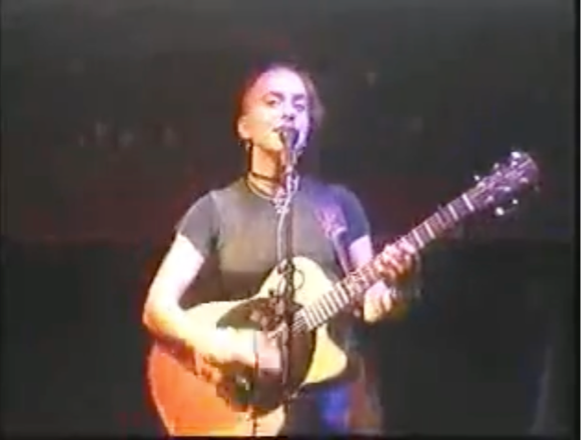
Watching back this interview and her performance reminds me that it cannot be overstated how important Ani was to me and many of us girls. She felt like a defender and a megaphone. Fifteen years before #MeToo, she validated that we weren’t crazy, that a lot of men were, frankly, bad. She put voice to our suspicion that there is no winning while being a woman, like the time my parents scolded me for looking like “a tramp” when I was eleven years old (the same age as the girl in “Letter to a John,” another song on Out of Range), because I’d purchased a cropped top and dared to think it looked cute on my pubescent body, trying to be the girl the world wanted me to be. Songs about having been abused, about an abortion, about hitching a ride with a friend who has your back—we hadn’t really heard that, let alone seen someone our age turn down a record deal, launch her own label, and release a song about leaving a period bloodstain on the music execs’ fancy chair. All while using fake nails, not for beauty but as taped-on claws, enabling the distinct, percussive playing that has even spawned an instructional article in Guitar Player about how to mimic her sound.
Listening anew, I hear the attitude that Van Meter called brattiness, and I marvel at how wise, and careless, a twenty-three-year-old can be. My journal harbors my realization that I would no longer be responsible for bolstering C.’s self-esteem, as well as my encounter with a guy at my favorite coffee shop who interrupted my writing to ask what I was writing and offer to read it, then, when I said no, told me I would never get anywhere with an attitude like that. I was trying to convince myself I could live without focusing on a man while still being open to loving someone, evaluating a carousel of boys at a pace that shocked friends accustomed to my reserve and intense loyalty. In hindsight, I wanted not to care because look where caring had got me at an age, a time, so full of not-caring. All this makes “You Had Time” sadder still, because it’s about someone who bothers to know and love you.
Just as intensely as with C., I remember the last beats of my friendship with Annette, a few years later, when we were twenty-five. There was an evening when we ripped off pieces of a fresh-baked loaf of bread. I smeared mine with butter and felt somehow affronted that she opted to eat hers bare. Around that time, she called late one night, sobbing that her seven-year relationship had ended. The news meant the end of an era for me, too. Through those seven years, Annette and I, her boyfriend, and a couple of other friends had knitted tightly together. I’d imagined our friendships could last a lifetime, weaving in other partners, children, pets, life. The breakup killed that dream, a grief I did not let myself acknowledge as I instinctively leapt to comfort Annette. In the next days and weeks, I left message after message on her machine. Weeks passed. Months. She never called back, never at all. That spring, when I ran into her at an event, she glanced at me and then looked away, like I was a stranger.
What had I done to end thirteen years of friendship in a heartbeat? Was I too leashed, in her mind, to memories of her ex? Had I been too impassioned in my readiness to defend her? Looking back, I recognize that I was prone to loving people who never gave themselves completely. People like the Ani of this song, who’ll tell you how wonderful you are while dumping you. At the song’s start, I’m allied with Ani, sympathetic to her ambivalence. But partway through, I feel for the oblivious waiting lover, that idiot. Why can’t you see what’s happening, you chump? They’re beside me at the bar where I got drunk one night, deep in my grief over Annette’s disappearance: my elbows on the elbow-worn spots where the finish had rubbed off, my forehead on the old wood, sobbing while a girl I barely knew rubbed my back.
What did you do out there?
And what did you decide?
You said you needed time
And you had time
In “You Had Time,” the narrator has gone blank. Pre-emptive grief creates a void, and if DiFranco understands one thing, it’s how to manipulate voids. She explains in her memoir No Walls and the Recurring Dream, “An acoustic guitar’s ability to make sound and silence sit right next to each other is at the core of its power. As with any rhythm instrument, the spaces are essential.”
The space of time. The space between knowing and not knowing how to play the piano. The space of your long future unfurling after you break someone’s heart. The space after I dropped the letter to C. in a mailbox and before I deeply understood that he wouldn’t write back, that we’d never talk again, that I would fall in love with someone else, a different love growing its own strong roots around the lacuna of that heartbreak.
Again, for all the things the “you” in this song tells Ani, they never actually get a chance to speak—it’s all a projection. Beautiful, poignant, even real. But how does the “you” experience this episode? The more I think about it, the uneasier I feel. What imagined voice narrated my absence from C.’s or Annette’s lives? How much—or how little—does that construction align with who I really am?
Nick Hornby writes that “You Had Time” is “perhaps the gentlest and most generous-spirited breakup song I know.” Of the china shop and very good food, he asks, “How many of us wouldn’t have felt better about being dumped if someone said that to us?” Perhaps he’s right.
A week before I got married, a mutual friend happened to run into C. in New York and told him the news. She reported that he was so shocked, his hands were shaking when they exchanged numbers to “catch up soon.” To my surprise, I realized he might have actually loved me. A gratifying insight, years too late. All along, I’d thought I was the Labrador, but maybe we both were.
Later still, one evening in my early thirties, I popped into the grocery store for a pint of ice cream and ran into Annette and her husband. Warily, we said hello; we made plans to meet. Over the next five years, we regained some of our closeness: having dinner, spending New Year’s Eve together with our families, thrift-shopping like the old days but this time for maternity clothes when she was newly pregnant with her second child and I felt sure I’d soon conceive mine. I told her, tentatively, how painful our split had been. True to form, she didn’t really have an explanation for dematerializing the way she had. I didn’t want to push; for me, our reunion felt like fitting a lost rib back into place, too fragile to dislodge. When I look back at our emails from that time, my voice sounds stiff, a stenosis lingering where the fracture had occurred. Once, I asked about our old letters, hoping to draw on them for the memoir I was writing. She told me she’d thrown them into the Burning Man pyre. It felt perversely good to know I had mattered enough to require purging. After a few years, she fizzled into silence again. I can’t imagine we’ll ever reconnect; ghosts shouldn’t be chased more than once.
Listening so intently to “You Had Time” lifts the veil between the me I’ve become—comfortable or at least resigned to people vanishing from my life—and the me who loved so hard, I could hear voices that weren’t even speaking. The young me thought Ani was unfair. Now, I have more insight into how C. or Annette may have struggled with what to do about me. I loved ferociously, but I demanded much of two young people trying to feel their own way into the world. Maybe they didn’t want to bear my flawed love along as they peered through the dark, or maybe they were not strong enough. For me, the outcome was the same. The Ani of the song relegates her partner to being a voice from beyond before their relationship is even over. Now, I credit her for knowing her own mind, and I see a sort of compassion there. I hope she had the courage to speak, but if not, I hope the song fulfilled its purpose; I hope that, one day, her partner could hear how much she loved them.
Looking back into my own shadows, maybe Hornby’s assessment is right. My pain might have been lessened if I’d known that C. and Annette left me, not because they did not love me, but despite it. After all, having someone see all you are and still not want you is devastating. But not wanting someone and not loving them are two different things.
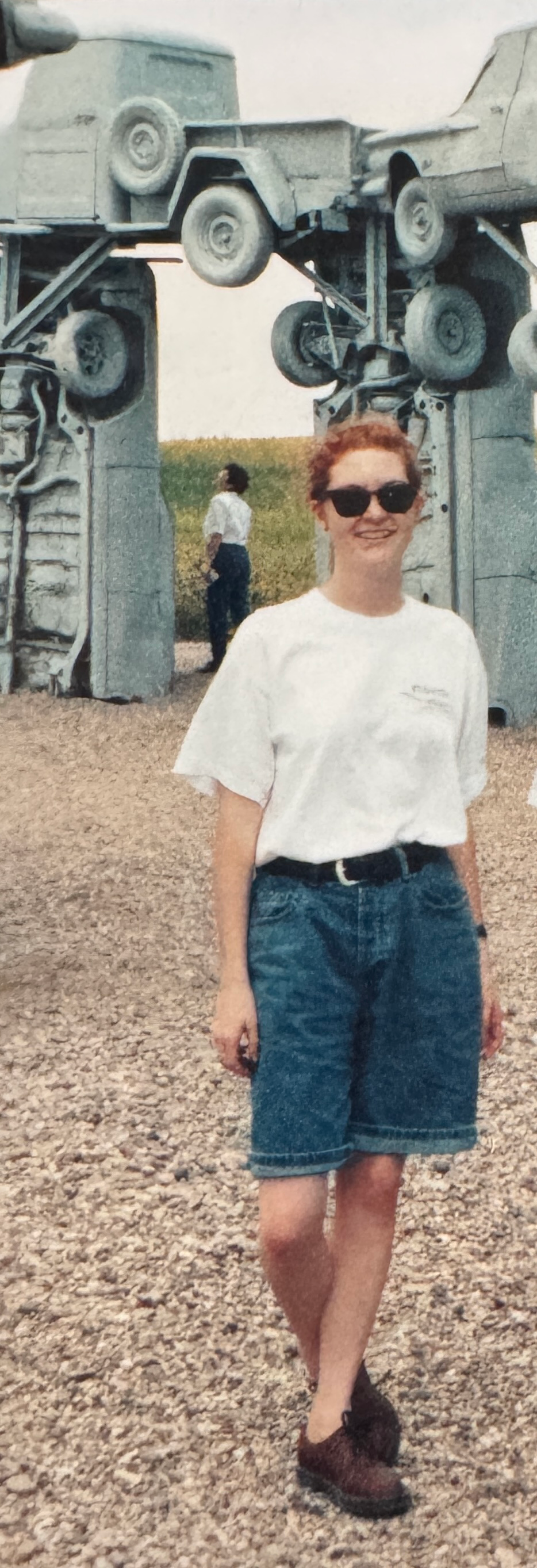
Susanna Donato’s work has appeared in the anthology A Harp in the Stars: An Anthology of Lyric Essays (University of Nebraska, 2021), Electric Literature, Redivider, Entropy, Proximity, and elsewhere. She is completing a memoir, The Only Girl in the Record Store, about growing up as a music-obsessed, Gothy, redheaded preacher’s kid.