
first round game
(7) Sade, “No Ordinary Love”
HANDLED
(10) Third Eye Blind, “The Background”
122-49
AND WILL PLAY ON IN THE 2ND ROUND
Read the essays, listen to the songs, and vote. Winner is the song/essay with the most votes at the end of the game. If there is a tie, we will play a one-hour overtime (and repeat until we have a winner). Polls close @ 9am Arizona time on 3/3/26.
How to Break your Own Heart: On Sade’s “No Ordinary Love” by Danielle Cadena Deulen
Sade’s voice is full of the ocean (you can hear the waves beneath her singing) a depth rolled up into a crash of breath. So, it makes perfect sense that in this official video, circa 1992, she’s a mermaid, a siren. And of course she’s singing about love, the most potent of lures.
This is no ordinary love…no ordinary love… our Sade Siren sings, heartbroken but gorgeous—decked in sequins and surrounded by coral—wringing her hands on the ocean floor, clearly thinking of a lost beloved…and now the scene of the lost beloved:
A pretty young man in a striped sailor’s shirt dives into the scene with his vulnerable, air-dependent lungs and she swims up to kiss him, it seems, to save him. They turn underwater, embracing, breathing each other’s breath. She’s nude from the waist up, pressing her breasts against him, the scales of her tail flashing. The camera leans into his hand pressed to her back, pulling her closer. Her luxurious hair swims out to obscure them from our view…
For the rest of the video, we don’t see them kiss. In fact, for the rest of the video we barely see him at all. He’s murky in our minds as we watch our siren ruminate, clearly locked in the memory, turning and turning inside it. She opens a woman’s magazine with a photo of a bride looking up with wonder at her handsome bridegroom. In the next scene our siren begins sewing her own white gown. She rocks and sings at the bottom of the ocean, stitching the sheer fabric into large hoops, building circles inside circles, driven by the memory of a kiss we can no longer see…
When her dress is done, she swims up through the sargasso, but we don’t see her surface. We don’t see how the hot air must have choked her throat as it opened to a city sunset: dusty and filled with exhaust. The first shot on land is of her in her white gown, walking alone in a sandy, littered lot beneath a bridge, tossing rice into the air. No one to witness the splash of dry grains or applaud their falling. Her dress drags. She’s following the iron bend of a train track in slanted light, heavy shadows stretching at the edges of the frame, and behind her, a broken metal fence topped with concertina wire.
Even in devastation, Sade is unearthly beautiful. Good god: her eyes. Her perfect skin. I’m talking of course about the person: the British-Nigerian singer herself, born Helen Folasade Adu…the band named after the singer (a shortening of her middle name, her family nickname) which seems right: could you imagine Sade without Sade? Their siren-song sound is all her. There’s something in the quality of her voice that sounds mythic, dreamy and untouchable, that soulful breathiness that makes the songs sound almost as if they are sung from your own interiority, or from a lover whispering in your ear. Her voice is subtle and soft, so you lean in. You want to hear everything she says…to portray such intimacy in a voice that is meant to reach millions is a difficult feat. I don’t know about you, but I feel tenderly toward her. I wouldn’t imagine I was good enough to love her, but I would hope whoever gets to love her treats her well. So, it’s painful watching her chase after someone who seems not to care at all. Where the hell is that sailor boy? Why leave the ocean, where she’s queen? For whom? For what? She’s unhinged for sure…showing up on land in a wedding dress looking for a groom…Still, she’s so beautiful it’s hard not to watch her. We lean in, rapt at her unraveling…
Frank Guan of Vulture described “No Ordinary Love” as one of Sade’s most “perfect” songs… a love song filled with luxurious “deep-sea synths” and an “accusatory guitar” solo that represents the anger drifting just beneath the surface of the lyrics, but never expressed directly in Sade’s voice, which stays sultry, languid, subtly intoxicating…
I gave you all the love I got
I gave you more than I could give
Gave you love
I gave you all that I had inside
And you took my love you took my love
The critics all describe “No Ordinary Love” as a song about unrequited love, or love betrayed. Our siren sings about the depth of feeling she has for her beloved, about their transcendent connection, which, as anyone in love believes, should have buoyed her heart above the riptides. She admits, by the verbs she uses, it’s all in past tense now, all the giving she gave was never enough to keep him from leaving. He didn’t feel for her what she felt. Whether wholly absent, or half-hearted, or the shadow of love, it’s not the full of what she gave and now she’s alone, waiting for him to return. This lack drives her mad…
In the video, our siren is a wretched spectacle, her long veil whipped by the wind—a lovelorn depiction of thirst. She arrives at a wrought iron door and pushes her way inside, taking her place at the counter of a dive bar filled with midday swillers who are affronted or confused by her presence. The barkeep is a frayed and heavy-set woman who looks at her askance as she wipes down the bar and slides a glass of water her way. Our siren sighs, pouring table salt into the glass. She flashes back to her underwater nest, where, in her mind, she and her beloved are still embracing. Consumed with grief, she bursts out of the bar as her voice belts out over the scene: I keep crying, I keep trying for you…
Our siren runs through a trash-strewn city, past its indifferent citizens waiting for buses, or walking reluctantly toward some obligation, or staring into the middle distance of their lives. They barely look at her as she passes. Her voice declares over the scene and the bitter swell of an electric guitar: There’s nothing like you and I, baby…
This is no ordinary love…
And perhaps she’s right. If the city she’s running through depicts the typical terrestrial existence, and we, typical humans, treading and toiling, barely looking into each other’s faces, then I think we can assume she would be happy to leave our ordinary loves behind and dive back into her own biosphere. She’s not looking for just anyone. She doesn’t grab anyone by his broad shoulders and march him to the altar. She’s racing against time and her own mortality to seek out her beloved…a connection so extraordinary it feels mythic…which brings me to a question: how mythic is it? Like, is it real?
I’m not referring to the cross-species attraction here or the tales of mermaids. I’ve been suspending my disbelief for the pleasure of watching this iconic singer play a literally mythic beauty hurting herself for love…nor am I even referring to the idea of passionate love itself… the way it opens up a small vortex that surrounds the hearts and minds of lovers…creating what feels like a new space in the world… a love so real it feels unreal…or a love so unreal it feels real…like the dream in which you find a new door inside your childhood home, and walk into an astonishing vastness—a whole other house, another city, an ocean you didn’t know was there…
If we follow common thinking about passionate love—that it is a temporary state, and after a while simmers down to something more stable and enduring, or ends—what’s depicted here isn’t exactly passionate love, is it? Because it’s unrequited. He’s not there to build the love-vortex with her, but the idea of loving him is so strong she’s whirled herself into her own vortex. That kind of feeling, I think, aligns itself more with the state of desire, which shares a similar drive to ambition. This is true even beyond metaphor: there is significant overlap in the brain regions and neurochemical pathways involved in both basic desire (wanting) and the more complex, long-term drive of ambition. [i]
Unrequited love is, ultimately, unrealized emotional ambition. People go mad for the fantasy—believing that if they could just have the object of their desire, they could be fulfilled, even happy. Their sense of self, therefore, relies on external forces to complete them. No doubt you, like me, have encountered dozens if not hundreds of pop psychology articles on why this is wrong-headed. You have to love yourself first—all TV therapists and unlicensed influencers croon at us from the echo chambers of the internet…
Oh, I’m not saying they’re wrong. I’m saying they’re vague, prescribing a cookie-cutter catch-all for ameliorating what is a far more subtle and powerful trap than they recognize…one that is hard-wired into our brains, and not just from the thousands of stories we’ve read and watched, but in the biological makeup of love and attachment itself. A General Theory of Love, by Fari Amini, Richard Lannon, and Thomas Lewis [ii], draws from neuroscience and psychiatry to explain the biochemistry of love attachments—oxytocin, dopamine, and vasopressin—mimic the fundamental mechanisms of parent-infant bonding. When you are in love, you feel vulnerable because you are tapping into your infant self: one whose happiness and sense of safety was entirely reliant on their caretaker. When you fall in love you are quite literally a baby again.
This is easier to understand if we think of love not as happening between two specific people, but as a relational structure. Person A believes they love person B. Person B probably resembles their parent(s) in some vague but undefinable way—too vague and undefinable for Person A to perceive in any conscious way—but is different enough from them to be sexy. With great luck, person B loves person A back with the same fervor and in the same way. Basically, you are both babies again, but both loving each other as you did the parent whom you had to abandon or be abandoned by when you entered adulthood. This may be a scientific explanation for why lovers call each other baby. Your attachment to them feels much stronger and deeper than it does to other people in your life. In fact, it feels like the most important bond, one that has always been there because it has…so romantic love leaps over the time barrier, returns you to a sense of timelessness.
Have you ever loved someone so much that it made you ache to be away from them? You know how a baby cries if her mother leaves the room? Same thing. This is why people are completely bereft when their lover leaves them. For however long they were in the state of love with their beloved, they had returned in a real, biological sense to the chemical state of their primary love bond. Now imagine this: an actual baby is crying for her mother and you turn to her and say, “You need to stop crying and love yourself first.”
Yes, I know: we are all adults here (I assume no babies are reading this) and if the beloved is just a stand-in for the parent then certainly we can use the power of our prefrontal cortexes to substitute someone else—maybe even ourselves!—for the missing parent/beloved. But telling someone to just love yourself is like trying to describe a self-administered surgery by explaining the last step first: and then just stitch yourself up! Omitting that the first part is always slice into yourself—which few people are willing to do, and honestly, I’m not sure taking on such a task will help if what you’re trying to do is heal relational wounds…at the very least, going it alone is sad and dangerous, which is why heartbroken people need to seek out friends, family, and therapists…to let someone else hold them as they cry…because to heal wounds of relationality, you literally need someone else to help you…
But no one is helping our Sade Siren. After her long sojourn through the lovelorn city, she arrives at a shipping port, presumably to continue the search for her beloved. Drawn down by the weight of gravity but still dragging her new feet across the pavement, she sips and sometimes spills a clear plastic water bottle, now crumpled in her grip. I keep wanting to reach into the scene and lead her back into the ocean while she murmurs Didn’t I tell you what I believe? / Did someday say that / A love like that won’t last…
Her voice is the perfect depiction of longing because there’s something mysterious and unreachable in it. Sade wisely held that mysterious line as a figure in music as well: a clear boundary between her as an artist and her music. She once remarked on this necessity for the creation of her songs: “The magic and the mystery is in the music itself. Knowing too much about someone can take away your attention from what they really do. Then people become celebrities rather than artists, and it's easy to step over that boundary and let yourself go.” [iii] She tells us plainly here that as audience to her creations, we should never really get that close to her: the collapsing of that boundary would ruin the work and quite possibly ruin her as well.
So, for all of Sade’s popularity, she’s always kept her personal obscured. If you’re the gossipy type, you’ve likely been disappointed at the lack of Sade dishing. Maybe you had to suffice with the meager rumors that she never substantiated. For example, during the four-year gap between Stronger Than Pride (1988) and love deluxe (1992), the tabloids liked to surmise that she’d locked herself away from music to enter a drug rehab facility or a mental hospital…rumors, no doubt, trying to goad her out into an interview to refute their claims, which she didn’t dignify with a comment until she returned to the publicity grind for her grammy-winning album love deluxe (on which “No Ordinary Love” lives). Then, she addressed the claims by simply stating that after touring for Stronger Than Pride, she was tired and needed to live her life for a while out of public view so she could live enough to write songs again, which seems fair.
Given Sade’s queenly bearing and her own reticence about personal matters, I doubt she would approve of my attempt to theorize whether “No Ordinary Love” was drawn from autobiographical material. However, I’d like to share with you a few unanchored details that keep floating through my mind. The song emerged as the hit single on love deluxe in 1992—three years into her six-year marriage to the Spanish film director Carlos Scola Pliego. The marriage would end in 1995 and many years later, in a rare, emotionally revealing interview, Sade would tell us how she was devastated by the failure of that union and it took her five years to recover from it…which isn’t surprising, given anyone’s feelings about divorce, but she was also a child of divorce herself. Sade’s Nigerian father, Adebisi Adu, and English mother, Anne Hayes, were married in 1955 and separated when she was four years old. That split put a continent between her parents. Sade couldn’t have gone through the thousand cuts of a divorce without abrading that old wound.
Let’s go back to our Sade Siren, sewing herself a wedding dress at the bottom of the ocean, lulled by her own dreamy ideas of love and marriage…Let’s go back to the way she emerges on land alone, walking past the unfriendly faces of other hurt humans, searching for the dream boy who never again emerges into view…this doesn’t seem like the creation of a happy bride only three years into a marriage. It seems like the creation of someone suffering silently inside an idea of a marriage. This might be because she is the one who loved more (as the song tells us), but this also creates another wave of interpretation that isn’t exactly about unrequited love, but something more slippery. What if it’s this: both people loved each other with the same oceanic passion but—because of temperament or trauma or both—they didn’t know how to make each other feel loved. So, instead of recreating the infinite safety of the infant-parent bond, they hurt each other. The hopeful feelings at the start of the marriage malingered past the possibility of reconciliation, and in the end, the only way to survive was to walk away from each other into the wide world alone.
To care for someone so deeply as to love them is a sacred act of vulnerability, and to have the other person meet you in that state feels like a miracle: it brings into focus what is beautiful in yourself, allows you a way to transcend old wounds, and is often the foundation and inspiration for great feats of strength or ingenuity or both. It is a strange, powerful, sometimes painful alchemy that changes you irrevocably. This is why we have the saying better to have loved and lost than never to have loved at all. Love is the catalyst for a transformative human experience that is better to have, so the saying goes, even if it means the inevitable loss of that love. But like all idioms, it accounts only for socially accepted generalities. I believe this song is about something far harder than unrequited love. This is about love depleted.
There’s a brilliant piece of silence woven into the syntax of the lyrics that catches in my heart. It’s just one beat, an audible ellipsis: “didn’t I give you all that I had to … give baby…?” The first part of the sentence fits twice into the 4-beat rhythmic line, as we expect it to: didn’t I give you / all that I got to… but then the sentence does two things I don’t expect. First, syntactically the line could have ended on all that I got to… a nice colloquial phrasing that would align itself with the cadences of many of Sade’s other songs. But the sentence continues onto the next 4-beat line when it starts anew, and you realize she wasn't done singing before, not quite to the end of her sentence. It gives the illusion of a pause in the middle of her sentence. All that I got to … give baby. The other unexpected silence happens after “baby”: there are two whole beats left in the line that are lyrically empty, though of course the musical accompaniment goes on, notating her exhaustion. It's as if she's come to the end of a sentence barely able to say it…needing a breath midway through. She tells us earlier that she gave this beloved not just all she had, but more than she had to give. Trying to keep this love alive, she burned through her emotional and energetic reserves, then kept burning on a desperate, self-immolating hope even after she thought it possible…
What she’s describing here is a Pyrrhic love. A love that transforms the lovers into enemies, even if they once reached for each other with sincere tenderness. It’s the shadow-side of love. So many unconscious psychological and chemical reactions happen within the exchange of a relationship, and two people can easily slip into patterns in which they are not relating to each other at all. They relate, instead, through the infant mind, the wounded part of themselves, babbling to ghosts. When this happens, there can be no forward movement, no way to get out of the trench of the past. There is nothing to do but leave the union. I call it a Pyrrhic love because it inflicts such a devastating toll on the lovers that it is tantamount to defeat…one that renders them unable to continue fighting, even for themselves…
Heartbreak is so dangerous. The dysregulation it creates in the mind and the body makes a person temporarily insane. Our Sade Siren is ocean aristocracy, but we watch her plodding over the earth like a beggar. It’s no wonder all the people around her ignore her or look at her slantwise: she’s not making sense to them. She’s clearly not even making sense to herself. Think of anyone heartbroken: whether from the end of the first love (that spirited high-dive without even the thought that it might end) or from the obliterating revision of a divorce…doesn’t it always seem like the heartbroken walk around with something missing?
Think of yourself heartbroken. Do you remember how hard it was to think of anything else? To call heartbreak a distraction is so understated that it is abusively wrong. It’s feels more like recovering from a surgery in which an organ was removed…you keep thinking of how something inside you feels lost…your mind leans reflexively toward the emptiness, listening. There was a song there once. You hope it will return. You keep hoping.
The hope of a lover returning is very different from the hope of a lover arriving in the first place. It isn’t the scenario of a love you merely imagined, but one you actually had—a person you held in your hands, whom you loved and were loved by in return. It felt like everything. A miracle. The secret purpose to your life revealed. How could you not still hope for the love to return?
Our Sade Siren never recovers from this hope, so the song is open-ended:
Keep trying for you
Keep crying for you
Keep flying for you
Keep flying, and I'm falling
And I'm falling…
The last sung notes seem to skim the surface of the music. In the extended version of the song, her notes echo in the synthetic cry of a sea bird, which I imagine circling and circling the wide ocean with nowhere to land. The soft synths and minimalist guitar blend a dream over the anxious backlit tapping of the drums until they all fade away from our hearing, from the scene in which the singer is falling, will always be in the midst of her falling.
What keeps you in a state of falling is not the song of the siren, but the one you imagine she sings. The one that echoes in your mind as you whittle yourself down with wanting. If you could find the source of the song… If you could be close enough to feel it trembling beneath her throat… If she would finally look you full in the face and tell you, one more time, that you are the one she loves, that she will always love, that she will never leave you again…
You can get caught in this kind of circular thinking for years, walking through cityscapes and forests and deserts and the labyrinthine rooms of your mind, but your journey will only end when you arrive at the only clear truth: either they don’t love you anymore, or they don’t love you enough. Either way, your lover won’t return. And this is the tragedy of the song—the long, lonely sadness of it:
You are your own siren.
You have only been singing to yourself.
[i] Azab, Marwa. “The Neuroscience of Wanting and Pleasure,” Psychology Today. Posted February 23, 2017. https://www.psychologytoday.com/us/blog/neuroscience-in-everyday-life/201702/the-neuroscience-wanting-and-pleasure
[ii] A General Theory of Love, by Fari Amini, Richard Lannon, and Thomas Lewis.
[iii] https://www.imdb.com/name/nm0755442/bio/ (Sade IMBD)
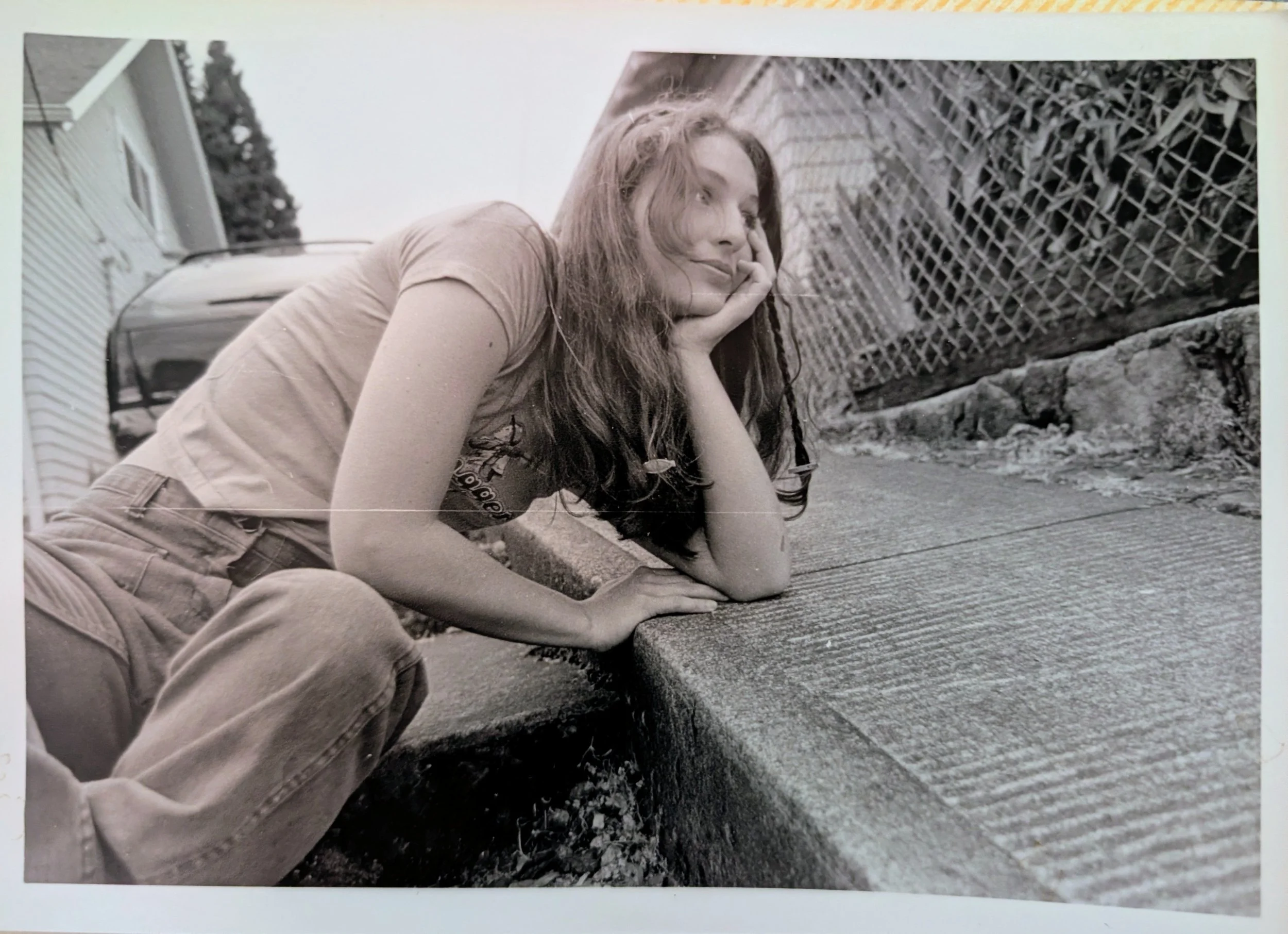
Danielle in 1993—one year after love deluxe and one year before she falls in love for the first time: thus, her blithe expression. Photo credit: Alison Wilson, her longtime bestie, who is just about to break her heart.
Danielle Cadena Deulen is the author of four books, most recently, Desire Museum, which won a 2024 Lambda Literary Award. Her previous publications include Our Emotions Get Carried Away Beyond Us, which won the Barrow Street Book Contest, American Libretto, which won the Sow’s Ear Chapbook Contest; The Riots, which won the AWP Prize in Creative Nonfiction and the GLCA New Writers Award; and Lovely Asunder, which won the Miller Williams Arkansas Poetry Prize and the Utah Book Award. She served as a Jay C. and Ruth Halls Poetry Fellow at the Wisconsin Institute for Creative Writing. She has been the recipient of an Ohio Arts Council Individual Excellence Award, an Oregon Literary Fellowship, and a Pushcart Prize. Originally from the Northwest, she now makes her home in Atlanta where she teaches for the graduate creative writing program at Georgia State University. Visit her author website to know more.
brian zitzelman on third eye blind’s “the background”
For the vast majority of my life, my favorite song on a given album was probably going to be the saddest sounding one. Be it Ozzy, Vampire Weekend, Bjork, Frank Ocean, or, hell, Daft Punk, I want the mope. The thing is: sad can be tone as much as it can be actual lyrical content. The number of tracks I've belted that I either don't have a connection to in terms of subject matter, or sometimes even proper knowledge of said lyrics is immeasurable.
In the spring of 1997, this was as true as ever. On new albums by such not particularly miserable acts The Offspring and Silverchair, I was committed to the downers. Admittedly, I was supremely down myself. I was nearly a year removed from moving from San Diego, California to California, Maryland (yes a real place). My first year of high school was going stereotypically and genuinely horridly. School counselors noted their dismay in my t-shirts featuring skeletons (Metallica) or creeps who turned out to be pieces of shit (Marilyn Manson); good call, said counselors, on the latter. They noted it'd be nicer if I wore pleasant shirts, while certainly not realizing that when I was depressed I reached for the evils of Gin Blossoms and Duncan Sheik more than the eerie variety.
So, while I still sported Sublime merchandise with enough frequency to make countless kids think I was a dealer, mostly I was playing something like "The Freshmen" by The Verve Pipe. As a high school freshman upon its release, damn did I relate to this angst. Such undaunted yearning and howling. Truly, this is late-stage alt-balladry for those that needed more of the "Glycerine" vibe. However, along with that year's Ben Folds Five hit "Brick," what I was emoting really was full of real world hardships beyond my purview. Yes, I hated my life and was being jettisoned to the school counselor for conversations about suicide, but these tracks dealt with, shall we say, adult themes.
Which leads to Third Eye Blind. 1997 saw their self-titled debut album dominate the radio and alt charts. The band had a series of hits that were either uptempo, catchy and about sad things or slow, catchy and about sad things. Did I know that? Not especially. Did others? Not especially. Fuck though, I loved this album. I swooned from the moment my dumb heart heard it to this very moment. Track after track of big melodies, romantic pining and more talk of overdosing than the, um, third eye can see.
Now, at fifteen I was spending every waking minute of my life wanting to be in love. Me adoring this album was inevitable. I played it over and over again. I bent those damn lyrics to fit my own sob-story. Take “The Background.” It is the twelfth track on the record and the first in a closing trio of songs that, amongst fans, is remarkable and better than any of their beloved hits. What more could a boy in southern Maryland falling for every girl who gives him the time of day connect to than the opening lyrics of “The Background.” “Everything is quiet/since you're not around. I live in numbness now/in the background.” Yes! Yes I am living in the damn numbness, by which I mean crying about the fact that take-your-pick-girl-from-band-class decided she doesn't think we should date. Sing to me of my feelings oh Stephan Jenkins! Sport those dimples and leather jackets and express what I fail to!
Things move forward with details about doing “he things we did before.” Sure, there is a reference to getting drunk on wine and fighting that doesn't personally translate, but I did crush on a quirky girl or two that smoked clove cigarettes. And then... “I don’t see you anymore/Since the hospital.” I got nothing. Sorry Mr. Jenkins.
But. Buuuuuuut. Come on. The chorus to “The Background” is pure lovey-dovey nip. “The plans I make still have you in them.” I mean, right?! “And I’m hanging on your words/Like I always used to do.” Fuck yeah I am. “I only know because I carry you around/In the background.” Woooooo! That’s the stuff.
Of course, the second verse quickly references hospital sheets.
Though not as heroin forward as the rest of their debut, one would have to pretty briskly walk past those obvious lyrical details. And briskly walk I did. My ass has been running past them for nearly thirty years.
Why do I do this? Why does anyone? There's something innately ethereal about the sound of a song that goes beyond the words within them. Traditionally, for myself at least, there is a belief that specificity gives a piece of music depth. More meaning. More power. Yet, clearly my comfort with blatantly ignoring not-remotely subtle pieces of a track’s subject matter signifies that conceit as slightly bullshit.
All of this is overthinking things. “The Background” has a hushed tenor of vocals over reverb and a pretty guitar chiming a melody over some soothing bass notes and drumming. Then it builds a little in temperament through the first chorus, before sliding back to calm. By chorus two though, the track begins to open more. Stephan Jenkins’ singing gets louder and more fervent. And at a shade past the three minute mark, a fuzzy guitar cracks onto the scene. The drums pound. Jenkins goes full belt and gutturally howls “I felt you long after we were through!”
I’m a puddle. It’s classic rock ballad stuff and done so with high quality ingredients. While ballads aren’t innately of the simple romantic variety, when so many of the things storming within a song are made up of that flavor, my brain just isn't going to focus on the hospital. Never has and never will it seems.
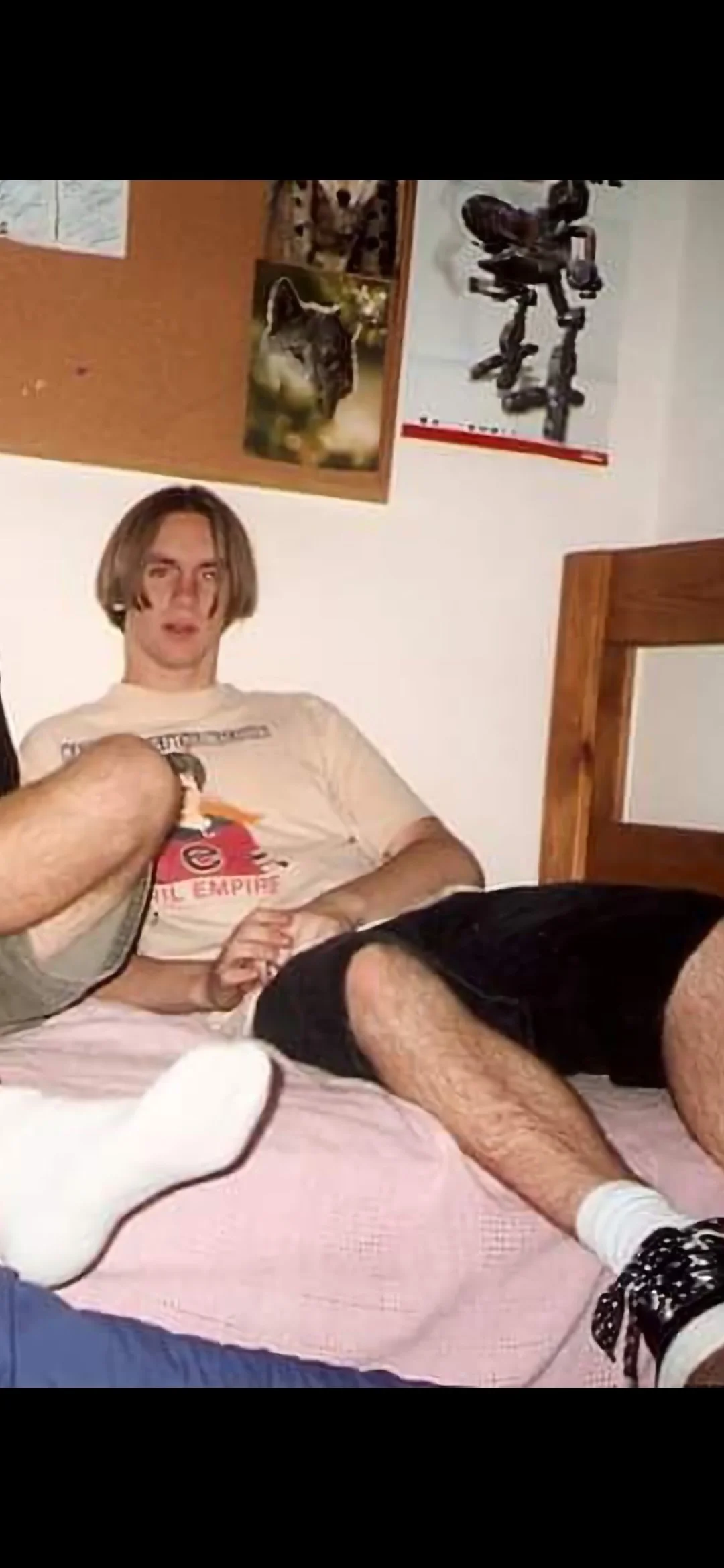
Brian Zitzelman still fixates on sad songs and regularly loses his voice singing along to them while driving home from work. He wears fewer jean shorts these days, but still has a number of The Cure t-shirts. And yes, he was in a band that used a Buffy the Vampire Slayer reference as a name.