
first round game
(2) No Doubt, “Don’t Speak”
SILENCED
(15) Gillian Welch, “By the Mark”
90-82
AND WILL PLAY ON IN THE 2ND ROUND
Read the essays, listen to the songs, and vote. Winner is the song/essay with the most votes at the end of the game. If there is a tie, we will play a one-hour overtime (and repeat until we have a winner). Polls close @ 9am Arizona time on 3/5/26.
brian oliu on no doubt’s “don’t speak”
Hush Hush, Darlin’
My four-year-old son’s favorite song at this exact moment is Wrecking Ball, by Miley Cyrus. This makes sense, as if you were a four-year-old who experiences the world through the beautiful literal, the lyrics are incredibly relatable. While the destruction and demolition tinges of the lyrics are appealing, I’ve noticed a trend in his preferred listening choices. He’s a big fan of a song structure I call “quiet quiet LOUD.”
I’ve been thinking a lot about the concept of the power ballad as some sort of Cartesian concept where we are inherently drawn to quiet sounds followed by massive bombast. Moments of tenderness followed by emotional outbursts, which, again, four-year-old child.
One day when listening to Twinkle Twinkle Little Star, he said “this is beautiful, right” from the back seat, and I was like “yeah dude, this IS beautiful.” There is something to performative sadness before payoff that speaks to the human condition.
The most beautiful song I had ever heard as a 13-year-old was Don’t Speak. It is in a long line of most beautiful songs that I have ever heard, but for one summer it was the alpha and the omega, a song that spoke to me in ways that I didn’t even comprehend. I’m not sure if I even understood the concept of how a song came together at that point—songs just existed, as if there was silence, and all of a sudden, a sum of parts.
Hush, Hush, Darlin’
I am a firm believer that good writing and great songs admit things that the speaker isn’t quite ready to admit. So here is mine: I maintained a No Doubt fan page on Geocities for many years. I coded the page myself in Notepad—a skill that continued to pay dividends throughout the MySpace era, as well as in my current work where every once in a while I need to update my work’s website with the most basic-ass HTML.
Of course, I wasn’t a fourteen-year-old citizen journalist or anything. The majority of my website consisted of photographs and animated GIFs that I found on other No Doubt fan pages. I listed all of the members of the band (including the horn players!). I provided my own interpretations of the lyrics to Tragic Kingdom in ways that only fourteen-year-olds could. Did you know that Tragic Kingdom is a reference to Disneyworld? The band is originally from Anaheim!
The most impressive part of my website, by far, was figuring out how to embed a RealPlayer link of a short 20 second clip of the Don’t Speak video. It included the second chorus, leading up to Gwen singing “altogether mighty frightening,” with her vocals fraying and breaking off at the last “-ing”. This of course ends the song before its best part. The drums clap in as Gwen hits a fervor singing “as we die,” before hitting the apex of the song. Even when I listen to the track now, I imagine it ending in silence after the word “frightening,” the pop of the Logitech speakers and the silence before the bombast.
Hush, Hush, Darlin’
If you don’t know, the song is a Gen X/early Millennial Silver Springs. Gwen Stefani and bassist Tony Kanal were high school sweethearts but broke up during the recording of Tragic Kingdom. There is an early demo of “Don’t Speak,” which is extremely accordion heavy and the “Don’t Speak,” refrain is flipped on its head, as if two lovers are completely in sync with each other to the point where they are able to communicate telepathically. Gwen wrote the song with her brother, who played keyboards in the band, but left to be an animator on The Simpsons. And honestly, thank god—Tragic Kingdom is a great album with some full swerve musical theatre dork nonsense contributed by Eric. The titular track and album closer, is astronomically bad lyricism that includes a reference to Walt Disney’s frozen head. A lot has been written about how her brother’s songwriting helped buoyed Gwen’s sentimentality, but if anything her earnestness helped level out her brother’s penchant for churning out nothing but goofy B-sides on an otherwise A-plus album.
In performances of the song, Gwen essentially pretends that Tony doesn’t exist. They’re both in their own worlds, with Gwen’s emotional expressions being directed mostly at the audience, while Tony, in typical bass player fashion, is relatively unaffected. This is obviously in direct contrast to the iconic 1997 performance of Silver Springs where Stevie Nicks looks like she is casting a spell on Lindsey Buckingham to make his heart fall out of his teeth.
Instead, the disconnect is shown In other ways. It’s a song where the bass is barely noticeable—the Spanish guitar of Tom Dumont is what drives the track alongside Gwen’s vocals. There is a brief build-up moment Gwen sings “I can see us dying/are we?” alongside Adrian Young’s classic drumming, but aside from that, it is a very non-bass driven song from a band that relied upon classic ska and new wave tendencies.
If anything, the song is a resignation from Tony Kanal—in an episode of 2000s VH1 Storytellers, Gwen demos the original version of the song. “One important thing about that is that it was pre breakup,” she says. “I know you so good, we’re gonna be together forever. We started working on the song, and we wrote the verses. And then Tony broke up with me, and I wrote the lyrics, and those are the lyrics that you know.”
Hush, Hush, Darlin’
The greatest rendition of “Don’t Speak” I’ve ever witnessed was not at the Garden State Arts Center in Holmdel, New Jersey, where a high school freshman Brian watched his favorite band at the time perform from the lawn seats, occasionally standing up and taking walks around the concourse in hopes of catching a glimpse of Gwen Stefani’s jeweled bindi reflecting off of the June sun.
It wasn’t the performance at The Arrowhead Pond of Anaheim for the Live in the Tragic Kingdom VHS tape, which I watched religiously—memorizing setlists and rewinding the set closer, a cover of The Beatles’ Ob-La-Di, Ob-La-Da, with Gwen barely hitting the McCartney high notes.
It was at freshman year of college karaoke—one of those student life organized events to keep the shy “straight-edge because I didn’t have an older sibling to buy me Bud Light” kids on campus instead of heading down York Road to the many freshman bars that would take a piece of paper that read “I’m 21” but only if you had the bravery to try.
A girl who I had never seen before and, for the most part, never saw again, launched into a tight-microphone gripped version of the song at the goading and slight encouragement of her roommates.
By this point, I had grown out of No Doubt. Return of Saturn came out five years after Tragic Kingdom, and those five years encompassed my entire high school career, which meant that it had seemed like six or seven lifetimes before I had heard “Don’t Speak.” I had a Gorilla Biscuits hoodie now. I had a handmade Fugazi t-shirt. I had At The Drive-In posters on my wall.
To say that I wish I appreciated this heartfelt monotone version of the song even more in the moment would be false in some sense—I imagine that if I was still a true fan, I would’ve been upset with the butchering of the song in favor of just pure pathos. Instead, it hit a beautiful nostalgia; a category unto itself—a song I used to love.
I imagine too, this might be a song that this fellow freshman in college used to love. It was sung with all of the fervor of “I hope you hear this and you choke on a worm-filled orange,”—of a track that meant something in the course of a relationship, but then not.
Hush, Hush, Darlin’
Is a power ballad most sad at the quiet points or the loud ones? When we think of a sad song, we think of outpourings of emotion, typically in hushed tones. But Don’t Speak is loud and strained—it is smooth, but Gwen Stefani’s vocals are constantly frayed and pushed to the edge of breaking. Can a sad song resolve itself throughout the course of the track—like some Victorian novel, or a six episode mini-series love arc? Don’t Speak has a bit of both—Tony Kanal forced to take a backseat to his ex-girlfriend’s life in perpetuity—not quite silenced, but faded into the background, providing scaffolding for someone else’s pain and eventual glory. We all used to love somebody. We all used to be loved by someone. The most beautiful song we’ve ever heard until we heard something new. But it’s still beautiful, right? This is all beautiful.
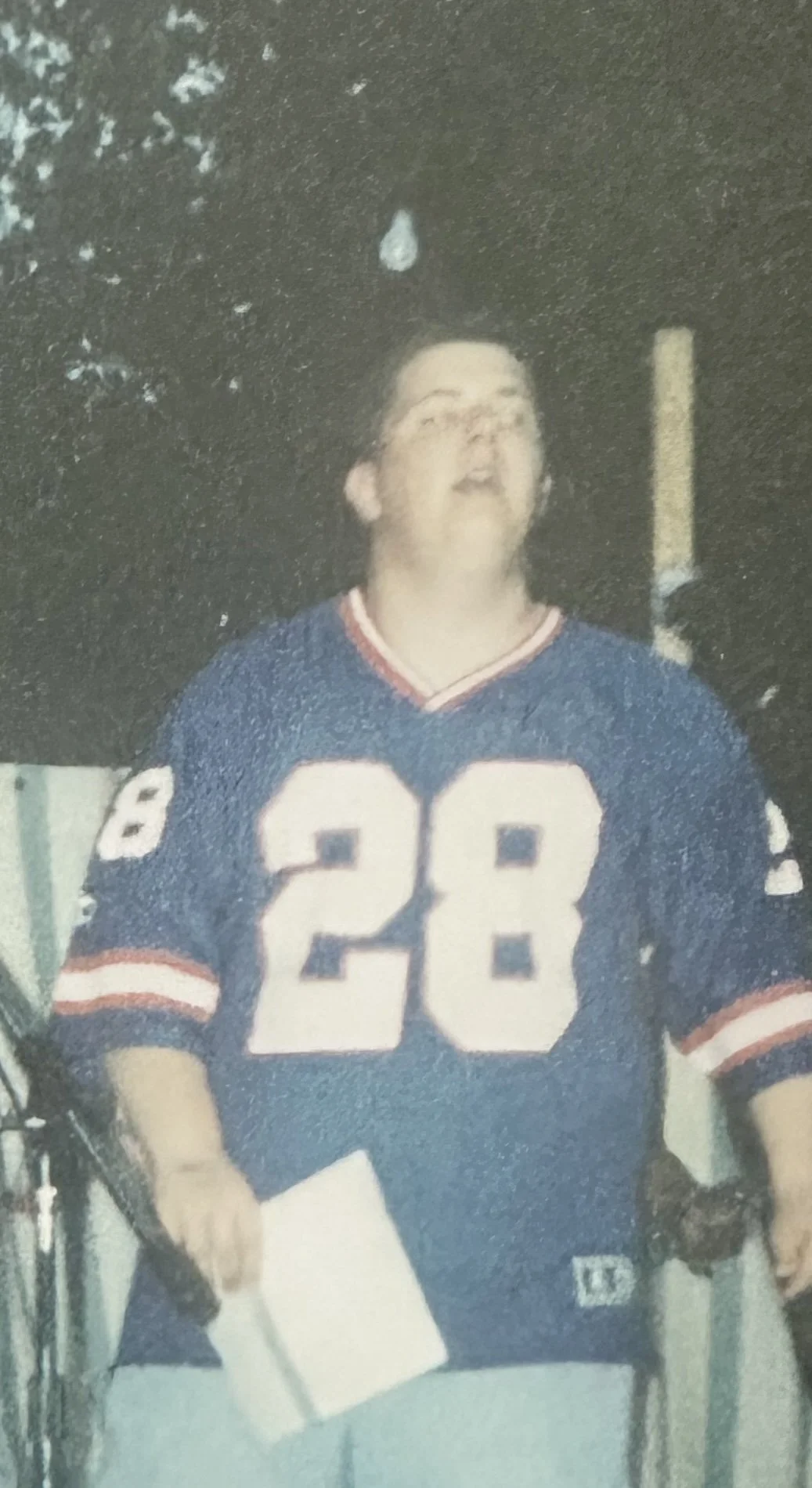
Brian Oliu coded the Geocities layout in New Jersey, and currently lives in Saint Paul, Minnesota. He is the author of five full-length works of non-fiction and three chapbooks. His book, "Body Drop: Notes on Fandom and Pain in Professional Wrestling" was released by The University of North Carolina Press. His favorite No Doubt song is "Sunday Morning," and Gwen Stefani breaks his heart on the regular.
Abigail E. Myers on Gillian Welch’s “By the Mark”
Denial, they say, is the first stage of grief. Perhaps it is also the first stage of joy.
In the Gospel of John, Saint Thomas, one of Jesus’s chosen Twelve, refuses to believe the Good News of the Resurrection of Jesus. He famously remarks, following an appearance of the risen Christ to a gathering of the other disciples from which he was absent, Unless I see the mark of the nails in his hands and put my finger in the mark of the nails and my hand in his side, I will not believe. If, as I did, you grew up hearing this story, you likely heard Thomas’s remark in a tone that could be variously described as skeptical, obstinate, supercilious, angry. Rarely, if ever, did you hear it in one that might be described as sad.
An outsider could be forgiven for finding the sainthood of Thomas the Twin to be ironic. Grudging, even. The church universal, for all that its entire raison d’être is a miracle beyond all human understanding, often sits rather uneasily with mystery, and even more so with doubt. Thomas we call a Saint, but also the Doubter, the one with the audacity to demand what we, two thousand years later, would still call proof. Few orthodox believers would claim to want to emulate him in the moment for which he is perhaps best known.
But this is a mistake. Thomas honors the end of Jesus’s human life with the most human of reactions: grief, the first stage of which is denial. Thomas, patron saint of architects and surveyors and India, ought to be the patron saint of the bereaved.
Gillian Welch’s “By the Mark,” from her 1996 album Revival, like so many of her songs, comes to us unadorned: her voice, described by Jedediah Purdy in The New Yorker as “rich and tarnished, with a roughness that hints at a tired or heat-baked throat,” unwinds alongside that of her longtime collaborator and co-writer David Rawlings and over a pair of acoustic guitars in standard tuning. Form follows function: in plain language, Welch inverts the typical reading of Thomas’s words. When I cross over, I will shout and sing/I will know my Savior by the mark where the nails had been. The voice of the narrator betrays no shame. They take it for granted that they will seek the sign upon his precious skin to know the Jesus for which they had longed.
Welch gives frank and dignified voice to those whose voices are often absent from discourse about them; Purdy identifies some of them from Revival as “moonshiners, migrant fruit pickers, and bootleggers.” Any one of these could be the narrator of “By the Mark,” a song for sinners settling into the idea that they have been redeemed. Or it could be a misunderstood saint who nevertheless understands his place among the aforementioned sinners.
Denial is the first stage of grief. The first stage is that in which one cannot fully accept the finality, the immutability, the irreversibility of death. At any moment, the mistake will be discovered. The sharp intake of breath, the thump in the chest, the fluttering of the eyelids: they will happen, and everyone in the room will exhale and laugh and exchange embarrassed glances. How silly of us!
For someone who did not witness the death or burial of Jesus—who, like most of the other disciples, seems to have gone into hiding following his arrest and crucifixion—Doubting Thomas seems quite certain that they took place. And, to be fair, they did. Ardent believers and firm nonbelievers agree on this much: the man known as Jesus of Nazareth was crucified under the aegis of the Roman government in Judea, and crucifixion inevitably ended in death.
We do not witness Thomas cycle through the stages before he hears of the resurrection, so we don’t know if he ever moved past denial on his journey through the valley of the shadow of the loss of his friend and teacher. There are other things we don’t know about Thomas; namely, most of the circumstances of his life before he began following the rabbi from Nazareth, including such basic facts as his family of origin or his age. The lack of specificity around the latter is especially compelling: was Thomas, like many of the other disciples are estimated to be, a young man, unmarried, poor, disaffected and disconnected?
Imagine that this is true. Imagine Thomas, perhaps barely out of his teens, lifted by the rabbi from Nazareth out of the grinding desperation of many young Jewish men in his time and offered friendship, purpose, hope. Imagine that Thomas had begun to imagine a life beyond both the empire of Rome and the religious leadership that collaborated with them—imagine Thomas imagining liberation. Imagine that vision crucified on Calvary’s mountain, where they made him suffer so, as Welch puts it.
Imagine that and it’s not hard to understand why Thomas doubted. I believed a good story once before, he might have thought. Look where it got me. Look where it got my friend. All of a sudden Thomas isn’t so much the Doubter as the Mourner. Sure, yeah, resurrection. Show me the mark of the nails. Then maybe we’ll talk.
I first heard “By the Mark” in church, one week after Easter, when Thomas’s story is often told. My friends Jenny and Jeff sang it, excellent stand-ins for Welch and Rawlings, after a sermon in which I heard for the first time that maybe, just maybe, Thomas was just sad. Thomas lost his job, his social life, his best friend. Thomas was, perhaps, not so different from the moonshiners and the bootleggers of whom Welch also sings, not so different from the unemployed or addicted or simply lonely men we know today. And, as true two thousand years ago as it is now, Thomas didn’t have, or wasn’t allowed, the language to say, I am sad. My friend died, and I am sad. I have no money and I am hungry and I am sad. I don’t know what to do with my life now and I am sad. So he said, instead, Unless I see the mark of the nails in his hands and put my finger in the mark of the nails and my hand in his side, I will not believe. Easier to be arch, angry, detached than sad.
In Welch’s telling, the denial and the doubt are necessary steps on the road to wisdom. The king of heaven, her narrator reflects, can be told from the prince of fools.
So: Jesus appears to all of his disciples, this time with Thomas included. Peace be with you, he says again. Peace: a closing of the circle of grief, followed by a break, an off-ramp, to life as it is currently constituted rather than as it once was.
And Jesus, exquisitely acquainted by now with the full range of the human experience, goes directly to Thomas, and lets him see and touch. Let’s expand this moment too: after Thomas’s denial, perhaps after some anger and bargaining and maybe even allowing himself some sadness, Thomas is offered peace. Imagine Thomas seeing and touching and holding his dear friend—his companion and teacher, who must have both challenged and held him through all manner of difficulty. Imagine Thomas letting himself start to imagine again. My Lord and my God.
If you have heard this story, you may also have heard Jesus’s tone here as chiding, sanctimonious, even scolding. Because you have seen me, you have believed; blessed are those who have not seen and yet have believed. But maybe Jesus, the teacher and friend and man, saw Thomas for what he was, and what he was not, and maybe still is not, allowed to be: a sad man, a man dealing with grief. Maybe he spoke those words while still holding his friend; maybe he spoke them gently, the way a friend would speak to a friend in the throes of sadness. Maybe he knew what Thomas needed in that moment. Maybe he respected Thomas’s nerve to ask for proof, as he did that of the Canaanite woman and the Roman centurion who dared to ask him for the healing that might have been reserved for Israel. Maybe he knew what Thomas had been imagining, and, knowing that he would leave the presence and sight of Thomas and his disciples again, had to tell him not to stop imagining a better, more just and harmonious world.
All my sin was paid for, a long, long time ago, Welch’s narrator concludes. So was Thomas’s. Jesus didn’t hold either Thomas’s sadness or doubt against him—he simply held him. He saw him as a full human having a fully human experience, and had mercy on him. Rather than shame, what if this moment cultivated, instead, joy in Thomas, joy that the imperial death Jesus freely confronted and defeated would not have the last word, and a reignition of Thomas’s holy imagination of a world he could not see—that we still cannot see?
Both Thomas and Welch’s narrator know Jesus by the mark where the nails had been—Thomas in a temporal, physical encounter, and Welch’s narrator in the simple future tense. Both know that empire is temporary, even when it seems eternal; both are granted the wisdom and peace needed to live another day in this world ripped apart by that empire. The economies of language in both Thomas’s encounter and in the lyrics of the song testify to the purity and simplicity of the joy that can emerge from doubt, from denial, through every stage of grief. Blessed are we who hear.
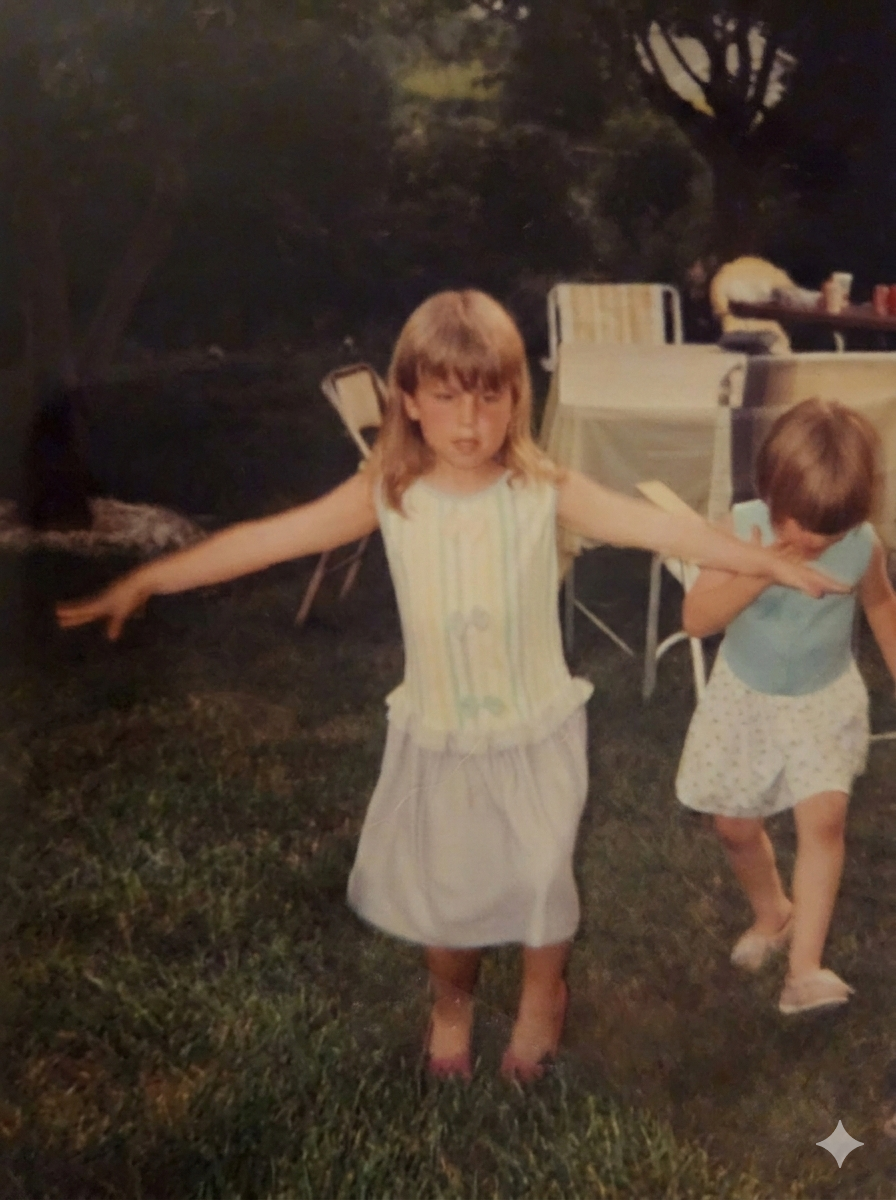
Abigail E. Myers writes poetry, fiction, and creative nonfiction on Long Island, New York. If you like sad songs from the '90s, you'll love her short story collection, The Last Analog Teenagers, organized by some more sad songs from the '90s and available from Stanchion Books. You can read more of her work at abigailmyers.com.