
first round game
(12) Vince Gill, “Go Rest High on that Mountain”
SHORTENED
(5) Foo Fighters, “Everlong”
101-79
AND WILL PLAY ON IN THE 2ND ROUND
Read the essays, listen to the songs, and vote. Winner is the song/essay with the most votes at the end of the game. If there is a tie, we will play a one-hour overtime (and repeat until we have a winner). Polls close @ 9am Arizona time on 3/4/26.
Hello, I’ve Waited Here for You: Kay Keegan on “everlong”
Back in 2017, until I told my MFA classmates that I’d be missing a workshop to attend a Foo Fighters concert with my new boyfriend, I thought everybody liked this band. The wrinkled noses, and audible “ews” proved just the opposite. Even though I try not to yuck other people’s yums (in public), I shouldn’t have assumed that such a basic courtesy would be reciprocated by a group of talented writers with a lot of opinions. And a bad habit many of them unconsciously deployed was making their opinions sound like facts. While their essays would be bereft of declamatory sentences because of their heightened sensitivity to the feelings and lived experiences of a largely imaginary reading audience, that was not the case elsewhere. Even my own professor made it a point to profess his revulsion of this band. Not just in the classroom, but on the Internet, where the shelf-life for personal opinions seems eternal (even if nobody reads or listens to them).
Because I wanted to do some research, I relistened to Elena Passarello and Justin St. Germain’s wonderful, informative, and now-defunct podcast, I’ll Find Myself When I’m Dead, all about the literary essay, just so I could remember what exactly it was they didn’t like about the Foo Fighters. Their 2021 episodes dedicated to March Plaidness seemed like the most obvious place to track down opinions I disagree with (regarding music, not essaying). That’s a grand total of 320 minutes of my life that I could have spent doing anything else. But, as many writers can attest, sometimes March Xness makes us do crazy things.
Playing the episode, “Round One Recap” on 1.5X speed helped me practice my stenography skills while making two of my former professors (and March Xness competitors) sound like they were livin’ la vida coca and loving it. Here, I present a couple glaring untruths:
“’In Bloom’” is such a Dave Grohl song. It’s a Foo Fighters song…and that’s why I don’t like it. It’s very radio friendly,” said Justin. God forbid if any real music fan ever discovered something they liked on the radio. Ugh! Disgusting! No! Do not under any circumstances let this crusty elder Millennial make you feel bad. He can’t help it. That’s just the way his voice sounds. Enjoying music that has broad appeal does not mean you’re a philistine or guilty of committing some sort of heinous social crime. My former professor continued airing out his grievances, “I hate the Foo Fighters so much…It’s like watered down Frat Grunge.” Upon hearing such derisive criticism, one might even call it snobbery, I experienced nearly the same level of fury I felt right before I punched my ninth-grade gym teacher for hitting me in the head with a lacrosse ball. A magical time when I didn’t get in trouble for physically assaulting an educator because he was too busy laughing at me. It was a valuable lesson from twenty years ago that reinforced the well-worn maxim that the pen is indeed mightier than my puny fists. I cannot wait for the existential crisis Justin St. Germain will have to endure if he participates in the voting procedures of this year’s competition: Either support someone he knows and vote for a Foo Fighters song, or…do whatever the fuck he wants.
Anyway.
The Foo Fighters concert, as I remember it, was spectacular. They performed at the Matthew Knight Arena in Eugene, OR, during their Concrete and Gold Tour. The band opened their set with “All My Life” a song with chugging guitars that Dave Grohl has compared to the Jaws theme, then spent the next two-plus hours playing all the hits their devoted fans wanted to hear and, if memory serves, most of the new album their world tour was supposed to promote. Best of all, Krist Novoselic joined Dave and guitarist Pat Smear on stage for a (mostly complete) Nirvana reunion that felt special simply because we were all congregated within the general vicinity of their old stomping grounds. Sure, we weren’t in Seattle, but Eugene felt close enough. Did they play any Nirvana songs together? Of course not. And yes, I do realize that saying I got to see most of Nirvana is a lot like when my parents brag about seeing half of The Beatles (Ringo and McCartney, separate concerts, for the curious).
But this is supposed to be an essay about “Everlong.” I remembered the song was included somewhere in the band’s setlist. It would have been a glaring omission if they avoided playing it on purpose. YouTube helped me rediscover that “Everlong” was played as the finale to their encore. Watching the video, the arena is full, but in the song’s duration, the packed floor slowly begins to thin from the back, leaving a noticeable bald spot in the crowd, which I was completely oblivious to at the time since my then-boyfriend/now-husband and I were stationed closer to the stage. Not Adam and God touching fingertips close, but we were lucky enough to not have to rely on the jumbotron screens like everyone stuck in the nosebleeds. For us, there was no half-second delay in watching six middle-aged musicians sweat their asses off.
This video was filmed from somewhere in the mezzanine and while viewing it I noticed there weren’t as many fans jumping around as I remembered either—I suspect it’s only because the knees of the ride or die Foo fans don’t work as well as they used to and it was past 11:00 pm on a Tuesday. There were a lot of bobbing heads and devil horn salutes, but I think the band’s energy on stage outmatched their audience. It didn’t feel that way at the time. Like any rock concert I’ve attended, it felt like a ritualized mutual adoration. We loved the Foo Fighters, and the Foo Fighters loved us back. Grohl once said in an NME interview, “When you play a song like [Everlong] every night, so many people connect with it that that sort of communal energy makes it magical every fucking night.” Having a secondary account that a stranger shared on YouTube stress-tests an opinion I normally wouldn’t have questioned. The veil of blind devotion I was living under at a Foo Fighters concert in 2017 wasn’t completely shredded after watching this video in 2026, but the seams gaped open, allowing some of the magic to seep out. Maybe that’s just one place where sadness lives. When something isn’t actually as awesome as what your own memory promised.
I can’t remember where I learned this, but I once heard that Dave Grohl wrote the first iteration of “Everlong” in forty-five minutes. The song was composed on guitar in dropped D tuning, but it’s clear “Everlong” was written by a percussionist because Grohl’s strumming patterns mimic the drums more than, say, another influential guitarist’s playing style. In a 2013 interview with Sam Jones, Grohl gives evidence to this observation by explaining, “The way I look at a guitar is like a drum set. I look at the lower strings like they’re kicks and snares and I look at [the higher strings] like they’re cymbals. So, when I play, it’s almost like a kick-snare pattern.” The same idea applies to when “Everlong” is covered on the piano. The left hand focuses on maintaining the song’s heartbeat (tempo), while the right hand can be more expressive and dynamic, as if you’re smashing shimmering cymbals instead of plunking keys.
Meanwhile, the unique chord progression of “Everlong” supports the melodic contour of the sung part. Contour is simply the rise and fall, or “shape” of a song’s melody. Either imagine “Everlong” notated on a musical staff or just hum the song as best as you can: “Hello, I’ve waited here for you,/ Everlong./ Tonight, I throw myself into…” The initial phrasing is relatively static and there isn’t a lot of movement up or down the staff, until there’s a steep descent on the word, “Everlong.” Alternately, one of the highest sung notes in the song arrives on the word “throw.” Grohl’s voice, like an object or person, in this case, is launched skyward, but must land somewhere eventually, so the melody returns step by step down to the root note. Why does this matter? Dave Grohl doesn’t have an impressive vocal range or the same level of dexterity as, say, Minnie Riperton or, hell, Luciano Pavarotti, but I’d like to give him his flowers for knowing how to work with the limitations of his instrument by digging up sonorous notes from the basement of his range and blasting out pinging notes hovering near the very top. Because I’ve played guitar and sang in bands before, I’m quite intimate with the rush that comes from performing on the knife’s edge of your own abilities in front of a living, breathing audience. It’s fucking scary, but when everything goes right it’s totally exhilarating. That vulnerability is kind of what “Everlong” is all about.
For the record, the occasion for dissecting “Everlong” did not present itself when I won the lottery to compete in March Sadness. Like a volcano, all this information was waiting dormant since I’d already devoted a frightening amount of time to thinking about this song as a musician, a nerd, and a fan.
The apex of my admiration for the Foo Fighters was during my first year of college. I remember spending an embarrassing number of hours I’d prefer not to estimate in the university library’s computer lab mining YouTube for every single band interview and music video I could find when I wasn’t finishing homework, reading the latest issue of Rolling Stone cover-to-cover, or hanging out with friends (yes, I had friends). This likely explains why my brain has stored such a massive quantity of information about the Foo Fighters yet I can’t recall where precisely any of it came from. This recurring propensity for obsessing over one subject would become a necessary evil for writing essays while writing in general turned out to be the only way I could lay my obsessions to rest.
Fifteen years ago, I loved the Foo Fighters. Since then, my devotion has mellowed and writing about a band I’m no longer obsessed with posed some difficulty. When I chose to write about “Everlong,” there was no nagging question I ruminated over for days. No thesis or “hot take” I wanted to share. No parallel themes from the song I could weave into stories from my own life and draw out meaning. For that, you should read Jordan Wiklund’s 2021 March Plaidness essay about the early Foo Fighters single, “I’ll Stick Around.” It’s excellent. I selected “Everlong” simply because I like it.
“Everlong” is almost as old as I am and, in my mind, has somehow managed to avoid the almost inevitable decline from uber-catchy earworm to corny corn fest like so many other popular songs from the 90s that tackle love (I won’t name any specific examples because, again, I don’t yuck other people’s yums). It’s been well-documented that “Everlong” is about the ending of one relationship and the beginning of another, and, like a lot of radio staples, the lyrics are fluid and vague enough to suit almost any situation. Fledgling romances, break-ups, breakdowns, weddings, funerals, triumphs, failures, and on and on and on. “Everlong” is adored by millions of people because like water, its meaning and resonance are both shaped by the vessel that is the individual listener.
I know the reason why I loved “Everlong” the first time I really listened to it with intentionality was because it captured that unexplainable feeling of straddling a beginning and an ending at the same time. “Everlong” sounds simultaneously aching and rapturous. Especially when you’re young, or young-ish. Because of its preoccupation with liminality (Sidebar: Are writers still talking about this concept in earnest or has its ubiquity within literary discourse become a joke? I haven’t written a whole essay in, like, two years, so…), “Everlong” wouldn’t be considered out of place on either side of the twin soundtracks often devoted to our own perceived invincibility or crippling self-doubt in the face of new love or in the wake of lost love. It’s a song that can break a heart or repair it, and what more does anyone want from the music they listen to?
When I listen to “Everlong” now, I mostly think about how certain songs are beginning to feel like time machines. I’m only thirty-four, but songs like “Everlong” thrust me backwards in time more often than they used to propel me forward. I guess another way to put it is that the songs I return to frequently unlock more memories of the past than fantasies of what the future might hold. Maybe it’s because the future seems a lot sadder and scarier than it used to. Maybe it’s because I don’t listen to a lot of new music.
When “Everlong” plays, I’m eighteen, wasting time on the Internet, and trying to decide if Dave Grohl would make a good boyfriend if our alarming 23-year age gap collapsed. When “Everlong” plays, I’m twenty-one, teaching young teens how to leap and twirl in a jazz dance class in rural Minnesota; perhaps one of the few places where I can temporarily abandon my own insecurities because I’m being worshipped on a weekly basis by tweens who possess the same unbridled passion that I once aimed at rockstars. But most of the time when “Everlong” plays, I’m twenty-five, standing in the Matthew Knight Arena in Eugene, OR, holding hands with my then-boyfriend/now-husband, and wondering “if everything could ever feel this real forever.” So far, the short answer is yes.
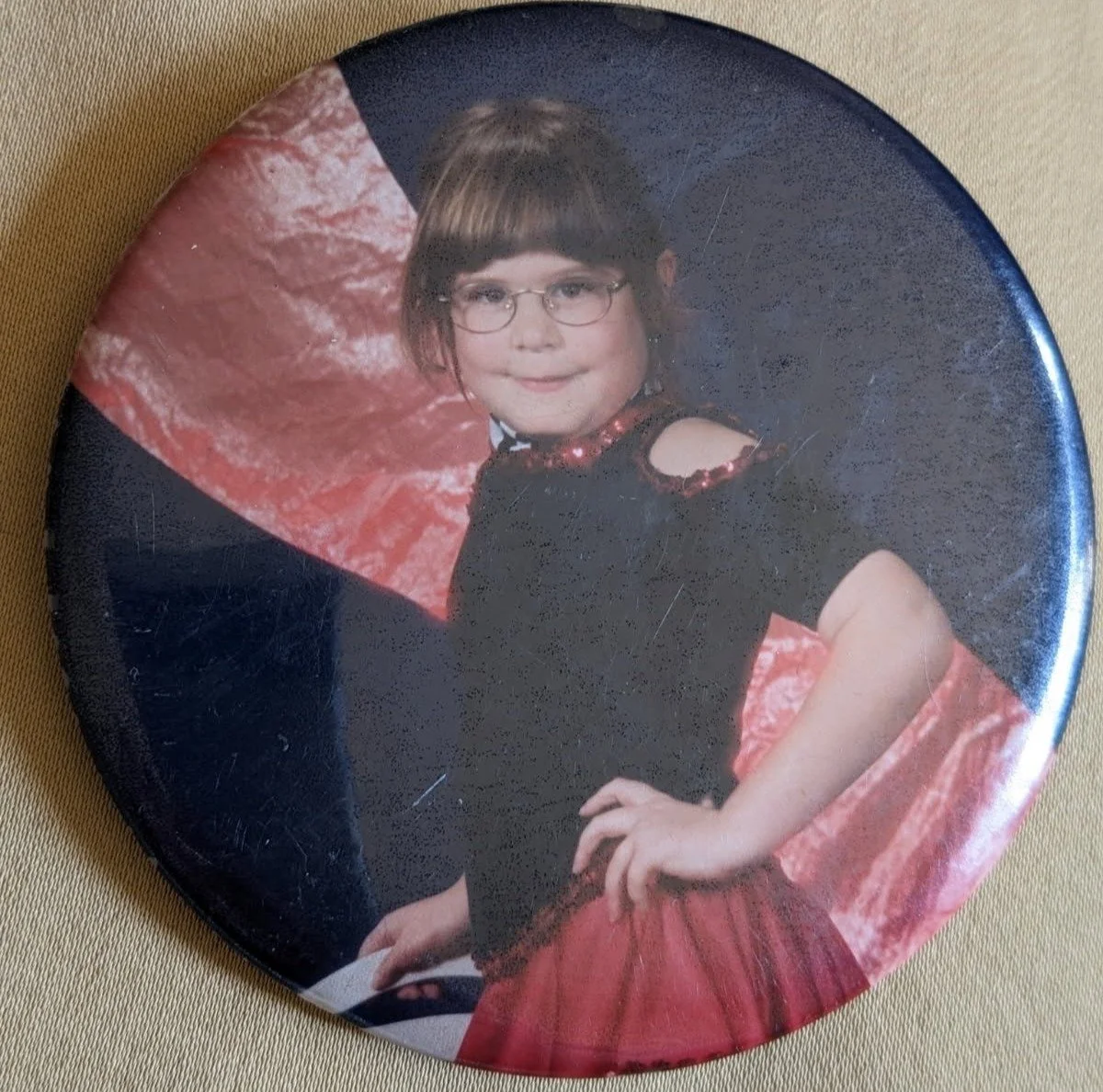
Danielle in 1993—one year after love deluxe and one year before she falls in love for the first time: thus, her blithe expression. Photo credit: Alison Wilson, her longtime bestie, who is just about to break her heart.
Kay Keegan teaches writing and literature to college students in Memphis, TN. She received her MFA in Creative Writing from Oregon State University and her PhD in English from Ohio University. Her essays have been featured in Essay Daily, Hobart, Inside Higher Ed, and elsewhere. She enjoys running, crocheting, and playing unsexy musical instruments. She recently finished writing a novel that affectionately satirizes academics and Gothic romance conventions. It has yet to find a publisher, but her husband told her to brag about her creative achievements more often.
“March is sadness”: amy rossi on “go rest high on that mountain”
That was what my mother texted when I told her the theme of this year’s Xness tournament. It’s a long month, with so many dates on the calendar weighed by memories. Among other reminders March carries, it’s one anniversary of loss after another: my grandfather, my uncle, and most recently, my father.
And it was easy to pick my song for this, when I saw my mother’s favorite singer on the list. But what I got was something more: a reminder of what the sadness of March means.
This is for you, Mom, and for anyone sitting with grief this month. I hope it brings you something too.
Vince Gill began writing “Go Rest High on That Mountain” in 1989, after his friend and fellow country singer Keith Whitley died at 34 of acute alcohol poisoning. He didn’t finish the song, though, and wouldn’t until 1993, when his older brother Bob Coen died of a heart attack at age 48.
Rolling Stone named it the 17th saddest song in country music, though such a list is a fool’s errand. One of my most steadfast beliefs is that a perfect sad song is one that does not tell you how to feel but instead lets you find your feelings—the difference between songs about sad things, perhaps, and truly sad songs.
The former is tricky, and I have little interest in songs whose sole aim is to evoke tears. For example, I’ve always hated Tim McGraw’s “Don’t Take the Girl” (in part due to the lyrical laziness of friends named Jimmy Johnson and Tommy Thompson). It’s too manipulative, using the idea of a 22-year-old potentially dying in childbirth to tell a boy’s story via a well-worn country songwriting technique: verse one, learn a childhood lesson; verse two, same lesson but with love; verse 3, same thing again but death and/or Jesus. It’s a storytelling song that rings hollow.
“Go Rest High On That Mountain” eschews such a familiar framework for something rooted in truth, but much more open-ended. It is deeply personal to Gill and broad enough to resonate with any listener. For me, it’s kin to Emmylou Harris’ “Boulder to Birmingham”—the kind of song where you feel the story behind it in your bones, not in the words, and want to know more.
And it’s both a song about something sad and a sad song. The fact that it sounds sad is part of Gill’s musical ability. Though from Oklahoma, he spent time playing bluegrass in Kentucky, the home of Bill Monroe and the high lonesome sound, which writer Kara Kundert describes as “that painful, heartbreaking high tenor pealing out mournfully in the happy-sad songs in our particular musical canon.”
You hear it in the chorus of the original recording of “Go Rest High”, when Ricky Skaggs and Patty Loveless and the three voices become something new entirely. In a New Yorker piece on the high lonesome sound, Amanda Petrusich says of the feeling: “In the language of our age, this is called ‘being present,’ but it feels more like ‘being electrified.’ Suddenly, you see and feel everything.”
And you hear it, too.
“Go Rest High” is infused with the specific grief of losing someone too soon. The first verse acknowledges a troubled life—Whitley had dealt with addiction and Coen had a traumatic brain injury in his 20s that led to him disappearing at times and experiencing homelessness. Gill sings “You weren’t afraid to face the devil / you were no stranger to the rain” and it’s peak country—the lines come from Whitley himself, and what better way to honor a friend and fellow artist?
The second verse takes us to the funeral, mourners gathered. Everyone is crying, but then Gill takes the kind of turn you can only take when you are writing not just for the sake of telling a story, but from a place of deep love. "Wish I could see the angels’ faces / When they hear your sweet voice sing,” he says. The way he hits the word “sweet” and the word itself is loaded with memory and tenderness, both personal and broad. Gill used to sing with his brother, Whitley’s voice was lovely but the voice of anyone we love is sweet, even when it’s off-key and atonal.
This gentle memory takes it from a song of mourning to a song of celebration. The two things we hold at once at once when we grieve.
My dad was an Xness cheerleader. Ever since my first time participating, he’d ask every year if I was involved again. I’d send him pieces I thought he’d like, and he would share my essays with his many Rotary Club friends on Facebook.
It makes sense. He loved being a dad, and he loved music. He raised us on the oldies, played air fiddle (while driving) to Charlie Daniels, drove me around in his red truck with “American Pie” playing, trying to explain what a levee was.
My father kept one curated playlist he called the perfect road trip playlist. After he died, in an incredible feat, my mom managed to extract it from his Spotify account on his mostly-defunct desktop and send it to me, and in the months that followed, I would listen to those songs as I drove around town, remembering how I shared with him Tesla’s cover of “Signs” and singing along to “Already Gone” as he drove me to high school.
One of my dad’s favorite songs was Billy Vera and the Beaters’ “At This Moment,” a despairing breakup anthem—right up there in the Sad Song Hall of Fame. I wondered what would happen the first time I heard it after he was gone. And when it finally came up on the playlist, I braced myself the moment those first notes filled my car. But somehow, I, a person who has cried at a comment on a recipe blog, kept it together as the song played on.
The song that did me in though, full sobbing in traffic on my way home from work? A late-90s one-hit wonder that I could not imagine my dad knowing. I can only guess he heard it on a sitcom series finale or something like that. The song’s appearance was so surprising that it shook me.
There were still things I could learn about my dad.
I’m not naming it because the memory is precious and mine, and the point is: anything can be a sad song, the saddest song even, if it hits at the right angle.
A thing I have thought about a lot with “Go Rest High” is the chorus: “Go to heaven a-shoutin’ / Love for the Father and the Son.” Gill is a devoutly Christian man, and while that can unfortunately mean a few different things in 2026, by almost all accounts, he cuts the figure of a man whose faith calls him to do unto others, not wield it like a weapon.
But if the best sad songs don’t tell you how to feel and instead get their power from a broad appeal to the range of human experiences—hitting at that right angle—what to make of a chorus, in a song with only two brief verses, that embodies a specific religious view? Does it detract from “Go Rest High”’s power?
I think the answer is found in what is perhaps the most famous performance of the song, at the 2013 memorial for George Jones. (An aside: the fact that a song written for two people who died young is also a suitable tribute for a man who died at 81 is a testament to the song’s breadth.)
Gill is accompanied by Patty Loveless, as he is during the original recording. He makes it through the first verse before the emotion becomes too much and his voice breaks at the first “go rest high.”
But Loveless is there, her voice enough to carry them both. She does not waver, holding him in her vocal and her gaze for the duration of the song—the inverse of the Stevie Nicks stare during “Silver Springs.” The beauty and power of this moment is hard to overstate.
This is the love the chorus is about, this is faith, and in this performance, I realized that “Go Rest High” is not asking listeners to share Gill’s same beliefs but to simply believe in something. Believe in love. Believe in your friends. Believe in the rainbow bridge.
Believe in your ability to grieve openly because you aren’t grieving alone.
This was always part of “Go Rest High,” why Loveless and Skaggs were there and why Gill often performs it live with others. This was always a song that needed other voices because that was always its point: shared memory, shared love, shared burden. I hadn’t heard it in that way before, but I will never hear it differently.
There are things that belong to both of my parents that I will carry for as long as I am lucky to be here, things like the expression lord love a duck and a delight in seeing a penny and the drive to give back. I will always think of my father when I hear Jim Croce and my mother when I hear Vince Gill.
“Go Rest High” is about the joy and the inevitable pain of carrying these things. The part where I still think, three years later, I can’t wait to tell Dad before remembering, but also the part where I can still tell my mother, sister or brother because the memories aren’t mine alone.
A phrase I came across once that keeps coming back: grief is the price we pay for love. The beauty of “Go Rest High on That Mountain” in 1994, in 2013, in 2026 is that it reminds us the cost is worth it.
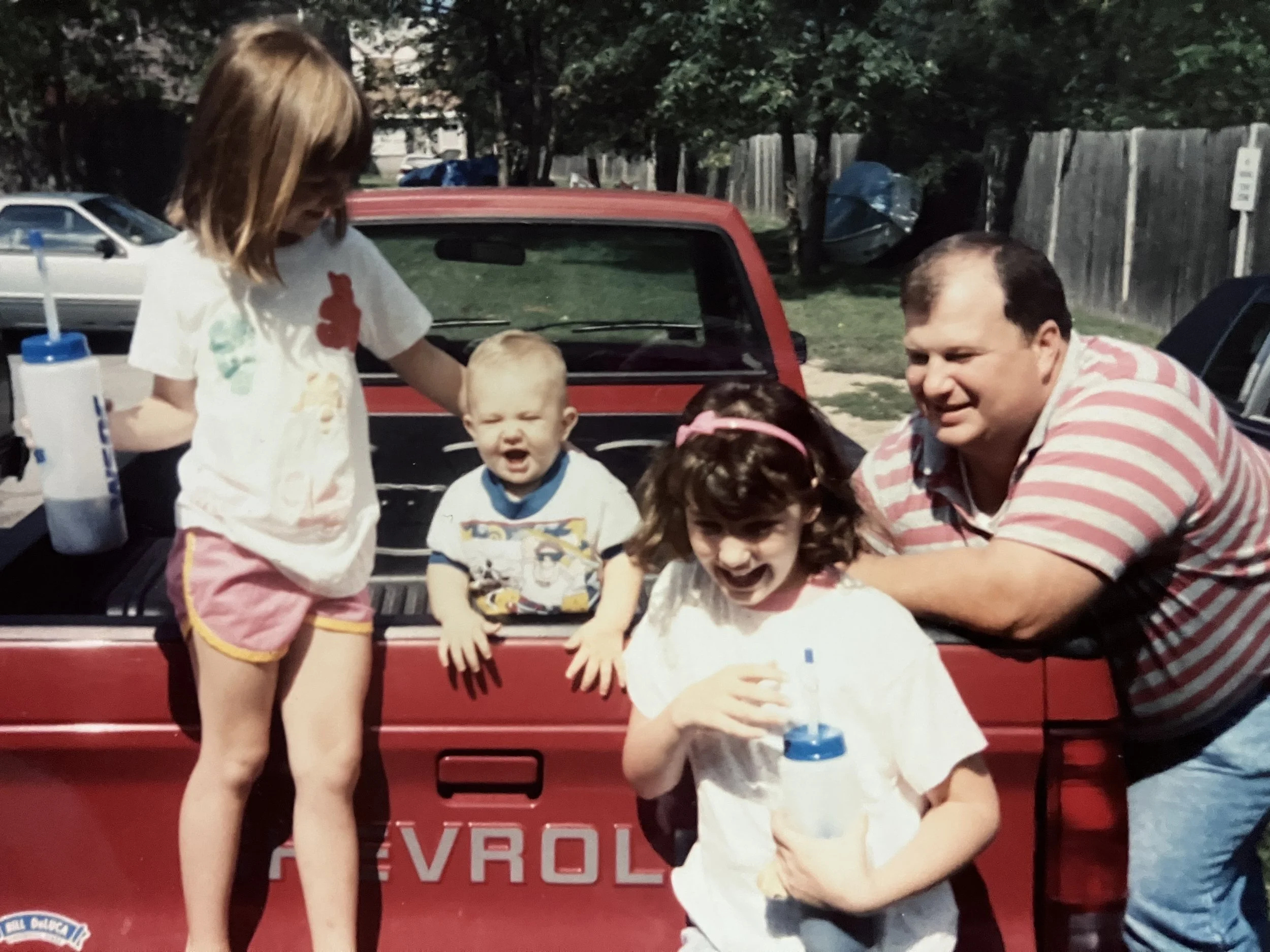
Amy Rossi is the author of The Cover Girl (MIRA/HarperCollins, 2025). She lives in North Carolina with her partner and two large dogs. Find out more at amyrossi.com