first round game
(1) Celine Dion, “My Heart Will Go On”
turned down
(16) Silver Jews, “The Wild Kindness”
178-83
and will play on in the second round
Read the essays, listen to the songs, and vote. Winner is the song/essay with the most votes at the end of the game. If there is a tie, we will play a one-hour overtime (and repeat until we have a winner). Polls close @ 9am Arizona time on 3/2/26.
“Far Across the Distance”: melissa fite johnson on Experiencing “My Heart Will Go On” Then and Now
On a recent walk with my husband, we talked about nostalgia—why it’s powerful, how we each define it. In particular, I was processing why I often feel nostalgic for incredibly painful moments in my life, which feels especially strange since I’m so much happier now. I don’t wish to go back—at least not literally, if time travel were a thing. But I love keeping journals. I love documenting and reflecting and considering how I got here, wherever here is. And sad memories are often the most defining ones. Celine Dion’s “My Heart Will Go On” is a portal to the worst few months of my life. It’s also one of my favorite songs. Both things are true at once.
In 1998, I saw Titanic twice in the theater. The first time was in late January, when the film finally came to the theater in my small Kansas town. In my journal from that year, I called the process of standing in line for hours to buy tickets with my friends “an adventure,” complete with elaborate plans to buy tickets to Spice World and switch theaters if it sold out. We made a whole evening of it—dinner at the Mall Deli, trying on dresses at Maurices, stuffing tickets from arcade games into our purses. Then we had to stand in line again to get good seats—there were twelve of us, and we took up a whole row. Even though we knew the movie would be heartbreaking, we were wild with excitement. We’d come prepared with travel tissue packs; we were looking forward to crying through Titanic the way we’d looked forward to shrieking through Scream and I Know What You Did Last Summer. Secondhand emotions, so satisfying and safe. We were young and invincible. Nothing could touch us.
The second time was in mid-March with my new boyfriend. In my journal, I wrote that Titanic “was actually sadder the second time around. It was nice to sit next to [him]—he stroked my arm until I felt better.” He and I were together for only two weeks, and later he told his friends we’d only been hanging out, not going out. He didn’t know why I thought it was more than it was, even though we went much farther sexually than I was ready for. In my journal, I wrote, “We hung out in his room. We talked a lot, which was nice. Then we did some things—I can’t quite decide if I should view them as being shameful or beautiful.” It wasn’t pressure so much as praise that lowered my defenses. Because of Titanic and movies like it, I believed in love that took only a few days to bloom. I wasn’t wary of grand statements like “Rose, you’re the most amazingly astounding, wonderful girl—woman—that I’ve ever known.” When this boy told me I was beautiful and that he’d wanted to kiss me for a long time, I’d been waiting my whole life to hear something like that. I was ready to open myself to whoever said it first. After he broke up with me, he told his friends he’d only hung around me because I was stupid and easy and had big breasts.
And then on April 3, my father died, an event that should be unrelated to that boy and Titanic, but it all feels like one memory. One soundtrack—“Near, far, wherever you are,” a lyric that meant a lot because I wasn’t sure about religion or heaven. One regret, that I’d wasted the last weeks of my father’s life pinned beneath this boy who thought so little of me. When I try to conjure that time—relive it more than remember it—I am walking the halls of my high school, wearing an oversized hoodie so no one can see my body, hoping no one brings up my father because I can’t talk about him without crying. I am sixteen.
In a late 90s talk show appearance, Celine Dion addressed her tendency to beat her chest with her own fist at the climax of her songs: “When I sing sometimes, I get emotional and I hit myself—I don’t know why! I don’t know why I do that.” She hit herself especially hard during her Oscars performance, spooking her heart of the ocean necklace right off her chest. I watched that moment in my childhood living room with my dad less than two weeks before he died.
I’ve been thinking a lot about that—emotion and violence, emotion and pain. I am trying to understand why I love a song that I so associate with the end of my father’s life and the worst few months of mine. It’s nice to remember him, and maybe that’s all it is. That’s such a simple, normal explanation. But maybe I’m still the girl who finds a strange pleasure in sadness, even when it’s real, even when it transcends a radio or screen. Don’t all of us sometimes put on an album or movie expressly because we know it will make us cry? Don’t we read through old journal entries documenting our most gut-wrenching memories? We know it will hurt, but the hurting reminds us we’re still here.
In my journal, I wrote, “That night, at home, Dad began complaining that he was having trouble breathing. After a while he asked me to call 911. An ambulance came and they took Daddy to the hospital. He was crying and they gave him oxygen and it was horrible. In the ER they said they thought he’d had a heart attack.”
He didn’t die that night. I took Mom’s car and got McDonald’s for her and me, and we ate it in the hospital waiting room. He died two nights later, after being moved from ICU to a regular room. Since he seemed to be doing better, I took a break from the hospital to go to the movies with my friends.
In my journal, I wrote, “When I left he’d been having a little trouble breathing, but he said he’d be OK. I kissed his forehead, told him I loved him, and I never saw him again.”
My friends and I didn’t see Titanic the night my father died, though it was still playing, of course. It played in theaters for nearly ten months. It’s hard to explain to my students, who are the age I was when it came out, how much of a phenomenon both the film and the song were. Halfway through 1998, “My Heart Will Go On” was already considered the most played song of the year. In this era of streaming movies at home and everyone making their own playlists, it feels to me like there aren’t as many unifying pop culture touchstones, the things that will remind everyone in the same age bracket of a certain winter or spring.
Maybe to test this theory, I asked a few students what they consider their generation’s version of “My Heart Will Go On,” their version of Titanic. Their answers were fantastic but totally varied, which makes me think there really isn’t a contemporary equivalent. For songs, they brought up My Chemical Romance and Billie Eilish, both of which feel appropriately dramatic, and one student suggested Adele, which I think speaks to a respect for Celine Dion’s powerhouse voice. For films, they mentioned Downton Abbey for its attention to class systems, the Bollywood movie Saiyaara for its love story, and Pirates of the Caribbean “because it’s ocean related.”
I also asked my students whether they thought Titanic and “My Heart Will Go On” were more romantic or sad, and they were all torn. One student called them “sad but cute”; another, “romantic with a hint of sadness.” Finally, someone found the word “bittersweet,” which might capture the spirit best of all.
Last summer, I was surprised that “My Heart Will Go On” wasn’t on the longlist of options for this tournament because it was considered more romantic than sad. I’d thought of the song as sad for so long, it was hard to think of it as anything else. However, it’s true that the first image that opening flute solo prompts—universally, I think, though usually I speak only for myself—is undeniably romantic: Jack and Rose on the bow of the ship, homecoming dance pose, his hands on her stomach, her hands covering his, her engagement ring from another man glinting in the sunlight, their faces close in anticipation of their first kiss. But it’s also true that the song makes me cry every time I hear it.
As I’m always telling my students, two things can be true at once. In another favorite romantic movie of mine, Before Sunset, Ethan Hawke’s character discusses an idea for his next novel: “I’ve always wanted to write a book where the whole thing happens within the space of one pop song.” He describes a scene from his would-be protagonist’s life, where his young daughter is dancing to a song on a table, and then a scene from his past, where his first love climbs onto his parked car and dances to the same song. The protagonist somehow understands that he is not merely being reminded of the past; he is there, and he is also in the present with his daughter. He is living both moments simultaneously.
I married a man who also saw Titanic more than once in the theater—a different theater, in a town not so far from mine. He held some other girl’s hand. Knowing him, he wasn’t dreaming of her or me or anyone to complete his life. He was already firmly himself; he loved pro wrestling and sketch comedy and alternative rock. He wasn’t an obvious romantic. Even so, he fell in love with the movie, and with “My Heart Will Go On,” as much as I did. And though he’s hilarious and sarcastic, there is nothing ironic about his love for these things. There’s a story his cousin loves to tell about how he got drunk one night and insisted she drive him to Walmart so he could buy the Titanic soundtrack, a double cassette. In the morning, his roommates played it to coax him awake, and he refused to be embarrassed. He stood by it, then and now.
My husband and I didn’t know each other when the movie came out, or when that song poured from every teenager’s car radio. But the fact that we both loved them fervently when we were young has informed our relationship since it began in 2003. He and I once waited to leave a hotel room one morning, for wherever we needed to be, because the end of Titanic was playing on cable. We’ve seen the movie together in the theater twice—in 2012, for the 100th anniversary of the ship’s sinking, and in 2023, for our local theater’s tradition of luring in our generation with beloved movies from our youth. We’ve been to three Titanic exhibits—two at Union Station in Kansas City, and the Titanic Museum Attraction in Branson, MO. And we’ve seen Celine Dion in concert; our sole reason for going was to hear “My Heart Will Go On.” Celine did not disappoint. She came out dressed as an iceberg, billowing white layers everywhere. My husband and I clutched each other and sang. We were both crying, but we were so happy. We couldn’t believe how lucky we felt not to know such sadness anymore. So maybe it’s true, the song is more romantic than sad—or at least maybe it’s finally true, true now as I’d wished it were then.
Celine Dion’s “My Heart Will Go On” is a time capsule of an incredibly sad time for me, but it isn’t only that. The story of my life does take place during the length of one pop song—this pop song. When I hear it, there are two of me, “far across the distance and spaces between us.” Two of me existing at once. I am walking my high school halls in an oversized hoodie, devastated and aching for my father. And I am beside my husband in the theater, final credits rolling. He and I turn to each other, not sure how embarrassed we should be by our red eyes and wet cheeks, this song soaring almost ridiculously behind us.
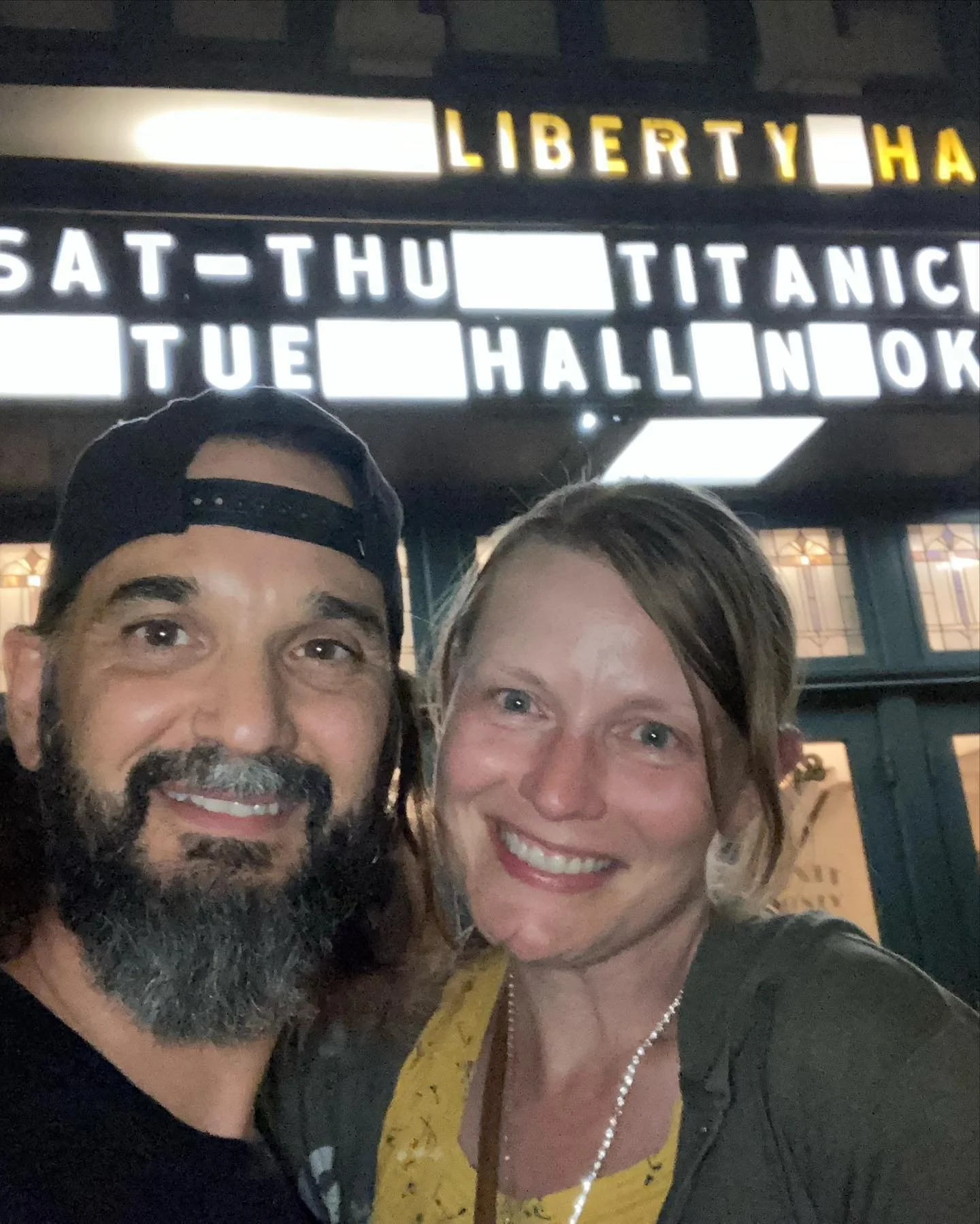
Melissa Fite Johnson is the author of three poetry collections, most recently Midlife Abecedarian (Riot in Your Throat, 2024). Her work has appeared or is forthcoming in Ploughshares, Pleiades, Southern Review, HAD, Ilanot Review, Poet Lore, DIAGRAM, and elsewhere, and has received a special mention for the Pushcart Prize. Melissa, a high school English teacher, is a poetry editor for The Weight Journal for high school students. She and her husband live with their dogs in Lawrence, KS.
Perfect in an Empty Room: samuel rafael barber on The Silver Jews’ “The Wild Kindness”
It’s October 1998. American Water is released while I’m a student at Howard Early Childhood Center. I eat a microwaved cup of Hormel chili after school—unaware that microplastics from the container are leeching into the beany and meaty morass—while watching Mister Rogers' Neighborhood and Power Rangers. I do other things too, presumably, though I don’t remember now. I’m five.
It’s July 2019. I’m 26 and driving around San Antonio late into the night. I’m driving on streets I’ve traveled thousands of times before and passing through neighborhoods that know me well enough to be wary of my current morose state. I use my blinker when appropriate and stop when appropriate and stare straight ahead with a peculiar twist to my face. I’ve been listening to the Silver Jews a lot since fellow Arizona MFA alum Mike Powell’s wonderful consideration of American Water brought David Berman’s vision to my attention. “The alleys are the footnotes of the avenues,” I think to myself. “In 27 years / I’ve drunk fifty thousand beers / And they just wash against me / Like the sea into a pier,” I think to myself. But mostly, in a voice my elementary music teacher Mrs. Ashworth would never recognize given its lackluster commitment and general lack of panache, I drone, “Some power that hardly looked like power / Said I’m perfect in an empty room,” every three minutes and fifty-four seconds.
I don’t have much else to do. In the mornings, I try to fill the void with the nation’s best breakfast tacos, and in the afternoon, I read. Occasionally, I meet up with high school friends who’ve remained or returned, like T.C., who teaches me to fly fish. My parents provide a plausible deniability that everything is going according to plan. They are excited for me. There are three weeks before my apartment is ready in Denver, where I’ll be starting a PhD program I’d never dared dream of attending. There are three weeks until all of my material possessions are shipped to my apartment in Denver from New York. The apartment is across the street from Shotgun Willie’s, the strip club where Memphis Grizzlies star Ja Morant will begin the multi-year self-immolation of his career by flashing a handgun and sacrificing the equivalent of ten years of my salary in his eight-game suspension. I haven’t stared at Shotgun Willie’s neon sign deep into the night yet, haven’t microwaved this or that frozen burrito for dinner while staring at Shotgun Willie’s neon sign at sunset yet. Mostly, my parents ask questions about the future, and I answer or deflect. I sigh or swallow. Enter or exit the door to my father’s car. Enter or exit the door to my childhood home.
And so, I drive. I’m a few months into the saddest year of my life, and so I listen to the saddest song I can believe in. It’s seven o’clock or perhaps nine o’clock or perhaps just after midnight. In any case, I drive. Another classic nitrogen afternoon has given way to a classic nitrogen evening, as David Berman reminds me. I too have written a letter to a wildflower—several letters, in fact, that I have the temerity to even consider mailing. There are four dogs in the distance, or perhaps six or perhaps ten. The overlapping barks make precise identification all but impossible. The apocalypse is growing—everyone reads the International Climate Committee’s annual report at this point. The turn signal is triggered, the brake eased. Over and over again I fail to muster agreement that I too can spurn the sin of giving in.
The banality of it is almost more torturous than the wound itself. To find myself in the same predicament as millions of unnamed song protagonists experiencing heartbreak is incomprehensively mortifying. Yes, there are 7.8 billion people alive, I think to myself, and approximately 117 billion people have been born in the history of the planet. Everyone knows this, I think to myself, everyone has these figures on hand. And yes, we all shit and consume and die. We have all been here before; I am not special. We all half-assedly consider the relative merits of jumping in front of the oncoming B train rather than persist, all conduct a split-second cost/benefit analysis as to whether it is worth honestly conveying the improbability of ever feeling like an approximation of the person we once were (not so long ago) when asked how our day is going by the postal worker handing us a Restoration Hardware catalogue and updated membership card for the ACLU.
It’s too dark to make out such detail, so I nod when reminded that every leaf in a compact mirror hits a target that we can’t see—at least on those occasions, as the song loops over and over again a hundred or so times each night across a dozen or so expeditions during this three-week stay in existential purgatory, when I’m insufficiently lost in thought and happen to catch the line. I’ve never been a fan of Manet, but “oil paintings of x-rated picnics” is as good an encapsulation of the work as you’ll find, I think, before the emptiness intrudes as only existential terror can. The turn signal is triggered. Eyes dart into the rearview mirror as headlights advertise the encroachment of an indeterminable number of interlopers into this private scene. Maybe it’s time to go to therapy, I wonder to myself, as all men wonder to themselves at one time or another before dispensing with the notion as hastily as I do, when Berman suggests there’s a freedom behind walls of medication. But I don’t want to be free. I want to be constrained by a specific sort of monogamy.
My relationship of seven years is over, but she has lied to herself—and by extension me—that it might not be. Far worse is the violation of what I’d formerly considered an immutable compact to never lie to myself. It’s summer and my camouflage is dying along with everything else. A sentient cheese grater has made short work of my prefrontal cortex, and I’ve been left out too long in the sun, so my colors have faded beyond recognition, and it’s not grass growing in the icebox but an accumulation of various vital organs beginning with my large intestine and ending with my spleen.
Instead of time, there will be lateness. I’m catastrophically late. I’ve been late to doctor’s appointments and recreational lunches and piano lessons for years, but I’ve finally been late to my life. It’s 2019 and I’m intoxicated by the delusion that I could have done something (anything) differently. Accepting one’s impotence is a crueler fate than admission of personal failure—every man is sensitive to his sperm count, every man conflates virility with power. I regret this or that domestic scene and vow to improve, but there’s no time. Instead of time, there will be lateness.
I’ve never dyed my hair, but doing so in a motel void feels about right. Every motel is a void and every void contains the illusion of a motel on its other side, after all. Nietzsche has a line about this too, having also spent a night or two at the Super 8 in Big Spring. The brake is eased, the steering wheel first gripped and later released with abrupt abandon. I picture the kind of coroner who works in a Mexican cave system, presumably handling tragic spelunking accidents. I remember the closest motel—over on Austin Highway, only a few miles away—and wonder if I too can disappear. “I’m sad,” I say to no one in particular as “The Wild Kindness” begins and ends and begins and ends.
It’s January 2026. I’m listening to “The Wild Kindness,” on repeat once again, two dozen or so times as I retrace the same thirty-minute drive from the home my wife and I have been renting to the home I still can’t quite believe we’ve purchased. I will be writing an essay on the song shortly and need this exposure for inspiration. I’m hauling this or that carefully-packed box of kitchen bowls or living room décor along with plenty of plants which are non-toxic to cats and dogs alike.
It’s a different car and I’m a different man. And not just for Ship of Theseus reasons, knowing that nearly none of my cells could recall those drives late into the night were they capable of thought—were we capable of considering our cells capable of thought. I’m happy, now. I’m married, now, and spending my life with a much better human. I no longer feel the need to disappear. I’m 33, now, and so the casual scorn I once felt towards death has been supplanted by an acute consternation only slightly dampened by a perpetual exhaustion with this farce of a so-called country.
I’m wishing Berman hadn’t chosen that motel void two or so weeks after the last of our drives together, selfishly wishing he’d chosen kindness rather than silence—as the narrator of the song does at its conclusion—if not for his sake than for mine. I’m wishing I could let forever be delayed, as he imagines, when I massage Taylor’s shoulder blades or hear her sing “Go, Cubs, Go,” after the latest win or lose to her in Scrabble for the eight hundred and forty-seventh time. I’m wishing we could hold the world to its word together, first by transporting every living former and current American president to The Hague and later by unearthing the Holy Grail and mass producing its effects for all but employees of ICE.
Knowing this to be foolhardy, instead, as I trigger the turn signal and ease the brake and pull up into a driveaway that has been ours for all of 10 hours, I’m wishing I could kiss my wife at this very second. I stand up from my computer. I can. I do.
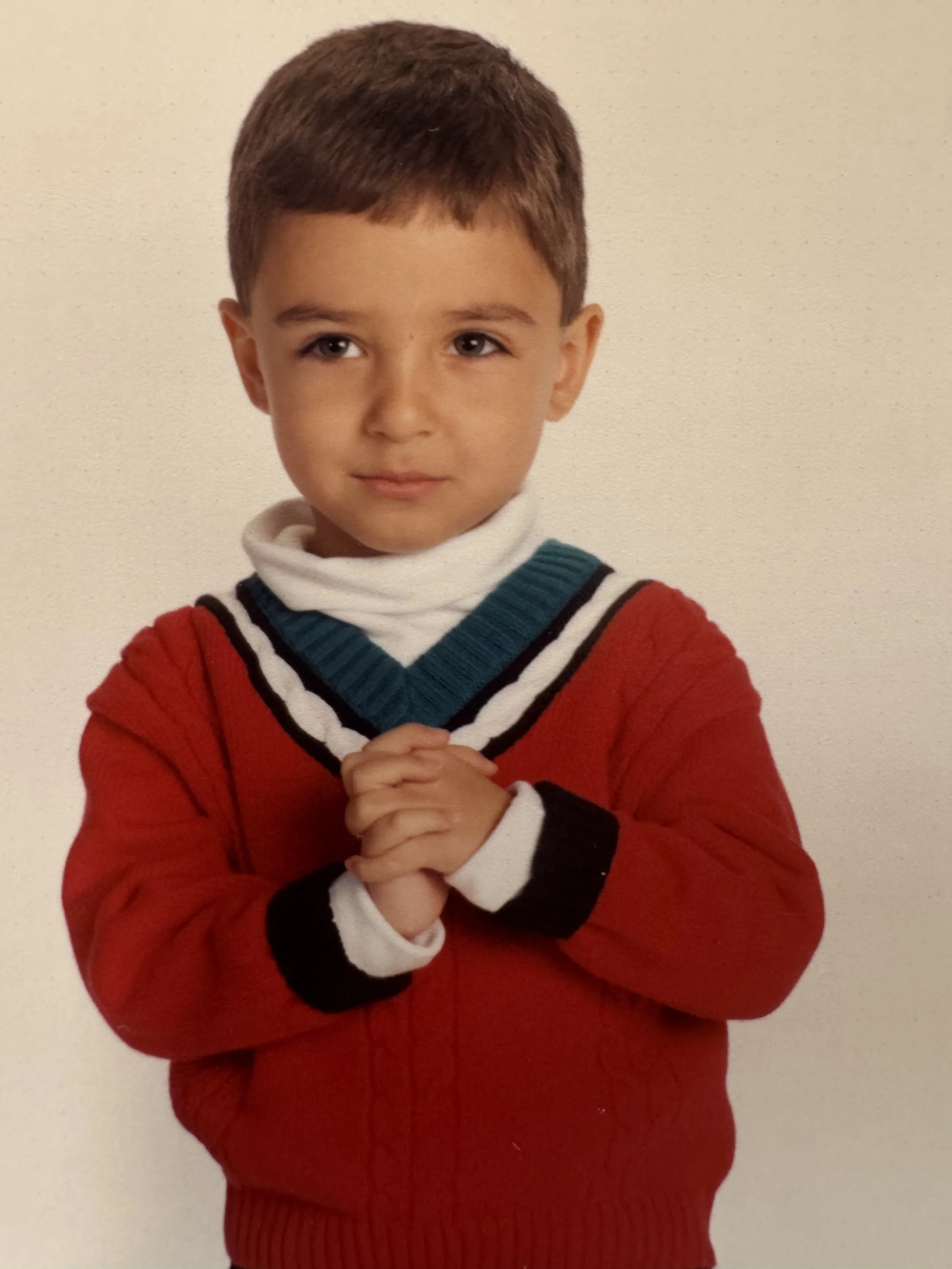
Samuel Rafael Barber is 0.00000001224994% of the population, a Chicano from South Texas, and author of the forthcoming story collection The Box in Which We Live, winner of the 2026 John Simmons Short Fiction Award from the University of Iowa Press. He holds a PhD in English and Literary Arts from the University of Denver and an MFA from the University of Arizona. His fiction has appeared in DIAGRAM, Passages North, Quarterly West, Shenandoah, Southwest Review, Tampa Review, and elsewhere. According to life expectancy tables, he will live another 48.6 years.