
first round game
(2) Cranberries, “Linger”
vs
(15) Cat Power, “Metal Heart”
Read the essays, listen to the songs, and vote. Winner is the song/essay with the most votes at the end of the game. If there is a tie, we will play a one-hour overtime (and repeat until we have a winner). Polls close @ 9am Arizona time on 3/10/26.
On Friendship, Crows, and Learning to Let It Linger: silas hansen on “linger”
I can’t be certain that it was truly the first time I heard the song, but it’s certainly the first time I processed the song as I heard it. I was almost 31, it was January 2018, and I was with some friends. I can’t remember where we were—someone’s house? The bar? Probably playing euchre, or talking, almost certainly drinking—but I remember the song coming on, and everyone getting really quiet.
“What song is this?” I asked.
“You’ve never heard ‘Linger’?!” someone asked.
We were still relatively new friends back then. In the years since, those friends are no longer surprised when I tell them I’ve never actually sat down to listen to Phish, or watch a David Lynch movie, or that I’d never even heard of Paul Thomas Anderson before seeing the trailer for One Battle After Another; hell, I didn’t even see Jaws for the first time until 2025, when they re-released it for the fiftieth anniversary.
They’re all 6-10 years older than me, all Gen Xers or Xennials to my very middle-Millennial existence (b. 1987), and they’re now used to introducing me to things, to treating me like a little brother.
“RIP,” someone said.
It was probably a friend I’ll call M., who would have recently turned 42. Let’s say it was.
At the time, we’d only known each other for a couple of years, but he has since become one of my closest friends, someone I love deeply and whose presence in my life feels invaluable. When he found out that I was trans—not from me—he pulled me aside and said, “I don’t care and we never have to talk about it again, but I wanted you to know I know.” We have talked about it since, but only if I bring it up first and he always raises his hand—legitimately raises his hand—before asking a follow-up question.
“She died yesterday,” he added, when he saw my confused face. “The lead singer.”
Everyone stayed quiet the rest of the song, myself included. I didn’t know anything about the band, or the lead singer, or the song for that matter. I didn’t process the lyrics—I never do, not until I’m able to read them as I hear them—but I was drawn in anyway, by the softness of the music, by the haunting way she sings. I did what I always do: I sent myself a text message that said “The Cranberries - Linger” and then promptly forgot about it for another six weeks.
*
Eventually, I did go back to the song—probably when M. or someone else from that night asked me about it—and then discovered other hits like “Zombie,” about the 1993 IRA bombing in Warrington, England and “Dreams,” which was featured in the hilarious Channel 4 sit-com Derry Girls. But it is always “Linger” that I return to—there’s something about the simplicity of the lyrics, the softness of those opening chords, the way even the percussion feels softer—probably brushes, according to my friend Nic.
Dolores O’Riordan, the lead singer with that haunting voice, was still a teenager when she wrote it, as part of her audition to sing for the band. They—called The Cranberries Saw Us at the time (a great pun, if I’m being honest, though kind of a terrible band name)—already had the music, so they gave O’Riordan a demo of just the instrumentals and asked her to work on it. She came back the next week with “Linger,” which became the band’s break-out hit, peaking at number 3 in Ireland and number 8 in the U.S.
The lyrics are quite simple, as is the song itself—just a few chords. “We were terrible when we started,” guitarist/songwriter Noel Hogan said in a 2017 interview with The Guardian. “I knew about five chords and four of them are probably in ‘Linger.’”
In that same interview, O’Riordan talked about the song’s origins:
It was inspired by a night I had at a club called Madonna’s. This guy asked me to dance and I thought he was lovely. Until then, I’d always thought that putting tongues in mouths was disgusting, but when he gave me my first proper kiss, I did indeed “have to let it linger.” I couldn’t wait to see him again. But at the next disco, he walked straight past me and asked my friend to dance. I was devastated. Everyone saw me being dumped, publicly, at the disco. Everything’s so dramatic when you’re 17, so I poured it into the song.
When I ask people about this song and why they love it, they tell me about their first loves, about the way the song brings them back to that moment. They talk about the nostalgia, the way she encapsulates what it feels like to get your heart broken when you’re young, when it feels like the end of the world, even though it only lasted for a few moments in the grand scheme of things. It’s a kind of feeling that only exists when you’re that age, before your prefrontal cortex is fully developed, when, as O’Riordan said, “everything is so dramatic.”
But that’s not what the song makes me think about. I didn’t ever have that. I didn’t date in high school, or college, or even graduate school, beyond a couple of first dates that never went anywhere. I was always an “old soul” (neurodivergent, I’d likely say now) and was in a hurry to grow up, to get out of my tiny rural hometown and be on my own. I had friends, but in retrospect wasn’t particularly close with any of them. I kept people at a distance—even my parents, my brother, even the people who were supposedly my closest friends.
I was 35 before I had my first serious relationship and even now, inching toward 40, I’ve only really dated two people and I ended both relationships because I felt overwhelming guilt about the fact that I didn’t feel as strongly about them as they clearly felt about me.
I just don’t know that I’m capable of feeling that kind of intensity for another person in a romantic or sexual context. I used to tell myself that I was probably capable, but it just hadn’t happened yet. Now, I think I’m probably too old: I didn’t develop those neural pathways when I was a teenager, when everyone else seemed to.
That’s what the song made me think about—not the loss of something I’d experienced, but the realization that I will likely never feel that, that it’s a feeling entirely out of my reach.
*
Before I came out as a trans man in my early twenties, started T, grew a beard, changed my name and pronouns, most of my closest friends were women. I had been a Women and Gender Studies major in undergrad, watched The L Word most weeks in my friends’ apartment, served as the maid of honor in my childhood friend’s wedding when I was 20. It felt natural to me, even as my body changed, to be in those spaces.
Even fourteen years into living full-time as a man, with my bald head and a beard that many cis men covet, I am still most comfortable with women. A few times, this has led to conflict: some friends have been convinced I had feelings for them, and I regularly feel a sense of grief—not because I regret my transition, but because I wish that it hadn’t changed those relationships—when I’m (quite reasonably) left out of a “girls’ night.” When they inevitably start dating someone, I end up a third wheel.
But I also began to crave friendship with cis, straight men. I’d been friends with men before, of course, but it felt different now that I was one of them. Thankfully, I’ve developed those big brother/little brother relationships with enough of my friends that I’ve learned. One of the first lessons was that straight men talk at bars, while playing golf, while watching sports.
“It’s so we don’t have to make eye contact if it gets too emotional,” M. told me once.
We were at one of the downtown bars late at night, probably around 1 am. I don’t remember what we’d talked about and I doubt that I would share it with you even if I did, but I remember that it was about grief and that we both teared up and I remember feeling so shocked, so honored, that he let me see that.
I was in my mid-thirties by then, and I had started therapy, and I was just starting to let my guard down a little bit, to let friends see the things I tried to keep hidden. I had chosen him in particular because it felt safe. I drank a lot more back then, particularly with him, and so I had, over the years, let him see parts of my inner life—typically after we’d both had far too much whiskey—that I didn’t share with anyone else and he responded without judgment, without it changing anything between us. I could cry in front of him—something I had spent most of my life trying to learn not to do, and failing—and he didn’t make me feel ashamed. He modeled for me that it’s possible to be confident in your masculinity without being a dick to everyone around you, that the coolest and most manly thing you can do is be kind.
*
I can’t pinpoint exactly when things got weird between us, but they did.
I sometimes end up developing intense feelings for friends—it’s not a romantic or sexual desire, but I do think it’s probably similar. When it happens, I feel this constant need to be around the other person, to know them and have them know me. It’s like my whole world revolves around them. I had, to this point, only ever felt this way with women. When that had happened in the past, they would almost always believe that I had feelings I didn’t have and I’d bolt the second things got weird. I’d throw myself into something else—different friendships, work—until those feelings started to ebb. Usually, those friendships didn’t last.
With M., though, bolting didn’t seem possible, even as it was increasingly clear that he had noticed. I couldn’t just cut him out of my life. I didn’t know how. It didn’t seem as simple as it used to. The thought of losing him the way I’d lost the others made it all worse.
I was having near-daily panic attacks (some about him and the situation between us, but mostly about everything else—being alone, the extended days of the pandemic, my job) and constantly reaching out for reassurance, for company. I took every single little thing personally: an unanswered text or finding out that he and another mutual friend had hung out without inviting me felt like the end of the world.
Once, both of us drunk after hours of drinking whiskey, a few months into this, he asked me if I had feelings for him. “It’s okay if you do,” he said. He told me that he didn’t feel the same way, but we could figure it out. We could still be friends. I almost believed him.
I didn’t, I don’t, at least not in the way he meant, but the question still terrified me. All I could think about was all of the other times I’d been asked that question—far less understanding, far more accusatory—and it triggered something in my brain that, in the months that followed, made the strangeness between us even worse. I don’t remember how I responded—probably with an adamant “No,” though I’m sure he still had suspicions. I don’t blame him. I probably would have thought the same. We haven’t talked about it since.
The truth is that it’s complicated. Did I want to date him, sleep with him, marry him? No. While I am, occasionally, attracted to men, M.’s not my type. But did I want to spend all of my time with him? Did I follow him around like a lost puppy, constantly needing him to tell me he wasn’t mad at me, that we were fine, that I mattered to him? Did I unconsciously stake my entire self-worth on whether or not he wanted to spend time with me?
I am ashamed to admit that the answers are yes, yes, yes.
It’s been three years now since we had that conversation. I’ve kept going to therapy, I found the right meds and got my brain chemistry under control, I’ve forged new friendships with people who are able to give me the kind of reassurance I need without it feeling like a burden. M. is still a part of my life, but our friendship is different now, less comfortable than it once was. It didn’t tank our friendship like I feared it might, but it has certainly changed it.
Back in August, when I first chose “Linger” as the subject of this essay, I kept thinking of M. when I sat down to write about it, no matter how much I tried to not make it about him. It made sense, though: I was grieving the way it used to be between us. When I talked to my therapist, he asked me what I wanted from M., what I needed for closure. I said I didn’t want closure—I wanted things to go back to normal, to have fun with him again without it always feeling so heavy, so hard, so complicated.
*
A couple of months ago, just before Christmas, M. invited me to grab a drink with him. Although we’d been to several of the same social gatherings, had played golf in a group a couple of times over the summer, we hadn’t spent time together one-on-one in months.
At the bar that night, M. told me about his new morning routine: He walked around downtown while smoking a cigarette and visited a murder of crows he’d discovered roosting in a tree on the community college’s downtown campus, a block from the bar. He had started leaving them gifts, he said: a handful of peanuts, some aluminum foil crumpled into balls.
“You’re living my dream,” I said. “I’ve always wanted to befriend a crow.”
“Done,” he said.
M. caught the bartender’s attention and asked for some of the foil they kept so people could wrap up their leftover pizza. We sat there and made handfuls of shiny foil balls as offerings while we finished our drinks.
We went out the back door, into the bitter cold Indiana air, and he pointed across the street, where what seemed like a hundred crows all roosted in a tree. We stood there for a few moments, just watching, in silence.
Finally, I asked, “Do they ever interact with you?” I imagined him like the pigeon lady in Mary Poppins, feeding them by hand, maybe even with one on his shoulder. He’s the kind of guy that animals and children instinctively trust, so it seemed possible.
He half-laughed, half-coughed, taking a drag off his cigarette. “No. They usually just watch me.” We stood in silence for a little longer and then he said, suddenly, his voice softer, “You seem like you’re doing a lot better these days.”
“I am,” I said. “And I’m really sorry about—”
He shook his head, stopping me from finishing. “You just needed something I couldn’t give you.”
I wonder, now, if the reason I kept thinking about M. while writing about this sad song isn’t because of grief and isn’t because of any feelings I may or may not have had, but because of what I’ve learned from him: that sometimes you can’t avoid the discomfort. Sometimes you do just have to sit with it. Sometimes the only way to get through it is to address it head-on, to keep doing the hard thing until it’s not hard anymore, to not just bolt. Sometimes you do, in fact, have to let it linger.
We talked a little longer, about something inconsequential—football or a movie or some mutual friends—and then we walked across the street, closer to the birds. They caw-cawed loudly when they noticed us but didn’t move from their tree. We stopped on the sidewalk nearest them, where the lights from the building illuminated the concrete slabs.
“Here,” M. said, dropping his handful of aluminum foil balls into the light, motioning for me to do the same. “That way they can see them.”
We walked back to the bar’s parking lot, watching from a distance. The crows didn’t come down from the tree, not while we were out there, but I imagined them later that night, after downtown got quiet and they felt safe, coming down from the tree to investigate, to see what gifts these friends had left.
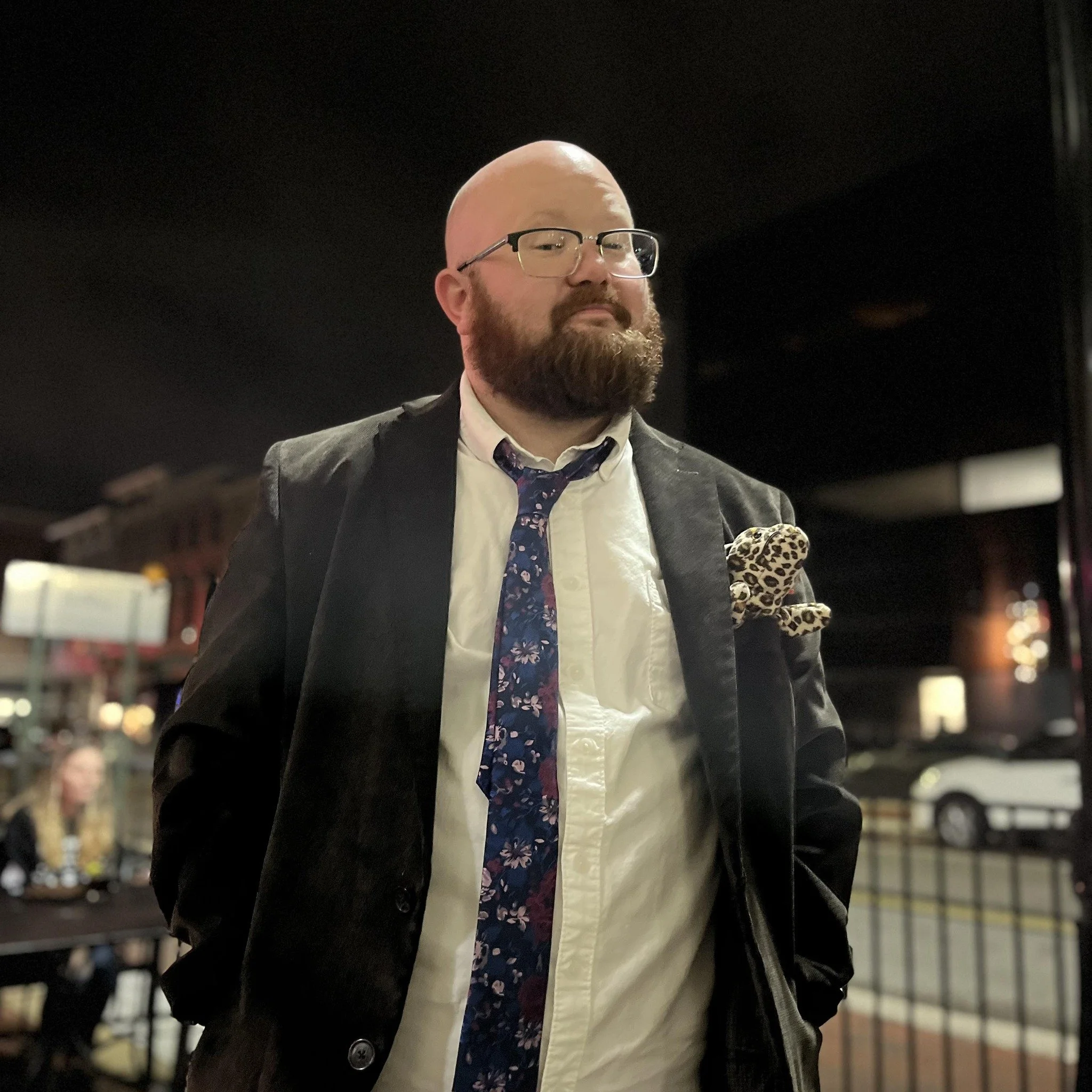
Silas Hansen’s essays have appeared in The Normal School, Colorado Review, Hobart, Slate, and elsewhere. A graduate of both SUNY College at Brockport and Ohio State, he (and his cats) now lives in Muncie, Indiana, where he teaches creative writing at Ball State University.
Mo Daviau on cat power’s “metal heart”
In the summer of 1997, I spotted Ben Stiller sitting on a bench in Northampton, Massachusetts, right outside Thorne’s Marketplace on Main Street. He wore dark sunglasses but looked entirely like himself. He was hiding out, and I knew that, because of the sunglasses. I thought it was interesting that he’d chosen our little college town for hiding. Since the college was Smith, a lefty women’s college where we didn’t care about men, or Hollywood, or people sitting on benches minding their own business, he was probably safe from being approached. He could enjoy our hip, cute town in peace. He could hide right out in the open.
Northampton in the ‘90s was a great place to hide. I did it myself. That was the summer before my senior year, and while most of my friends were off doing internships in New York and Boston, or otherwise preparing for their post-graduate careers, I stayed in town and worked at the Smith College Archives, a lovely experience that was responsible for the eight-year long mistake that was my career in libraries and archives. What I really wanted at the time was to do an internship at a publishing house in New York, but I had a stepfather, and he loved to make my mother tell me no. He’d convinced my mother that I was a spoiled brat, and asking for money, even for something that would have benefitted me and my career, was proof of this. I didn’t even ask, because I knew what the answer would be.
Because I didn’t have much of a home to return to, I stayed in Northampton for most of my college summers working whatever job I could get. That summer of Ben Stiller, I rented a room in an off-campus apartment with two UMass dudes and worked my archives job, where I earned $6 an hour processing feminist archival documents and occasionally directing a patron on how to use our not-yet-digitized cataloging system. At night, I went to rock shows at our small town’s clubs and basements. Or I watched TV with the UMass dudes.
Where would I be right now if I’d done that publishing internship? An editor and power broker at some publisher in New York? Probably not. I mostly wonder what my life would be like if my mother hadn’t believed bad things about me. If wanting things had been allowed, even encouraged. That message from home turned me into a godawful perfectionist. I figured I had to go miles out of my way to prove that I was an honest, non-brat person by never making a single mistake, by being perfect in the eyes of, I don’t even know, God? Back in the summer of 1997, I wanted to be like my classmates, who would all have jobs lined up after graduation, or grad school acceptances, or some sense of purpose and chosen-ness that I lacked. They made life look easy. But they had families who guided them into their futures, even if they came from families who couldn’t afford to float them rent money for a room in Brooklyn for the summer. They had homes to go back to if things didn’t work out. Their mistakes weren’t proof that they were flawed and therefore deserved less. They were not called brats for seeking their own happiness.
Maybe I saw something of myself in Ben Stiller sitting in sunglasses on that bench on Main Street, hoping to be ignored in the most reverent way possible. A famous man seeking peace in the same town where I had found mine. It made sense to me.
There was a rumor going around town that summer that Chan Marshall had seen Ben Stiller in the crowd at a Cat Power show and was so mad that he was there that she stomped off stage. As I wrote this essay, I searched the internet for evidence of this happening and came up with nothing, not even evidence that she had done a show in Northampton in 1997. If it happened, I wasn’t there. It probably didn’t. For some reason, though, for all these years, I’ve had this vision in my head of Chan on stage at the Iron Horse spotting Ben Stiller down below, ripping her guitar strap off her shoulder, and yelling some sort of epithet at the star of Reality Bites, leaving a full crowd standing there as the lights came back on, upset about the eight bucks they spent on the ticket.
Chan Marshall, aka Cat Power, was not only known in the late 1990s for her excellent albums, but for ending her shows early, usually visibly upset about something. Something we couldn’t see but what, to her, forced the early ending of one of her shows. These erratic performances fed into the “women be crazy” misogynistic bullshit of the ‘90s and ‘00s. In 1998, the year Moon Pix came out, my friends and I watched the Monica Lewinsky scandal unfold on the Baldwin House living room television. For all our readings of Gloria Steinem and bell hooks and the other great feminists, we Smithies for the most part did not align ourselves with Monica. We thought that whole thing was hilarious. We’d never suck presidential cock. It was entertainment fodder to us. We couldn’t, and wouldn’t, relate. We were better than that. We may have smoked and drinked and fucked, but we could only fuck someone worthy of us, only drink the good shit, and only smoke among company so interesting that it would make for a great story later.
Since Smith College touted itself as a factory churning out smart, successful women, and most of us had bought into the idea that we were smart and successful, Chan Marshall’s onstage antics turned me off. I liked her music. The melancholy of it. The slightly off-kilter singing that I also loved in acts like Neutral Milk Hotel connected with me. I liked the sound of her pain because I was in pain, too. I played her music regularly on the airwaves of Smith’s radio station. But I also wouldn’t have wasted money on a ticket to a show she was potentially going to end after three songs.
How did she get away with that, I wondered? Why? Why wasn’t she, like me, punished for showing her real, disagreeable emotions?
Not many women succeed purely on talent. They have to be liked. They have to be palatable. I would never look ungrateful. I would never lose my shit. I would forever be a picture of composure. I was terrified of what would come to me if I did lose my shit—rejection, obviously, but something else, too. Confirmation that I wasn’t worth a thing. Even when I entered my thirties, and then my forties, and wrote emotional things about abusive relationships and gut-heavy, sad music, I never expected pity and kept those emotions contained in the space of the page. I never made my feelings anyone else’s problem. Especially not in public. I would only be grateful to the people who did me the favor of reading my work. I never put my own needs above anyone else’s. And in my relentless pursuit of perfection, I found the idea of bailing on your own show hard to forgive, even if the songs were beautiful bangers.
How did she keep her fans after stomping away, I used to wonder. I was sincerely confused. I may have been a career mediocrity, but I never inconvenienced anyone or made a scene, and that meant something to me.
Turns out, you can be loved like that. It would be a few decades before I’d experience being loved in spite of being messy and choosing myself. I often wonder about people who got the memo before me. Who told them? How did they learn that lesson? Who loved them anyway?
At forty-five, I met my second husband, ushering in an unexpected era of happiness and domestic bliss after years of not happiness and domestic un-bliss. Therapy-type people say you learn the most about yourself in relationships, and they were right. He was the final showdown, reaching into the dark spaces therapy couldn’t touch.
To my husband, patiently bearing witness to a long overdue personal reckoning, I now had to answer this question: why are you so goddamn hard on yourself?
Enter Chan Marshall singing How selfish of you to believe in the meaning of all the bad dreaming.
My husband is incredibly loving and understanding. He has seen me at my lowest lows, my highest highs, my messiest messes, and he stood by me as I wrote my novel, Epic and Lovely, a semi-autobiographical story that’s ultimately about surviving (or not) abusive relationships. And in these last few years that he’s been in my life, I’ve grieved all the years I spent trying to survive with my hardened heart. I’ve also had to forgive myself. I really and truly didn’t know I could be any other way.
Until recently, I was the only person protecting myself. My heart was metal, baby, because I couldn’t afford to make it soft.
Women, as we age, get pretty good at healing ourselves. There’s a whole industry around it, of course, but you don’t need to buy a candle to heal. You can know that you will be loved in spite of your big, bad feelings. You can let them rip. You’ll be loved, admired, accepted, embraced, and you won’t have to hide or be perfect. You can cancel all the shows. You don’t have to perform at all. You can want things. You can choose yourself.
How selfish of to me to wait for one person to un-metal my heart. How unfair that that person couldn’t be me.
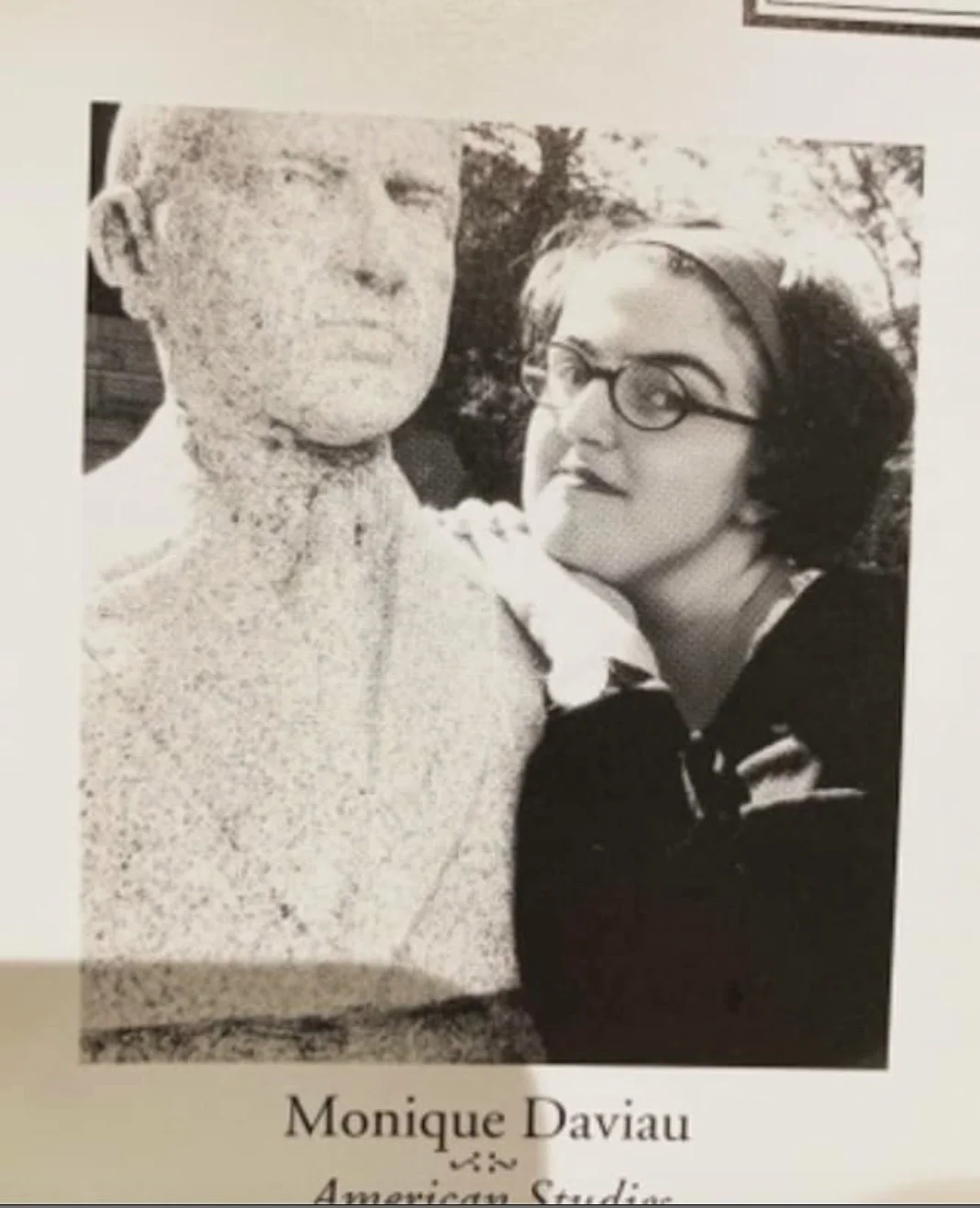
Mo Daviau recently turned 50 and is feeling a certain way about the passage of time. Her second novel, Epic and Lovely, was published last September by West Virginia University Press. She lives in Portland, Oregon, with her husband and works as a bookseller. She writes about bookstore life at bravebookstore.substack.com.