
first round game
(4) Paula Cole, “Where Have All the Cowboys Gone”
broke
(13) Magnetic Fields, “100,000 Fireflies”
114-72
and will play on in the 2nd round
Read the essays, listen to the songs, and vote. Winner is the song/essay with the most votes at the end of the game. If there is a tie, we will play a one-hour overtime (and repeat until we have a winner). Polls close @ 9am Arizona time on 3/4/26.
Die, Heteronormativity, Die! Erin Dorney on Paula Cole’s “Where Have All The Cowboys Gone”
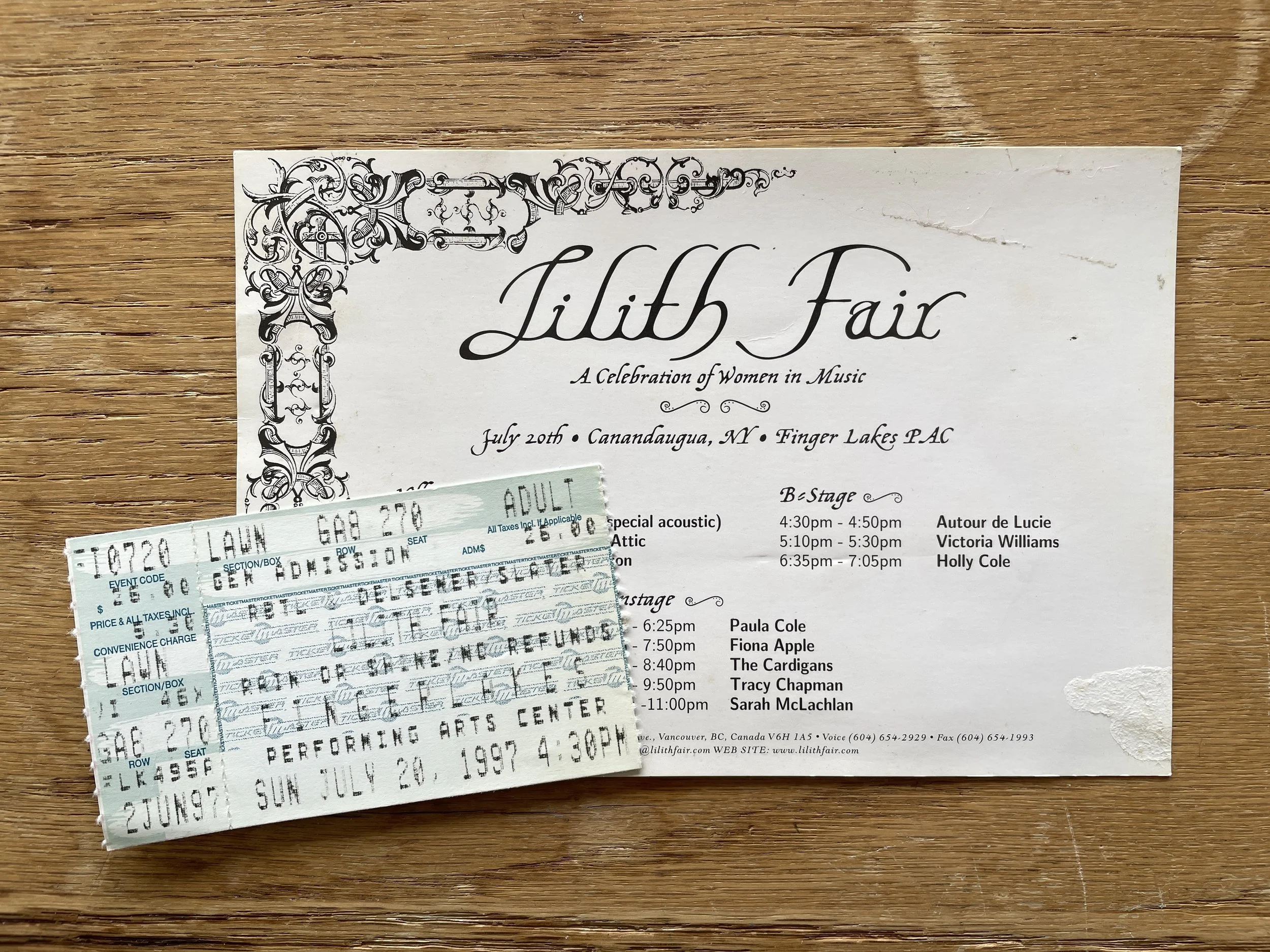
The year I turned 13, my mom bought me my first concert ticket. $52 gave us access to the lawn of the Finger Lakes Performing Arts Center for Lilith Fair, a celebration of women in music. Featured on the Mainstage in 1997: Sarah McLachlan, Tracy Chapman, The Cardigans, Fiona Apple, Paula Cole. One of my most vivid memories from that night is how scandalized I felt seeing a crowd of women toss and poke inflated condoms around like balloons. Looking back, my embarrassment was a sign.
A year earlier, Paula Dorothy Cole, an American singer-songwriter from Rockport, Massachusetts, had released her second studio album. The Fire was entirely self-produced, recorded over a two-week period, and featured a number of standout songs that helped Cole clinch the Grammy for Best New Artist in 1998:
The song "Feelin' Love" was featured on the soundtrack to the 1998 film City of Angels (a hell of a soundtrack that also contains “Iris” by the Goo Goo Dolls, being written about by Moira McAvoy for this competition, as well as “Uninvited” by Alanis Morrissette, being covered by Lela Scott MacNeil).
Cole’s “I Don't Want to Wait" peaked at number 11 on the Billboard Hot 100 and became the theme song for WB teen drama series Dawson's Creek.
And the triple-Grammy nominated "Where Have All the Cowboys Gone?" peaked at number eight on the Billboard Hot 100 and number four on the Adult Top 40.
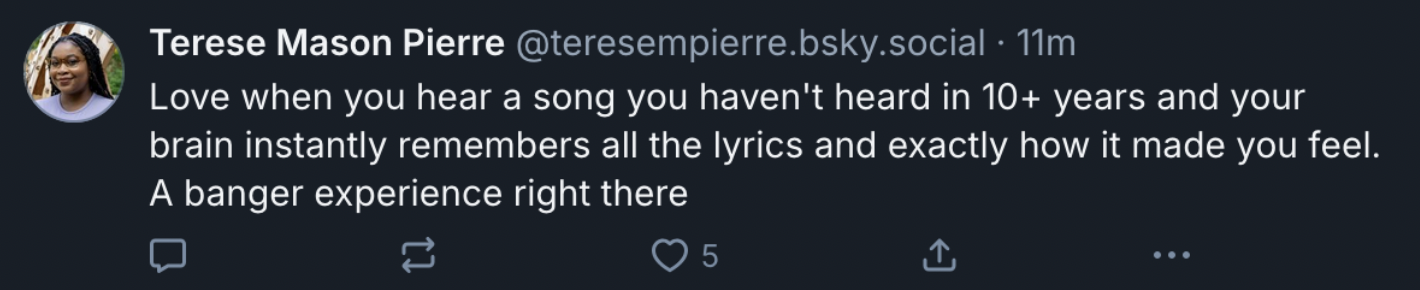
By now, this is where you’re probably at:
*
Over the course of 4 minutes and 23 seconds, Cole’s “Where Have All the Cowboys Gone?” brings listeners in on a little secret: The speaker is not well. She is not thriving. She has, in fact, been let down.
Together, we move through various relationship stages—infatuation, disillusionment, and finally, despair (via literal wailing). Each verse leans heavily on stereotypical gender roles, with the speaker doing the laundry, raising the children, and washing the dishes, while he pays all the bills and goes out to have a beer. Elsewhere she fixes him something to eat while he relaxes and watches TV. One night she wears a new dress but he don’t even notice meeeeeeeeeee.
And each chorus is a lament, as the narrator questions the loss of her idyllic dream:
Where is my John Wayne?
Where is my prairie song?
Where is my happy ending?
Where have all the cowboys gone?
Where is my Marlboro Man?
Where is his shiny gun?
Where is my lonely ranger?
Where have all the cowboys gone?
On humble offer, my personal list of favorite mondegreens:
Where is my prairie dog?
Where is my hairy son?
Where is my cherry bong?
Where is my bury wrong?
Where is my fairy thong?
Where is my merry gun?
Where is my airy ton?
Where is my sherry spun?
Where is my very pun?
Where is my dairy nun?
Where is my wary one?
Where is my scary bun?
Misheard lyrics aside, the song is about having been sold an image of what your life with a man will be like, and then coming to the realization that it’s actually a pile of crap. Hello heteronormativity, my old friend.
*
Heteronormativity is baked into American culture. Our standard mode of operation is the society-wide assumption that places heterosexuality as the norm: the gender binary and all of the stereotypes that go with it (marriage, sex, clothing, household chores, childrearing, emotional labor—the list goes on and on).
If you do not operate within the bounds of heteronormativity, you are othered—suspicious, a threat. Simultaneously, if you appear hetero and attempt to use agency to situate your identity outside of that norm in an empowered way—well, prove it. As a bisexual cis woman married to a cis man, ask me how I know. If you’ve read this far, if you’ve got some kind of interest in breaking out of the hetero-norm, you’ve likely heard this invalidating bullshit: It’s just a phase. You’re doing it for attention. You just want to have sex all the time. How many xyz have you slept with? Pick a side.
As described by Lauren Berlant and Michael Warner in their essay Sex in Public:
Heteronormativity is more than ideology, or prejudice, or phobia against gays and lesbians; it is produced in almost every aspect of the forms and arrangements of social life: nationality, the state, and the law; commerce; medicine; and education; as well as in the conventions and affects of narrativity, romance, and other protected spaces of culture.
Baked. In.
*
Things that interest me, heteronormatively, about Paula Cole’s “Where Have All The Cowboys Gone”:
Pay attention to what lyrics repeat in the song, and ask yourself why. Cole could have come up with other things for the man to do (the gender stereotype platter is full!) but instead she chooses to say “if you pay all the bills” twice. This song is about economics, and so is heteronormativity. In our patriarchal society, it behooves men to uphold the norms so that they can continue to consolidate power—financially, socially, generationally, institutionally.
We learn so much about him, and nothing about her. By the end of the song, listeners know what kind of car he drives (‘56 Chevy); what beverages he likes to drink (lemonade, beer); where he works (Tennessee); what his job is (farmer); and at least one of his hobbies (going to the bar). That’s like, a whole dating profile. On the flip side, the narrator only exists in contrast to him—cooking (for him), cleaning (for him), childrearing (for him). Erasure! This devaluation of women is another hallmark of heteronormativity, creating an expectation of unpaid, invisible labor, reinforcing the hetero-hierarchy, and limiting women’s autonomy.
I love love love how Cole’s linguistic affect reflects the dismantling of her narrator’s illusion. The first time she sings “if you pay all the bills” (:40), her voice is as sweet as can be, fluttering with a tiny bit of shimmery tremolo. Very demure, very mindful. The second time (1:25), Cole’s voice is still calm, but slightly less. At 1:55, her voice is starting to sound whiney, complaining that he hasn’t even noticed her new dress, with a little bit of a stutter (“but you don’t, but you don’t even notice me”). And by the time she gets to “while you go have a beer” at 1:36, we can hear an aggressive, visceral snarl in her voice. These subtle changes in inflection are a nod to gendered communication stereotypes. Women’s perceived “bitchiness,” expressing their (justified) rage, the expectation to communicate indirectly with honeyed words, to speak only when spoken to—all tools of heteronormativity.
There is no conclusion to this song. Alternatively, the song’s conclusion consists of seven rounds of yippee-yi yippee-ya’s followed by 33 seconds of a woman’s distorted wailing. When I was attempting a 100-listen log of this song (FAIL), it came on at high volume when I was in the shower. I’m telling you—there’s nothing freakier than the sounds happening at the end of this song. Turn up the volume, press your earbuds in hard, and tell me I’m wrong. It’s unsettling.
Is this what heteronormativity feels like—a never-ending, wavering wail? The fledgling affect theorist in me screams yes. The lived experience of myself and my many raised-as-female friends screams yes. It brings to mind the wailing women—expressing deep grief, lamenting profound loss, trained in the ritual of public witness. In the last full minute of her song, Cole is interceding—not in a Biblical sense, but she is issuing a warning: People, do not fall for this shit.
In the song’s radio edit, they cut Cole’s wailing out entirely.
*
“Where Have All The Cowboys Gone” wasn’t on the provided list of songs for March Sadness. My number came up late in the lottery and I couldn’t get over the fact that “Iris” was already taken. So, I proposed three songs: Cole’s “Cowboys” (planning some kind of queer take); Pearl Jam’s “Better Man” (planning to write about a bad ex who loved them); and Meat Loaf’s “I’d Do Anything for Love (But I Won’t Do That)” (planning to write about pissing). Upon reflection, all three would have addressed heteronormativity—just one example of its profound impact on my life.
But, is this song sad? The question came up in a car full of writers, as we were driving towards Buffalo, NY. “Well if it’s not sad, what is it?” one of them asked. We couldn’t think of a single alternative.
“Cowboys” is undoubtedly Sad. It’s a song about expectations and promises, and if you were raised as a woman in the 90s and early aughts, like me, you were fed those heteronormative promises and expectations hook, line, and sinker. Straightness was not only assumed as the baseline but enforced, if only through showing us no options for another way.
In 1997, all of my teachers were women: Tracy, Martha, Debbie, Nancy, Maria, Carol, Gail, Lucinda. From my 7th grade report card: Erin is doing average work (junior high band & math); Erin shows excellent effort (life science & chorus); Your daughter uses class time effectively (history).
In Wellness Skills I was doing commendable work, was working conscientiously, was a pleasure to have in class. But in Wellness Skills, a Frankenstein-ian conglomeration of Home Ec, Sex Ed, and Adulting 101, we weren’t learning shit, beyond being molded into perfect little hetero women. We learned to bake a cake. We learned to sew a button back onto a man’s shirt. The only gay thing I remember learning about was AIDS, under the guise of STD week. Scare tactics. Othered. Erasure. Flash forward to college, where an actual assignment in a class called Marriage and Sexuality was to create a list of qualities I sought in my future husband. Help, I’ve been heteronormatized!
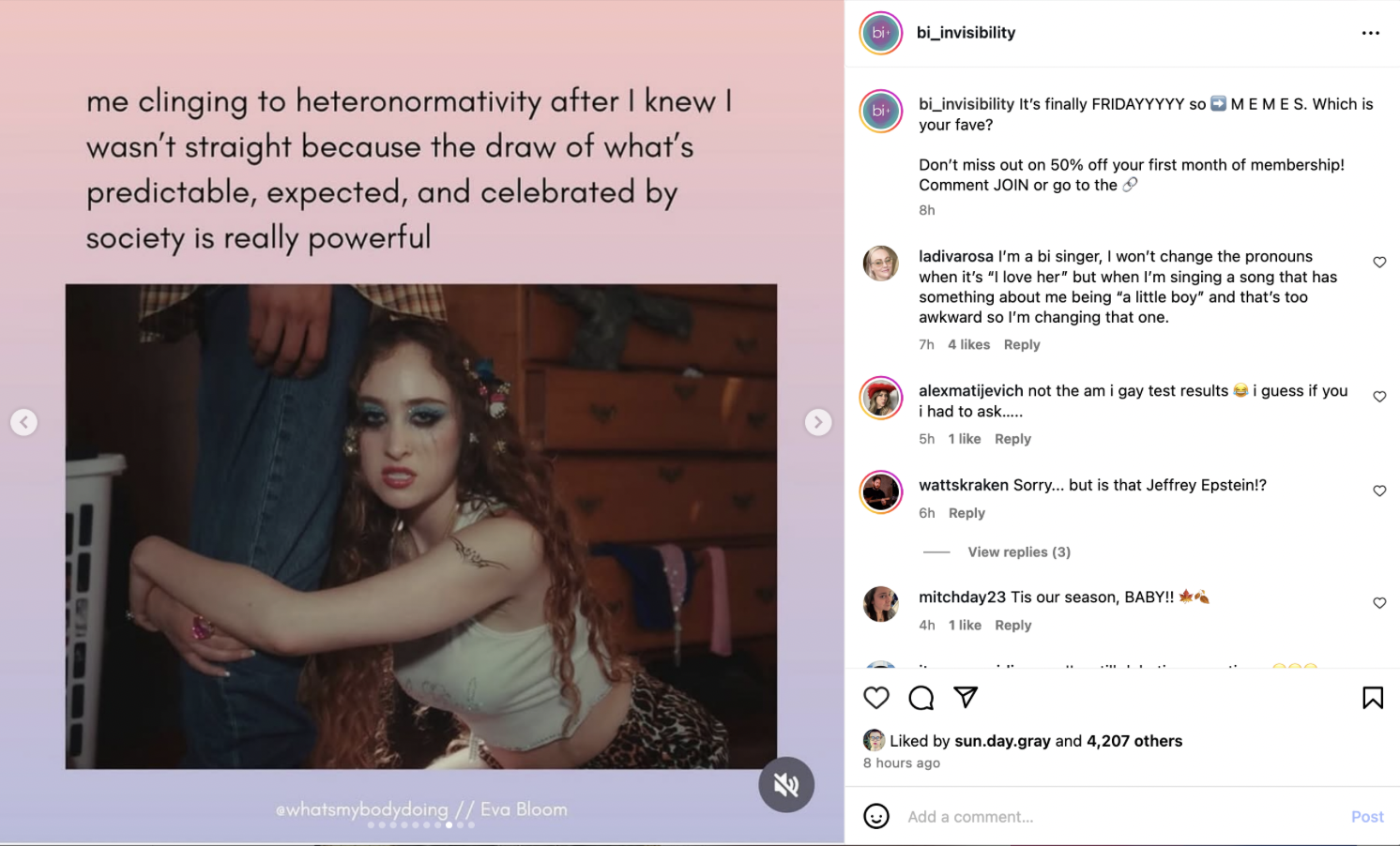
Like writer R.O. Kwon, who came out as bisexual in 2018, until I left my hometown, I didn’t know anyone who was openly queer. Kwon’s viral tweet, her coming out while being married to a man, opened the door for me. It’s when I finally started to realize that my life can be expansive, and does not have to follow the script society has pushed me towards. That I can be and rather than or.
Here’s sad for you: When Cole’s “Cowboys” was released in the 90s, it was picked up by conservative radio host Rush Limbaugh. He played it frequently on his show, mistaking it as a song about a woman literally yearning for a macho, cowboy hero to come rescue her. A hetero ode. It must be so galling for Cole to think about—did her biggest hit become her biggest hit because our heteronormative society reflected back what it wanted to see, while missing the point entirely?
Those of us finally emerging in midlife are not alone. In 2022, 26 years after the release of “Cowboys,” Paula Cole came out as bisexual herself. She credited the move to her daughter and her daughter’s generation—their fluidity and acceptance: “I’ve been very shy about it. I’m an introvert, and also, it’s a nebulous place to be for us Gen-X’ers. I’m 54 and there was just no place [to be open about it].” Cole remembers seeing people yell at bisexual women to “make up your mind” at a Pride Parade in the early ‘90s: “I felt like, ‘O.K. I don’t know how to be, I don’t know what I am’…and years passed.”
That nebulous place? Heteronormativity. At the heart of it, “Cowboys” is a sorrowful cautionary tale, written by a queer elder. I think Paula Cole (and her narrator) would support this message: Kill the heteronormie in your head.
Thank you to Tyler Barton, Kristen Felicetti, Neil Richard Grayson, and Erica Stone for helping me get myself ready in the ‘56 Chevy of the mind.
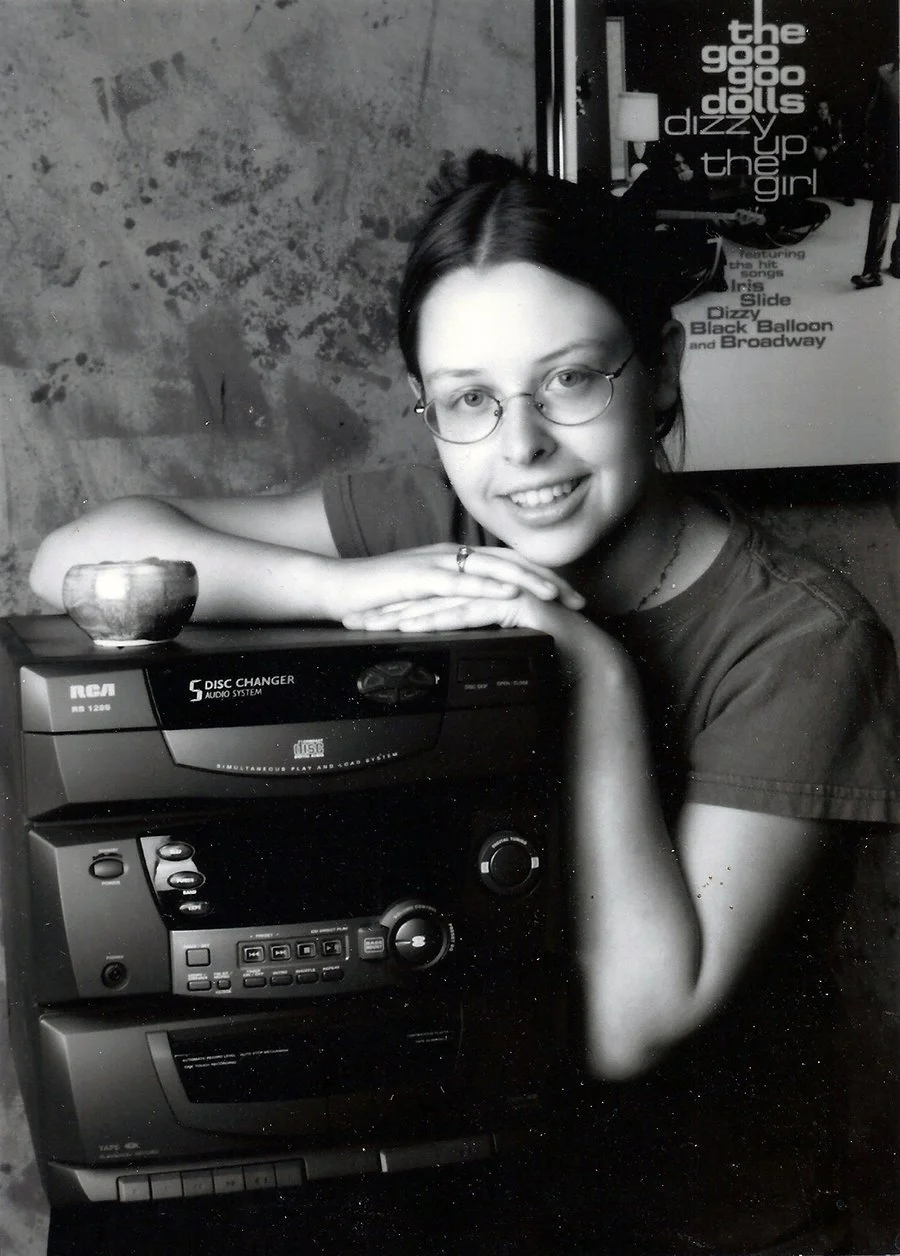
Erin Dorney is a poet and artist based in Western New York. She is the author of Yes I Am Human I Know You Were Wondering (Autofocus) and I Am Not Famous Anymore: Poems After Shia LaBeouf (Mason Jar Press). She is the managing editor at Sarabande Books and covers zines for Zona Motel.
You Won’t Be Happy Anyway: Ashley Naftule On “100,000 Fireflies”
1. soup
The first thing we see is a bowl of soup and a glass of dark liquid that could be wine. The frame containing them trembles, shifting slightly at an angle like the head of a cat tracking a bird hopping on a window sill. Then we see a man’s face—his painted lips a black en dash on an empty page. Next we see a little girl dressed in white, lying still in a coffin. We cut back to the man, his lips still in neutral, neither committed to the acceleration of a smile or the hard stop of a downward turn. And then we see a woman in white, her lips as black as his, reclining on a divan—she looks like she could be the ghost of a Patrick Nagel model, liberated from whatever 1980’s salon wall hosted her painting to haunt this spectral boudoir. Once more, we see the man. There’s nothing to read on his face; the page is still empty.
The man’s name was Ivan Mosjoukine, a Russian actor and experiment subject for the Soviet filmmaker Lev Kuleshov. The less than a minute long sequence Kuleshov shot starring Mosjoukine’s blank expression is one of the foundational works of film theory, displaying how through film editing and audience interpolations one can create emotional connections and resonances between unrelated images.
Mosjoukine is not in the same room as the soup, the dead girl, or the woman, but because the camera keeps cutting back to him we presume a relationship between him and the images. Hunger for the soup, perhaps. Sorrow for the dead girl. Attraction for the woman. This is the Kuleshov Effect in action: even though Mousjoukine’s face never changes, we project meaning in his “reactions” because of the contrasting images. We see sadness in dead eyes, a flirty grin in a flat lining mouth. Nature abhors a vacuum and so do we.
2. The Man
“I have a mandolin, I play it all night long,” Susan Anway sings on the opening of “100,000 Fireflies” by the Magnetic Fields. “It makes me want to kill myself.” There is no mandolin on the song nor does the instrument appear at all on the rest of 1991’s Distant Plastic Trees—a record recorded almost entirely with samplers, synthesizers, drum machines, and one acoustic guitar. Usually, when an instrument gets accused of something in a song—no, you see, it’s the guitar that’s gently weeping, the piano that’s been drinking, not me—we hear the slandered party plinking and chiming on the track. The mandolin catches strays in silence.
One has to wonder: do all mandolin players desire death? Did Peter Buck, back in 1991, playing the mandolin in the music video for “Losing My Religion” with the solemnity of a bard strumming before a mad king, dream about swan-diving into the nearest thresher? Is the mandolin a drag? A bad hang? Is its rustic dignity too much to bear?
“100,00 Fireflies” is the lead single off the Magnetic Fields’ first album, one of two records (the other being 1992’s The Wayward Bus) in the Magnetic Fields’ discography where maestro Stephin Merritt is not the lead vocalist. It’s his words Anway is singing, which she does with a tossed-off, low-key delivery. Is the mandolin line a joke? A theatrical woe-is-me conceit—the kind of self-aware, “here I go putting on my hair shirt again” writing that Merritt does as well as Morrissey (but thankfully without the latter’s lamentable politics). Or is there real depression, disgust, sadness in the line? Anway’s vocals lean neither toward irony or sincerity; no winks or tears can be gleamed in the space between her notes.
This opacity is a deliberate stylistic choice on both Merritt and Anway’s part. The songwriter sent Anway demo tracks with strict instructions not to emote. Anway, who passed away in 2021, was an enigmatic figure even to her onetime bandmate. “I would happily have known Susan better—she was fun,” Merritt said in an interview. “But she was quite firm about not wanting to be known..” Part of what makes “100,000 Fireflies” such a remarkable song is how much it embodies this contradiction: the desire to connect sung by a woman who doesn’t want to be known, whose lyrics about love and loneliness hit you like a speeding truck while coming from a voice that sounds like it could’ve just as well be reciting a grocery list.
3. Coffin
It feels like you’re walking in space. The dark room is paneled with mirrors; strings of LED lights hang suspended throughout, flickering on and off in a slow, hypnotic cadence. In all that reflected darkness, any sense of spatial awareness is gone. The walls could be a finger’s brush away or nowhere within reach. It’s just you and these hundreds of fireflies encased in glass, humming dimly in the dark until the next few patrons walk in and you start searching for the edges of the room to find your way out.
Every time I go to the Phoenix Art Museum, I make sure to spend some time in the dark room that houses You Who Are Getting Obliterated in the Dancing Swarm of Fireflies, an installation by Yayoi Kusama that’s been housed at PAM since 2006. It’s a popular attraction, which is why there’s usually an attendant nearby monitoring the installation to make sure a traffic jam doesn’t form inside its mirrored walls. I also suspect they’re there to make sure nobody’s tripping out inside or having an interstellar grope session. A gentleman never kisses and tells, etc etc, but I will say that if you ever have the chance to kiss someone you love in the Fireflies Infinity Mirror Room you should take it and keep doing it until someone hits you with the “move along” flashlight beam.
The title of the installation intrigues me like that line about the mandolin. How can one be obliterated by fireflies? Isn’t the whole point of them their gentle radiance? Standing in the mirror room when it’s pitch black and seeing the fireflies flicker to life is like watching a harmless Big Bang spark to life. Instead of a great cosmic mushroom cloud, a 100,000 pinpricks of warm light lancing the dark.
For Kusama, obliteration is about the loss of a boundary between the self and the other. In the mirror room, there is no separation between myself and the darkness until the fireflies clarify things. The room lights up with colorful dots; Kusama loved putting dots on people, objects, even animals. You can see her in Jud Yalkut’s short 1967 short film Kusama’s Self-Obliteration putting white paper dots on a horse that she then rides, draped in a crimson shroud. She even covers the surface of a lake with red dots, floating on the surface like lily pads the color of blood. Her body, her art, the natural world, other people: they all blur together.
4. The Man, Again
“100,000 Fireflies” is a song in two parts. The first half is wistful and romantic. It's almost childish, not just in the sprightly, toy piano-esque instrumentation but in Anway singing about being afraid of the dark and running out into the forest to catch fireflies to light up her room. This is limerence, the kind of romantic obsession that has one carving heart initials into a tree or writing your beloved’s name in a journal with the intensity of an occultist drawing a sigil in blood. Merritt’s lyrics in this first half are a summoning ritual, an invocation for a crush to comfort them at night. The second half is about what happens when the ritual works.
The tempo changes; the music loses its twee character, transforming into a hushed, shimmering elegy that wouldn’t be out of place on a 4AD record. Anway goes from talking to an absent beloved- from singing to the air, to the fireflies lighting up her room, to her suicide-inducing mandolin- to direct address. The back half of “100,000 Fireflies” is a plea, an argument, for a relationship that is no longer theoretical but something real and messy and possibly doomed.
"You won't be happy with me, but give me one more chance. You won't be happy anyway." Anway still sings in her detached manner, but you can picture her looking down at the coffin in this moment. She sings about their discontent: lamenting that all their friends have moved to New York, that they keep shrieking at each other when they mean to say soft things, begging for one more chance to live their lives together “in this repulsive town.”
British pop heroes Saint Etienne sang about a similar dilemma in 1993’s “Archway People,” singer Sarah Cracknell delivering the line “There are some nice parts of London/You can see them from here” with a yearning that’s heartbreaking. “Archway People” is about people who will never move away, who settle for each other, who stay together after the excitement’s gone away. “Archway People” is one of the futures that “100,000 Fireflies” could resolve into, Anway and her unseen lover choosing to remain unhappy together, obliterated, whispering in the dark with their bottled fireflies.
5. The Woman
All my life I’ve felt an emptiness at the core of my being, like a small hole that you can hear the wind whistle through. I was a weird, lonely kid, living my life in books. If I had friends, I thought, that would fill the hole. So I made some friends, good friends; some of them I remain friends with to this day. For a time, the hole seemed to close up… but then the emptiness returned. I need a purpose. If my life had some overarching meaning, then I will be whole. I devoted myself to art. I wrote many things; most of them were bad, but some were good enough to close the hole. But then the emptiness returned. It’s got to be sex, I thought. I’m in my 20’s and I’m still a virgin. Surely once I experience this last rite of passage into adulthood I will be rendered whole? I had sex; it was wonderful; I felt so close to someone for the first time that I felt the boundaries between us vanish. But then the emptiness returned. Okay, it’s got to be love! I must experience true love and then I won’t be empty anymore. I experienced true love. I felt whole…. But then the emptiness returned.
“You won’t be happy anyway” sticks the knife in me every time I hear it. It’s one of the truest things anyone has sung about love. So much art and pop culture centers around the idea of love as a transformative and redemptive thing. Some of it—like Hedwig singing “The Origin of Love” or Faye Wong’s home invasions winning over Tony Leung in Chungking Express—is sublime. But that sentiment of finding your missing piece in others, or having one’s drab life energized by the interventions of some manic pixie dreamgirl, no longer resonates with me. Because I know the emptiness will endure. I will continue to try and fill it until it finally swallows me up at the end of my life like the last ray of light being pulled into a black hole’s crushing gravity. I have precious few words of wisdom to impart to anyone, let alone my younger self, but one thing I know is this: you should not place the burden of your own happiness on someone else. After all, you won’t be happy anyway.
6. The Man, One More Time
Imagine if Stephin Merritt sang “100,000 Fireflies” in 1991. Merritt is a fine singer; his sardonic baritone is the project’s calling card, a voice that can simultaneously convey emotion while sounding like he’s lampshading his own singing. He is a theatrical singer who is self-aware of his role as singer; he sings with quotation marks. In his most affecting songs like “Busby Berkeley Dreams” he gets so deep into his role as Stephin Merritt that he forgets himself. But those moments of obliteration are rare. It’s the women in the Magnetic Fields—Anway and Shirley Simms, who sings some of the best songs on Magnetic Fields classics like 69 Love Songs and Distortion—who are given the opportunity to sing the songs without underlining them as they go.
Merritt’s approach with guest vocalists mirror the acting philosophy of Robert Bresson, the French director who applied Kuleshov’s theories on projecting meaning onto images to acting. Bresson often used untrained, non-professional actors for his films, opting to call them his “models.” He would instruct them to act without affect, to just say the lines and do the motions without putting any extra flair on them. Play as though they were an empty page and let the audience use the meaning of their lines, the images, and the context of the scene to overwrite emotional depth onto them.
“100,000 Fireflies” works as well as it does because it’s Anway singing those words, not Merritt. If Merritt sang about wanting to kill himself over a mandolin, we would hear it as a joke, as droll hyperbole. It’s Anway’s plain-spoken singing that opens a space for despair to color that line. We are able to read so much into the song because she gives us so little. When she sings that final verse, the lack of emoting gives it the ring of truth. She sounds emptied out, exhausted, pleading directly without leaning on the wit or poetry she used earlier because there’s nothing left to do but say stay, be with me, we should be whispering all the time.
7. Soup, Coffin, Man, Woman
A dark cabin in the woods. A dark mirrored room. Fireflies in jars; fireflies on strings. You, a warm memory on a cold night. You, wrapped in my arms, bumping up against an unseen glass wall. The emptiness above us, all that dark matter, illuminated in fits and starts by the light of long-dead fireflies. The emptiness within, always hungry. The emptiness that bookends our lives: the billions of years of non-existence behind us, the long nothing that awaits us after we conclude our brief blip of sentience here. Maybe the only obliteration we can really offer each other is to be each other’s fireflies, winking and flickering in the dark, saying don’t look at all that, look at me, see what you want to see, look at the light, it’s fine, you won’t be happy anyway.

Ashley Naftule is a resident playwright and the Associate Artistic Director at Space55 theatre in downtown Phoenix. They've written and produced 8 full-length plays: Ear, The First Annual Bookburners Convention, The Canterbury Tarot, Radio Free Europa, The Hidden Sea, Orange Skies, Roger & Gene, and Selena and Judy Go Dancing. Their next play, Peppermint Beehive, is set to premiere in May 2026. As a freelance journalist, their work has been published in The AV Club, Pitchfork, Daily Bandcamp, Bright Wall/Dark Room, Vice, The Outline, Longreads, Phoenix New Times, Echo Magazine, AZCentral, and The Cleveland Review of Books. Their short fiction has been published in Coffin Bell Journal, AEther/Ichor, The Molotov Cocktail, Cabinet of Heed, Grasslimb, Dark City Mystery Magazine, Hypnopomp, Write Ahead/The Future Looms, and Planet Scumm. Their micropoetry chapbooks Basic Instructions Before Leaving Earth and Epoch & Olivetti Sing All The Hits are available (respectively) via Rinky Dinky Press and Ghost City Press. Despite the uncanny resemblance, they bear no relation to country singer Vince Gill nor is in any way an evil Vince Gill doppelganger that escaped from The Black Lodge.