
first round game
(5) Mariah Carey, “Without You”
SNUCK BY
(12) Crash Test Dummies, “Superman’s Song”
72-65
AND WILL PLAY ON IN THE SECOND ROUND
Read the essays, listen to the songs, and vote. Winner is the song/essay with the most votes at the end of the game. If there is a tie, we will play a one-hour overtime (and repeat until we have a winner). Polls close @ 9am Arizona time on 3/11/26.
Erin Langner: Between the Lines of Mariah Carey’s “Without You”
Before Mariah Carey sings “Without You” at Proctor’s Theater in the summer of 1993, she tells the audience of young people at her feet that the song always made her cry when she was a little girl. She says it in a soft, less assured voice than we’ve since come to know. As I watch the performance on YouTube now, all I can think about is how in the year that she said this, I was a little girl. And that year, more than anything, I wanted no one to see me cry.
When Mariah belts out the song that night in upstate New York, she is twenty-four years old. She clutches her heart, she stamps her foot, her gaze lands somewhere well beyond the camera. I almost believe she’s missing the unnamed person in the song who is leaving. But this was recorded in July, which means Mariah had just married Tommy Mattola—the president of Sony music, twenty years her senior. The chunk of diamond flashes on her finger as she pulls the mic away from the stand. Her full-bodied melisma stretches the word “live” so long that it nearly slows time; it feels as if she wants to stay inside of the lyric for as long as possible. Or at least that’s what it sounds like to me now that I know her whole story. Back in 1993, I probably would have believed the article in Seventeen magazine that implied she had a happy marriage to go home to at the end of the night: “The two marry in a wedding fit for a princess (this one was literally adapted from the British royal wedding) and live happily ever after with horses and a dog in a sprawling ranch house in upstate New York. The end.”
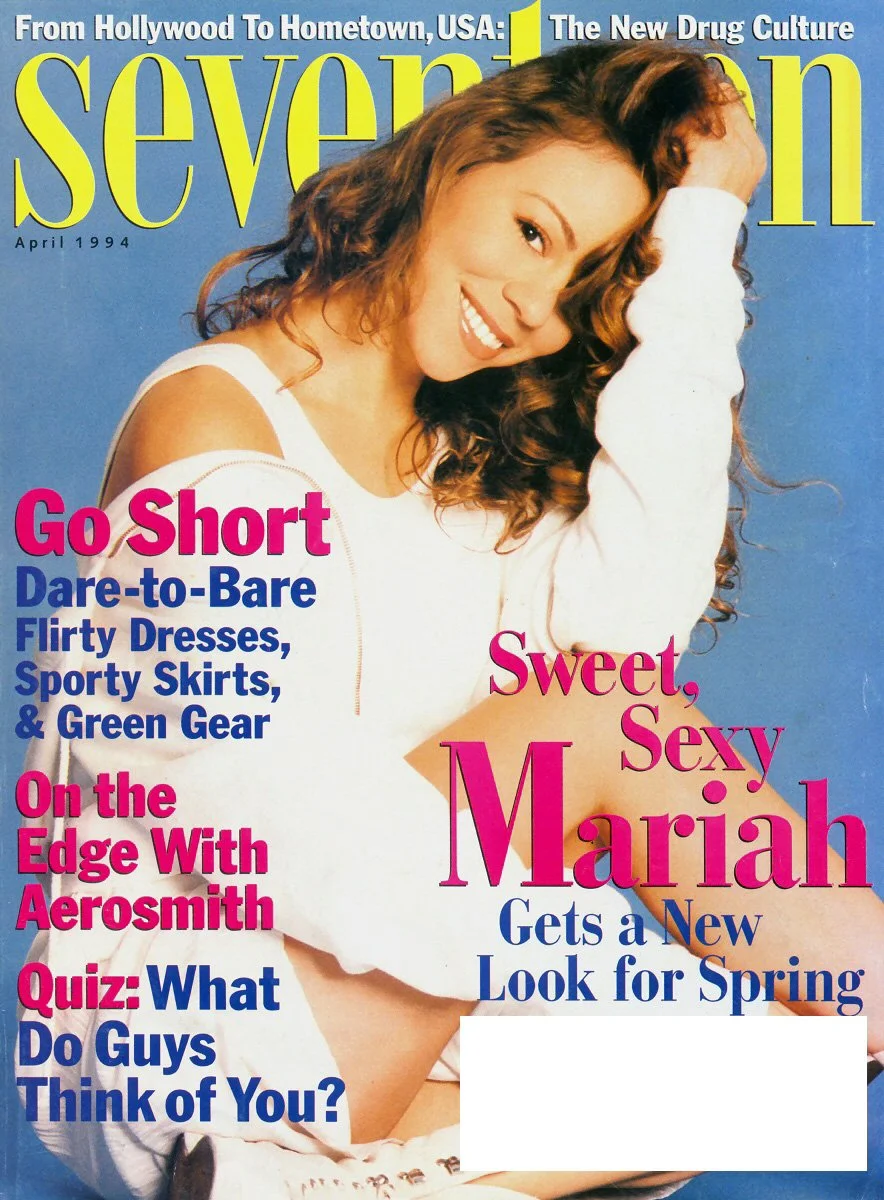
Mariah Carey’s “Without You” is a cover of a cover, which might mislead you to think that it isn’t truly sad. How could borrowing someone else’s words ever conjure the same fullness of emotion as singing your own? But there is also liberation in the cover, which can become a physical shield against ascribing the lyrics to literal experiences of the person singing it. Or as Emily Lordi puts it in the New Yorker when she describes Mariah’s covers, they release her “from burden of autobiography that hounds female singers.” Other people’s words create space to forge a separate self—one away from the story that everyone believes to be yours.
I longed for that very separation when I was the little girl who didn’t want to cry; the impossibility of such a feat did not occur to me.Mariah would have been all over the radio that year, but now I hear mostly silence, because it was around when my mother died from cancer. At my own insistence, I was back at school exactly one week later. Once there, I was determined to project my fineness with full force, especially as I began to sense my new descriptor behind the eyes of every person I knew and didn’t know: I was now the girl whose mom died. The weight of it was suffocating in the degree to which it changed my life overnight; the last thing I wanted to do was talk about it. But the first thing I sensed behind the wondering eyes of the other kids standing before me—often out of the utmost concern—was how much they wanted to know what it was like.
My fourth-grade portrait was taken a few weeks later and tells the story of that whole year. I wore a long, V-neck cardigan, one side of which was magenta, the other purple; a pink plastic heart button kept the sweater’s two halves together at my waist. It was probably the last article of clothing I ever wore from Kids ‘R’ Us. My hair draped over my shoulders in long, dishwater-blonde strands that looked like they hadn’t been washed for days. Inspired by an older cousin, I’d begged my father to let me perm my bangs. Not knowing any better, or perhaps just out of sympathy, he’d let me do it, much to my detriment. In the portrait, they are piled atop my forehead, crinkled and disheveled.
And then, wrapped around my neck, tied in a loose knot, is a navy-blue bandana sprinkled with rhinestones. It was one my mother wore after her hair had fallen out, at least in part because I was terrified of seeing her bald head. She wasn’t usually one for frills; her wardrobe was comprised of mostly of earthtone cable knit sweaters and khakis. But the bandanas she wore were unlike everything else—bright pinks, blazing reds, and the bedazzled blue. They seemed to belong to a side of her that I never knew. After she died, the bandanas made their way into my own top dresser drawer. My desire to be close to her through them in such a public way surprises me now—that I was willing to touch the fabric, wrap it so intimately beside my skin that I could inhale some part of my mother’s scent that briefly outlived her between the threads. Somehow, I didn’t hide the bandanas in the same way I hid the rest of my grief. I was so curious about them, enchanted even by the possibility of being physically close to this other, brighter version of my mother.
In the photograph, the blue bandana clashed spectacularly with that jewel-toned sweater. And yet, there I am: smiling, my eyes looking somewhere slightly off beyond the camera, trying to convince everyone that this girl never cries.
*
It’s easy to imagine a Sony executive suggesting “Without You” for Mariah Carey’s Music Box album. On its surface, the song sounds like an answer to Whitney Houston’s “I Will Always Love You,” which came out the year before and won it all—Grammys. Billboard domination. Best-selling female song of all time. But that’s the story of another cover that overwrites another story of sadness. Meanwhile, Mariah’s previous album Emotions had underperformed in Sony’s eyes (eight million copies sold worldwide, against her debut’s fifteen million). Listening to Music Box, it seems that the Black music traditions that underlie much of Emotions (disco, Motown, gospel) were blamed for the sales figures—traditions that spoke to the biracial sense of self Mariah longed to center in her music. While those influences make more subtle appearances, Music Box abounds with the “adult contemporary” (white) genre of ballads that sold albums in the 1990s, including “Without You.”
Maybe that Sony executive made up the song’s backstory, about Mariah crying whenever she heard it. Or another story that came out later, about how she heard the song in a restaurant and knew it had to be on Music Box. At the time, Mariah rarely sang anything she hadn’t penned herself. She has writing credit on every song on the three albums that preceded Music Box except for one (a cover of The Jackson 5’s “I’ll Be There”). As someone who took her catalogue so seriously, I suspect Mariah knew the authentic depth of sadness that lives within “Without You,” despite its schmaltzy story of a lover’s departure and the devastation that ensues. Namely, the sadness of Badfinger—Welsh rock proteges of The Beatles who were largely buried alive by the weight of their potential. Badfinger members Pete Ham and Tom Evans wrote “Without You,” and the band recorded it in 1970. But the song found greater success when Harry Nilsson covered it in 1972. As Badfinger finally experienced some career momentum around that time, financial mismanagement left them with almost nothing to their name by 1975. Ham, whose girlfriend was eight months pregnant, hanged himself that year in their garage studio. Then, one night in 1983, Evans got into an argument over the "Without You" songwriting royalties and hanged himself in his garden.
A fractured self is sometimes the only kind that can survive the disconnect between how we expect the world to be and how it ends up being. That self, visibly disentangled from her autobiography, can at times be hard to witness. My father had my fourth-grade portrait on the mantel until recently, and whenever it caught my eye, I immediately wanted to look away. Though, whether it’s hard to look at because it captures the way I was trying so hard to separate my daily life from my grief, or because I was just so visibly sad, I’m not sure. I wonder the same of Mariah Carey—whether there’s a perceptible disconnect on Music Box that can be hard to listen to. In 1993, the LA Times wrote that “you don’t get much genuine emotion from any of these pop-soul songs.” The revile of such critics had roots in other problems (misogyny and racism, among others). But to say the album simply lacks authentic emotion is also untrue.
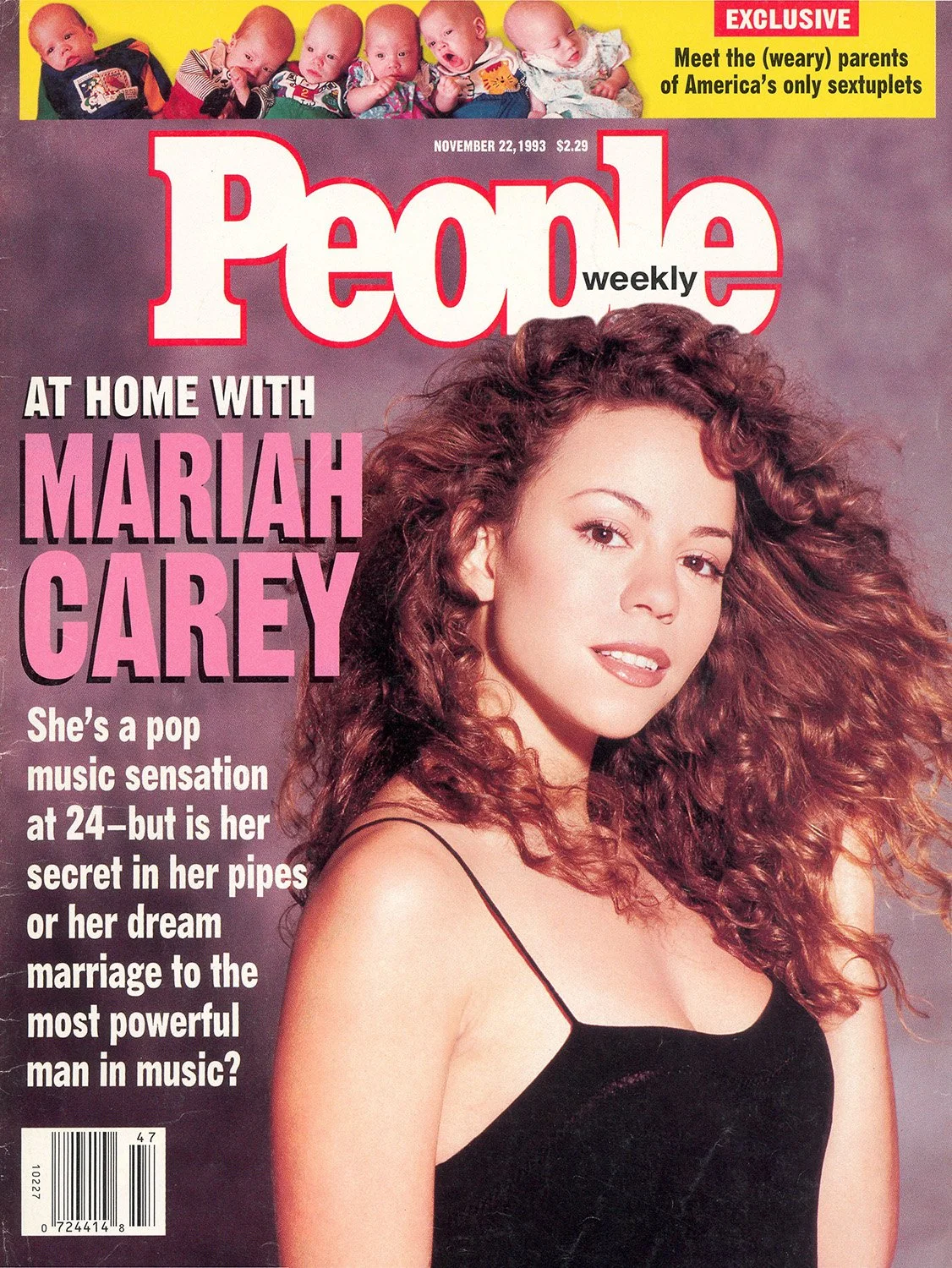
Authentic emotion lives between the lines. I hear it when Mariah sings one lyric of “Without You” in particular. It’s buried between the vocal acrobatics that fill the song’s repeated incantations. In an offhanded aside—sung in a lower register at odds with the most bankable parts of her musical personae—she sings, “I guess that’s just the way the story goes.” It feels like moment of the song that should go unnoticed. But when she sings it so knowingly, I hear someone who has experienced the way elements of your life—particularly ones you’d rather think about less—can become the story people tell about you repeatedly, until it defines you. The memoir that Mariah published decades later relays the more nuanced details of her early years as a backup singer who had been living on one dollar a day, deciding between a bagel and a subway ride, until her demo tape ended up in Tommy Mattola’s hands when she was nineteen. “Underneath the shine, I had some inkling there was a darker energy that came with him—a price to pay for his protection. But at nineteen, I was willing to pay it,” she writes in her book. Meanwhile, a headline in People 1993 distilled her life into a singular story: “…Is her secret in her pipes or her dream marriage to the most powerful man in music?”
When Mariah performs “Without You” at Proctor’s Theater a month after their wedding, everything is black. She wears a black shirt topped with a black vest and paired with black pants. With only occasional interludes from a spotlight, her figure fades into the stage. The darkness almost swallows her at times. Meanwhile, her voice moves across the octaves with such richness, I can only believe it comes from a place of despair, even if that emotion has nothing to do with the words that contain it. The full self often has a way of bleeding through even the thickest skin.
*
I received my first Mariah Carey CD at a sleepover my father allowed me to have for my eleventh birthday. By then I was in the fifth grade. I had gotten better at doing my hair myself, and I’d made new friends, who never asked me about my mother and whose fashion I tried to emulate: oversized t-shirts, neon leggings, black Reebok Princess sneakers.
When I opened the “Hero” maxi-single CD one of those friends gifted me, Mariah stood on the cover in a long black dress, her curled hair tumbling down her shoulders, her smile bright against an amber backdrop. Though I felt indifferent about the song, I was immediately filled with relief.
I knew I was supposed to like “Hero,” if only because it was on almost every radio station my nanny would flip through on the car radio when she picked me up from school. I was also old enough to recognize the clichés of the ballad. It sounded like things we were taught in school assemblies or at D.A.R.E. lessons with a police officer. I was an extremely good kid, but even I didn’t believe that “the hero lies in you.”
All of those girls in Reeboks who were sitting around me in a circle at the party ooohed and professed how much they loved Mariah Carey. I could see from the CD cover that she seemed like a deeply feminine person. I believed that loving this song would mean that I understood the important things that girls know. That I wasn’t just the girl whose mom died, a girl who knew nothing about the prospect of woman-ness that stretched out before me. I also only owned four other CDs at the time. The “Hero” disc went into heavy rotation, as if it could train me into becoming more like other girls and less like myself. Secretly, my favorite song on the album was an obscure remix of a song called “Dreamlover,” but I never told anyone this; it would have made it sound like I didn’t know what I was supposed to like. After listening to my CD for weeks, when I finally heard the original mix of “Dreamlover” on the radio one day, I was devastated by its levity. The opening synth notes sounded like the theme music to television shows I’d watched as a child, with happy endings that always resolved by the end of the half-hour.
I only learned recently about Mariah’s devotion to her remixes. Unlike a cover, the words are still hers, but some threads of the song’s original version expand while others contract, to surface a new meaning. She describes the remixes as a source of freedom while she was still married to Mattola. The “Dreamlover” that I loved was the “Theo’s Club Joint” mix. It opens with an atmospheric soundscape that plays behind Mariah’s drifting, high-register vocal until the drum machine interrupts with a thick beat and a reworked sample of “Blind Alley” by The Emotions. In short, Mariah’s love of hip hop shows itself in this version without reserve. The pop-princess of the original “Dreamlover” remains, but the new sounds enrich the lyrical buoyancy with a deep sense of gravity. The remix moves through this intentional push-and-pull over and over again, turning its narrator from someone lost in a wispy fantasy into one keenly aware of her desire’s distance from reality. I found that sound so infectious, I could only believe that this was the song’s real version.
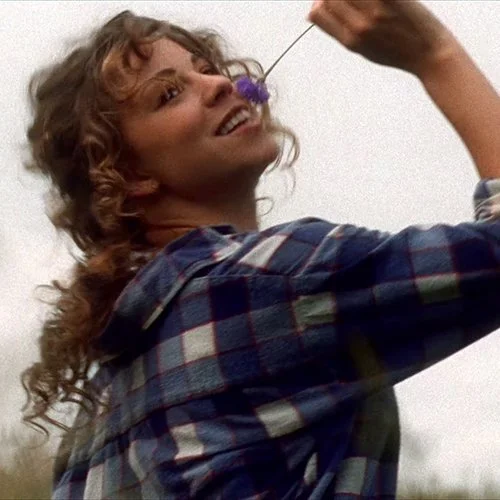
It's easy to hear the way the more complete sense of self that underlies the “Dreamlover” remix became “Fantasy” and then became whole albums, like Butterfly and The Emancipation of Mimi. Meanwhile, I suspect I’m still just living a fractured life, albeit one where other people’s words have connected it in places where I couldn’t. “Dreamlover” has been some of those words. The song was there for my first real crush. It was at the prom. It played at my bachelorette party. And recently, it was on in the car. Except this time, it was my daughter hearing her for the first time. We were heading south on the highway that slices our city in two. As the bass kicked in, I turned up the volume so we could feel it vibrating through our insides, like a heartbeat. We were on our way to an old roller rink, where I was going to teach her something my mother taught me when I was a little girl.
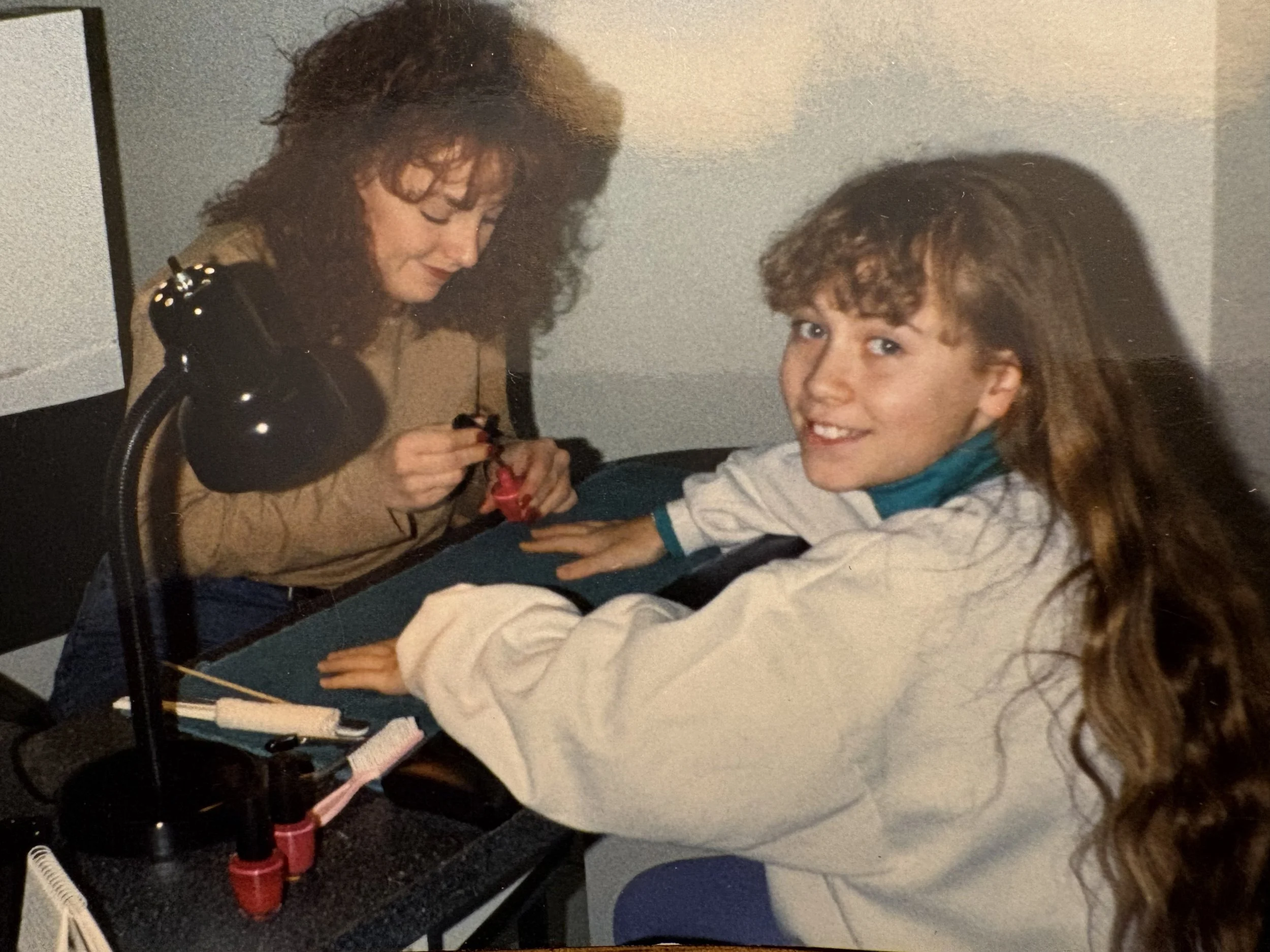
Erin Langner is the author of the essay collection Souvenirs from Paradise. She lives in Seattle, where she’s an editor at the Frye Art Museum. Despite not considering herself a Lamb, she loves Mariah Carey even more than she did before she began writing this essay.
NO COUNTRY FOR GOOD MEN: erin mcreynolds ON CRASH TEST DUMMIES’ “SUPERMAN’S SONG”
It’s the height of despair. A convicted felon has taken over the Oval Office. He seems impervious to whatever is used against him. Weaponry that ordinarily takes down powerful men—the media, protests, Congress—no longer has any effect. He commands all to kneel before him, and they do. Sinister devils walk among us, armed henchmen free at last to act out their sickest fantasies against innocent people.
On the streets, people are suffering, angry, and afraid. Superman, they scream, where are you?
*
Tarzan wasn’t a ladies man
I cast my first vote for President of the United States in the 1990s, riled up by Bill Clinton’s on-air saxophone solo, endorsements from Sassy magazine, and Michael Stipe sending me a letter encouraging me to “Rock the Vote.” It was fun and easy to be a young liberal in those days. Kurt Cobain proclaimed that God is gay. We rallied around the environment and affirmative action, believed bumper stickers could change the world, and jeered at the Religious Right and its red-faced men who kept sticking their sausage fingers into forbidden funds (and females).
We weren’t yet talking endlessly about a masculinity crisis—on my college campus in 1995, we seemed to permeate each other’s conversations, improv troupes, parties, and social plans, regardless of gender, much more easily than people do now. Granted, it was San Francisco, but I think it owes more to the fact that social media hadn’t yet transmuted our existences from the material plane to a virtual Thunderdome of bullying and paranoia.
I already knew the Canadian folk-pop band Crash Test Dummies from their ubiquitous and annoying radio hit, “Mmm Mmm Mmm Mmm,” in which the Dummies’ bullfrog-voiced lead singer, Brad Roberts, spins nonsensical yarns. Despite the song’s masterful composition and musicianship, it’s often placed on “most hated” lists (although Weird Al’s parody makes the song worth it). But for Gen Xers, the only thing cooler than being cynical is liking something that nobody else seems to get—or anyway, that’s how they became part of my listening life. In a used record store in Haight-Ashbury, I found their 1991 debut, The Ghosts That Haunt Me, which includes the absolute fucking gem, “Superman’s Song.”
*
Clark Kent, now there was a real gent
From the moment he appeared on magazine stands in 1938, Superman has been living up to his name, even managing to evolve as the culture’s impression of what it means to be “super” evolves. What distinguishes Superman from other superheroes is his penchant for wielding considerable power for the benefit of the vulnerable. It makes for a pretty dull personality trait, but it also gives the artists who interpret him room for projection: for instance, James Gunn’s 2025 depiction of Superman emphasizes his status as an immigrant, someone who comes from another place, struggles to adapt to this one, and performs largely unseen work, only to find himself loathed by a fickle populace.
And Superman is usually loathed by the populace at some point, in every narrative. What an apt reflection our (American? Capitalist?) tendency to take ease for granted, to assume that the opportunities and protections we’re given will always be there, and the second they aren’t, to throw a fit and say, Let’s see what this Lex Luther guy is offering.
But he can take it, right? That impressive, muscular specimen with a jaw that can cut glass—except that it doesn’t need to because his eyes literally do that. Whether he’s battling mortal crooks, galactic space monsters, other superheroes, and even himself, Superman always prevails, and in doing so, models something that we Earthlings try, but cannot conceivably live up to.
That’s got to make for one lonely, tragic figure, argues the Crash Test Dummies.
*
He forced himself to carry on, forget Krypton and keep going
There was one battle Superman couldn’t win, in any decade, in any iteration: saving his father’s life. And not one father, but two. Throughout the last 90 years, we’ve watched Superman lose his birth dad, then his Earth dad, over and over, and in doing so, become one of us. Become a child of loss.
He’s someone who grappled with belonging and grief and guilt, and yes, rage, but was mighty enough to hold these things and let them sink in, just like the light from our younger, hotter sun sinks into and charges his Kryptonian cells. Kal-el’s birthplace may have given him potential, but his adopted home gave him power; Jor-el, from his crystal space grave, encouraged him to use this power to push man to “greater things” (a dangerous prospect, considering it will be decided by one man alone what “greater things” means), but his salt-of-the-earth Kansas family empowered him with kindness, modeling love and decency. Lois shows him what life (and love) looks like when you’re dedicated to fighting for what is right and just. We’d all be fucked if that superbaby had crash-landed in Silicon Valley or Mar-a-Lago.
Superman reminds us we are products of all the people and places that raised us, all that we have lost, and all our pain. See his generosity and empathy in spite of it—and because of it.
It's clear that Superman is not only an apt model for how to be a hero, but how to be a man. At a time when we, worldwide, are seeing what happens when boys are denied those gentle and fair models, that love; when they are denied their pain or are threatened by it, and then grow up to command armed forces, nations, audiences, technology, policy.
*
Hey Bob, Supe had a straight job
Clark chose his job as a reporter for an obvious reason: to stay informed of crimes, wherever they were being committed. But in our dark times, his day job has taken on a blinding significance: the reporter’s role is to observe, find the cause, bring it to the light.
We’ve seen what happens when the media is weakened, sold, watered down, held unaccountable for its claims. Democracy dies in darkness, went the Washington Post’s missive, but now they’re owned by a Lex Luther lookalike and “the media” now includes any villain with money, a mouth, and an axe to grind.
“Be like Superman” can just as easily mean: be reporters, go into the fray, capture the scene on your smartphones and hold it up to the light. It’s no small thing to be a reporter, we are learning.
*
Even though he could have smashed through any bank in the United States
At the time of this writing, we are trying to survive a supervillain’s rule. The rule of a man who, if he had Superman’s power, would smash into any bank in the United States—and has done just that, robbing already poor and struggling citizens blind, betraying those who voted for him.
We are being led by a man who, like the Tarzan of “Superman’s Song,” can hardly string together four words. A man who, if Solomon Grundy were threatening all of humanity, wouldn’t do a single thing to help us unless he made money doing it; he’d more likely ask Grundy to make him a better offer.
The worst part is, no one person seems able to stop him. No one among our magnanimous rich, or our universally loved celebrities, our humane and erudite politicians. New York Magazine reported on the new crop of Democratic leaders, promising young justice warriors who are pure of heart and who tout decency, who have already fought for the soul of their city, their county, their district, and won. But they’re lightweights yet: each on their own is no match for the archvillain and the monsters we have released.
And sometimes I despair the world will never see another man like him.
The power of the chorus’s final line lies in the simple and honest statement, sometimes I despair, followed by a devastating conclusion: he was only ever a fantasy. The world never had a man like him to begin with.
At least that’s how I felt when I began writing this essay. As I finish it, Renée Good and Alex Pretti have just been executed in Minneapolis, in full view of the world, as they tried to protect their neighbors from harm. We know this because of the bravery of those who filmed, knowing they could be next; these good reporters.
In response, the people of Minneapolis didn’t look to the skies and wring their hands, waiting for Superman to come. They took to the streets, they resisted, refused to participate in the machine’s insidious workings. They reminded us what it means to become, as the poet June Jordan said, the ones we’ve been waiting for.
I bet that he was tempted to just quit and turn his back on man and join Tarzan in the forest
“Superman’s Song” is less interested in hailing Superman’s powers and service to mankind than it is in imagining him as one of us, grieving and exhausted but hanging in there, trying not to give in to cynicism and greed. Kept on changing clothes in dirty old phone booths ‘til his work was through / nothing to do but go on home. In 1991, when this song was released, it was a quirky intellectual exercise, the kind we could afford. A sad folk song for a powerful entity, as if one would ever be needed.
Now it’s a rallying cry against despair. Now it’s a Superman we can live up to.
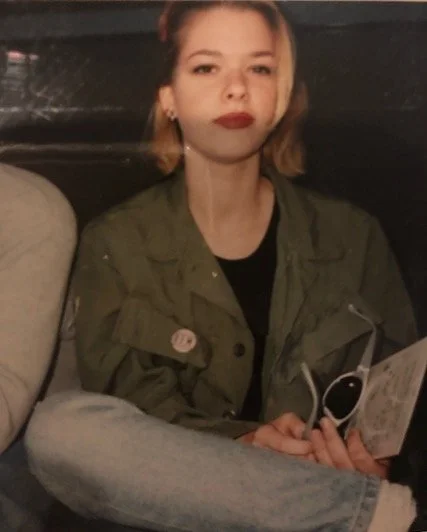
Erin McReynolds’s essay about Live’s “I Alone” was a first-round defeat in March Plaidness, but that’s its own form of winning. Her essays and cartoons have appeared in The Sun, LA Times, McSweeney’s, and New Letters, and elsewhere, and are among the notables in Best American Essays 2020 and 2024. She’s revising a memoir, writing a novel, and trying to turn your kids Gen X.