
first round game
(5) Bush, “Glycerine”
grounded
(12) Fiona Apple, “On the Bound”
158-77
and will play on in the second round
Read the essays, listen to the songs, and vote. Winner is the song/essay with the most votes at the end of the game. If there is a tie, we will play a one-hour overtime (and repeat until we have a winner). Polls close @ 9am Arizona time on 3/2/26.
Drew Krewer on Fiona Apple’s "On the Bound"
It was probably a humid Sunday, probably in the late 1980s, my mother probably overly-perfumed to mask her parking lot cigarettes. It's a story that has been recounted many times, yet the only details I deeply remember are in my body. I remember where we were sitting, the restlessness in my legs. The preacher that morning was especially long-winded, so perhaps it was on a holiday weekend when the more secular folks filtered in out of obligation. I remember feeling trapped, like I couldn't move. At a certain point, I couldn't take it anymore, and it all loudly spilled out of me:
I'M ABOUT TO DIE!!!!!
:: :: ::
As I entered my freshman year in high school, I lost all of my male friendships to the rural Georgia ethos of football, hunting, and activities involving mud. I opted out of weight-lifting class, as I had no desire to build myself to look more "manly." I had always been a straight-A student, but as I entered high school, my obsession with academic excellence (or, more aptly, winning honors) became intimately tied to my self-worth. Most every year we had those bizarre magazine sale initiatives that culminated in a pep-rally-esque meeting in the gymnasium where students of all ages won prizes and grabbed floating money in a plastic box; I always aspired to get a prize, which meant my family received lots of magazines, and I became an avid reader of Entertainment Weekly.
:: :: ::
I'm not sure I ever really believed in the historical accuracy of the Bible, and I postponed baptism for quite some time because I had difficulty arriving at a moment of authenticity with the religion to warrant such a commitment––I recognized the holiness of these customs and did not want to transgress such ceremonies. As I entered high school, though, I became one of the oldest children that had yet to be baptized; I was acutely aware of the expectations others had of me. It was sometime in 1998 when Jewel's Spirit album was released that I found a more secular, forgiving angle to Christianity, and in private study, I focused more heavily on lessons of good will, generosity, and kindness. My moment of authenticity finally arrived outside of church hours, so we met the preacher at the church on a Saturday to dunk me underwater.
:: :: ::
I had originally discovered Fiona Apple in a Details magazine advertisement for her first album Tidal. (Thanks magazine sale and my desperation to consume some form of "male" media!) I bought the album without having ever heard a song, my obsession quickly followed, and the photo shoot for the album art made me so focused on wanting piercing blue eyes that I ended up with blue contact lenses after much begging, although my eyes, as many will attest, aren't that far away from blue.
I had this fantasy of "being beyond my years," desirable, and famous to the degree I could look back on my classmates and willingly forget them when approached for autographs. This was a frequent fantasy, usually coupled with a cunty "acceptance speech" for a Grammy.
:: :: ::
Shortly after my baptism, the church formed a "young men's group," a name that made my skin crawl, as I didn't think any of us were old enough to be called "men." It also didn't help that I was struggling to navigate my relationship with concepts of masculinity and my own personal agency. I went from ruminating on good deeds to being trained to install myself as being more important than my female counterparts. The group was clearly a talent pipeline intended to keep the church afloat––having us lead sermons, pass out the collection plates, read scriptures. In retrospect, it felt like mandated drag. One of the first things we covered in the group was spreading the gospel. I walked into a local convenience store to grab a Gatorade and there was an older teen in a Marilyn Manson shirt by the cooler. After grabbing my drink, I meekly asked him "Do you believe in Jesus Christ?" He turned to me, silent, perplexed, then walked toward the exit.
:: :: ::
"Did you see Fiona Apple last night on the VMAs tell everyone that the world is bullshit?" I asked people during homeroom.
I was met with eyerolls and dismissive comments like "She's not right in the head."
:: :: ::
Entertainment Weekly told me when it was time to visit the mall to pick up Fiona's second album. It was the week I received the news that I was not my school's nominee for the Governor's Honors program, a residential summer camp designed for precocious teens. I was deeply despondent, disappointed, and angry at everyone, including myself. I requested a brochure online from an arts camp in Michigan that I brought to my mother, who was very much dazzled by academic excellence and big name schools. I begged her to at least let me apply.
Whenever I got my hands on a new album from one of my Lilith gals, the album received a serious, uninterrupted full listen over my Discman headphones. Even before the first listen, Fiona's new album made a statement with its 90 word title, affectionately truncated to When the Pawn.
The first song on the album, "On the Bound," opens with off-hand, scattered percussion, which abruptly gives way to a forceful march of piano. Woodwinds accent the tune, providing whispers of something adjacent to carnival music. Given my recent disappointment, my brain latched onto this forceful, dark opening, and I found myself listening at a sonic level––I was angsty and determined to claw my way forward, the beat providing a canvas for such machinations.
Apple's lyrics are always masterful and pronounced; "On the Bound" is minimalist, with frequent repetition and playful moments where her voice wanders into lengthy stretches of iambs. The song touches on how doubt can destabilize a successful love. At times, she nearly runs out of breath repeating the phrase "You're all I need." But the lyric that came to haunt me, which is also repeated with great frequency:
And maybe some faith would do me good...
:: :: ::
Elders at the church started stamping hymns in the song books with "not to be sung" labels, after determining songs didn't exactly reference the Bible. They changed the sign in front of the church so that "church" went from an uppercase "C" to lowercase, so that Christ's "C" was larger and more important.
I kept passing collection plates during service, kept hearing myself being called a YOUNG MAN.
I felt compelled to attend the junior/senior prom with a girl from church, which was really just an excuse for her to get lobster and for our parents to have prom photos.
Performance became an escape. I ran into the woods to sing, or went to the farming shed to pretend I was in a studio, singing loudly You're alllllll I neeeeeeeed, you're alllllll I neeeeeeeed, You're allll I neeeeeeeeeeeeeeeeeed, You're alllll I neeeeeeeeeed, You're allllllllll I neeed... And maybe some faith would do me good...
I would sit on the bank of the pond, writing poetry, staring above at the sun-lit leaves and the water. Was there another spiritual option out here?
:: :: ::
As a "geriatric millennial," I was trotted to the library to learn card catalogs, but the mid-90s also brought the Internet, browsers, search engines, and instant messaging. Most of the kids in my class viewed the Internet as a nerdy tool that school was trying to force upon us, and those with rich social lives had other things to do than "surf the web." Given my convenience store "tell it from the mountain" failure, I decided chat rooms were the new frontier for mission work.
I began chatting with a user who quoted bizarre laws from the Old Testament, like not wearing mixed fabrics; I was basically taught at church that the Old Testament doesn't apply to us as much as the New Testament, so I let them know that I would need to hear something from the New Testament to really see the validity of an argument. This person brought forward contradiction after contradiction.
Additionally, the sect in which I was raised took the Bible quite literally, so I began seeing my own contradictions––if we can't use piano for hymns because it wasn't mentioned in the Bible, why does our church have microphones, a sound system? Those weren't in the Bible, either. Similar perspectives revolved around drinking/not drinking wine––a historical interpretation of "food safety" was often mentioned as why it was permitted in ancient times, though to my knowledge this is not detailed in the Bible. One could use this interpretive lens for pretty much any scripture that doesn't align with the contemporary world; however, the handful of scriptures around homosexuality (most of which have been poorly translated) is something that is an ongoing focus of sermons––why doesn't this rise to the occasion as something needing historical reinterpretation? Why is the church being selective in the way it follows the Bible while also professing that its perspective is literally emerging from the holy text? I eventually came to sum up my experience this way: the Bible is to be read as completely literal until the literal comes to fail for the reader, at which point the text is either deemed metaphorical or in need of additional historical context. Everything is riddled with the humanity of it all.
And maybe some faith would do me good...
:: :: ::
For a (pretty) good year after my baptism, I had put away my Tori Amos CDs because of her very vocal opinions on God and Christianity. While my chat room sermon from the mount didn't result in any converts, it did give me the courage to be analytical in the spiritual space, and it gave me permission to listen to the voices in music that were speaking to internal conflicts I was currently facing.
I eventually learned that Tori Amos's song "Mr. Zebra" is really close to being one minute long; if you sing it thirty times in your head, you can get through a thirty minute sermon without having to hear a word.
:: :: ::
Sometimes things fall through for a reason. Sometimes you're not meant to live in an interstate-town bookended by anti-abortion and "second coming" billboards. Like me, rural south Georgia towns were plagued by the desire to be notable, to be the best––a few notable town slogans: "The Peanut Capital of the World," "The Watermelon Capital of the World," and my favorite, "The Reading Capital of the World."
The young men's program at the church seemed pretty much unavoidable, and its uncomfortable demands were only accelerating. I'm not exactly sure when that year, but I received notice that I was accepted to the summer arts camp in Michigan. We weren't a flying family back then, so I hopped in the car with my grandfather, the Discman kicking off that first Fiona track: All my life is on me now... hail the pages turning.
As we drove through the countryside and up I-75, I had no idea that this would be my official departure from Georgia, that the young men's group was forever behind me, that my future was on the bound.
Drew Krewer is author of the chapbook Ars Warholica (Spork Press) and co-editor of The Destroyer. His work has appeared in Troubling the Line: Trans and Genderqueer Poetry and Poetics, DIAGRAM, Afternoon Visitor, and Dream Pop, among other publications. He holds an MFA from the University of Arizona and lives in the desert.
Safer Grunge for Sad and Angry Kids Like You: Jason Thayer on “Glycerine”
“No.” Your mom shakes her head, the decision final.
“Why?” you whine, clutching the Nirvana CD.
“I don’t want you listening to music that’s so—” She pauses, searching for the right word. “So sad.” Lips pressed tightly together, Mom blinks fast, eyelids like windshield wipers in a coastal storm. She is determined not to cry in the Fred Meyer Electronics department as she thinks about the constellation of sad things in your life, the fear of what this music might stoke in you.
Mom doesn’t know a single Nirvana song, but the news still talks about Kurt Cobain and how he fumbled a shotgun into his mouth and pulled the trigger with his toe. Mom also knows that ever since your own dad died of a heart attack, you’ve started screaming out, “I’m going to kill myself!” in the face of life’s smallest injustices. When you can’t find your shoes, when you miss the bus to school, when you die in Super Mario World, that’s it, you are going to kill yourself. As a single parent raising a 10-year-old with precocious suicidal ideations, Mom holds the line on the Nirvana Embargo of 1995.
If Cobain’s caterwaul is a handful of jagged rocks chucked into a wood chipper, Gavin Rossdale’s moan is smooth pea gravel spread across the playground, crunching softly under the feet of kids at recess.
His band, Bush, is a safer version of grunge for sad and angry kids like you. Watching Bush play MTV’s Spring Break ‘96, you are immediately transfixed. The rest of the band disappears into the shadows as Gavin steps forward, strumming the opening chords of “Glycerine.” Night has fallen on Panama City Beach and the crowd sways, flicking lighters, Gavin’s mouth obscured by the shadow of the mic, his moisturized ringlets brushing those perfect cheekbones. And that voice, the way it breaks when he sings, “I’m never alone, I’m alone all the time.”
His good looks are not lost on you, a husky middle schooler who the gym teacher calls Melon Belly. But it’s not like you have a crush on Gavin Rossdale—you don’t want to be with him, you want to be him so desperately you feel an ache in your chest when you watch him onstage, the purple sky opening up, spilling out rain as the chorus kicks in. Even the sky melts when he croons, “Don’t let the days go by.”
When Gavin Rossdale wrote “Glycerine” in the midst of breaking up with his model girlfriend, he could not have anticipated the effect it would have on you, a kid in Seaside, Oregon, sitting crosslegged on the living room floor, curtains drawn against the sunlight, watching MTV Spring Break ‘96, a bowl of chocolate chip mint ice cream melting in your lap.
After that, you search out any and all media you can find about Bush—or, more specifically, anything about their lead singer. You tape pictures of Gavin to your bedroom wall, cut from the SPIN cover story on Bush titled “Don’t Hate Them Because He’s Beautiful.” You take the clipping to the woman who cuts your hair and ask, “Can you make me look like this?” She chuckles a little, says “I’ll see what I can do” before giving you the same blunt, too-high bangs as usual, a cut that does no favors to your big wire glasses, your puffy pubescent face.
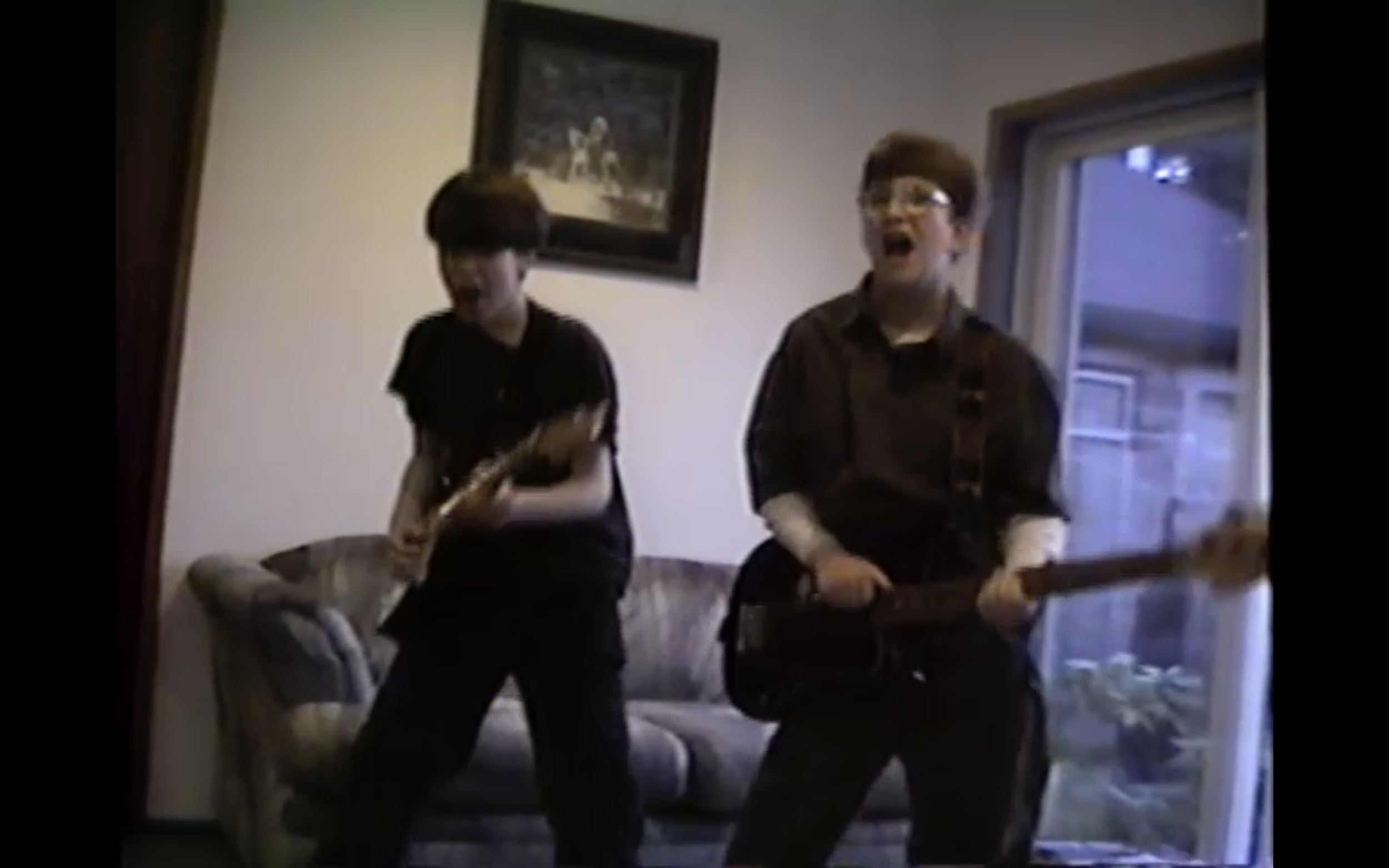
Your best friend, Israel, has the look you want: thick auburn hair cut into a bowl, an upturned nose, a whisper of freckles across perpetually flushed cheeks. He looks natural with his Fender Stratacastor slung across his chest as you both pantomime “Glycerine” while your older sisters film your performance on the VHS camcorder. Israel knows the chorus but you sing every single lyric, strumming hard at the bass guitar your dad had played in his band, Myth, before you were born. On the outside, Israel looks more like Gavin, sure, but on the inside, you are Gavin.
Israel likes Bush, but he can’t listen to them at home. His mom, a born-again Christian, has an embargo of her own: no “worldly” music. Just as Bush becomes a safer version of Nirvana for you, DC Talk is the Jesus Freak alternative for Israel, both your single mothers wary of the power the men singing these songs have in shaping who their sons will become.
“Rossdale’s got a very lazy bunch of existential demons,” quips James Hannaham, alluding to the singer’s privileged upbringing in the SPIN cover story you pore over while listening to Bush’s Sixteen Stone on repeat.
Because he is beautiful and untroubled, that same year Rolling Stone puts a shirtless Gavin on the cover, finger coyly tugging at his bottom lip, inlaid with the question: “Why Won’t Anyone Take Gavin Rossdale Seriously?”
The son of a doctor and a model, Gavin was raised in a wealthy London neighborhood, literal and metaphorical oceans away from you and Israel, who grew up a block from each other in a rusted out tourist town, your fractured families hovering around the poverty line. This is the alchemy of fandom: no matter the distance between us, we find ourselves in the words our idols sing.
By 1997, there’s a lively debate as to who is the better lyricist, Gavin or Kurt Cobain, on bushnet.com, a forum you find listed in the liner notes of Bush’s remix album, Deconstructed. You immediately burn through your weekly ration of dial-up internet, scouring the responses. The consensus of even the biggest Bush fans is that Cobain wrote better lyrics.
“What does ‘I live in a wheel where everyone steals’ actually mean???” bushfan81 posts to the thread, referencing the “Glycerine” lyrics.
In The Creative Act: A Way of Being, Zenned-out music producer Rick Rubin writes that making art requires tapping into “the Source,” a creative energy suspended in the ether. He argues there is resonance in the work we create even if we don’t yet know it. The power of art lies in its malleability, each reader wrapped in their own tapestry of experience that dictates the meaning they unearth, intended or not.
In other words, it doesn’t matter what these lyrics mean to Gavin, it matters what they mean to you.
When you hear him sing about living in a wheel where everyone steals, you think about the cruelty of the world you know. You think about losing your father when you were seven, and in “Glycerine,” you see the value of a loss like this. The guitar’s overdriven hum, quieted by Gavin’s callused fingertips, the aching moan of those cello strings, his strained voice: the act of making something this beautiful out of personal pain is revelatory. Listening to it again and again in your bedroom, you know exactly what you can do with sadness, and soon you begin scrawling your own lyrics into notebooks you keep hidden in the back of your dresser.
Shortly after you begin mapping your adolescent emotions, Israel becomes a skater, JNCO’s enveloping his legs, a tight white t-shirt clinging to his chest, a fake silver chain around his neck. A labret piercing skewers his bottom lip, his shaggy bowl cut now twisted into spikes rising from his scalp like the devil his mother tried to shield him from. He carves his initials in Olde English into his bicep using India ink and his sister’s diabetic syringes. Ditching DC Talk, he favors Nu-metal, which is easier to slip past his mom’s blocade now that he has a Discman.
Around this time, you review Golden State—Bush’s fourth studio album—for your high school newspaper, dismissing it as “recycled grunge.” You are a teenager and your taste has evolved. You are hooked into Modest Mouse and Sleater Kinney and Elliott Smith, the holy trinity of Pacific Northwest indie.
By the end of sophomore year, Israel stops showing up to school. Soon there are rumors that he is dead.
“He’s not dead,” you say.
“I don’t know, man,” a kid in your Biology class shakes his head, “he was really fucked up last time I saw him.”
After school, Israel laughs when you tell him about the rumor. “I’m just high,” he snorts. “Too high to go to school or not high enough.”
Israel runs a pawn shop out of his bedroom, fixing up and selling electronics. The two of you lug an old tube TV that someone traded him out to his backyard. He cues up Limp Bizkit’s “Break Stuff,” cranks it in the headphones he’s slung loose around his neck so you can hear too. The two of you smash the shit out of the TV, hurling rocks at the screen, driving your heels into the set, beating on it with wooden boards you pull from the crumbling fence lining the yard. The TV hisses. Israel finds a ball peen hammer and swings it hard into the guts of the television, keeps swinging, even after his hands are bloody and the song has ended, shards of glass glittering like fallen stars across the dried up lawn.
After high school, you lose touch with Israel. You go to college, you graduate, you move two thousand miles from Oregon, waiting tables at the Fairmont Hotel in downtown Chicago. The restaurant manager has put Gavin Rossdale’s 2008 solo hit, “Love Remains the Same,” on the breakfast playlist, sandwiching the glossy, overproduced song between Melissa Ethridge’s “Come to My Window” and Gotye’s “Somebody That I Used to Know.”
In the chorus, Gavin invites the listener to “drink to all that we have lost.” You oblige, pouring Cava into paper coffee cups every morning with the small and ancient Nigerian man who washes dishes and insists everyone call him “the President.” You affectionately call him Prezie, the two of you ducking down behind racks of steaming glasses in the dishpit, gulping Pinot Gris, Chardonnay, Sauvignon Blanc, then chasing it with swigs of black coffee to cover the smell on your breath.
You don’t know all that Prezie has lost, but earlier that month, the woman you moved to Chicago with told you she was no longer in love with you. You stood over the stove in your kitchen, stuttering in disbelief, stirring crumbles of blue cheese into heavy cream to coat the gnocchi you were making the two of you for dinner.
“Glycerine” takes its title from the temperamental chemical, nitroglycerin—a metaphor for Gavin’s volatile relationship. You have been in unstable relationships before, but this one was not that. Just months earlier, you had signed a lease on an apartment together and filled it with IKEA furniture, staying up late to talk about how many kids you should have once the time came.
Despite what the title suggests, musically, “Glycerine” doesn’t feel combustible. It is the kind of measured song a person writes while musing on the challenges of their strained relationship, penning poetry about the half-life of infatuation and the bittersweet beauty in our fleeting connections, noting on the lyric sheet where the cellos come in, patiently strumming out a chart-topper. It is a song about instability, clearly written by a stable person.
Gavin wrote Bush’s follow up album, Razorblade Suitcase, in the weeks after the relationship finally fell apart, his longtime girlfriend packing her belongings out of the apartment they shared, the final vestiges of their life together gone. Unlike its predecessor, chocked full of radio-ready, post-grunge bangers like “Glycerine,” no song on this ragged breakup album would ever grace a coffee house playlist. Razorblade Suitcase is reality sinking in, Gavin flailing against the dissolution of the life he’s built, not having the energy to get the chords right—not wanting to get the chords right—just fucking angling the guitar at the amp and letting the feedback’s squeal stand in for his own anguish, his own urge to “lean into fire,” to embrace self-destruction, if he could even find the strength.
After your breakup, you write sad song after sad song, performing them with your gloomy, proto-goth band, Hotegaia. Jerking your body to the heavy-handed tom beat in Chicago’s dark basements, warehouses, and dive bars, you croon your guts out to acquaintances and strangers with creative haircuts. You close your eyes and go trance-like. On stage, it feels fucking incredible, making yourself this vulnerable, bathed in the blue gel lights you set up for each show, killing every other light in the space so that all definition in your face falls away.
But in a blink, the set is over and you snap back to reality, a twinge of fear radiating through your chest. The drinking helps with that, sanding down the raw anxiety of sharing parts of yourself that the world beyond the stage advises you to conceal.
For all the confidence his good looks should have leant him, Gavin must have also felt this gnawing anxiety—a problem he dealt with by smoking ungodly amounts of what the SPIN article calls, “cheba,” which is, you guess, what they called weed in 1996.
Animated by sparkling wine and sadness, your race toward radical vulnerability culminates with a solo project—you, alone on stage wearing all white, a splotch of fake blood smeared across your chest, pouring cheap champagne over your head as you sing sad-boy hip hop reviewed in the Chicago Reader like this: “The beats are lo-fi, gritty, and sometimes so skeletal they make his caustic words sound even bleaker—I had to take a few breaks in order to make it through the whole album, but it's worth it.”
Of all the songs you’ve written, none are like “Glycerine.” None are the kind that, in the years to come, you will feel comfortable sharing with your partner or your partner’s dad or your own mom or other musically-inclined parents with kids the same age as yours—even when they ask. It’s sad fucking music, but it’s not catchy or beautiful. Which is to say, it’s music most people don’t really want to hear.
Comedian Chris Fleming jokes that we love transgressive art—but only when it’s presented in a palatable package. “Be original,” Fleming says, “but run it by us first.” David Bowie could sell albums as an androgynous alien because his music was pure pop perfection, sung by someone whose cheekbones were only rivaled by Gavin Rossdale’s. “That’s a beautiful, beautiful jock,” scoffs Fleming.
In other words, write your sad song, but make sure it has an infectious chorus, and don’t say anything too fucked up, and if you could look really hot when singing it, that would be great, thanks.

A few years after you sing your last dark song in an equally dark Chicago basement, your sister calls to tell you that Israel has died. She read it on Facebook. No cause of death, just his older sister posting to let the world know.
You’ve tried writing about Israel before. One of the first short stories you ever wrote was about the last time you saw him, just after graduating high school. He was living in a single bedroom apartment with his sister in Seaside, sleeping on a futon in the living room. Nursing a bottle of MD 20/20, he showed you the blood stains on the recliner he was sitting in—evidence of an overdose that landed him in the hospital a couple weeks prior.
“I’m clean now,” he had grinned, taking a long draw off his cigarette. His dull eyes widened as the ember glowed orange, a tiny sunset held precariously between his yellowed fingers.
When you showed this story to the person you were dating at the time, she looked up from the pages, face scrunched in confusion. “How were you even friends with this guy? What could you have possibly had in common?”
“That’s the thing,” you said. “He and I have so much in common.”
Now, almost a decade after his death, you think about the time you and Israel dyed your hair with Kool-Aid on the last day of fifth grade, about the two of you wrestling, your cheeks rouged with adrenaline as your little boy bodies caromed off each other, careening around his bedroom. You think about staging talk shows with your sisters as the hosts—the two of you playing the musical guests, always Bush, adopting British accents in your interviews.
Searching the internet for anything you can find about Israel’s death, you soon get sidetracked looking for that performance of “Glycerine” in the rain. Unfathomably, you stumble upon a different rain-drenched rendition of the song, shot three years after Bush’s MTV Spring Break set. Woodstock ‘99 was massive, a few hundred thousand people held captive by the image on the big screen of Gavin, alone on stage, shirtless, wet locks sticking to those granite cheekbones. Even watching it now, you feel a familiar longing to be Gavin Rossdale up there, an ache at the canyon between you and him. You feel a charged anxiety just at the thought of how vulnerable you’ve made yourself over the years, singing words into a microphone that could never possibly resonate like his—a fear that peaks when you think about how you need to push past this insecurity in order to share parts of yourself with the people in your own life.
“I’m never alone, I’m alone all the time,” Gavin sings and the meaning of this contradiction finally clicks into place.
Your counselor, Ian, says your anxiety comes from a desire to connect with others and the fear of fumbling that connection. Ian says to feel this emotion—to embrace the anxiety and what it represents instead of trying to drown it out. Because craving connection with others, chasing it, is how we find communion; it’s how we survive our sadness.
Every time you tried to write about Israel, you kept circling around everything you and he had in common, but in the end, it’s what you didn’t that matters most.
At 10 years old, when you watched Gavin Rossdale play “Glycerine,” the downpour tracing his face, his voice breaking on the refrain, you longed to do what he did—to make loss worth its weight in your life, to use it as a bridge to others’ grief, to write a song that people felt so deeply they belted it out into the rain. Unmoored by sadness, this longing became your North Star, guiding you toward the shoreline and the ones who waved you down, welcomed you home.
Jason Thayer is the Editor-in-Chief of Complete Sentence. His writing has appeared in The Rumpus, HAD, and Fourth Genre, among others. He is working on a memoir and a new Hotegaia album, both works exploring how early trauma steers our lives.