
first round game
(13) Kristin Hersh, “Your Ghost”
silenced
(4) The Black Crowes, “She Talks to Angels”
145-136
AND WILL PLAY ON IN THE SECOND ROUND
Read the essays, listen to the songs, and vote. Winner is the song/essay with the most votes at the end of the game. If there is a tie, we will play a one-hour overtime (and repeat until we have a winner). Polls close @ 9am Arizona time on 3/7/26.
elana levin on the black crowes’ “She Talks To Angels”
“Hard these days to try to live your life thinking that music can actually be something to relate your life to another person—instead of being a JC Penny fucking catalogue.” —The Black Crowes frontman Chris Robinson in 1992 at the first concert I attended.
I’ve heard that the power of sad music is that it enables artists to relate their lives to another person, making themselves and the listeners feel less alone. I often joke that I’m allergic to sad music, but I have history with the 1990 Southern Rock ballad “She Talks To Angels”. March Sadness inspired my friend and I to cover it—reinterpreting it as the goth song it sort of always was.
I’ve also heard the naysaying: “The Black Crowes are just a ripoff of the Rolling Stones” was the early 90s version of “The Rolling Stones are just a ripoff of Chuck Berry” or “The Beatles” or “the entirety of blues music,” depending what year the grump is griping. The staleness of the take means nothing to the listener who is ready to enjoy music on its own terms.
“The Cross From Someone She Has Not Met. Not Yet.”
The Stones took Black American music. Changed it. Sold it back to the US and the world. And starting in the 90s, The Black Crowes took The Stones and The Faces, British rock bands playing American-inspired music and sold it back to us through the lens of Being From Georgia and did it at a turning point in rock history.
Why did the musical lineage of the Crowes need to pass through England before making its way back south? Hearing music without the weight of “authenticity” can make it easier to try. Maybe adulation from afar helps you hear something local with fresh ears.
This is not an essay about authenticity or who owns what. You’ve read that before. Instead, we return to 1990, when Poison and Mötley Crüe still ruled rock airwaves and grunge was not yet a twinkle in the mainstream eye. What bridged 1980s power ballads like “Janie's Got a Gun,” “Without You,” “Ballad of Jayne” and the next trend? Here is a perfect dip into the past: “She Talks to Angels.” It’s even about heroin addiction, the drug that haunts so much of 1990s rock.
While the Crowes hated the pop metal that dominated the charts in the ‘80s, dismissing them as “boy bands with chlamydia,” even they acknowledge that “She Talks to Angels" was the “last of the hair ballads.” Which helps explain how it hit #1 in the US Mainstream Rock chart in 1991.
The Black Crowes are a Georgia band. Their central core were songwriting brothers Chris and Rich Robinson, frontman and rhythm guitar respectively, and drummer Steve Gorman. They grew up loving the Stones, Big Star, Buffalo Springfield and The Faces, but they’d also been inspired by the success of college rock bands—especially REM. REM was proof that a band from GA could have a unique sound, build a loyal underground following and be successful enough to make it. Remember, REM were popular in the late ‘80s but not yet superstars.
The Robinson brothers' feuds were Oasis level famous and from their personal descriptions they seem to be a reverse Davies brothers situation; with older brother Chris playing the role of the loud, ADHD, confrontational extrovert (aka Dave Davies), and younger brother Rich being the quieter moody obsessive (aka Ray Davies). Honestly: as Kinks fans, the Crowes would probably at least not fight about my comparison.
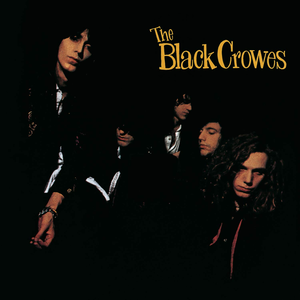
The cover of their 1990 debut album Shake Your Money Maker casts the band in shadow. With long hair and appearing to be dressed in all black the album cover could have passed for a photo of Faster Pussycat or LA Guns. But as seen in the T-Rex: Born To Boogie tribute that is the video for their single “Twice as Hard,” it was clear they weren’t like the LA bands: they were time travelers, just like I wanted to be.
The first million records sold slowly. The second million sold fast. 12-year-old me was in the second million. I remember first the video of their cover of Otis Redding’s “Hard to Handle” and was instantly obsessed with their combination of ‘60s soul, ‘70s rock and whatever was coming to me right then on my MTV rock shows. Someone had to tell me it was a cover.
“But to me it means everything”
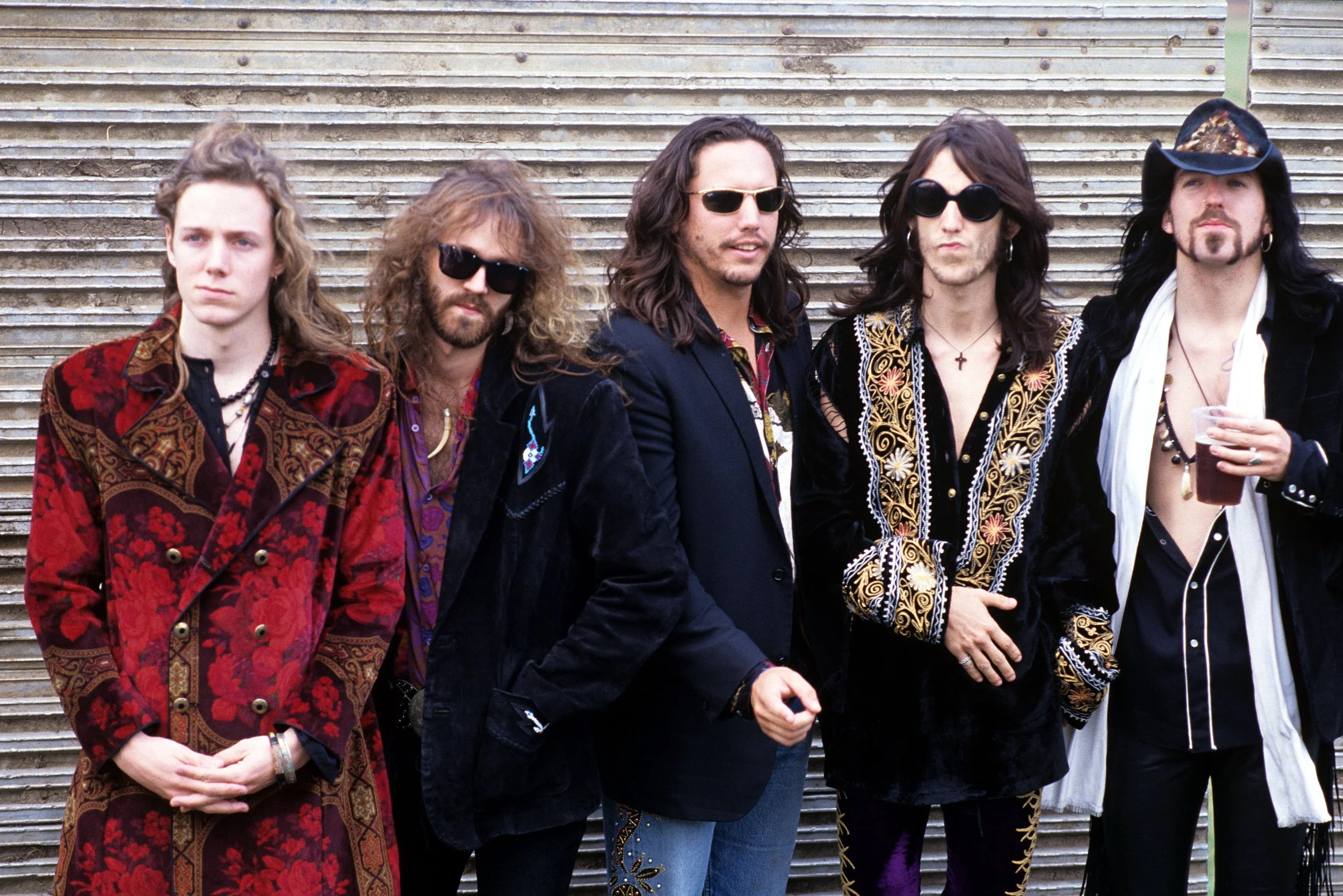
I was cutting pictures out of music magazines-level obsessed. The very first concert I got a parent to take me to, rather than one we all went to as a family, was their 1992 show at Constitution Hall. I went with a friend and I remember her leaving her green crushed velvet jacket at coat check. I asked her “aren’t you worried about someone taking it?” and she assured me “I’m sure they all have their own green velvet jackets”. Didn’t I wish.
It was a great show and watching that video bootleg on YouTube felt like a door to an almost fully forgotten memory. They were fucking great live, an extremely muscular performance and with their gospel-style backing vocalists in tow. I remember a meandering jam I didn’t get much out of at the time (I’m sure their success had an influence in the burgeoning Jam Band scene). They played mostly songs off their second album, though; “Seeing Things” and “Hard to Handle" stayed on the set list. “She Talks to Angels” did not. Very on brand of them to dump their top first top 10 hit off the setlist fast.
I’m pathologically retro—always driven towards versions of things from before my time instead of ones I can actually experience. For example, I was part of the 90s goth revival but always preferred the goth music of the 80s. This was my trajectory with The Black Crowes style of southern rock as well. In time, I turned my back on the band, finding it all embarrassing and falling in line with the criticisms of them as copycats. Eventually I wafted to goth.
According to the music app we’re all leaving, Exile on Main St. is my most listened to album. Period. Which is why, when I revisited this song to prepare for March Sadness, I noticed that it’s this album’s version of “Sweet Black Angel”—minus the Stones' particularly painful attempt to write in dialect. Somehow, I’d also missed that Allman Brothers Band member and Rolling Stones musical director Chuck Leavell is the guy playing keys on the Crowes debut.
“She Tells You She’s An Orphan After You Meet Her Family”
For years, I took to heart music critics' advice: why listen to The Black Crowes when you can just listen to Exile? But, revisiting the album 30+ years later, I can’t help but notice the ways in which it IS of its time.
The Crowes freely admit to having been in a loudness war with Guns n’ Roses (who they are about to open for in 2026). Their studio engineer on Shake Your Money Maker, Brendan O'Brien, contributed a lot to their sound. O’Brien soon became Mr. 90s Rock, working with Stone Temple Pilots and Soundgarden. So of course, that’s in the mix just as much as Chuck Leavell.
Their 1988 demo reminds me of REM, and college rock. Steve Gorman (remember him? Their founding drummer who wrote a memoire?) credits legendary Def Jam producer George Drakoulias who discovered them at a club gig, signed them, and encouraged them to take their sound in a more rawk and raucous direction on their debut. The album is mostly rockers but “She Talks To Angels" was the breakout hit.
The song’s melody stemmed from something Rich Robinson began writing at age 15. When the band started, he was so young that they had to sneak him into his own gigs. The song’s lyrics, by Chris Robinson, tell a story of a woman dealing with heroin addiction. She invents fantasies about her own life while mourning the loss of her child. The song is written from the perspective of her lover.
I’d heard Chris’ story that the song was based on a goth girl he knew from the scene. But what I didn’t know till I did research for this essay is that he didn’t know her well. In fact, he’s not even sure if she used heroin. So the song is really about his fantasy of her.
He says didn’t know many people using hard drugs at that point, but a few years later they would plague his band. He was imagining what life was like for someone older who was living harder than he was, the band being strictly into pot and alcohol at the time.
When I got the album in 1992, I was listening to it for about 6 months before anyone I knew so much as smoked cigarettes, let alone shitty ‘90s weed. (People under 40: I cannot overstate how weak the pot generally available along I95 was in the ‘90s. You could pass your finals stoned, that’s how mild it was. It was the LaCroix of drugs).
The Crowes’ pot hazy world was just slightly beyond my frame of reference, right around the corner, just like the character in the song’s life was in relation to the Crowes in 1990. Except she is not real. The life he imagined for the woman is one he may as well have created whole cloth from all of the art about drug use that he (and I) consumed.
It’s not like either of us are Iggy Pop.
“She wears a smile when the pain comes”
I remember that back then a parent asked me if I thought the song “romanticized drug abuse.” I took that to mean, did I think it was advocating FOR heroin use. Preposterous. But I wasn’t far enough in my education to consider if Romanticism with a capital R was present. Romanticism is the gothic underpinning of the song. It IS Romanticizing a tragic hot goth girl they invented, even if we don’t want to borrow her supply.
The lyrics are deliberately vague, but are evocative and potent images in a Southern Gothic milieu: the lock of hair she keeps in her pocket like a Victorian, and painting “her eyes as black as night”. Is the woman he invented suffering from post-partum emotional pain or chronic pain triggered by pregnancy? Maybe she really did just get the wrong takeaway listening to Lou Reed? Whatever the cause, he romanticizes the pain he imagines for her.
“Pain Going To Make Everything Allright. Yeah Yeah Yeah”
What is the point of sad songs? It’s said that in US culture men aren’t allowed to express sadness, only anger. Music, country and blues especially, is one of the vanishingly rare places where men are celebrated for doing both.
“What is original?" said Chris Robinson in a 1991 interview attributed to Rolling Stone. “I’m not going to bang two badger carcasses together and recite poetry and say, ‘Hey, here’s the new thing.’ We sing a traditional type of music in a very untraditional way. It’s country music, and blues and R&B and other things.”
“They call her out by her own name”
I desperately wanted to be in a band my whole life. I tried guitar and bass, but never got good because what I now recognize as joint hypermobility made practicing hard. My fingers literally get stuck. I have always loved to sing. I took lessons. I’m pretty good.
But “just” singing wasn’t enough to get you into a band when I was a teen. Guys asserted that anyone could “just sing” (technically true, but...) and one extraneous body is one extra carpool to manage so instead teen bands of the grunge era (and after) were beset with lots of guitarists producing terrible sounds with their larynxes. But hey, at least they aren't “girls”. Chris Robinson seemed to be pretty valuable in the Black Crowes even though he's mostly “just” singing.
I’m so grateful that I’ve been able to find people to make music with as an adult. People who validate that I can contribute to music with my voice alone. (Check out our cover of “She Talks to Angels!”)
Chris Robinson sings some fantastic dirty rock vocals. He spent weeks recording them after the rest of the band was done in the studio. He hits notes on this album that he has not reproduced live (I get it, believe me). The strain you can hear in his voice sometimes, beyond natural grit, conveys emotion. It’s never unpleasant, at least not on the album. Most rock singers get pitchy live. It’s brutal to sing a whole show.
He holds his own with David Crosby, which is no small feat. I hear some echoes of Humble Pie era Steve Marriott when Marriott’s voice developed more power.
Robinson drawls and stretches syllables, singing in a thick southern accent that he actually displays but a small touch of when he’s speaking in interviews. It’s stylized. It’s memorable. The Crowes are nothing if not style. And when I am honest with myself, that style works on me.
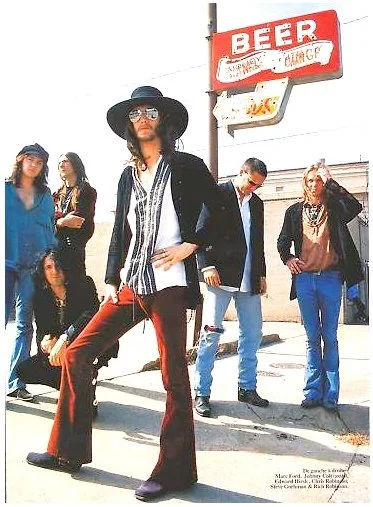
The Crowes didn’t just find their southern rock sound by way of the UK, they also found their look. In his Conan O’Brien Needs A Friend interview, Chris Robinson recalled how hard it was in 1990 to find clothes resembling something Keith Richards might have worn in 1972. I can relate.
Chris finally scored a pair of maroon bell bottoms at Kensington Market during The Black Crowes appearance on the 1991 Monsters Of Rock tour. He proceeded to wear them while opening for Metallica, revelling in the metal audience’s aesthetic confusion. It seems their big international shows in the early ‘90s were backing serious metal bands. I love all those groups, but it is an awkward fit.
Their dislike of playing huge venues and performing to other bands’ fans inspired them to stop accepting offers to open for other bands, regardless of the economics. Instead, they designed the tour for their second album, Southern Harmony and Musical Companion, with audacious and non-negotiable intent to perform as headliners in theaters. They’d rather sell out a smaller space where they could control the look and feel and sound.
They committed to an artistic vision of vintage analogue decadence with giant psychedelic rugs, netting, warm lights, and an intoxicating haze of completely illegal pot smoke amidst the Daughters of the American Revolution Constitution Hall. We were transported. We related. We were less alone. That’s the point of it all anyway, right? At least according to what Chris Robinson said at my first rock concert in 1992—and probably according to March Sadness too.
Special thanks to Alanna Black for her music knowledge and making my cover dreams a reality and to Rena Gross, Natalie Reed and Handsome Frank for the edits.
Elana Levin podcasts at the intersection of comics, genre media, and politics as the host of Graphic Policy Radio. Elana has written about pop culture for The Daily Beast, Wired Magazine, Den of Geek, and more. They would love to write for your music publication be it listicles or in-depth examinations. They also post too much on Bluesky @Levin.
annie zaleski on kristin hersh’s “your ghost”
On April 22, 1994, Kristin Hersh appeared on Late Night With Conan O’Brien. Conan introduces her as a housewife and a mother of two “who also happens to be the lead singer of the band Throwing Muses.” (Turns out the 1990s were not quite as enlightened as we might have thought.) Sitting on a high stool with her legs crossed, she proceeded to perform a languid version of her current single “Your Ghost.”
This take is much slower than the one on her debut solo album, Hips and Makers. Hersh plucks each guitar chord deliberately and sings as though she’s in a trance, even moving her head in a circular motion in rhythm with the music. The melancholy in her voice stings like an icy wind on exposed skin.
Released several months before this performance, Hips and Makers was a far cry from Hersh’s plugged-in electric work with Throwing Muses, the band she’d fronted for a decade. Hersh wrote and recorded Hips and Makers in a horse stable near her house, co-producing the record with Lenny Kaye. The music she made was sparse and cutting, dominated by intricate acoustic guitar and occasional meditative cello from Jane Scarpantoni. The album demanded attention, as Hersh vacillated between delicate compositions like “Your Ghost” and ones with more heft; “A Loon” and “Sundrops” especially resemble ornate folk-punk.
Nevertheless, Hersh didn’t plan on using these tunes—which she wrote for her then-husband/then-manager Billy O’Connell—to launch a solo career. To hear Hersh tell it, Hips and Makers was a fluke. “I was taken entirely by surprise by this record,” she said with a laugh in an early 1994 interview. “It wasn’t my idea. It was my husband’s. And it took years of convincing on his part to get me to take it seriously as a genre.
“The effect of acoustic instruments is so muscular, so physical,” she added. “You don’t have to go through any cords and amps and pickups and buttons and lies before you get there.”
Appropriately, Hersh searched far and wide for the perfect acoustic guitar to suit Hips and Makers. "I didn't want my record to have a shuffling, percussive sound or a wimpy Celtic approach because that's not what my songs are about,” she told Guitar in 1994. “Some blues lines sound really great on a bright kinda guitar like a Guild but I needed so much more than that as I had so many involved parts to play.
Hersh finally found her desired instrument in the attic of a music store in Kansas after the owner gave her a “tiny, beautiful guitar” made by an Austin, Texas, man named Bill Collings. “I played one chord and choked up – there were tears in my eyes!” she continued. “I couldn't believe how wonderful it sounded and I knew that I had to have one." Collings ended up making her a custom model.
Thanks to her discerning eye (and ear), the guitar tone on “Your Ghost” is particularly exquisite, like honey-gold rain. The song’s arrangement is also precise: With methodical patience, Hersh vacillates between wary minor chords and cliffhanger major chords, creating depth out of simple strums. Calling it folk or acoustic rock doesn’t feel quite correct; instead, it feels like something slightly antique, slightly mystical.
I’ve been on a huge Throwing Muses kick since early 2025, as the disquiet lurking beneath the surface of the band’s music captures how I’ve felt in the last year: rattled, unsettled, uneasy. My love for the band stretches back decades and encompasses the group’s many complexities. I’m forever drawn to the musical tension between beauty and sadness, turmoil and tranquility, chaos and contemplation. And as a vocalist, Hersh exudes fragility and strength—a weary but resilient character who feels everything intensely.
Like many 1990s kids, I fell in love with Throwing Muses via their 1995 album University, which arrived in a post-Nirvana world when weirdos and misfits had a mainstream platform. I was so entranced by the bouncy, bracing “Bright Yellow Gun” that I bought the whole album with one of my hard-won Columbia House record club selections. The rest of University also resonated with me, with striking moments such as “Shimmer” and “Teller” existing alongside more otherworldly moments such as the delicate “That’s All You Wanted” and hypnotic “Crabtown.”
University arrived roughly a year after Hips and Makers. As it turns out, the two records are inextricably linked. In an interview that aired in January 1994, Hersh noted that Throwing Muses were in the studio in New Orleans recording. “Ironically, the acoustic project has given the Muses a lot more time to work on their record,” she said with a laugh. “It’s become a very carefully done project, when [you’re] usually pushing yourselves to get product out. Now we have time to sit with it and make sure that it’s perfect.” A Billboard article, meanwhile, noted that the band had actually finished University the previous year.
Although polished enough to land on the radio, the latter didn’t sound overproduced or labored over. Hips and Makers also sounded raw. Lyrically, however, Hersh told an interviewer the subject matter of these songs didn’t diverge markedly from her past work; it was how she delivered the lyrics that differed.
“I don’t think that it’s strikingly more personal than the Muses songs, just more invitingly personal instead of aggressively personal,” she told an interviewer. “I’m not screeching so much. And there’s so much silence and space around it. It sounds like you walked into someone’s bedroom.”
Accordingly, Hersh told HITS in 1994 that she wrote “Your Ghost” in Scotland, after a late night drinking whiskey in a bar with her bandmates, roadies and others. “I had never done that before,” she confessed. “So we were up until 4 a.m. and when I went upstairs, I was just burning and pacing and I couldn’t sleep.”
The way she describes the arrival of “Your Ghost” is magical. “I threw open the windows and this huge moon came shining in, as goofy as it sounds. Well, I’m not one to start thinking, ‘I must write a song. I’m an artist with a capital A.’ Actually I just thought, ‘I’m never going to drink whiskey again.’ But I grabbed some stationery and wrote down all the words to ‘Your Ghost’ and what I thought the chords would be. And when it was done, I shut the windows and cooled down.”
“Your Ghost” might be considered the inverse of Kate Bush’s “Wuthering Heights.” On the latter, the ghost Cathy floats through the night until she reaches Heathcliff and begs him to let her in through a window. She’s on the outside looking in, asking to be back into his life.
In “Your Ghost,” however, a restless Hersh wants companionship. Awake in the middle of the night, she’s haunted by the silence in her house and doesn’t want to be alone with her thoughts. Instead, she imagines a comforting fantasy: dialing up her ghost—referred to simply as “you”—and calling and calling until they come to visit her. Delightfully, Hersh narrates this reunion, describing a lively presence (“Let him walk down your hallway, it's not this quiet”) and fanciful movements (“Slide down your receiver, sprint across the wire”) that end in solace and connection: “Follow my number / Slide into my hand.”
Unfortunately, this happy reconciliation is fleeting. The lonely pre-chorus imagery (“It's the blaze across my nightgown/It's the phone's ring”) represents moonlight and the sound of the phone, two sharp reminders of this spirit. As Hersh sings these lines, Jane Scarpantoni’s cello eases into the mix, amplifying the emotional ache in long, low strokes. And then comes the chorus, the line “I think last night you were driving circles around me” repeated multiple times. It’s a disorienting admission, as if Hersh isn’t quite sure she encountered her ghost. Did she sense their presence? Or was that the night talking? Did the visit actually happen?
The second chorus reinforces the end of this pleasant fantasy. She can’t go on with her life—or start her day—until she tucks her memories away (“I can't drink this coffee till I put you in my closet”) and she unfairly chastises herself for giving into her nostalgia: “I take it from his whisper/You're not that tough.”
Hersh is much too hard on herself. After all, missing someone is disorienting and confusing; grief can pop up when we least expect it. But it’s comforting to think that someone we love is just a phone call away, even in the afterlife, and that we can summon them at will to come visit. Giving into fond memories isn’t a sign of weakness; instead, it’s a way to keep someone alive.
I can’t remember where I first heard “Your Ghost.” Maybe it was on the late-night MTV show 120 Minutes, which played all the cool alternative videos. According to statistics, the “Your Ghost” clip aired once in February 1994, on the same episode Hersh contributed a fierce live acoustic version of “Sundrops.”
It’s more likely I heard “Your Ghost” on the radio, either in Cleveland or on the modern rock station in St. Louis, a city I visited frequently in 1994. Colloquially known as 105.7 The Point, this station was forward-thinking and open-minded. Archival playlists show that the station had “Your Ghost” in ultra-heavy rotation, alongside Morrissey, Material Issue, Soundgarden, Crowded House, Sarah McLachlan, and Enigma.
Either way, teenage me would have sought out “Your Ghost” because Michael Stipe was on it. In 1994, I was at the height of my R.E.M. obsession and needed to hear absolutely everything even tangentially associated with the group.
I had been profoundly moved by the band’s 1992 album Automatic for the People. At that point in my life, when nothing but possibility loomed ahead of me, I didn’t fully understand R.E.M.’s ruminations on mortality, grief, politics, and restlessness. But these songs stirred something in me and made me think bigger. One of the first album reviews I ever attempted was on Automatic for the People. I didn’t know how to be a music critic (or a writer, for that matter) but I felt compelled to articulate why these songs mattered so much to me.
As it turns out, Hersh was also drawn to the way Stipe instinctively used his voice to access deeper truths. “I just heard his voice in one of my ears, and ‘Your Ghost’ being played in the studio in the other,” Hersh said in an interview. “Suddenly I knew what could save the song: ‘Michael, would you sing on this song? I think it would save it.’”
Much to Hersh’s delight, Stipe was game to collaborate. “He has an unbelievably beautiful, deep voice at the same time as it whines in high tones,” she continued. “It flies around. I had already tried to save the depth in the song with a low thundering drum, a big marching drum that sometimes roars out below it all. It sounded very experimental until Michael sang. His voice balanced all these fragments from the drum and the cello at the same time as it introduced a certain character into the song.”
Stipe’s contributions do indeed add new wrinkles to the spirit visit. He’s the titular ghost, conspiratorial and wise. He first emerges during the chorus, shadowing Hersh as both sing the lines “I think last night you were driving circles around me.” Turns out she wasn’t imagining this ghostly presence; instead, she and the phantom are in lockstep. Vocally, Hersh and Stipe also sound perfect together, their twin murmurs unified by shared memory and sadness.
On the second runthrough of the chorus, “Your Ghost” has a breakthrough. Stipe repeats the line “You were in my dream” on his own, in a voice that cracks with need and longing, as Hersh chimes in with “I think last night,” before both agree: “You were driving circles around me.” The lyrical shift is poignant. Hersh isn’t the only one thinking of her ghost. Her ghost also thinks of her. Everything she’s imagining is true, and their connection survived into the afterlife. Despite singing slightly different lines, they always converge at the same place. “Your Ghost” is bittersweet, sure, but comforting rather than isolating.
Of course, Hersh never gives a firm description of who this mysterious “you” is to her; instead, this apparition is whoever we need it to be. But in an interview with Billboard, she had a much different take on the meaning of “Your Ghost,” one that wasn’t quite so morose. "When someone dies on you, it's hard to think, ‘How nice,’” she said. “But when you're used to them not being there, you have another angel, another ghost there with you. That's a sweet way to think of it."
In an odd footnote, Hips and Makers also functioned as a reverse olive branch of sorts, created so Hersh could cut ties with her then-label, Warner Bros. “I bought myself out of my contract by trading them my first solo record for my freedom,” she said in one interview. In other chats, she was even blunter about the transactional role of Hips and Makers, and how releasing that and University did indeed free her from her record contract.
“I had already said to [the label], ‘Look, I’m never going to give you bimbo product. Let us go and I’m out of here,’ and their response was, ‘No, it doesn’t work like that. We’re going to destroy you instead,’” she said.
“So I offered them a solo record, thinking that they were never going to allow it. I mean, they didn’t like my band so why would they like one-third of my band? When they said okay, I thought they were just being nice or feeling sorry for me or something. I didn’t honestly think they were going to release it. Why would they? I mean, if you listen to it, it doesn’t make any sense.”
Incredibly, Hips and Makers made sense to a lot of people. The album peaked at No. 7 on the UK albums chart and No. 1 on an indie albums chart. In America, it became Hersh’s highest-charting album yet, reaching No. 10 on Billboard’s Heatseekers chart and No. 197 on the overall albums chart. “Your Ghost” appeared on the With Honors soundtrack, four songs after Madonna’s blockbuster megahit “I’ll Remember,” and became a No. 1 hit in Iceland of all places.
“Your Ghost” has had a very long tail, with covers performed by The Dandy Warhols, Damien Rice and Greg Laswell, among others. In the mid-2000s, Hersh also re-did “Your Ghost” with her band 50 Foot Wave, transforming the song into a doomgaze elegy scratched with sunburned guitars and noisy distortion.
At first, Hersh sounds like she recorded her vocals underwater. However, as the song crests to the end in a tangle of metallic chaos, she starts howling like a possessed banshee with strep throat. The quiet grief of the original has festered into something feral and raw, like an angry blister that keeps coming back. Perhaps the porous connection between the living and the dead calcified, or maybe the passage of time dredged up other emotions.
In the end, perhaps “Your Ghost” represents the unique experiences that haunt your own life—the losses, the loves, the grief, the happiness. Over time they might evolve from benign phantoms into angry apparitions (and back again) but they are never very far away.
“It’s simple without being simplistic,” Hersh said in 1994 to describe the song. “My songs aren’t usually that specific. I believe your life’s experiences make chemicals in your body that have to match the chemicals in the song so that the song can almost inject you with something that feels like a color or chemical shooting through you and only then do you qualify as the singer of that song. My life experience plays a huge part in these songs, but I don’t think they’re stories about me. Everybody I’ve ever lost is in that song.”
Annie Zaleski is a New York Times best-selling author, journalist and editor with work in Rolling Stone, NPR Music, The Guardian, Variety, The Los Angeles Times, Stereogum, Salon, Billboard, Classic Pop, and Record Collector.
I’m also the author of Taylor Swift: The Stories Behind the Songs and Beyoncé: The Stories Behind the Songs, as well as a 33 1/3 book on Duran Duran’s Rio; the illustrated biographies I Got You Babe: A Celebration of Cher; Lady Gaga: Applause, Pink, Raise Your Glass, and Harry Styles: A Sign of the Times; and the music history books This is Christmas, Song by Song and We Found Love.
I’ve also contributed essays to multiple books, along with liner notes to the 2016 reissue of R.E.M.’s Out of Time, and reissues by Game Theory, ZZ Top and Jason Mraz. Additionally, I was commissioned by the Rock & Roll Hall of Fame to write induction essays for Duran Duran, George Michael, Cher, and Cyndi Lauper.